Business Outlook Africa

Author name: Business Outlook Africa

Economy

Dr. Sarkodie Identifies Three Untapped Revenue Streams ,Says Reforming Informal Tax, Natural Resources and Property Rates Could Yield GH₵ 110 Billion

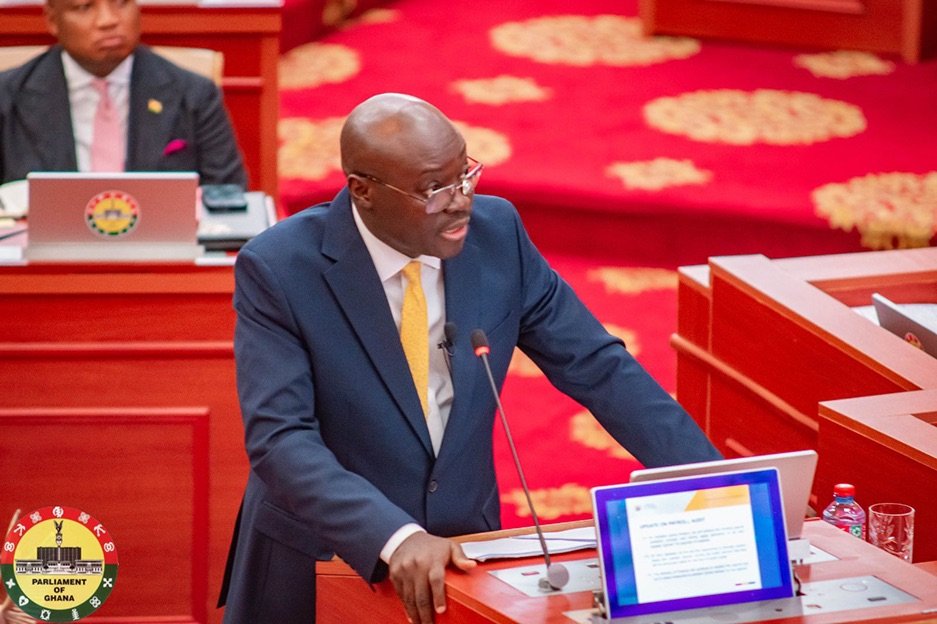
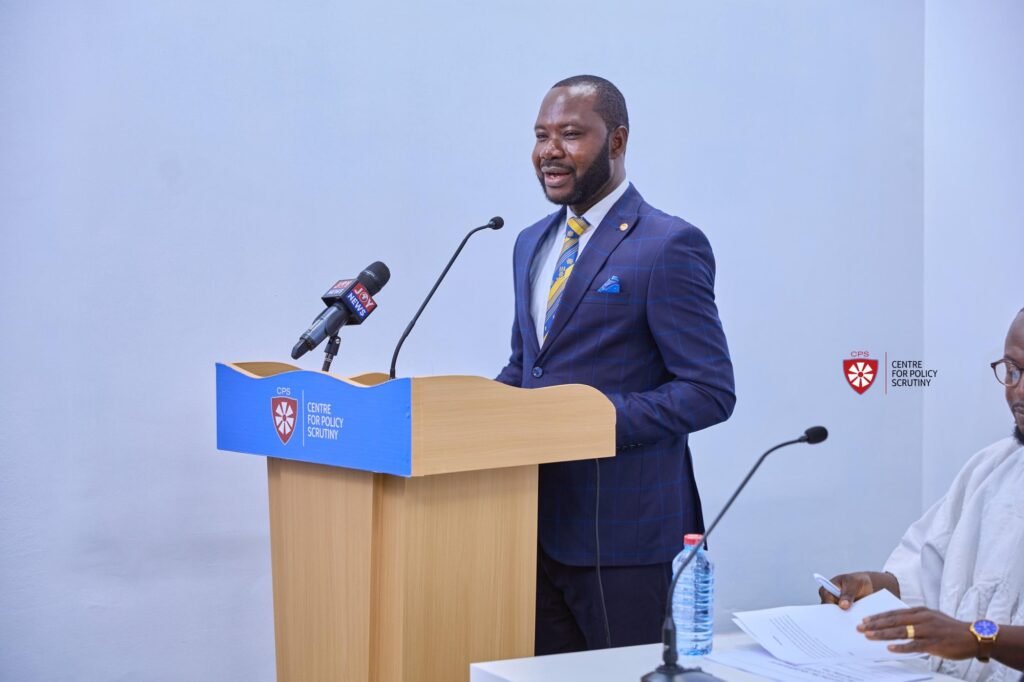
Economist and Lecturer at the University of Ghana, Dr.Adu Owusu Sarkodie has called on government to undertake serious reforms in the taxation of the informal sector, natural resource revenue management, and property rates collection adding that the country can unlock an additional GH₵ 110 billion in annual revenue when done . Speaking after the Mid-Year Budget Review on July 23, 2026, Dr. Sarkodie explained that per his analysis, the country can get nearly half of its entire 2026 revenue target when it undertakes these aforementioned reforms . “I am yet to see a huge reform in Ghana’s revenue performance in terms of taxing the incomes of the informal sector, in terms of the natural resource, in terms of property rates. I want to see the re-setting agenda in these three because I did my math and I realised that if we do these three well, Ghana can add an additional income of GH₵ 55 billion. No, GH₵ 110 billion.That’s about half of the entire money that the government is looking for in the year 2026 alone.” he stated Dr. Sarkodie also cautioned against the Finance Minister’s no-revenue-no-spending approach arguing that that approach is not sustainable for long term economic growth and transformation hence urging the Ministry to find aggressive ways to mobilize revenue. “The second recommendation is that we must embark on aggressive revenue mobilisation.The posture of the Finance Minister is that if he doesn’t get the revenue, he will not spend. But if you continue to manage an economy like this, you will not get the needed growth and transformation that you need. Therefore, we must try and raise inner revenue so that we can spend on productive sectors.”he added On the 24 hour economy, Dr. Sarkodie urged the government to prioritise the implementation of key initiatives outlined in the 24-Hour Economy document ,singling out the development of economic activities around the Volta Lake as a particularly promising idea that deserves urgent and sustained pursuit “And the other recommendation is that there are beautiful ideas in the 24-hour economic documents and therefore we should try and implement some of them, especially the one on the development of economic activities around the Volta lake. It is a brilliant idea. They must continue, they must make any effort, every effort to pursue that..” He said Dr. Sarkodie also raised concerns about the implementation of the 24-Hour Economy policy, arguing that there is a clear disparity between what was promised and what is currently being delivered . He also challenged the logic behind prioritising the construction of 24-hour markets. “Finally, the issue of 24-hour economy. What was promised, what is contained in the document, and what they are delivering are different things. They promised 133. In the document, 133 appears only in one page of the 287 pages. The entire document is about economic transformation.But they’re not even doing economic transformation. They’re focussing on building markets. The market is about buying and selling.What are you going to sell on the market when you have not transformed the economy?Where is the factory to produce what to be sold on the market? For me, this is a bigger question.” He questioned

News

Dr. Sarkodie Disputes Finance Minister’sClaim on Inheriting An Economy on Its Knees

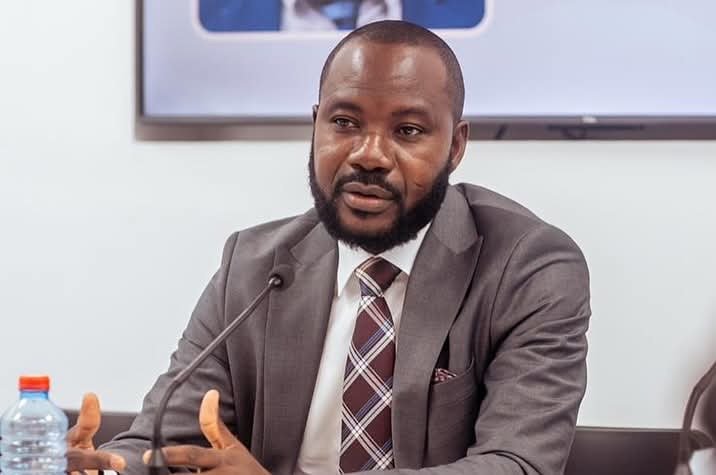
Economist and Lecturer at the University of Ghana, Dr.Adu Owusu Sarkodie has stated that the Finance Minister’s claim on inheriting an economy on its knees when the current administration came into power is far from true. Speaking after the Mid-Year Budget Review on July 23, 2026, Dr. Sarkodie explained, that the figures available don’t support the Finance Ministers Claim adding that the economy was on the path of recovery after the 2024 general elections . “So, clearly, we cannot see that the economy as of the end of 2024 was an economy on its knees. It was on the path of recovery.” he stated Dr Sarkodie also called for the internalization of the IMF PCI program the country is currently on ,explaining when done properly there will be no need to return to the IMF for support. “And even currently, we still have the PCI, the Policy Coordinated Instrument, which will stay with us for 36 months. My opinion is that we should internalise this PCI in such a way that we may not need an IMF programme again, but we can resolve the issues ourselves.” he added He ended by calling for a collective fight against inflation, explaining that the Bank of Ghana in its current state cannot achieve the inflation target alone without the contribution of other agencies and ministries. “The fight against inflation should not be left in the hands of the Bank of Ghana alone.Bank of Ghana today is not in a good position to keep sterilising and taking the bullet on behalf of all other agents in the economy. The fight against inflation should be a shared responsibility between Bank of Ghana, Minister of Finance, Minister of Trade and Industry, Agribusiness, Minister of Agriculture, Minister of Trade, Transport, Minister of Roads and Highways, all real sector players must come on board, communication, all other sectors must come on board to fight against inflation.” He said

Economy

2026 Mid-Year Budget: Finance Minister Attributes Ghana’s Macroeconomic Gains to Fiscal Discipline and Competent Economic Management

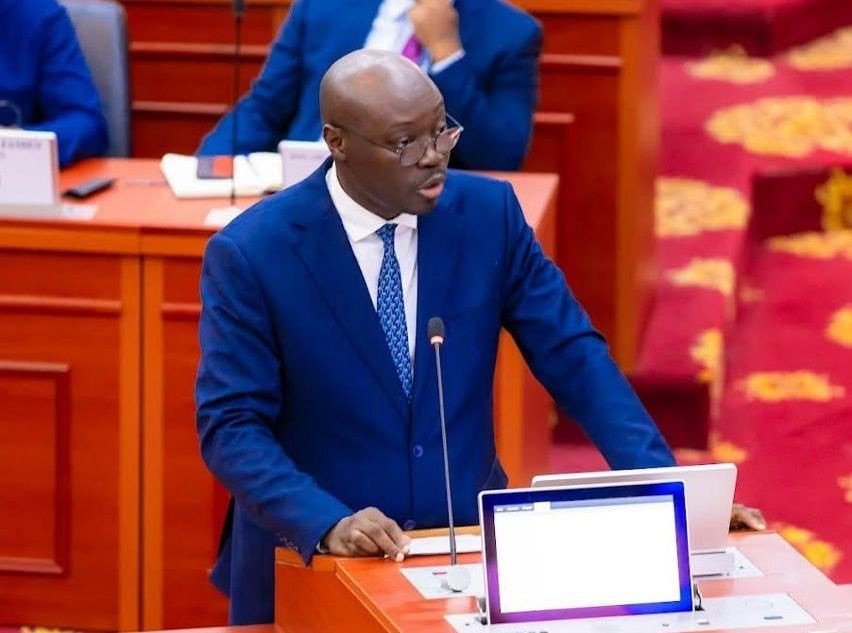
Finance Minister, Dr. Cassiel Ato Forson has attributed the recent macroeconomic gains experienced to what he describes as the “superior economic management” undertaken by the current administration. Presenting the 2026 Mid-Year Budget Review on the floor of parliament on July 23rd 2026, Dr. Cassiel Ato Forson debunked narratives of these gains being as a results of luck, debt restructuring or even the IMF Program inherited from the previous government after taking office in January 2025. “The progress Ghana is recording today did not happen by chance.Some have suggested that our recent macroeconomic gains are simply the product of good fortune.Others have attributed the recovery solely to the debt restructuring programme or the IMF programme inherited in 2025.Mr. Speaker, I firmly disagree. Our recovery is as a result of superior economic management.” He stated The Finance Minister added that although debt restructuring and interventions by the IMF can create fiscal space, sustainable economic recovery can only be built on good policy choices, competent economic management, disciplined execution and courageous leadership. “Debt restructuring may create fiscal space, but it does not create fiscal discipline.An IMF programme may provide a framework, but it cannot substitute for sound policy,disciplined implementation and political will.Sustainable economic recovery is built on good policy choices, competent economic management, disciplined execution and courageous leadership.” He added The Finance Minister then highlighted that as as a result of this economic management, every major macroeconomic indicator has improvedsignificantly. Dr. Cassiel Ato Forson went ahead to explain that Ghana’s economic recovery has been hinged on Fiscal Correction, the modernization of Ghana’s Tax Regime and the Complementary Fiscal Policy for Inflation Targeting and Exchange Rate Stability. “The recovery of the Ghanaian economy has been anchored on three Key Transformational Policy Reforms (KTPs).These Key Transformational Policy Reforms are Fiscal Correction,Modernising Ghana’s Tax Regime and Complementary Fiscal Policy for Inflation Targeting and Exchange Rate Stability.” He added Ghana’s recent macroeconomic gains show strong economic recovery, highlighted by 6.4% GDP growth in Q1 2026, single-digit inflation normalization, and a stabilized cedi.

News, Uncategorized

BoG maintains policy rate at 14% as MPC cites global inflation risks

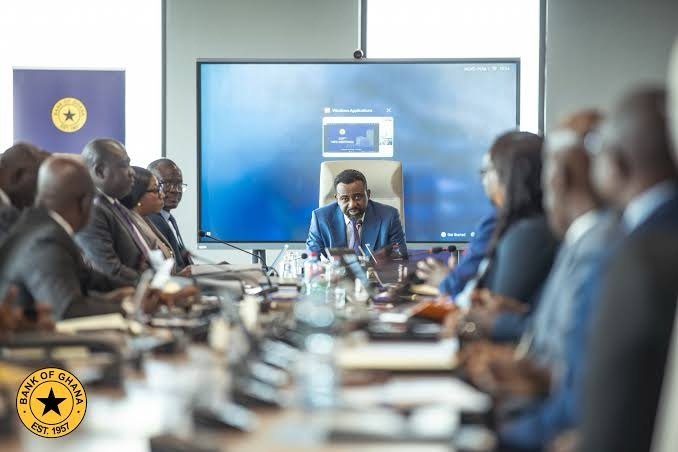
The Bank of Ghana (BoG) has maintained the Monetary Policy Rate (MPR) at 14 per cent following the conclusion of the 131st Monetary Policy Committee (MPC) meeting, citing heightened global uncertainties and the need to preserve price stability. Announcing the Committee’s decision at the 131st MPC briefing in Accra, Governor of the Bank of Ghana and Chairman of the MPC, Dr. Johnson Pandit Asiama said the current monetary policy stance remains appropriate despite Ghana’s improving macroeconomic performance. “The Committee, by a unanimous decision, maintained the Monetary Policy Rate at 14.0 per cent,“ According to the Governor, although economic growth has remained resilient, private sector credit has improved and inflation has stayed below the lower bound of the Bank’s medium-term target band, emerging global developments require policymakers to remain cautious. Dr. Asiama explained that escalating geopolitical tensions in the Middle East, rising crude oil prices, and the possibility of upward adjustments in utility tariffs present upside risks to Ghana’s inflation outlook. “The current policy rate remains appropriate to guide inflation towards the Bank’s medium-term target band while allowing policymakers time to assess evolving global risks,” The Committee noted that while inflation expectations remain broadly anchored and the country’s external sector continues to strengthen, it will continue to closely monitor both domestic and global developments before making any future adjustments to the benchmark interest rate. The Monetary Policy Rate serves as the benchmark rate that influences borrowing costs across the banking sector and remains one of the Bank of Ghana’s principal tools for managing inflation and maintaining macroeconomic stability.

News

GoldBod Introduces New Trade Financing Framework for Tier 2 Licensed Gold Buyers

The Ghana Gold Board (GoldBod) has introduced a new trade financing framework aimed at strengthening accountability, improving risk management and ensuring the efficient administration of funds provided to licensed gold buyers under its Gold Purchase Financing Programme. The new framework which is going into immediate effect outlines the process that Mandatory procedures will follow for Tier 2 Licensed Gold Buyers and other qualifying licensed gold buyers to gain access to GoldBod’s trade funding via the Aggregators. The initiative is part of GoldBod’s overall goal of increasing transparency, financial control and sustainability in the formal gold trading industry in Ghana. Under the revised framework, all eligible Tier 2 Licensed Gold Buyers are required to submit a formal application to an Aggregator, present a valid GoldBod Tier 2 Licence for verification and complete all Know-Your-Customer (KYC), due diligence and creditworthiness assessments before accessing financing. Applicants in line with the directive are also required to sign a Trade Financing Agreement with the Aggregator which specifies the terms of financing, repayment commitments, reporting and compliance requirements. After which funds will only be released until the agreement is approved by the GoldBod. GoldBod also aiming at safeguarding public funds has also introduced a security requirement under which funded buyers must provide an acceptable Bank Guarantee, Advance Payment Guarantee, Insurance Bond or other approved security depending on which, the security will be determined if it will cover between 10 and 50 percent of the approved financing amount. The Board has also instructed all the beneficiaries of the Trade Financing Programme to formalise their transactions under the new regime by fulfilling all the outstanding obligations and closing their current trade financing accounts with Aggregators by August 1, 2026. Failure to comply will result in their removal from the list of eligible Tier 2 Licensed Gold Buyers until all outstanding amounts have been fully settled. GoldBod also outlined strict enforcement measures for defaulters with participants who fail to honour a first demand notice within 21 days risking suspension of their GoldBod Buyer Licence, while continued default after a final 30-day demand notice may result in criminal proceedings. Additionally, the Board has introduced restrictions to prevent multiple financing arrangements. Funded Tier 2 Licensed Buyers will not be permitted to obtain financing from another funded Tier 2 Buyer, while Tier 1 Licensed Buyers may not receive GoldBod trade financing from more than three funded Tier 2 Licensed Buyers at any given time. Breaches of these provisions may attract regulatory sanctions, including the suspension or withdrawal of funding approvals. GoldBod said the new framework is designed to strengthen governance, protect public resources and ensure that its Trade Financing Programme continues to support a transparent, responsible and financially sustainable gold trading ecosystem in Ghana.