Business Outlook Africa

Agriculture

Agriculture

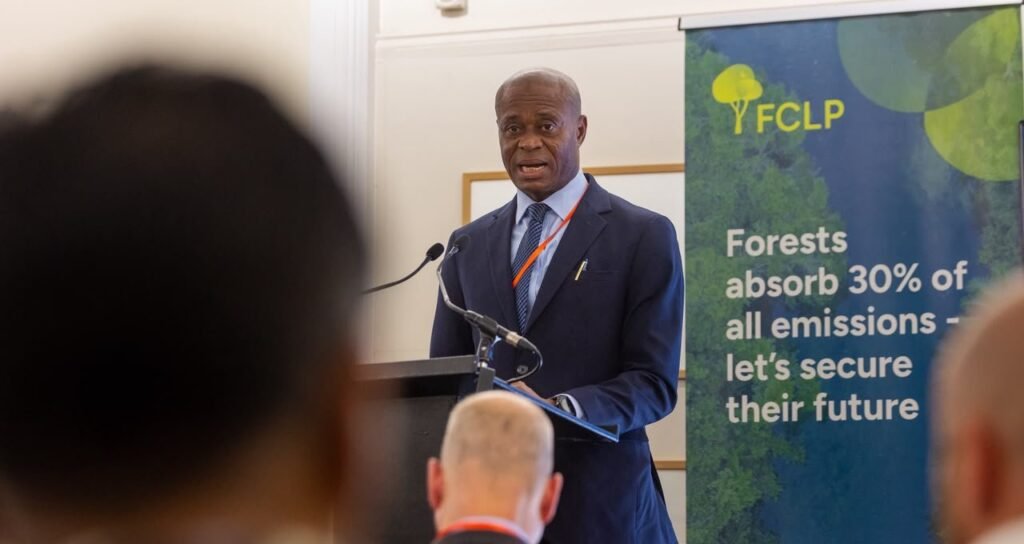
Ghana Pushes for Fair and High-Integrity Carbon Markets at London Climate Action Week

Ghana has renewed its call for a fair, transparent and high-integrity global carbon market, saying it is essential for mobilising climate finance and helping developing countries meet their emissions reduction targets. Speaking at a meeting of the Coalition to Grow Carbon Markets during London Climate Action Week on June 23, 2026, the Deputy Minister for Lands and Natural Resources, Yusif Sulemana, described carbon markets as a practical tool for unlocking investment, accelerating mitigation, and delivering real benefits for communities and nature. He revealed that Ghana had taken bold steps to integrate carbon markets into its national climate strategy, assigning 24 million tonnes of its emission reduction target to Article 6 cooperation under the Paris Agreement. According to him, the country has doubled that ambition in its revised Nationally Determined Contributions (NDCs). The Deputy Minister also highlighted Ghana’s four bilateral carbon market agreements with Switzerland, Sweden, Singapore and South Korea, describing them as evidence of the country’s readiness and commitment to transparency and environmental integrity. He added Ghana’s focus is now on scaling investment in carbon finance projects, including clean cooking, renewable energy, forest conservation and methane reduction. “We want to see more high-quality mitigation activities,” the Deputy Minister said. He, however, stressed that credibility must remain at the heart of market growth. “Integrity is the foundation of trust, and trust is the currency of carbon markets”,Sulemana added. He called for fair carbon pricing and equitable benefits for host communities. The Coalition to Grow Carbon Markets is a government-led initiative launched at London Climate Action Week. Its primary goal is to spur global corporate demand for high-integrity carbon credits to help close the estimated $1.3 trillion climate finance gap.
Agriculture

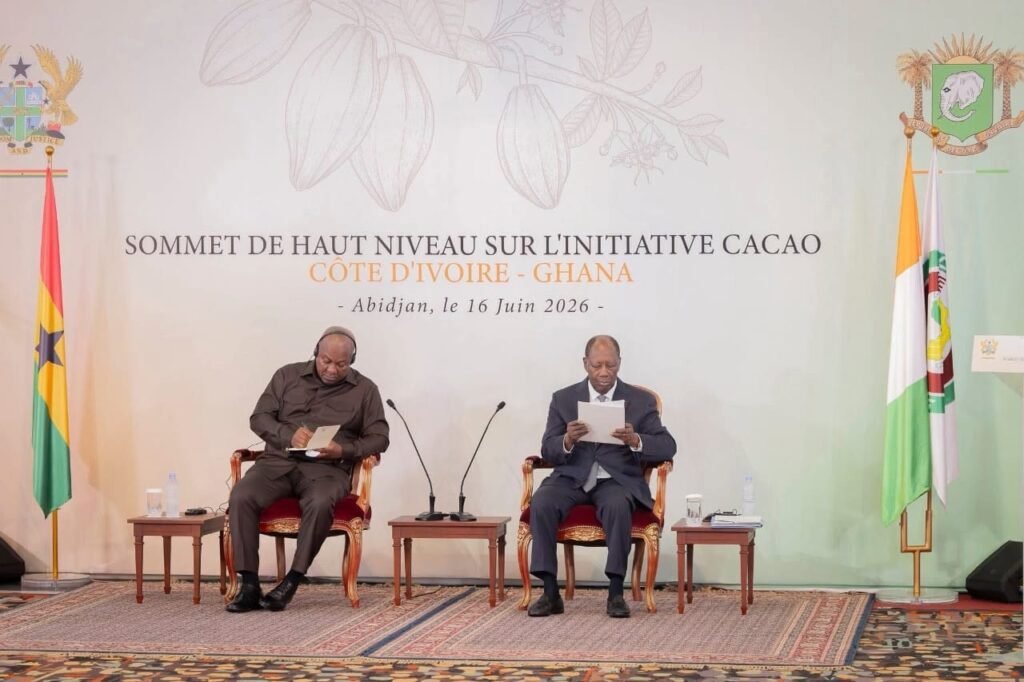
Ghana, Côte d’Ivoire to Expand Cocoa Initiative to Other African Nations

Presidents Alassane Ouattara of Côte d’Ivoire and John Dramani Mahama of Ghana have signed a new joint declaration committing both countries to fairer farm-gate prices for cocoa farmers and deeper cooperation across the sector. The declaration was signed at the Côte d’Ivoire-Ghana High-Level Summit on the Cocoa Economy, which took place in Abidjan on Tuesday, June 16, 2026. The two Heads of State renewed their shared commitment to a sustainable cocoa economy, placing farmers at the centre of priorities for sector governance and value sharing, building on the original Abidjan Declaration of March 26, 2018, which has served as the foundation for cooperation between the two states. The declaration stated that Côte d’Ivoire and Ghana together account for about 60 percent of global cocoa production, a position it said confers shared leadership and a special responsibility for the future of the sector. It also noted notable achievements of the two countries’ joint efforts so far, including the creation of the Côte d’Ivoire-Ghana Cocoa Initiative (CIGCI), the establishment of the Living Income Differential (LID), the harmonization of marketing and price announcements to producers, the implementation of traceability, the African Regional Standards for Sustainable Cocoa (ARS-1000), and cooperation between research institutes to combat the Cocoa Swollen Shoot Virus Disease (CSSVD). The declaration further stated that the sector remains exposed to major challenges such as price volatility, illegal gold mining, the adverse effects of climate change, the rise in the use of cocoa substitutes and equivalents, and the increasing demands of international sustainability regulations. It added that Africa, which accounts for about 80 percent of global production, it still captures only a marginal share of the value in the cocoa-chocolate supply chain. The two leaders stated they were convinced that fair remuneration for farmers is a pillar of the sector’s sustainability and a requirement for economic justice and social stability. Consequently, Ouattara and Mahama agreed to harmonize farm-gate price policies to optimize producer remuneration, stabilize the market and strengthen commercial cooperation through several key measures, including market synergy, the alignment of premiums and the harmonization of crop-season calendars. They also committed to creating added value by increasing processing capacity, encouraging regional and continental trade, and stimulating national and regional consumption of cocoa-based products. With this declaration, Ouattara and Mahama have agreed to expand the Côte d’Ivoire-Ghana Cocoa Initiative to other African countries, to enhance regional cooperation, harmonize sector policies, strengthen collective bargaining power on global markets, and coordinate responses to the emerging challenges of the cocoa economy.

Agriculture

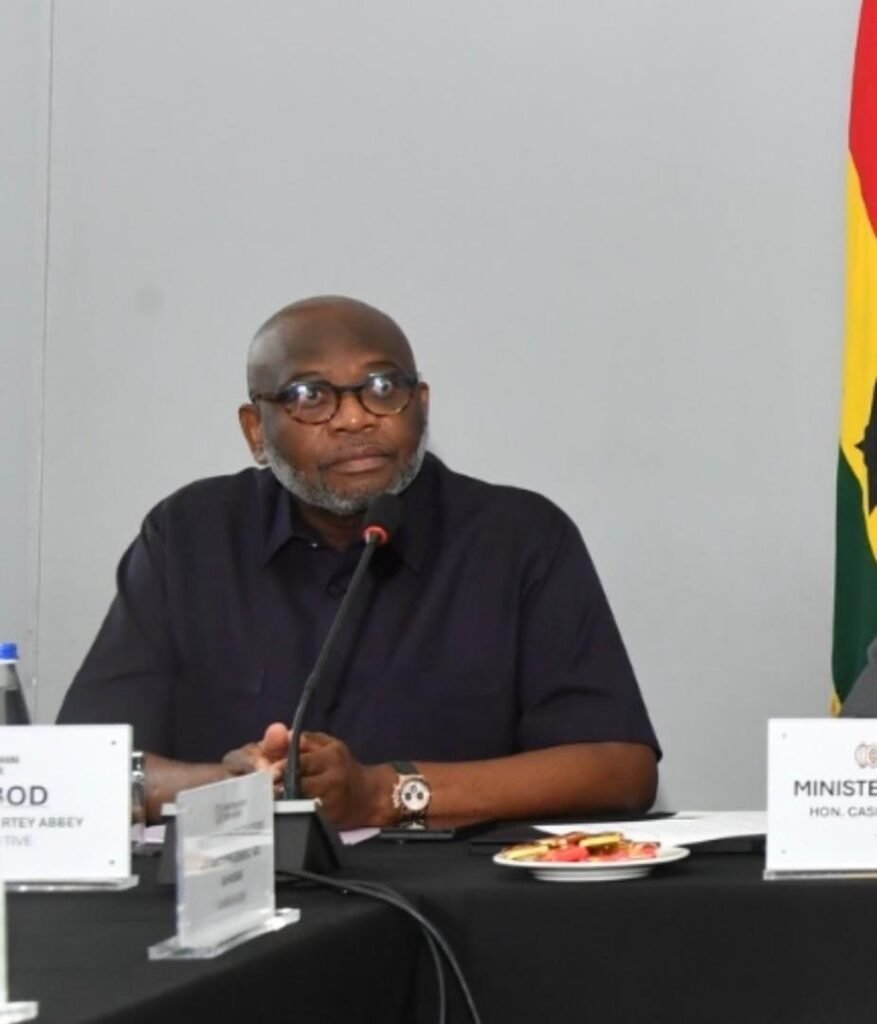
Dr. Randy Abbey Calls For Greater Trust And Unity In Ghana–Côte D’Ivoire Cocoa Partnership

The Chief Executive of the Ghana Cocoa Board (COCOBOD), Dr. Randy Abbey, has called for deeper trust, transparency, and commitment between Ghana and Côte d’Ivoire as the two countries seek to strengthen cooperation and secure greater value for cocoa from the two countries on the international market. Addressing stakeholders at a meeting of the Côte d’Ivoire–Ghana Cocoa Initiative (CIGCI) in Abidjan, Dr. Abbey stressed that sustained collaboration between the world’s two largest cocoa-producing countries remains critical to improving farmer incomes, enhancing market influence, and promoting the long-term sustainability of the cocoa sector. According to him, while both countries have made significant strides in advancing their shared interests through the Initiative, the success of future efforts will depend largely on the ability of Ghana and Côte d’Ivoire to deepen mutual confidence and maintain a common strategic direction on key industry issues, particularly cocoa pricing. “Ghana and Côte d’Ivoire have a unique opportunity to shape the future of the global cocoa industry. However, this can only be achieved if we continue to work together in a spirit of openness, honesty, and trust,” Dr. Abbey stated. He noted that as countries responsible for producing more than sixty percent of the world’s cocoa, Ghana and Côte d’Ivoire possess considerable leverage within the global cocoa value chain. He therefore urged both nations to move beyond dialogue and demonstrate an unwavering commitment to coordinated action that protects the interests of cocoa farmers. “With one accord, the two countries can achieve a lot in terms of price on the international market,” he emphasized. Dr. Abbey observed that fragmented approaches to pricing and market engagement could weaken efforts to secure fair value for cocoa producers, while stronger cooperation would enhance the bargaining power of both countries and improve returns from cocoa exports. He further underscored the need for transparency in all collaborative arrangements, indicating that trust remains the foundation upon which successful partnerships are built. “The discussions we hold must be matched by practical actions and mutual confidence. Without trust and transparency, it becomes difficult to achieve the common objectives we seek for our farmers and our economies,” he added. The COCOBOD Chief Executive also highlighted the importance of sustaining cooperation on broader issues affecting the sector, including sustainability, traceability, climate resilience, and farmer welfare. Established to deepen strategic collaboration between Ghana and Côte d’Ivoire, the Côte d’Ivoire–Ghana Cocoa Initiative serves as a platform for addressing common challenges confronting the cocoa industry and promoting policies that enhance the livelihoods of cocoa farmers in both countries. Industry stakeholders have consistently argued that closer coordination between the two leading cocoa producers is essential to strengthening their influence within the global cocoa market, improving value retention within producing countries, and ensuring that farmers receive a fairer share of the wealth generated from cocoa. As global demand for sustainably sourced cocoa continues to grow and regulatory requirements become increasingly stringent, observers believe that a stronger and more united Ghana–Côte d’Ivoire partnership will be pivotal in shaping the future of the international cocoa trade and advancing the welfare of millions of cocoa farming households across West Africa.

Agriculture

Deputy Finance Minister Says Lack Of Transformational Capital Is Holding Ghana’s Rice Sector Back

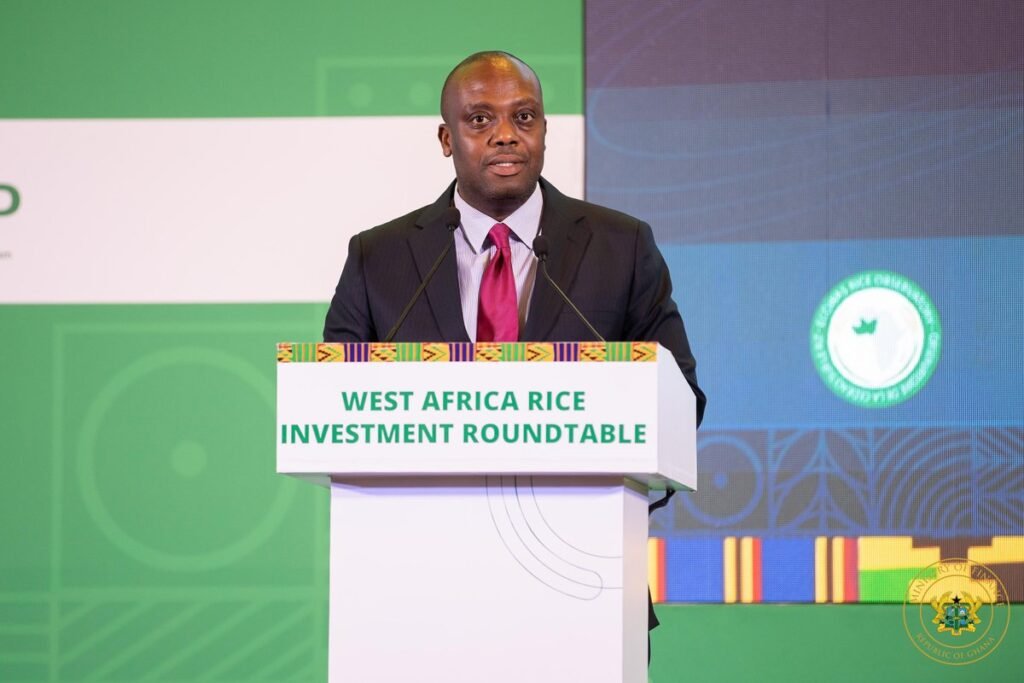
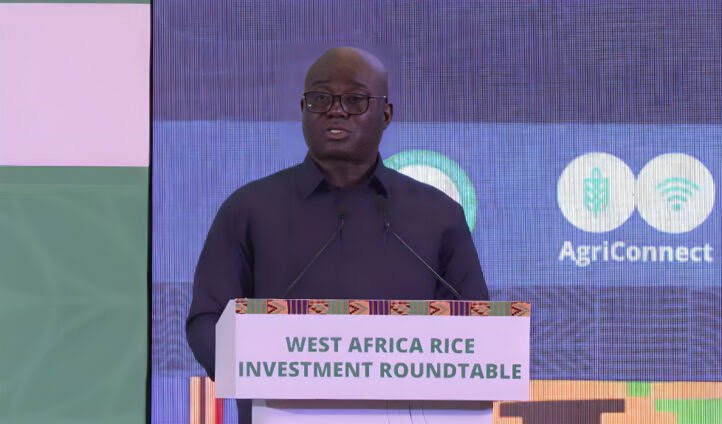
The Deputy Minister for Finance in Ghana,Thomas Nyarko Ampem, has stated that Ghana’s problem when it comes to domestic rice production and importation is due to a lack of sufficient transformational capital . Speaking during the first day of the West African Rice Investment Roundtable here in Accra, the Deputy Minister explained that abundance in resources in the region is proof that the region’s inability to be self-sufficient in rice production has nothing to do with a shortage of natural resources. “We know that West Africa is not short of potential in rice production. We have the land, we have the water resources, and we have the farmers. What we have lacked for far too long is sufficient transformational capital capable of unlocking this potential at scale.” He stated The Transformational capital, Thomas Nyarko Ampem argued, must be patient enough to fund irrigation rather than just seasonal inputs, risk-tolerant enough to invest in storage, milling, logistics and processing rather than just commodity trading, and strategic enough to see a unified West African rice economy rather than fragmented national markets separated by borders. “Clearly, transformational capital means more than money. It means patient capital that funds irrigation, not just seasonal inputs.It means risk-tolerant capital that invests in storage, milling, logistics, and processing, not just commodity trading.It means strategic regional capital that sees a West African rice economy, not fragmented national markets separated by borders. That is the scale of ambition this movement demands.” He added Touching on the longstanding West African Jollof debate, the Deputy Minister advocated for the the conversation to shift from which country’s Jollof tastes better to which country produces enough rice to feed its people. “Therefore, the real jollof competition before us is not whose rice tastes better, even though we know Ghana’s is the best. It is whether West Africa can finally produce enough rice to feed itself competitively.” He stated The West Africa Rice Investment Roundtable is a high-level event organized by the ECOWAS Commission in collaboration with the World Bank Group and the African Development Bank (AfDB) with the primary objective of tackling the region’s $3.5 billion to $4 billion annual rice import bill.    

Agriculture

Ghana Moves to Protect Farmers and Halt Smuggling Amid $320M Annual Rice Import Bill

The Minister for Food and Agriculture, Eric Opoku has revealed plans to establish an inter-ministerial task force to help combat the smuggling of rice out of the country. Speaking at the Day 1, of the West African Rice Investment Roundtable, the Minister who also doubles as the Member of Parliament for Asunafo South Constituency explained that the move aims at helping Ghanaian rice farmers who often are placed at a severe economic disadvantage usually because they are being forced to compete with unfairly low prices. “We are establishing an inter-ministerial task force to intensify surveillance and enforcement against rice smuggling through unauthorised border routes which continues to undercut our farmers.” He stated Eric Opoku then added that the sector has currently open to private investment and partnerships explaining that the government has done its best to create a viable business environment for them to operate in . “To the investors, financiers and development partners in this room, my message is simple. Ghana has done the work to direct the sector.We have mapped the opportunity, we have created the market certainty, we have aligned the incentives, we have built the monitoring backbone that lets you verify performance. What remains is partnership. And partnership is what we are ready for.” He added Ghana currently faces a massive 44% deficit in its rice supply. While annual consumption stands at 1.7 million tonnes and is rising by 2% each year due to population growth, local production only covers 960,000 tonnes (a 56% self-sufficiency rate), leaving the country no other choice but to spend $320 million annually on foreign rice imports to cater for its 751,000-tonne gap. The West Africa Rice Investment Roundtable is a high-level event organized by the ECOWAS Commission in collaboration with the World Bank Group and the African Development Bank (AfDB) with the primary objective of tackling the region’s $3.5 billion to $4 billion annual rice import bill.  

Agriculture

Ghana’s New Self-Financing Rice Policy Aims to Cut Import Bills Without Consumer Tariffs

The Minister for Food and Agriculture, Eric Opoku has revealed government’s plan of implementing an import quota policy which directly links the privilege of importing rice to the growth of domestic production. The Minister made this statement at the West African Rice Investment Roundtable where he explained that the policy,when introduced willl see to rice importers in Ghana being required to demonstrate verifiable procurement of and partnership with Ghanaian rice producers before import permits are approved. “That is why I am announcing a second decisive measure today. Government will implement an import quota policy that directly links the privilege of importing rice to the growth of domestic production.Under this policy, rice importers will be required to demonstrate verifiable procurement of and partnership with Ghanaian rice production before import permits are approved.” He stated Eric Opoku added that the government is doing this not to “raise tariffs that punish consumers.” But it rather aims at “redirecting the existing value in the rice trade towards building our own productive capacity.” Adding that “the import share will reduce progressively over the next 10 years, but each reduction will be contingent on verified milestones in domestic production.” According to Ministry analysis, this structured phase-out offers a credible pathway to 100% rice self-sufficiency within a decade. The economic dividends of the shift are projected to be massive: saving Ghana an estimated $2.1 billion in cumulative foreign exchange, mobilizing $400 million in private investment, and creating more than 200,000 jobs spanning farming, processing, and distribution. “So where does this take us to? Our analysis shows a credible pathway to 100% rice self-sufficiency within 10 years. That pathway will save Ghana an estimated $2.1 billion in cumulative foreign exchange, mobilise over $400 million in private investment, and create more than 200,000 jobs across farming, processing, distribution, and allied services. And we will get there inclusively, because this is about people.” He added The Minister for Food and Agriculture further added that the policy will not introduce any burden on the nation coffers since it is designed to be self financing. “And critically, this policy is designed to be self-financing, carry no new burden on (the national treasury, and it will be governed transparently on a clear statutory basis, with safeguards to ensure it benefits rich, genuine producers and the smallholders linked to them, not a privileged few.” According to the minister this policy sits within the government’s wider Feed Ghana Programme which aims at ensuring food security, boosting local production, reducing dependency on imported food, and creating sustainable jobs, particularly for the youth. The West Africa Rice Investment Roundtable is a high-level event organized by the ECOWAS Commission in collaboration with the World Bank Group and the African Development Bank (AfDB) with the primary objective of tackling the region’s $3.5 billion to $4 billion annual rice import bill.

Agriculture

BOPP Approves Final Dividend of GHS0.9085 Per Share, Replaces Ernst & Young with PwC at 2025 AGM

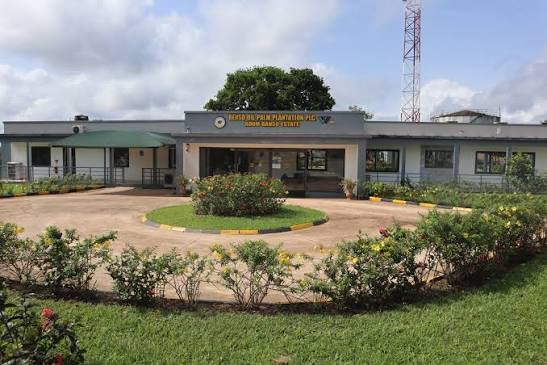
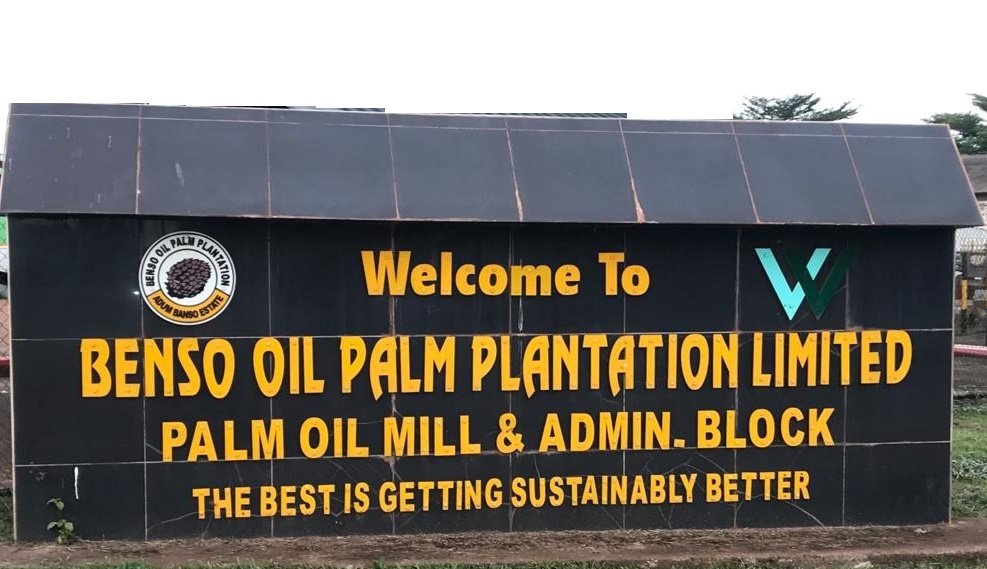
Benso Oil Palm Plantation PLC (BOPP) has approved a final dividend of GHS0.9085 per share for the financial year ended 31st December 2025, as part of its key resolutions adopted at its Annual General Meeting held on Friday, 22nd May 2026 at The Palms by Eagles Hotel, Takoradi in the Western Region. Shareholders ratified an interim dividend of GHS1.0627 per share, which had already been paid, and approved the Board’s recommended final dividend of GHS0.9085 per share for the 2025 financial year. The General Meeting also saw to the approval of the re-election of Ms. Esine Okudzeto as Non-Executive Director and Dr. Alfred Mahamadu Braimah as Independent Non-Executive Director, both of whom were retiring by rotation in accordance with the Companies Act, 2019 (Act 992). Shareholders also approved a proposed increase in directors’ fees for the Financial Year 2026. In a significant governance development, the General Meeting approved the appointment of PricewaterhouseCoopers (PwC) as External Auditor, replacing Ernst & Young (EY) whose tenure had come to an end.

Agriculture

Benso Oil Palm Plantation to Pay GHS 0.2420 Final Dividend Per Share for 2025 Financial Year

  Benso Oil Palm Plantation PLC has announced the payment of a final dividend of GHS 0.2420 per share for the 2025 financial year, subject to shareholder approval at the company’s upcoming Annual General Meeting. According to the company , shareholders registered in the books of BOPP at the close of business on Wednesday May 20, 2026 will qualify for the final dividend with the register of shareholders to be closed from Thursday May 21, 2026 to Friday May 22, 2026, both days inclusive. The ex-dividend date has been set as Monday May 18, 2026. Consequently, an investor purchasing BOPP shares before this date will be entitled to the final dividend. However, an investor buying BOPP shares on or after Monday May 18, 2026 will not be entitled to the final dividend. The proposed dividend of GHS 0.2420 per share, if approved by shareholders, will be paid on 14 July 2026. Benso Oil Palm Plantation PLC is a major Ghanaian agro-industrial company specializing in the cultivation of oil palm and the production of crude palm oil (CPO) and palm kernel (PK).

Agriculture

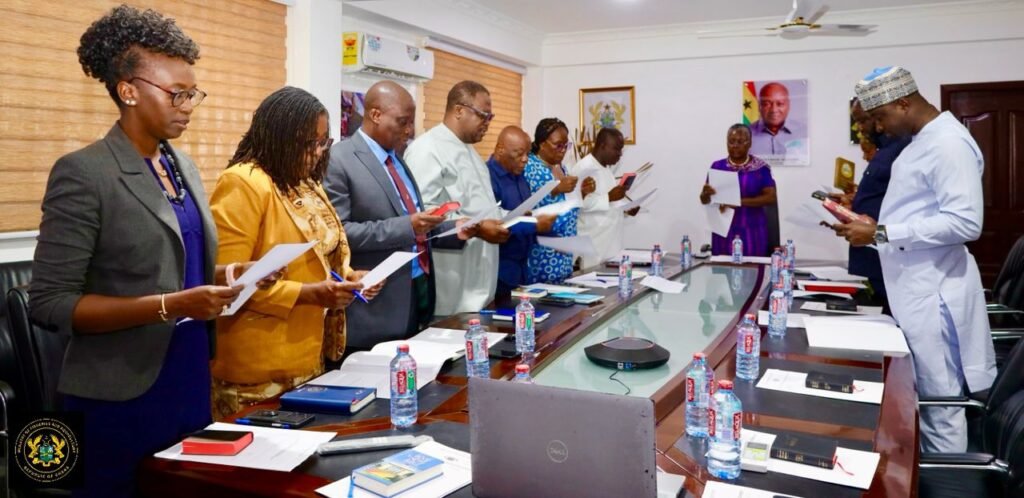
Ghana Swears In New 12-Member Fisheries Commission Board Under Act 1146

The Minister for Fisheries and Aquaculture, Emilia Arthur, has on Friday, April 10, sworn in a new 12-member Board of the Fisheries Commission, marking a significant step in the implementation of Ghana’s updated fisheries governance framework under the Fisheries Act, 2025 (Act 1146). The reconstituted Board which will be chaired by the Dean of the School of Research and Graduate Studies (SRGS) at GIMPA,Prof. Wisdom Akpalu,will include representatives drawn from key institutions across the fisheries, maritime, security, environmental, and research sectors. Other members of the Board include Dr. Afisah Zakariah (Ministry of Fisheries and Aquaculture), Prof. Benjamin Betey Campion (Fisheries Commission), Mubarick Masawudu (Ghana Maritime Authority), Commodore Ben Baba Abdul (Ghana Navy), Eric Ken Winful (Ghana Police Service), Esi Nana Nerquaye-Tetteh (Environmental Protection Authority), Stephen Yeboah Ampiaw (Ghana Ports and Harbours Authority), Ruby Asmah (Fisheries and Aquaculture Research Institute), Esi Biney (Water Resources), Emmanuel Allegye-Cudjoe (Veterinary Services Directorate), and Frank Kwesi Alhoon (Ghana Tuna Association). Speaking at the inauguration, the Minister of Fisheries and Aquaculture, Emelia Arthur urged the board members to uphold the highest standards of accountability, demonstrate strong environmental stewardship, and remain committed to advancing Ghana’s Blue Economy agenda. “The Board is expected to drive a vision of a sustainable, well-governed, and resilient fisheries sector that supports food security, creates decent jobs, and contributes meaningfully to national development,” she stated. The reconstituted Board reflects the provisions of the new law, which expands institutional representation to strengthen oversight and promote a more coordinated approach to managing the country’s fisheries resources.

Agriculture

Mass Fish Deaths at Tema Shipyard: What We Know So Far

A sudden mass fish mortality incident at the Tema Shipyard has triggered an urgent multi-agency investigation, raising concerns about environmental safety and food security in one of Ghana’s key coastal hubs. The incident, first detected in the early hours of April 6 between 5:00 a.m. and 6:00 a.m., saw dead fish concentrated within a 50-metre radius of the main unloading ramp. In response, the Food and Drugs Authority (FDA), Fisheries Commission, Tema Metropolitan Assembly (TMA), and the Criminal Investigations Department (CID) of the Ghana Police Service immediately secured the site and launched coordinated investigations. What Is Being Investigated? Authorities say there is currently no evidence of deliberate sabotage or a widespread public health emergency. However, caution remains high. Between 60 and 80 fish samples, along with water samples, have been collected under strict chain-of-custody procedures and sent for priority laboratory testing. The goal is to determine whether the cause is environmental contamination, chemical discharge, oxygen depletion, or another marine disturbance. Such incidents can occur due to sudden changes in water quality — including pollution, algal blooms, industrial discharge, or temperature fluctuations — but officials stress that conclusions will only be drawn after scientific analysis. What Does This Mean for the Public? As a precaution, authorities have advised the public not to harvest, buy, or consume fish or seafood from the Tema Shipyard and surrounding areas until an official “All-Clear” is issued. Importantly, fish from certified cold-chain markets outside the affected zone remain safe when properly cooked to at least 63°C. Consumers are also being urged to report any sightings of dead or distressed fish, and anyone experiencing symptoms such as nausea, vomiting, diarrhoea, dizziness, or skin irritation after consuming fish from the area should seek medical attention immediately. Why This Matters Tema is a critical node in Ghana’s fisheries and maritime economy. Any disruption, even temporary has implications for fishermen, traders, exporters, and food supply chains. While authorities emphasize there is no confirmed public health crisis, the situation underscores the importance of environmental monitoring and rapid response mechanisms in coastal industrial zones. Further updates are expected as laboratory results become available. Until then, officials are urging the public to rely solely on verified information from the relevant agencies.