
Business Outlook Africa

Real Estate

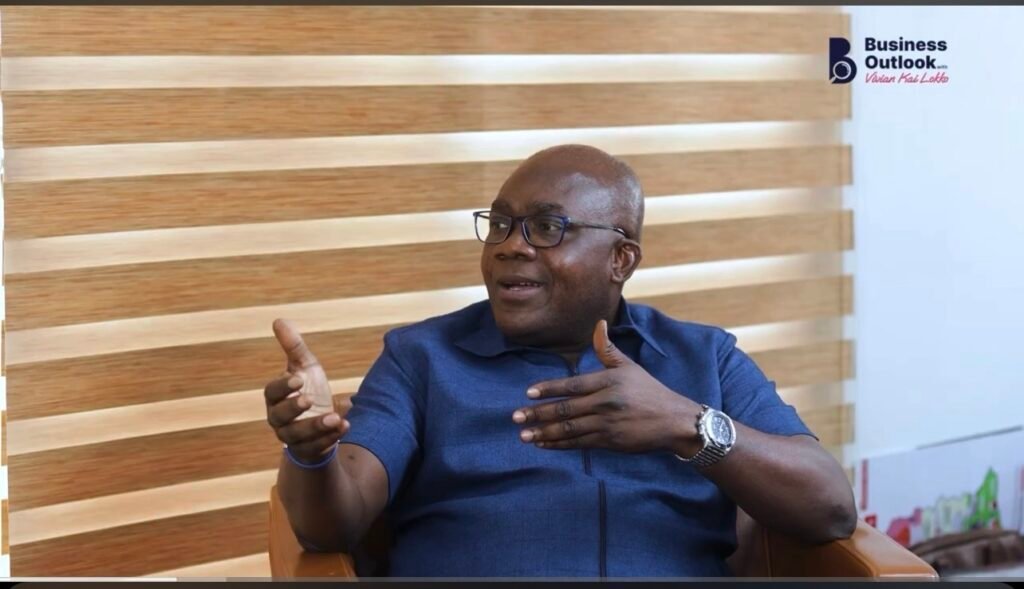
Head of Mortgage Banking and Customer Experience at Republic Bank Ghana,Dan Adjetey Mohenu
Real Estate

Republic Bank Ghana Mortgage Head Blames Housing Crisis on Demand-Supply Disconnect — Calls for Cheaper Land and Local Materials

Head of Mortgage Banking and Customer Experience at Republic Bank Ghana,Dan Adjetey Mohenu has stated that a major problem fueling the housing crisis in Ghana has to do with the disconnect between demand and supply. Speaking exclusively to Business Outlook Africa, Dan Adjetey explained that this is as a result of developers overpricing the houses making it difficult for those in demand to afford it. “Now there is a disconnect between supply and demand. I say so because the suppliers say the developers, those who put up the houses, end up pricing them higher than what the demand can afford.” Dan stated The Head of Mortgage Banking added that this growing disconnect leaves suppliers no other option than to sell to people in the diaspora who end up not staying in these apartments whiles the real people who need to stay in these facilities end up not being able to . “So we end up relying on the diasporas who have the purchasing power to purchase these houses and nobody stays in them. So the actual people who live and work in Ghana are unable to afford the prices of what the suppliers bring to the table. So it continues to create that gap.” Dan added On what can be done on the supply side to increase affordability, Dan Adjetey called for cheaper lands and the use of indigenous resources in putting in these houses arguing that this when done will go a long way to reduce house prices,mortgages and increase affordability. “Now we need to look at the supply side where are we getting cheaper lands? Where are we getting cheaper building materials to put up these houses?” He added On what he describes as affordable given his expertise in the field, Dan Adjetey stated anything not more than GHC 350,000 can be considered affordable arguing that with this people who earn between GHC 3,000 and GHC 4,000 can easily access mortgages without having much burden. On the current state of the mortgage industry, Dan Adjetey stated that it’s in a better state explaining that most people now know of the industry and what it entails than before. “Well, the point where people now understand what mortgages are.I won’t say everybody, but at least you have the diasporas understanding how mortgages work in Ghana.You have people who work and live in Ghana also understanding and seeing the mortgage as the first option when it comes to home acquisition.” he stated      
Real Estate

Ghana’s Building Inflation Holds Steady at 2.2% in April 2026 — GSS

The Ghana Statistical Service has reported that building inflation recorded in April 2026 has remained flat at 2.2%, unchanged from that of March 2026, but down from 24.4% in the same month of the preceding year. The Ghana Statistical Service reported in the April 2026 Prime Building Cost Index, that construction costs have been on the increase but at a much lesser rate compared to a year ago. The report also showed that prices for building materials increased 1.5% in the month leading up to April 2026, which suggested that building prices had experienced short-term changes and price pressures in the sector. The main contributors to building inflation over the period were identified as electrical work, glazing, plumbing, metal work and tiles. The electrical work made up 52.8% of total inflation in the building sector, and the combined effect of glazing, metalwork, plumbing, and tiles was 100.5%. The figures indicate a construction industry characterised by rising costs despite a year-on-year improvement, but still highly focused on finishing and installation items, which are essential to the delivery of housing and the development of infrastructure throughout the country.

Real Estate

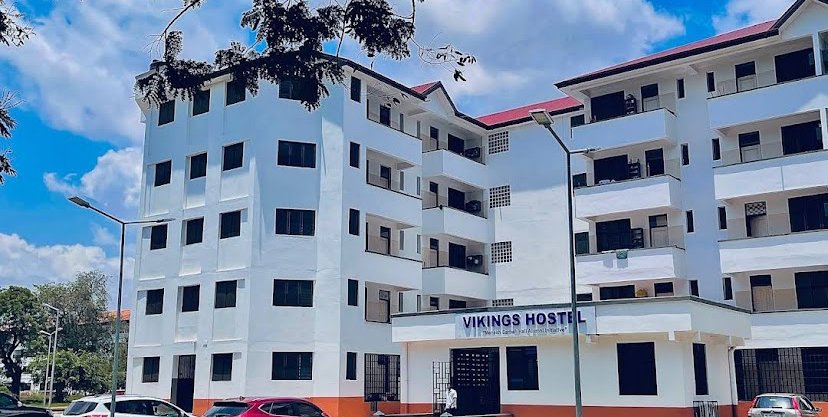
Rent Control freezes proposed increases in private hostel fees for 2026/2027 academic year

The Office of the Rent Commissioner has directed a temporary suspension of all proposed increases in private student hostel fees for the 2026/2027 academic year, citing growing public concern over rising accommodation costs. In a press statement issued on Tuesday, May 19, 2026, the Rent Control Department acknowledged persistent complaints from students, parents, and guardians about the continuous hikes in hostel fees, particularly within and around tertiary institutions across the country, which necessitated the directive. “In view of the above, the Office of the Rent Commissioner directs all private hostel owners, facility managers, operators, and stakeholders within the student accommodation sector to place a temporary hold on all intended or proposed increments in hostel accommodation fees for the 2026/2027 academic year until further notice,” the statement said. As part of the intervention, the Rent Control Department has also invited stakeholders, including private hostel operators, student representative bodies, and tertiary institution authorities, to a stakeholder engagement meeting. The meeting is expected to address concerns surrounding hostel fee increments and explore sustainable and lawful solutions to pricing challenges. Key issues to be discussed include: • concerns relating to rising hostel fees; • compliance with existing rent regulations and consumer protection provisions; • practical strategies to ensure affordability and fairness; and • measures to promote transparency and accountability in the sector. The Office of the Rent Commissioner emphasised its commitment to ensuring fairness, transparency, and responsible regulation within Ghana’s rental and accommodation sector. All stakeholders have been urged to cooperate fully with the directive and actively participate in the engagement process to help safeguard the interests of students and the broader educational community. The move is widely seen as a relief for many students and families who have struggled with the increasing cost of accommodation in recent years, especially amid broader economic pressures. Authorities say further updates will be communicated following consultations with stakeholders. Source: univers.ug.edu.gh

Real Estate

GHL Demands Apology from Acting Rent Commissioner Over Pentagon Hostel Comments

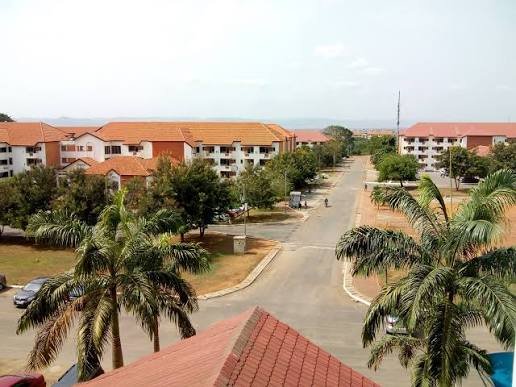
The Ghana Hostels Limited (GHL) is demanding an immediate apology from Acting Rent Commissioner Fredrick Opoku over comments he made regarding rent charges its  Pentagon Hostel on the University of Ghana campus, while strongly defending its pricing structure. In a statement released earlier today , management of GHL said the comments by the Acting Rent Commissioner were made without adequate due diligence and had created a misleading impression about the hostel’s operations. “We wish to state that the comments made by the Acting Rent Commissioner were not based on adequate due diligence, which has since created a misleading impression about the operations of the facility.” The statement read According to the company, although the facility is a Social Security and National Insurance Trust (SSNIT) investment, the day-to-day management, pricing structures, and tenancy arrangements are independently handled by Ghana Hostels Limited GHL also provided a breakdown of its accommodation charges, explaining that standard four-in-a-room at the old Pentagon Hostel cost GH¢7,392 per academic year per student, while rooms at the new Pentagon cost GH¢8,876 per academic year translating into approximately GH¢821.33 and GH¢986.22 per month, respectively, inclusive of water, electricity quota, and GH¢100 in Junior Common Room (JCR) dues. The Company also clarified that the company currently doesn’t charge GH¢ 28000 for any of its facilities as it’s being put out there. The management insisted that the rates remain competitive and comparatively lower than those charged by several private hostels around the University of Ghana enclave. The management then reiterated its commitment towards transparency, accountability, and constructive engagement with all stakeholders on issues of national interest.

Real Estate

Dr. Orleans-Lindsay Urges Government to Establish Real Estate Fund to Lower Housing Costs

Executive Chairman of JL Holdings, Dr. James Orleans-Lindsay, has called for the establishment of a dedicated real estate development fund in Ghana to provide patient capital for property developers. Speaking to Business Outlook Africa, Dr. Orleans-Lindsay explained that commercial banks in the country are currently under-capitalised and therefore are unable to provide the kind of long-term financing that real estate development demands. He noted that the absence of patient capital remains one of the most significant drivers of high housing costs in Ghana, making homeownership increasingly out of reach for many Ghanaians. “We need to have a real estate fund that people can tap in. The banks, just like all other indigenous companies are not capitalized enough so i have what i term unavailability of patient capital you need money 10 to 15 years money you don’t have how can you tell a developer i’ll give you money for three years two years it won’t work so once you don’t have patient capital houses will continue to be expensive”Dr. Orleans-Lindsay stated Speaking about the cost of construction, Dr. Orleans-Lindsay urged the government to put in place deliberate measures that would incentivise real estate professionals to adopt local raw materials in their projects rather than using foreign materials . He argued that many of the local raw materials are comparable in quality to imported alternatives and that their wider adoption would go a long way in bringing down construction costs. “ Government needs to encourage developers, we need to encourage developers to use local raw materials. Do you know the bamboo has more, has an equivalent tensile trength like the iron road? The bamboo, yeah. So the Chinese use bamboo more for scaffolding, for a lot of things, the bamboo has a three-quarter tensile strength.So, it has to be encouraged. Cement is a great component of house construction,the other, the porcelain cement is there, we started to push it along the line, it is fissile, we have a lot of porcelain in the system that we could have, you know, encourage.” he added Beyond the real estate sector, Dr. Orleans-Lindsay made a broader call to the presidency to enforce the rule of law, asserting that a significant number of the country’s structural challenges would be resolved if the law were applied fully and without compromise. “Don’t forget, Ghana’s economy is $120 billion, Cote d’Ivoire is $112 billion,Sierra Leone is $6 or $7 billion, Liberia is $8 billion.We are the second biggest in West Africa, eighth biggest in Africa. It’s no joke, we are only 32 million people, 33 million people, it’s no joke.Something is going well for us. What is left, if you ask me personally, is organisation.We have some of the finest laws, we have everything going for us, it’s left with the application.The one thing that I would say to the affable president is, use the rule of law, finished. Rule of law will solve a lot of our problems.”he added He concluded by noting that the high cost of housing in Ghana cannot be divorced from the broader cost of living in Accra itself, describing the city’s overall expense as a foundational factor that feeds directly into property prices. Watch the full interview here: youtu.be/7qg7Sney-14

Real Estate

Reinvest Profits, Avoid Bank Loans — GREDA President Tells Young Entrepreneurs

President of the Ghana Real Estate Developers Association (GREDA) and the  Executive Chairman of JL Holdings, Dr James Orleans-Lindsay, has urged young entrepreneurs and real estate professionals, to learn the act of reinvesting their profit back into their businesses to ensure sustainable business growth. Speaking to Business Outlook Africa, Dr James Orleans-Lindsay explained that reinvesting back into the helps entrants into the real estate sector to better thrive and grow.He added that young professionals in the real estate scene should delay gratification and focus on reinvesting their profits so as to ensure the company survives in the long term. “The story of the takeaway always that I tell people, reinvest in the business. I put everything back. If you don’t reinvest, you won’t have a thriving business, because interest rates are high.” He stated On financing, Dr. Orleans-Lindsay strongly advised professionals entering the real estate sector to avoid commercial bank loans at the start of their journey, warning that the accompanying interest rates can be overwhelming for new entrants. He instead recommended turning to family and friends for early-stage capital, noting that such arrangements typically carry no interest and offer more manageable repayment terms. “And so, you know, in real estate in Ghana, you don’t borrow to start a real estate business.You borrow to finish, because the money trickles in. You see, don’t borrow from a bank to start real estate, borrow from friends, family and the likes who normally would not put any interest on it. So those are some of the tenants in business, especially entrepreneurs, that people really don’t pay attention to.” He added Beyond Real Estate,the Executive Chairman of JL Holdings also urged young people to venture in agriculture, food production,food processing and agribusiness emphasizing that the biggest challenge Ghana is likely to face in the next 5 years will be food security. “The next five years to eight years, the challenge in West Africa, in Africa, will be food security.Those who want to listen should listen.Go into food, go into agriculture, go into storage, go into preservation. Why is it that 40 percent of the things that is produced in Ghana go waste? Who is putting money in temperate cold rooms?.” He stated Dr. Orleans-Lindsay ended by debunking the widely held notion that a lack of capital is an insurmountable barrier to starting a business, arguing that the claim of having “nothing to start with” is largely a myth, pointing out that the very resources people spend daily on food, clothing, and other basics represent untapped startup potential. According to him, aspiring entrepreneurs who look critically at their everyday spending will realise they already have something to work with and that with deliberate sacrifice and reallocation of those resources, the excuse of having nothing becomes difficult to sustain. Watch full interview here: https://youtu.be/7qg7Sney-14?si=CO_9sDZYF-k6nr9H

Real Estate

Ghana’s Construction Cost Inflation Eases to 2.2% in March — Eleventh Consecutive Monthly Decline

The Ghana Statistical Service has released the March 2026 edition of its Prime Building Cost Index(PBCI) and Inflation with year on year inflation down from 2.4% in February and 23.6% a year ago to 2.2% – eleven straight months of declining inflation. The report also revealed that even though prices are still rising in the short term generally, building cost increased slowly by 0.8%. Year on year labor inflation also slowed down to 1.6% in March 2026 having previously been 2.4% in February 2026. Materials inflation also reduced by 0.1% from the 2.4% recorded in February 2026 with plant/equipment inflation still remaining at the 2.6% also recorded in February 2026 pointing to materials and plant as the main sources of price pressure in construction. The data further revealed stark differences in price movement across individual construction inputs with Glazing recorded the sharpest increase, with inflation at 11.9%, while cement moved in the opposite direction, posting a deflation of 8.3%. The Prime Building Cost Index (PBCI) is a monthly measure by the Ghana Statistical Service (GSS) tracking construction cost changes for materials, labor, and equipment

Real Estate

NUGS Formally Petitions Rent Control Department on ‘Exploitative’Hostel Pricing at Tertiary Level

The National Union of Ghana Students (NUGS) has petitioned the Rent Control Department,calling for urgent intervention in what the union describes as a growing crisis of exploitative hostel accommodation pricing across the country’s tertiary institutions. In a statement issued on Friday, April, 23,2026,the Union cited the persistent and unjustified rent increases by private hostel operators and property owners within and around university campuses, highlighting that the increments are mostly imposed without in contrast to the provisions of the Rent Act, 1963 (Act 220). The student union further flagged widespread violations of the law’s provisions on advance rent payments, stating that students are being compelled to pay rent covering periods exceeding six months to one year upfront, a practice which contradicts the Rent Acts. NUGS added that the situation has created financial strain and, in some cases, displacement of students unable to meet the excessive demands which undermines access to education and places undue burden on students who largely depend on limited financial support. The union’s petition outlined six specific demands from the Rent Control Department: 1. Immediate investigation into hostel pricing structures within and around tertiary institutions nationwide. 2. Strict enforcement of the Rent Act, 1963 (Act 220), particularly regarding advance rent payments and lawful procedures for rent increment. 3. Sanctions against property owners and hostel operators found to be in breach of the law. 4. Establishment of clear guidelines for hostel pricing and tenancy arrangements specific to student accommodation. 5. Strengthened monitoring and enforcement mechanisms to ensure sustained compliance. 6. Creation of accessible reporting channels for students to lodge complaints and seek redress without fear of victimisation. NUGS then expressed confidence that decisive action from the Rent Control Department would restore fairness and reinforce respect for the rule of law within the rental housing sector. The Rent Control Department operates under the Ministry of Works and Housing and is mandated to regulate rent matters in Ghana in accordance with the Rent Act, 1963 (Act 220).

Real Estate

Interior Ministry Distances Itself from Security Personnel Rent Allowance Tax Deduction

  The Ministry of the Interior has clarified that it bears no responsibility for a 20 percent tax deduction that has been made from the rent allowances of security services personnel, attributing the deduction entirely to the Ministry of Finance. The clarification follows the circulation of information in the media suggesting that the Interior Ministry had deducted the tax from the allowances of security personnel. Dismissing the reports in a statement issued , the Ministry stated categorically that it does not have the mandate to deduct tax from the rent allowance of security services personnel. “The Ministry wishes to clarify that it does not have the mandate to deduct tax from the rent allowance of security services personnel,” the statement read. The Interior Ministry, however, confirmed that the 20 percent deduction did occur, explaining that it was applied by the Ministry of Finance at source, in compliance with existing tax law. The statement offered no further details on the specific legal provision underpinning the deduction, nor did it indicate whether a review of the policy was being considered. The Ministry used the opportunity to appeal for calm among affected personnel, assuring them that the government remains committed to their welfare. “We urge all personnel to remain calm and rest assured that the government will not short-change any personnel and will continue to prioritize their welfare,” the statement concluded.

Real Estate

Cost of Building Eases Sharply as Inflation Falls for Ten Straight Months

The Ghana Statistical Service has revealed that the cost of building in Ghana is now rising at a much slower pace, with building cost inflation dropping to 2.4% in February 2026, down sharply from 23.7% recorded in February 2025. The Prime Building Cost Index, which measures changes in the cost of construction inputs including materials, labour, and plant, serves as a key indicator for tracking price pressures in Ghana’s construction sector and helps inform planning decisions by developers, contractors, and policymakers. The decline marks ten straight months of falling building cost inflation, with electrical works, tiles, and glazing identified as the key drivers together accounting for 92% of the current 2.4% inflation rate. On the other hand, cement, steel, coarse aggregates, fine aggregates, and bathroom accessories helped pull inflation down by a combined 56%. The Data from the Statistical service also revealed that price movements within the sector remained mixed with Toilet accessories recording the steepest price rise at 10.8%, while cement prices actually fell by 7.1%, highlighting the uneven pressures across different building material categories. Labour, materials, and plant costs all inflated at between 2.4% and 2.6%, slow and broadly stable though the Ghana Statistical Service noted that materials remain the main short-term concern for builders and developers across the country.