Business Outlook Africa

Business

Business

GoldBod Jewellery Alerts Public to Website Change ,Old Website No Longer in Use

GoldBod Jewellery Limited has announced a change in its official e-commerce website, directing customers to its new online shopping platform . In a statement released,the company stated that its new official online shopping platform is now accessible at www.goldbodjewellery.gov.gh effective July 13, 2026. GoldBod Jewellery Limited further noted that the previous website www.jewellery.goldbod.gov.gh is no longer in use and hence should be disregarded. The company then encouraged the public to patronize proudly Ghanaian made gold jewellery and make use of its official website. GoldBod Jewellery Limited is a Ghana Gold Board (GoldBod) subsidiary that is the country’s top state-owned luxury jewellery brand established to convert responsibly mined gold from Ghana to make world-class handcrafted jewellery and investment gold tablets.

Chief Executive Officer of the Association of Ghana Industries (AGI), Seth Twum-Akwaboah
Business

Seek Counsel, Join Associations, Do Due Diligence – AGI’s Seth Twum-Akwaboah’s Blueprint for Investing in Ghana

The Chief Executive Officer of the Association of Ghana Industries (AGI), Seth Twum-Akwaboah, has urged potential investors looking to invest in Ghana to not overly rely on their own knowledge but rather seek professional advice before investing. Speaking on the Ghana Investment Promotion Centre’s (GIPC) Invest in Ghana Podcast on some mistakes to avoid when investing in Ghana, Twum-Akwaboah said many investors make the mistake of relying solely on their own knowledge when entering Ghana’s market, overlooking the value of networks and professional counsel already embedded in the business ecosystem. “In business, you are investing resources — we’re investing your time, we’re investing your energy. So don’t make the mistake of ignoring good professional advice. The think they know, the think that I’ve read on the net, I’ve interacted with a few people. But who have you interacted with? Are they the professionals? Do they give you the right information? So you don’t make those assumptions. Talk to the right people, get the right information, and that will direct your investment activities. It is very important,” he stated. Twum-Akwaboah added that he understands that most often than not, people are deterred from utilising professional services because of the perceived high cost involved, but he explained that it is a far better cost to incur than putting entire capital at risk. “Sometimes they think it’s costly. They think it’s expensive to do so. You have to be prepared to pay for these professional services. There’s no doubt about it — it may not be that expensive, but because we make mistakes, it could be more expensive later on,” he added. He also cautioned against entering Ghana’s market on assumptions, stressing that investors must conduct thorough market analysis and due diligence before deploying capital, particularly because Ghana’s market is not uniform across sectors or regions. “Don’t make the assumption that the market is there for you. You have to do thorough market analysis. If you are investing money, you are expecting a return on your investment. Ghana offers one of the best returns on investment, but don’t make assumptions. The market is not homogeneous. You have to do thorough due diligence,” he further stated. Twum-Akwaboah also emphasised the need for investors to seriously align with or join business associations, explaining that they tend to not only draw experience from other local and foreign companies but also get to navigate external challenges which are out of their control and difficult to manage individually. “The other thing that I also add is the fact that, to deal with this, you also talk to business associations because you have people who have experiences. We in AGI, for example, we have local investors, local indigenous businesses — we also have a lot of foreign businesses that are located here and are doing business, and they are all networked within the system. They will share their experiences with you,” he cautioned. “Again, I add that, you know, you have control over a lot of things. You decide how much you have to invest, you decide who to employ, where to get your own materials. A lot of them are within your control — factors within your control. You can manage it, but there are external factors you cannot manage, and you cannot manage alone. That’s where business associations become very important because they deal with the ecosystem. They are influencing policy,” he added. The InvestGhana Podcast, officially launched by the GIPC in May 2026, serves as a strategic digital platform aimed at amplifying Ghana’s commercial opportunities, sharing direct investor experiences, and deepening global investor awareness.


Business

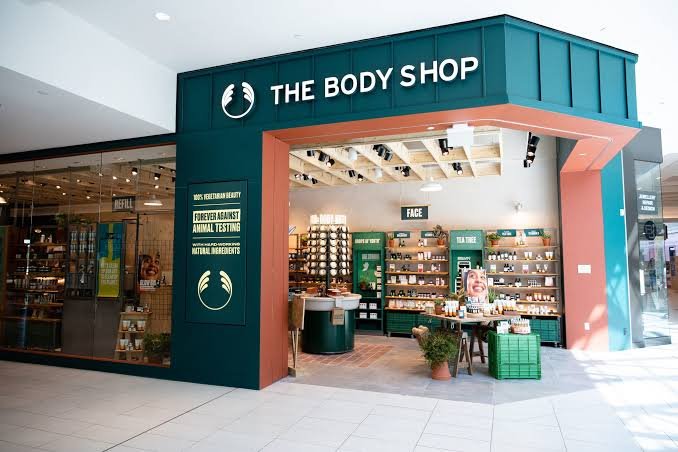
The Body Shop to Open Second West African Store in Ghana

Global beauty retailer, The Body Shop, is set to open its second West African store in Ghana, deepening a long-standing relationship between Ghana and UK. A relationship which is rooted in the sourcing of shea butter from Northern Ghana for its operations. This development was announced by the Ghana High Commission in the United Kingdom, which described the move as a milestone moment in Ghana’s growing role in the global beauty supply chain. According to the High Commission, the expansion follows strategic collaboration with the British High Commission and the UK Trade Envoy to Ghana, through which efforts were made to encourage greater value addition by promoting the establishment of a Body Shop processing plant in Ghana. “This is more than investment; it is shared growth, sustainable trade, and partnership in action,” the High Commission stated in her post . The initiative is expected to bring production closer to the source, create jobs, and strengthen Ghana’s position in the global beauty industry. Ghana has long been a key supplier of shea butter to The Body Shop, with the ingredient sourced primarily from communities in Northern Ghana. The establishment of a local processing plant signals a shift from raw material export toward value-added production on Ghanaian soil.

Business

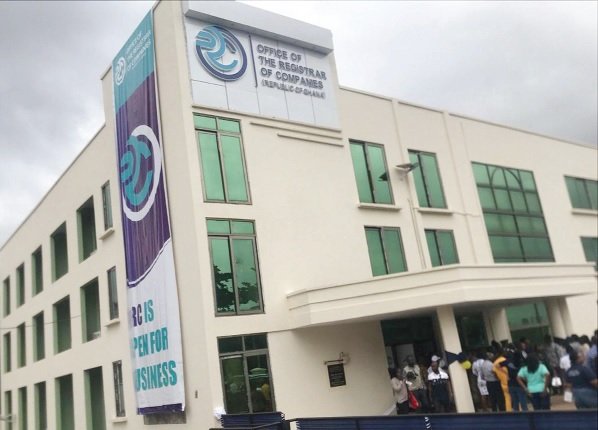
ORC Online Portal Temporarily Down as Office Moves to Plug Security Gaps

The Office of the Registrar of Companies (ORC) has announced a temporary disruption to its online portal following a system audit that uncovered unauthorized access to key entry points within the platform. The audit, conducted by the Office itself, revealed compliance concerns relating to the Data Protection Act and the Companies Act, as well as potential revenue leakages tied to certain paid services on the portal. In response, the ORC moved swiftly to review and secure the affected access points ,a move that has, in the interim, limited access for some users. In a public statement, the Office outlined the scope of its ongoing review, which includes aligning the level of information accessible on the portal with provisions of the Companies Act, enhancing data access controls, and ensuring full compliance with cybersecurity standards and the Data Protection Act. “These measures are being implemented to safeguard sensitive personal and corporate information, while reinforcing public trust in the ORC’s digital services,” the statement read. The ORC was also quick to address speculation linking the portal shutdown to controversies surrounding the sole-sourcing of government contracts, flatly denying any connection between the two matters. Additionally, the Office used the opportunity to clarify the scope of its company name search feature, stating that it only displays the names of registered companies and does not reveal ownership details or other sensitive corporate information. The ORC has assured the public that work is ongoing around the clock to restore full portal functionality, with enhanced safeguards being built in alongside the restoration process.

Associate Director, Workforce Transformation at PwC Ghana, David Tsey
Business

Businesses Must Prepare Workers for AI Disruption — David Tsey

Associate Director, Workforce Transformation at PwC Ghana, David Tsey, has called on organisations to integrate artificial intelligence into workforce strategies to better manage the disruption expected from emerging technologies. Speaking at the PwC Africa Workforce Hopes and Fears Survey Forum on the Rewiring the Future of Work, on February 25th, 2025, Tsey stressed the need for business leaders to identify skills gaps, understand how AI can enhance operations, and prepare employees to take advantage of new opportunities created by technological change. He added that the growing curiosity and optimism about AI present an opportunity for businesses and educational institutions to equip workers with future-ready skills. “ We need to harness optimism around AI to ensure that we are managing disruption effectively. We are saying integrate AI into workforce strategy. Do you know the gap? Do you know how AI can help you as a business leader, as workforce leader in your organisation, and how are you preparing to position your staff, you know, to take advantage? And we need to minimise the disruption that will come, develop strategies to manage the impact that the AI will have on your staff across the path.Leverage the positive sentiments at the work. There’s a lot of excitement. There’s a lot of curiosity. Take advantage of that as a business leader. That is very important ” He also called on HR and workforce leaders to move beyond routine administrative roles and become strategic partners in decision-making, while prioritising skills development and clear internal career pathways. “ HR, our workforce leaders, can no longer be working business as usual. We must find ourselves at the decision-making table.One way to do that effectively is to understand what are the priorities of our organisation and be able to put in place workforce development programmes that prepare our workforce toward that.That is very important. And create a transparent career pathway on internal mobility.” The PwC Africa Workforce Hopes and Fears Survey Forum brings together business leaders, HR professionals, policymakers and academics to discuss how emerging technologies, shifting employee expectations and economic pressures are reshaping workplaces across the continent.

Ashanti Region
Business

Security Taskforce Moves Against Overcharging Drivers as Ashanti Region Fare Enforcement Widens

  Authorities in Ghana’s Ashanti Region have stepped up enforcement measures against commercial transport operators accused of charging passengers fares above officially approved rates. The intensified action, led by officers from the National Security Secretariat in collaboration with the Kumasi Metropolitan Assembly (KMA), forms part of a broader effort to regulate public transportation costs and protect commuters from exploitation.   The special operation commenced on Monday, January 26, with joint security teams deployed across key transport corridors within the Greater Kumasi area. Officials say the initiative is designed to identify, sanction and deter drivers and transport unions who fail to adhere to fare structures set by regulatory bodies. The exercise is also expected to be rolled out to additional districts in the region as monitoring and enforcement activities expand. Objective of the Exercise According to regional authorities, the clampdown aims to restore discipline in the commercial transport sector, where complaints of arbitrary fare hikes have become increasingly common. Passengers have frequently reported being charged above standard rates, particularly during peak hours, fuel price fluctuations, and periods of high demand. By reinforcing compliance with approved fare guidelines, officials hope to stabilise transport costs and reduce financial pressure on daily commuters. The operation is being carried out through coordinated roadside inspections, spot checks at major terminals, and engagement with transport unions. Security personnel and municipal officers are also verifying vehicle documentation and fare charts displayed inside commercial vehicles to ensure transparency and accountability. Vehicle Impoundments and Investigations As part of the enforcement drive, several vehicles suspected of violating fare regulations have been impounded. These vehicles have been towed to the Kumasi Metropolitan Assembly yard located within the premises of the Ashanti Regional Coordinating Council. Owners and drivers of the affected vehicles are currently undergoing administrative and legal investigations to determine the extent of their infractions. Authorities emphasise that impoundment is not solely punitive but also serves as a deterrent to others who may consider flouting established fare directives. Depending on the findings of investigations, sanctions may range from fines and warnings to prosecution under applicable transport and consumer protection laws. Official Warning to Transport Operators Speaking to local media, the Ashanti Regional Deputy Security Coordinator, Alhassan Tapsoba, issued a firm caution to commercial drivers and transport unions, urging them to comply with approved pricing structures. He stressed that while the security taskforce is prepared to work cooperatively with compliant operators, deliberate refusal to follow regulations will attract legal consequences. Tapsoba noted that drivers who persist in charging unauthorised fares risk being handed over to the police for further action. He added that the approach of the taskforce combines flexibility with firmness — rewarding compliance while penalising repeated violations. The message, he said, is intended to send a clear signal that enforcement will remain consistent rather than temporary. Broader Implications for Commuters and the Transport Sector The renewed enforcement initiative reflects ongoing concerns about the cost of urban transportation and its impact on household budgets. In cities like Kumasi, where a large proportion of residents rely on commercial minibuses and taxis for daily mobility, fare increases can significantly affect living expenses. Consumer advocacy groups have welcomed stricter monitoring, arguing that predictable and regulated fares help maintain fairness in the system. Transport unions, on the other hand, often cite rising operational costs — including fuel prices, vehicle maintenance, and spare parts — as reasons for fare adjustments. Authorities acknowledge these challenges but maintain that any changes must be officially sanctioned through established regulatory processes rather than unilateral decisions by individual drivers. Expansion of Monitoring Efforts Officials indicate that the current operation is only the first phase of a longer-term compliance strategy. Plans are underway to introduce periodic checks and collaborative engagements with transport associations to prevent future infractions. Public awareness campaigns may also accompany enforcement actions to educate both drivers and passengers on approved fare structures and reporting channels for violations. By strengthening oversight and reinforcing regulatory standards, regional authorities aim to promote fairness, order and consumer protection within the commercial transport sector. The continued presence of security personnel at transport hubs signals that fare compliance will remain a priority as the exercise progresses across the Ashanti Region.