Business Outlook Africa

News

News

Dr. Sarkodie Disputes Finance Minister’sClaim on Inheriting An Economy on Its Knees

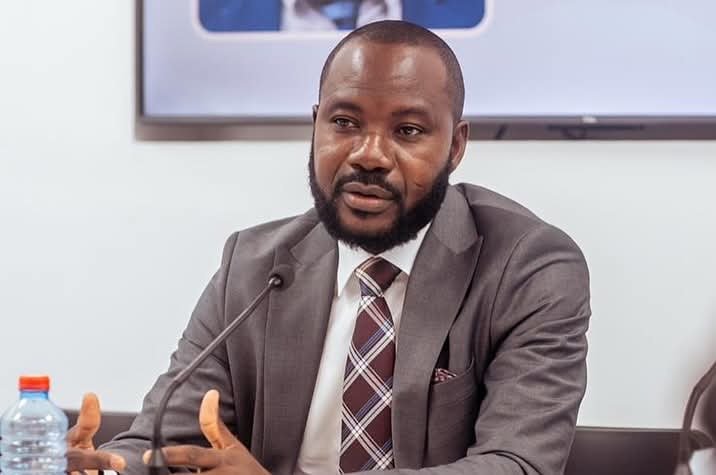
Economist and Lecturer at the University of Ghana, Dr.Adu Owusu Sarkodie has stated that the Finance Minister’s claim on inheriting an economy on its knees when the current administration came into power is far from true. Speaking after the Mid-Year Budget Review on July 23, 2026, Dr. Sarkodie explained, that the figures available don’t support the Finance Ministers Claim adding that the economy was on the path of recovery after the 2024 general elections . “So, clearly, we cannot see that the economy as of the end of 2024 was an economy on its knees. It was on the path of recovery.” he stated Dr Sarkodie also called for the internalization of the IMF PCI program the country is currently on ,explaining when done properly there will be no need to return to the IMF for support. “And even currently, we still have the PCI, the Policy Coordinated Instrument, which will stay with us for 36 months. My opinion is that we should internalise this PCI in such a way that we may not need an IMF programme again, but we can resolve the issues ourselves.” he added He ended by calling for a collective fight against inflation, explaining that the Bank of Ghana in its current state cannot achieve the inflation target alone without the contribution of other agencies and ministries. “The fight against inflation should not be left in the hands of the Bank of Ghana alone.Bank of Ghana today is not in a good position to keep sterilising and taking the bullet on behalf of all other agents in the economy. The fight against inflation should be a shared responsibility between Bank of Ghana, Minister of Finance, Minister of Trade and Industry, Agribusiness, Minister of Agriculture, Minister of Trade, Transport, Minister of Roads and Highways, all real sector players must come on board, communication, all other sectors must come on board to fight against inflation.” He said

News, Uncategorized

BoG maintains policy rate at 14% as MPC cites global inflation risks

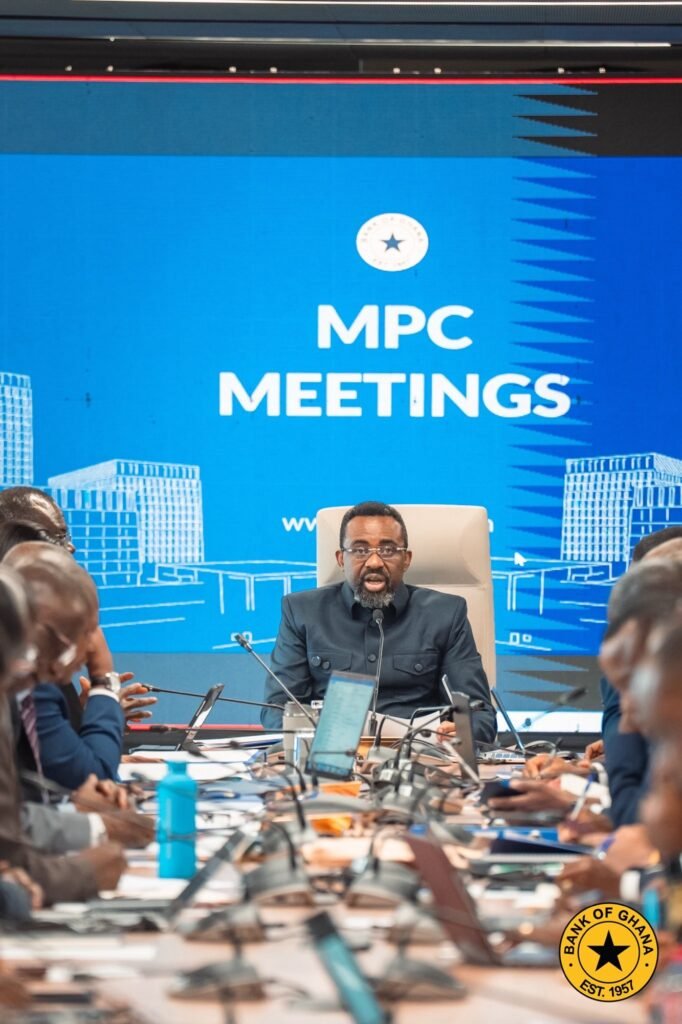
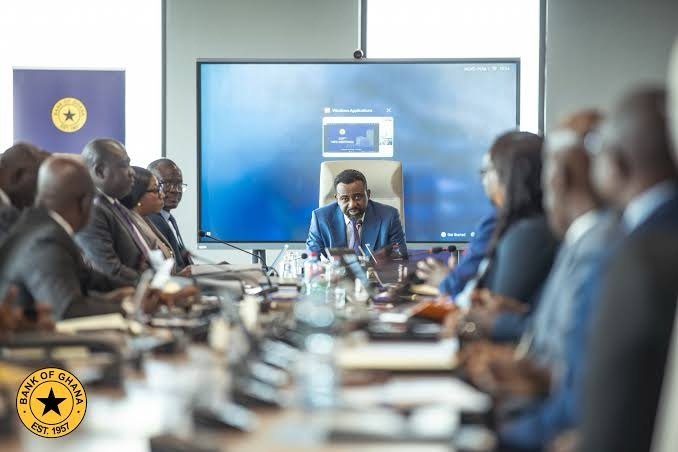
The Bank of Ghana (BoG) has maintained the Monetary Policy Rate (MPR) at 14 per cent following the conclusion of the 131st Monetary Policy Committee (MPC) meeting, citing heightened global uncertainties and the need to preserve price stability. Announcing the Committee’s decision at the 131st MPC briefing in Accra, Governor of the Bank of Ghana and Chairman of the MPC, Dr. Johnson Pandit Asiama said the current monetary policy stance remains appropriate despite Ghana’s improving macroeconomic performance. “The Committee, by a unanimous decision, maintained the Monetary Policy Rate at 14.0 per cent,“ According to the Governor, although economic growth has remained resilient, private sector credit has improved and inflation has stayed below the lower bound of the Bank’s medium-term target band, emerging global developments require policymakers to remain cautious. Dr. Asiama explained that escalating geopolitical tensions in the Middle East, rising crude oil prices, and the possibility of upward adjustments in utility tariffs present upside risks to Ghana’s inflation outlook. “The current policy rate remains appropriate to guide inflation towards the Bank’s medium-term target band while allowing policymakers time to assess evolving global risks,” The Committee noted that while inflation expectations remain broadly anchored and the country’s external sector continues to strengthen, it will continue to closely monitor both domestic and global developments before making any future adjustments to the benchmark interest rate. The Monetary Policy Rate serves as the benchmark rate that influences borrowing costs across the banking sector and remains one of the Bank of Ghana’s principal tools for managing inflation and maintaining macroeconomic stability.

News

GoldBod Introduces New Trade Financing Framework for Tier 2 Licensed Gold Buyers

The Ghana Gold Board (GoldBod) has introduced a new trade financing framework aimed at strengthening accountability, improving risk management and ensuring the efficient administration of funds provided to licensed gold buyers under its Gold Purchase Financing Programme. The new framework which is going into immediate effect outlines the process that Mandatory procedures will follow for Tier 2 Licensed Gold Buyers and other qualifying licensed gold buyers to gain access to GoldBod’s trade funding via the Aggregators. The initiative is part of GoldBod’s overall goal of increasing transparency, financial control and sustainability in the formal gold trading industry in Ghana. Under the revised framework, all eligible Tier 2 Licensed Gold Buyers are required to submit a formal application to an Aggregator, present a valid GoldBod Tier 2 Licence for verification and complete all Know-Your-Customer (KYC), due diligence and creditworthiness assessments before accessing financing. Applicants in line with the directive are also required to sign a Trade Financing Agreement with the Aggregator which specifies the terms of financing, repayment commitments, reporting and compliance requirements. After which funds will only be released until the agreement is approved by the GoldBod. GoldBod also aiming at safeguarding public funds has also introduced a security requirement under which funded buyers must provide an acceptable Bank Guarantee, Advance Payment Guarantee, Insurance Bond or other approved security depending on which, the security will be determined if it will cover between 10 and 50 percent of the approved financing amount. The Board has also instructed all the beneficiaries of the Trade Financing Programme to formalise their transactions under the new regime by fulfilling all the outstanding obligations and closing their current trade financing accounts with Aggregators by August 1, 2026. Failure to comply will result in their removal from the list of eligible Tier 2 Licensed Gold Buyers until all outstanding amounts have been fully settled. GoldBod also outlined strict enforcement measures for defaulters with participants who fail to honour a first demand notice within 21 days risking suspension of their GoldBod Buyer Licence, while continued default after a final 30-day demand notice may result in criminal proceedings. Additionally, the Board has introduced restrictions to prevent multiple financing arrangements. Funded Tier 2 Licensed Buyers will not be permitted to obtain financing from another funded Tier 2 Buyer, while Tier 1 Licensed Buyers may not receive GoldBod trade financing from more than three funded Tier 2 Licensed Buyers at any given time. Breaches of these provisions may attract regulatory sanctions, including the suspension or withdrawal of funding approvals. GoldBod said the new framework is designed to strengthen governance, protect public resources and ensure that its Trade Financing Programme continues to support a transparent, responsible and financially sustainable gold trading ecosystem in Ghana.

News

Bank of Ghana launches maiden MPC Education Observership Programme at 131st Monetary Policy Committee meeting

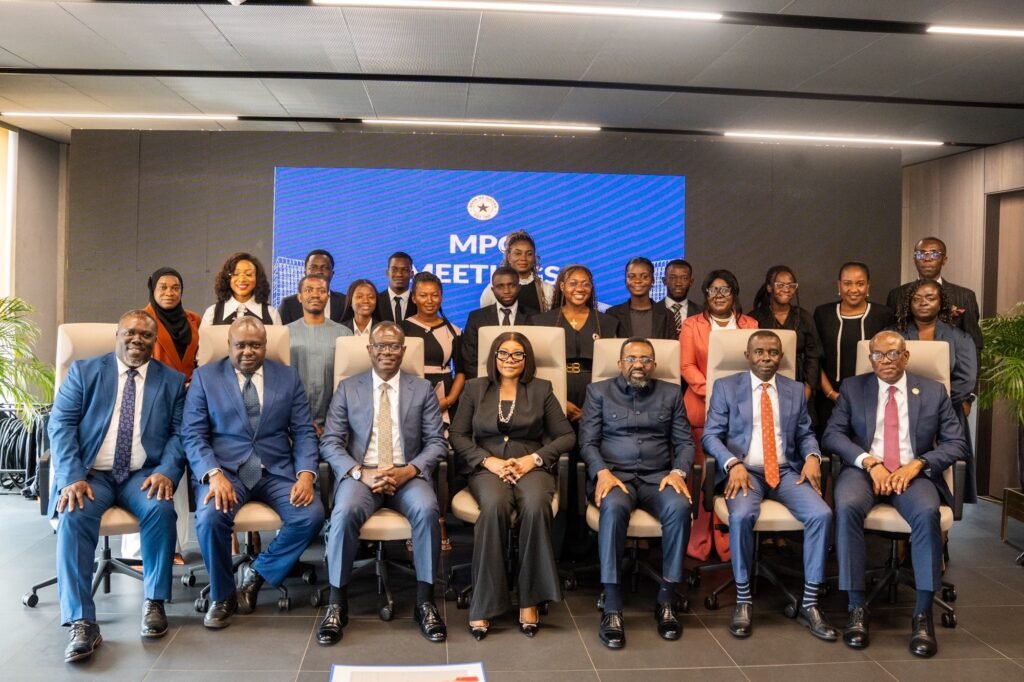
The Bank of Ghana has introduced its first-ever Monetary Policy Committee (MPC) Education Observership Programme, giving selected university students a rare opportunity to witness the central bank’s policymaking process during its 131st Monetary Policy Committee meeting. The maiden initiative formed part of the Bank’s efforts to strengthen public understanding of monetary policy by opening its decision-making process to students pursuing economics, finance and related disciplines. Participants observed how members of the Monetary Policy Committee assessed developments in the domestic and global economy before reaching a decision on the country’s Monetary Policy Rate. The University of Ghana made history as the first institution to participate in the Observership Programme, with its students describing the experience as an invaluable opportunity to connect classroom learning with real-world policymaking. Speaking to Univers News, President of the Finance Students’ Association at the University of Ghana Business School, Favour Betta, said the observership offered a perspective that could not be gained through lectures alone. “Honestly, the experience has been an eye-opener because being selected as one of the people from the University of Ghana for this observership programme is a massive opportunity. In lecture halls, we always talk about economic theory, but here we see it happening in real life at the Bank of Ghana, and it is a whole different ball game altogether.” She further explained that observing the Committee’s deliberations demonstrated the depth of analysis and evidence that inform monetary policy decisions. Also sharing her thoughts was the Vice President of the Finance Students’ Association, Emmanuella Mensah, who added that the programme reshaped her understanding of how the policy rate is determined. “I have come to realise that arriving at the policy rate is not just an individual decision. It is a collective process that involves deliberation among some of the brightest minds before a final decision is reached.“ According to her, the observership underscored the importance of collaboration, critical analysis, and diverse expertise in shaping decisions that influence inflation, financial stability, and the broader economy. The maiden MPC Education Observership Programme marks a significant step in the Bank of Ghana’s efforts to bridge the gap between academia and public policy. By granting students direct access to the country’s highest monetary policy decision-making forum, the initiative seeks to inspire the next generation of economists, finance professionals and policymakers while promoting a deeper understanding of the role of central banking in Ghana’s economic development. SOURCE:https://univers.ug.edu.gh

News

BoG Governor Calls for Evidence-Based Policy Decisions Amid Global Uncertainty as 131st MPC Meeting Begins

The Governor of the Bank of Ghana,Dr Johnson Pandit Asiama , has called for careful, evidence-based policy decisions amid global uncertainty and rising energy prices as the bank begins its the 131st Monetary Policy Committee (MPC) Meeting. Speaking at the opening of the 3 days at policy review on Monday, 20 July 2026, Dr. Asiama added the Committee will review recent inflation trends, the impact of the Bank’s May policy reforms, evolving domestic liquidity conditions, and external risks to the economy. “Our task this week is not simply to assess the latest data. It is to determine whether the framework we strengthened in May remains fit for the conditions now before us, and whether the choices we made then continue to serve the medium-term objectives on which our credibility depends,” the Governor stated. Noting Ghana’s continued macroeconomic resilience, Governor Asiama however sounded a cautious note on the country’s inflation outlook, disclosing the prolonged disinflation phase that Ghana has experienced has now ended, with inflation returning towards the target band. “The disinflation phase has ended, and inflation is now returning towards the target band. Headline inflation has risen for three consecutive months, from 3.2 percent in March to 5.3 percent in June, driven largely by transport and haulage prices.” He stated The Governor also stated that the recent escalation of tensions in the Strait of Hormuz has brought back the volatility in energy market, a development with direct implications for Ghana’s import costs and domestic price levels. “Renewed hostilities around the Strait of Hormuz have since reignited volatility in energy markets, with Brent rebounding above US$85 per barrel earlier this week. For Ghana, as a commodity-exporting yet energy-importing economy, these developments reinforce the need to assess carefully the extent to which external cost pressures may influence the domestic inflation outlook over the policy horizon.” The MPC which meets bi-monthly is a committee set up by the Bank of Ghana Act which is aimed at formulating and implementing policy in the areas of money, banking and credit to promote and preserve monetary stability.

News

GoldBod Honors NACOC with GH¢12.65 million for Landmark Gold Seizure

The Ghana Gold Board (GoldBod) has presented GH¢12,645,862.48 to the Narcotics Control Commission (NACOC), representing 50 percent of the proceeds from the sale of 17 gold bars seized from illicit gold traders in 2025. Speaking at the presentation ceremony on Wednesday, July 15, 2026, the Chief Executive Officer of GoldBod, Sammy Gyamfi, explained that the payment was made in accordance with the Board’s policy of rewarding individuals and institutions that provide credible intelligence leading to the arrest of illegal gold traders and the recovery of unlawfully traded gold. According to Mr. Gyamfi, although GoldBod’s policy entitles an informant whose intelligence leads to a successful operation to 10 percent of the value of recovered gold,the Board however expanded the incentive framework beyond informants to recognise officers and institutions involved in enforcement operations hence consequently giving an an additional 20 percent reward for officers and NACOC, as the institution that deployed its personnel, logistics, and operational resources for the successful operation. The combined allocation brings NACOC’s total reward to 50 percent of the proceeds realised from the seized gold. Sammy Gyamfi also revealed that following assay and valuation, the 17 gold bars were valued at around GH¢25 million, resulting in a reward of GH¢12,645,862.48 for NACOC. Receiving the cheque on behalf of the Commission, Director-General of NACOC, Major General Maxwell Obuba Mantey, reaffirmed NACOC’s readiness to continue collaborating with GoldBod and other state institutions to combat illicit activities that deprive the country of much-needed revenue. According to Goldbod,this incentive scheme reflects its determination to encourage intelligence sharing and deepen collaboration with state security institutions in combating illicit gold trading, smuggling and other offences within the gold value chain.

News

Ghana’s Informal Cross-Border Trade with Togo, Burkina Faso and Côte d’Ivoire Hit GH¢ 31 Billion in First Nine Months of 2025 — GSS

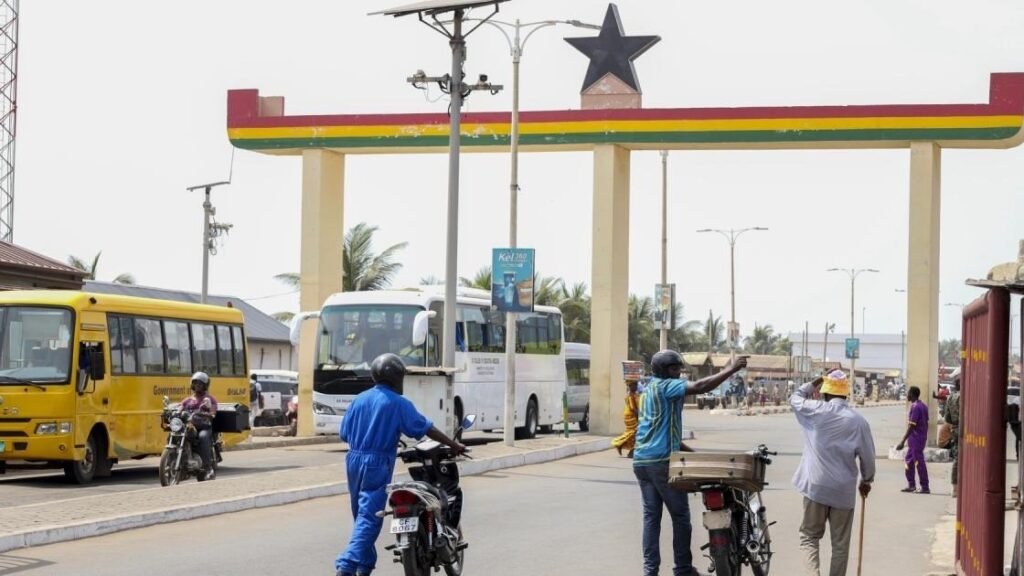
Ghana’s informal cross-border trade with its three immediate neighbours namely Togo, Burkina Faso, and Côte d’Ivoire has reached GH¢ 31 billion between January and September 2025, representing 6 percent of all of Ghana’s trade with the entire world. This is according to the Ghana Statistical Service’s Informal Cross-Border Trade (ICBT) Survey covering the first three quarters of 2025. The Survey futher revealed that Ghana’s informal trade with its closest neighbours was 1.5 times the size of formal trade recorded over the same period with informal cross-border trade reaching GH¢ 31 billion against GH¢ 20.1 billion in formal trade with the same three neighbouring countries over the same period. The survey further revealed a clear gender division in how Ghana’s informal cross-border trade operates with men moving approximately 70 percent of exported goods across Ghana’s borders as against the 60 percent moved by women over the same period . Speaking on this, Government Statistician, Dr. Alhassan Iddrisu noted that this distinct gender dynamic has direct implications for policy,calling for policies designed to serve and regulate informal cross-border trade to be designed with both men and women in mind. “Policies that serve this trade must be designed for both,” he stated. The Ghana Statistical Service (GSS) Informal Cross-Border Trade (ICBT) Survey is a landmark national data collection initiative designed to measure and analyze unrecorded commercial activity happening outside formal customs channels along Ghana’s land borders.

News, Uncategorized

BoG Governor Warns Community Banks — Governance Standards Must Match New Identity

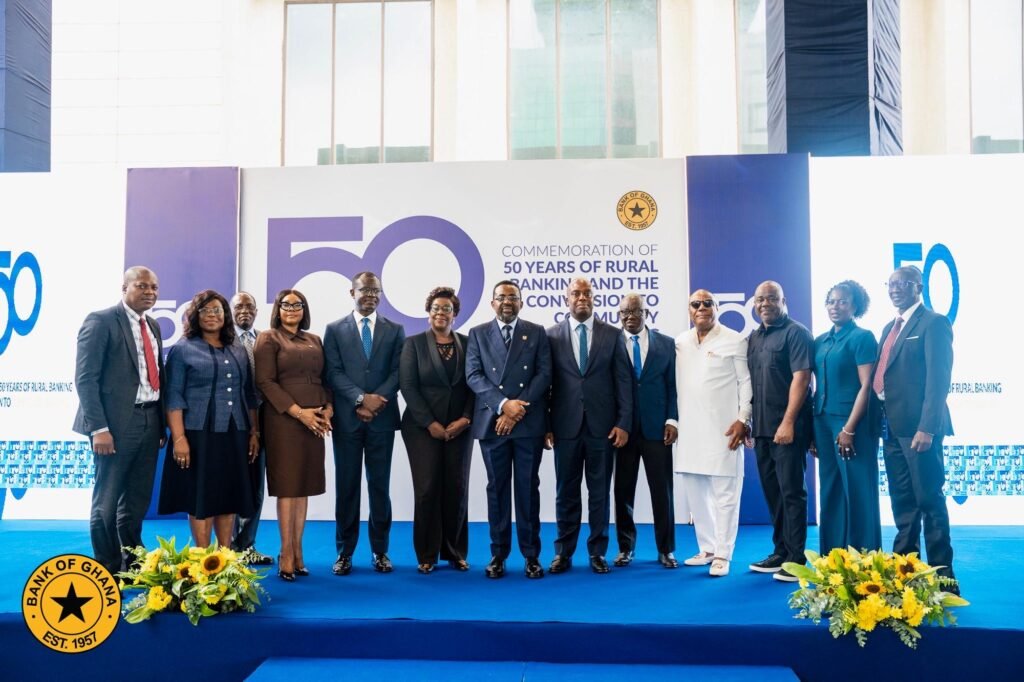
The Governor of the Bank of Ghana, Dr. Johnson Pandit Asiama, has underscored the importance of microfinance sector reforms in strengthening community banking, expanding financial inclusion, and promoting sustainable economic development. Speaking at the Commemoration of 50 Years of Rural Banking and the Conversion to Community Banking on July 16, 2026, Dr. Asiama urged the managers of the country’s 147 Rural Banks to embrace their new identity as Community Banks and to uphold the responsibilities that come with the transition. “Let me be plain about what the Bank of Ghana will and will not accept. Community ownership cannot mean weaker governance, and local knowledge is not a substitute for risk management. Social purpose does not excuse financial indiscipline,” he stated. The Governor further argued that Ghana’s financial system is too concentrated and that this concentration is a systemic risk that community banking is uniquely positioned to address. “A financial system resting on a small number of large institutions is not a resilient one. Depth is not only about size. It is also about spread,” he added. Dr. Asiama also disclosed that Ghana’s community banks will no longer be permanently confined to the communities that birthed them explaining that the strongest and best-performing among them can in time grow into national institutions. “The reforms open the door wider as well: to broaden what these institutions offer, to compete, and, for the strongest among them, to grow in time into something national,” he stated. The scale of what the sector has built over five decades makes that ambition credible. What started as one bank at Nyakrom in 1976 is today 147 licensed institutions with approximately 1,000 branches, over 8 million customers, and an asset base of approximately GHS 26 billion as at May 2026 ,numbers the Governor described not as a measure of institutional success but as a verdict on the original idea.

News

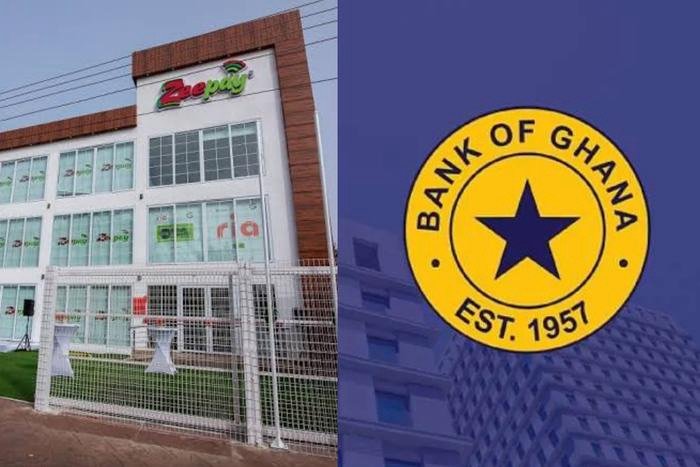
Zeepay Ghana Commits to Orderly Resolution Following Bank of Ghana Licence Revocation

Zeepay Ghana Limited has issued a public statement acknowledging the revocation of its Dedicated Electronic Money Issuer (DEMI) Licence by the Bank of Ghana, stating that it is working closely with the regulator and all relevant stakeholders to ensure an orderly, transparent, and responsible resolution. The statement comes after the Bank of Ghana’s disclosure yesterday on the revocation of Zeepay Ghana’s DEMI licence due to persistent contraventions of its licensing regulations and Zeepay’s failure to comply with directives to inject sufficient funds to fully back the e-money balances of customers, agents, and merchants, as well as its failure to wind down its e-money issuance business as directed. In its response, Zeepay Ghana stated that it recognises the concerns the development may cause and expressed appreciation for the patience, understanding, and continued cooperation of its customers, employees, agents, merchants, partners, and the wider public during the period. The company further stated that it remains committed to acting responsibly, maintaining open and transparent communication, and working constructively with the Bank of Ghana and all relevant stakeholders towards an orderly resolution. Zeepay Ghana Limited is a Ghanaian financial technology company that operates as a mobile money wallet and remittance service.

News

COCOBOD settles obligations to Non-DDEP Cocoa Bill Holders.

The Ghana Cocoa Board has announced the fulfillment of its outstanding financial obligations worth GH¢162 million to individual owners of Cocoa Bills who did not participate in DDEP. This announcement, given on the 15th of July 2026, follows the implementation of the DDEP in 2023, where payment to some non-Cocoa Bill holders remained outstanding. With the payment of this outstanding obligation,COCOBOD has now fully settled these obligations as part of its commitment to honour all legitimate debts. They then advised all beneficiaries to contact their respective fund managers to access their payments. COCOBOD further expressed appreciation to the affected investors for their patience and understanding, reaffirming its commitment to restoring confidence, strengthening its financial position, and ensuring the long-term sustainability of Ghana’s cocoa industry. This payment resolves a critical cash lock-up that had lingered since the 2023 sovereign restructuring.