Business Outlook Africa

Economy

Economy

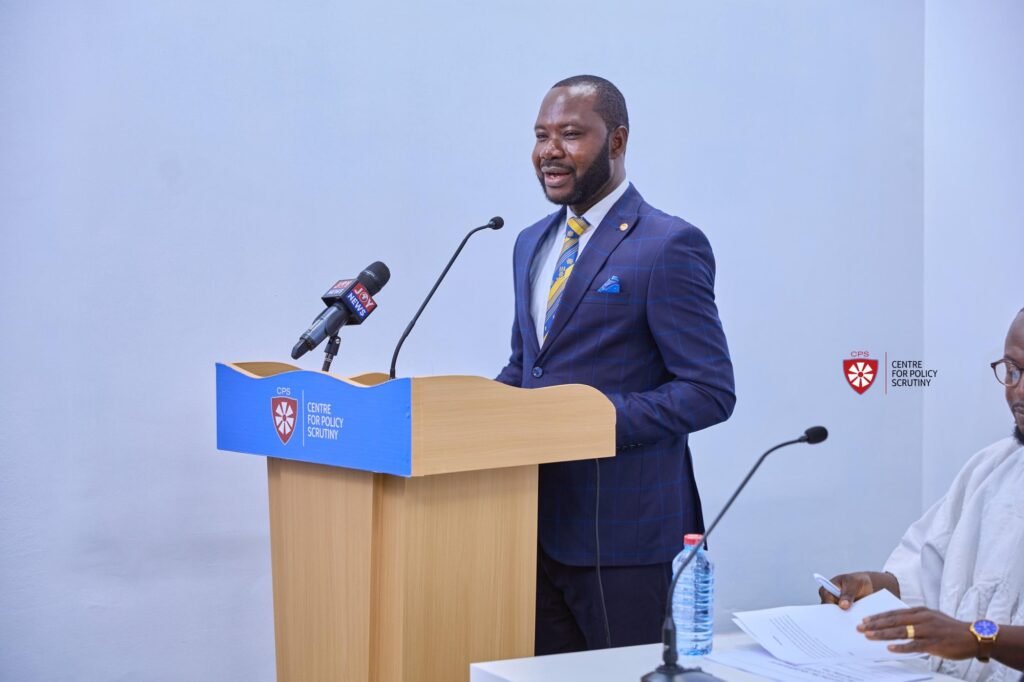
Dr. Sarkodie Identifies Three Untapped Revenue Streams ,Says Reforming Informal Tax, Natural Resources and Property Rates Could Yield GH₵ 110 Billion

Economist and Lecturer at the University of Ghana, Dr.Adu Owusu Sarkodie has called on government to undertake serious reforms in the taxation of the informal sector, natural resource revenue management, and property rates collection adding that the country can unlock an additional GH₵ 110 billion in annual revenue when done . Speaking after the Mid-Year Budget Review on July 23, 2026, Dr. Sarkodie explained that per his analysis, the country can get nearly half of its entire 2026 revenue target when it undertakes these aforementioned reforms . “I am yet to see a huge reform in Ghana’s revenue performance in terms of taxing the incomes of the informal sector, in terms of the natural resource, in terms of property rates. I want to see the re-setting agenda in these three because I did my math and I realised that if we do these three well, Ghana can add an additional income of GH₵ 55 billion. No, GH₵ 110 billion.That’s about half of the entire money that the government is looking for in the year 2026 alone.” he stated Dr. Sarkodie also cautioned against the Finance Minister’s no-revenue-no-spending approach arguing that that approach is not sustainable for long term economic growth and transformation hence urging the Ministry to find aggressive ways to mobilize revenue. “The second recommendation is that we must embark on aggressive revenue mobilisation.The posture of the Finance Minister is that if he doesn’t get the revenue, he will not spend. But if you continue to manage an economy like this, you will not get the needed growth and transformation that you need. Therefore, we must try and raise inner revenue so that we can spend on productive sectors.”he added On the 24 hour economy, Dr. Sarkodie urged the government to prioritise the implementation of key initiatives outlined in the 24-Hour Economy document ,singling out the development of economic activities around the Volta Lake as a particularly promising idea that deserves urgent and sustained pursuit “And the other recommendation is that there are beautiful ideas in the 24-hour economic documents and therefore we should try and implement some of them, especially the one on the development of economic activities around the Volta lake. It is a brilliant idea. They must continue, they must make any effort, every effort to pursue that..” He said Dr. Sarkodie also raised concerns about the implementation of the 24-Hour Economy policy, arguing that there is a clear disparity between what was promised and what is currently being delivered . He also challenged the logic behind prioritising the construction of 24-hour markets. “Finally, the issue of 24-hour economy. What was promised, what is contained in the document, and what they are delivering are different things. They promised 133. In the document, 133 appears only in one page of the 287 pages. The entire document is about economic transformation.But they’re not even doing economic transformation. They’re focussing on building markets. The market is about buying and selling.What are you going to sell on the market when you have not transformed the economy?Where is the factory to produce what to be sold on the market? For me, this is a bigger question.” He questioned
Economy

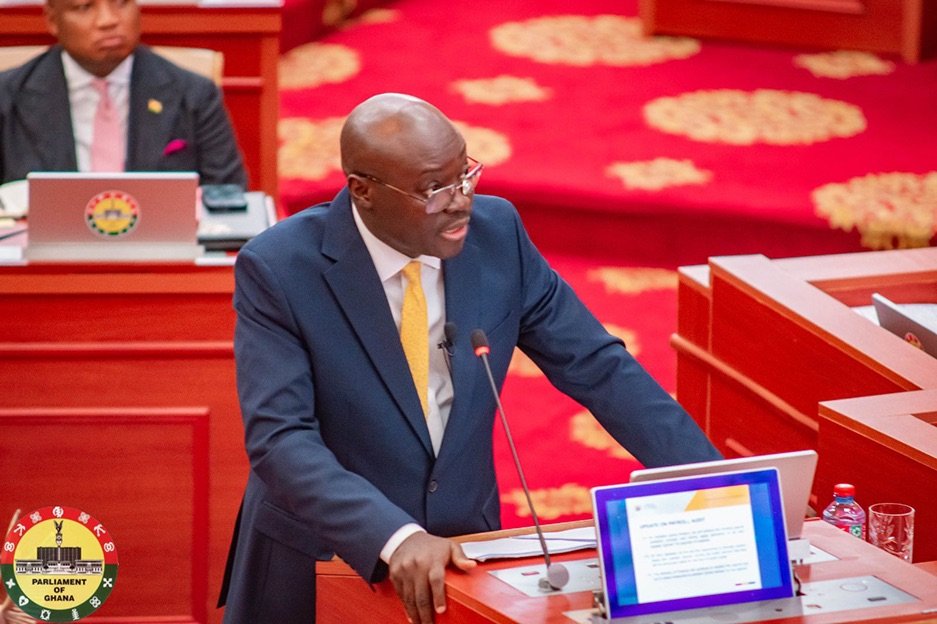
2026 Mid-Year Budget: Finance Minister Attributes Ghana’s Macroeconomic Gains to Fiscal Discipline and Competent Economic Management

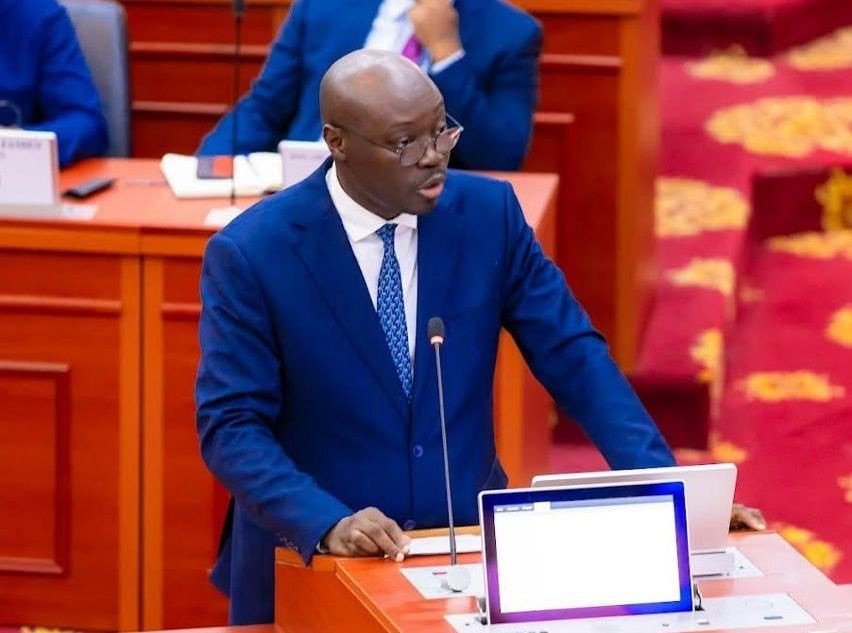
Finance Minister, Dr. Cassiel Ato Forson has attributed the recent macroeconomic gains experienced to what he describes as the “superior economic management” undertaken by the current administration. Presenting the 2026 Mid-Year Budget Review on the floor of parliament on July 23rd 2026, Dr. Cassiel Ato Forson debunked narratives of these gains being as a results of luck, debt restructuring or even the IMF Program inherited from the previous government after taking office in January 2025. “The progress Ghana is recording today did not happen by chance.Some have suggested that our recent macroeconomic gains are simply the product of good fortune.Others have attributed the recovery solely to the debt restructuring programme or the IMF programme inherited in 2025.Mr. Speaker, I firmly disagree. Our recovery is as a result of superior economic management.” He stated The Finance Minister added that although debt restructuring and interventions by the IMF can create fiscal space, sustainable economic recovery can only be built on good policy choices, competent economic management, disciplined execution and courageous leadership. “Debt restructuring may create fiscal space, but it does not create fiscal discipline.An IMF programme may provide a framework, but it cannot substitute for sound policy,disciplined implementation and political will.Sustainable economic recovery is built on good policy choices, competent economic management, disciplined execution and courageous leadership.” He added The Finance Minister then highlighted that as as a result of this economic management, every major macroeconomic indicator has improvedsignificantly. Dr. Cassiel Ato Forson went ahead to explain that Ghana’s economic recovery has been hinged on Fiscal Correction, the modernization of Ghana’s Tax Regime and the Complementary Fiscal Policy for Inflation Targeting and Exchange Rate Stability. “The recovery of the Ghanaian economy has been anchored on three Key Transformational Policy Reforms (KTPs).These Key Transformational Policy Reforms are Fiscal Correction,Modernising Ghana’s Tax Regime and Complementary Fiscal Policy for Inflation Targeting and Exchange Rate Stability.” He added Ghana’s recent macroeconomic gains show strong economic recovery, highlighted by 6.4% GDP growth in Q1 2026, single-digit inflation normalization, and a stabilized cedi.

Economy

Finance Ministry Completes Restructuring of Outstanding SADEREA Notes

The Ministry of Finance has announced the successful exchange of its the outstanding SADEREA Notes as it nears the completion of the external debt restructuring program. This exchange marks a major milestone in the country’s economic recovery and resolves the last outstanding component of its sovereign bonded debt restructuring. This comes after 12.5% of Senior Secured Amortising Bonds were issued earlier to finance capital expenditure in Ghana’s health sector. Out of the original US$253.2 million issued earlier , approximately US$117.8 million inprincipal remained outstanding as at January 2026. With the completion of outstanding SADEREA Notes government is showing its commitment towards restoring debt sustainability, strengthening investor confidence, and maintaining macroeconomic stability.

Economy

Ghana’s Economy Expands by 4.7% in April 2026

Ghana’s economy expanded by 4.7 percent in April 2026, driven steadily forward by an expanding Services sector. This is according to the latest Monthly Indicator of Economic Growth by the Ghana Statistical Service, which further indicated a slower pace as compared to the 7.4 percent growth seen in April last year. The Services sector led the expansion with a growth rate of 6.0 percent, accounting for 61 percent of all growth in the month.This expansion was largely led  by information and communication. The Industry sector also accounted for nearly a third of the month’s expansion with a growth of 4.0 percent, nearly four times of the 1.1 percent that was recorded a year ago. This was as a result of strengthened mining activities . The Agriculture Sector however rebounded, with a growth rate of 1.7 percent after contracting by nearly 7 percent in the same period last year. The MIEG index rose to 113.3 in April 2026, up from 108.2 a year earlier. The Monthly Indicator of Economic Growth, is a high-frequency economic index developed by the Ghana Statistical Service (GSS) to track the country’s economic performance on a monthly basis. It aggregates data across Agriculture, Industry, and Services to give policymakers, investors, and researchers an early snapshot of national economic momentum ahead of official quarterly Gross Domestic Product (GDP) reports.

Economy

Dr. Pamela Graham sworn in as Ghana’s first female Auditor-General

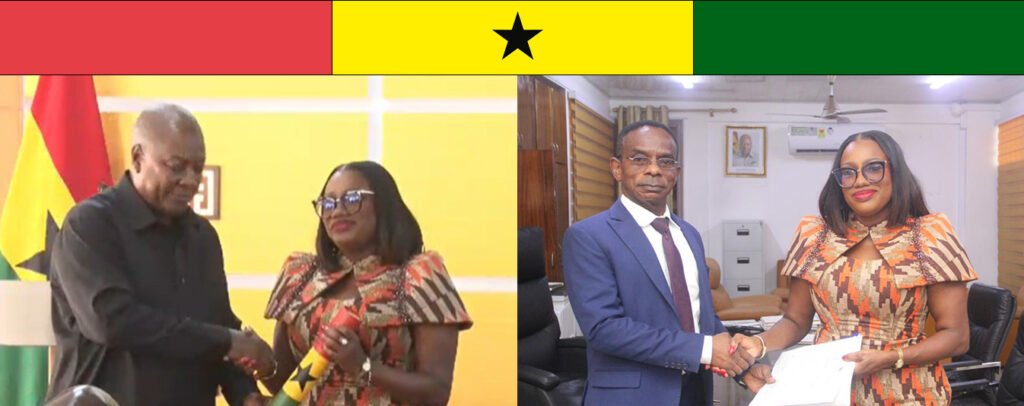
President John Dramani Mahama has sworn in Dr. Pamela Graham as Ghana’s new Auditor-General, urging her to discharge her constitutional mandate with independence, integrity and courage in safeguarding the nation’s public resources. Speaking at the swearing-in ceremony at the Presidency, the President said the occasion reaffirmed Ghana’s commitment to transparency, accountability and sound public financial management. He noted that the Office of the Auditor-General plays a vital role in ensuring the prudent management of public funds, preventing waste and strengthening public confidence in state institutions. Congratulating Dr. Graham on her appointment, President Mahama reminded her that her duty is to serve the Constitution and the people of Ghana, stressing that every audit report must be guided by facts, evidence and the law. President Mahama also expressed appreciation to the outgoing Auditor-General, Mr. Johnson Akuamoah Asiedu for his dedicated service and contribution to strengthening public accountability over the years. The President also reaffirmed his government’s commitment to strengthening the Audit Service through investments in modern audit technologies, digital systems, institutional reforms and capacity building. He further called on all public institutions to cooperate fully with the Auditor-General and implement audit recommendations promptly. Dr. Graham not only the 11th individual to constitutionally assume the office but also becomes the first female Auditor-General of the Republic of Ghana. With over 25 years in the private sector, where she spent over two decades at EY Ghana, joining the firm in 2001 and later becoming the firm’s first female Partner,Dr. Graham is recognized as a leading expert in institutional governance, public financial management, and corporate auditing. She holds an MBA from the Alliance Manchester Business School and a Doctorate in Business Administration (DBA) completed through a joint program between IPAG Business School and NiBS University. Dr. Graham assumed office following the retirement of her predecessor, Johnson Akuamoah Asiedu. In her capacity as the head of the Ghana Audit Service, she is tasked with the constitutional mandate under Article 187 of the Ghanaian Constitution to audit all public accounts and safeguard the state’s public purse

Economy

GRA Extends Deadline for Filing 2nd Quarter Tax Returns to July 6

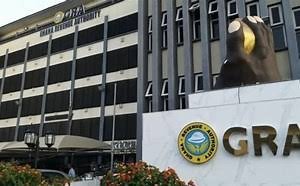
The Ghana Revenue Authority has extended the deadline for the filings of second quarter Corporate Income Tax (CIT), Personal Income Tax (PIT) and May 2026 Value Added Tax (VAT), National Health Insurance Levy (HIL), and Communications Service Tax (CST) following the heavy downpours on June 29 2026. The GRA stated that the deadline which according to the tax calendar is usually due on the last working day of the month following the tax payable period, has been extended to Monday,July 6,2026 to help support affected parties of the floods. The authority further assured tax payers who file within the stipulated deadline of not being liable for late filing penalties. It however stressed that “normal penalties will apply to returns made after the extended deadline”. GRA also encouraged the use of its Taxpayer’s Portal to file returns to minimize travel and avoid delays. It also added that the move “is a targeted relief measure intended to assist taxpayers affected by the flooding to meet their tax obligations without incurring immediate penalties”. The GRA then expressed its commitment to maintaining uninterrupted tax administration while supporting businesses during this difficult period.

Economy

Ghana’s Inflation Rises to 5.3% in June 2026, Marking Third Consecutive Monthly Increase

Ghana’s inflation has risen to 5.3% in June 2026,up from the 3.7% recorded in May 2026. This is according to the latest monthly Consumer Price Index(CPI) report by the Ghana Statistical Service(GSS) released on June 26,2026,marking a third consecutive increase after 17 consecutive months of decline. Although the June 2026 inflation is far below the 13.7% recorded during the same period last year, the Statistical Service sounded a caution concerning the recent upward trend . Whiles year-on-year inflation fell drastically, the month-on-month side painted a different picture with inflation rising marginally by 0.2%. Shaping inflation was the services sector which increased by 9.4%, followed sharply by transport which jumped to 9.1% during the period and goods which increased by 3.7%. The biggest story however had to do with locally produced items which accounted for 86.6% of the total inflation after a rise by 6.7%. Imports on the other hand also rose by 2.3%. A look into food inflation also reveals a 102.5% rise in ginger while kontomire fell by 38%. While these figures indicate an uptick due to rising fuel and non-food costs, it remains well within the Bank of Ghana medium-term target band of 8% ± 2%.

Economy

Building Inflation Rises to 2.7% in May 2026

  Ghana’s building inflation rose to 2.7 percent in May 2026, up from 2.2 percent in April, though remaining significantly lower than the 22.0 percent recorded in the same period last year, according to the Ghana Statistical Service (GSS). The figures were disclosed in the May 2026 Prime Building Cost Index (PBCI) and Inflation report, with Government Statistician Dr. Alhassan Iddrisu noting that while annual inflation remains low, recent monthly trends signal that cost pressures are gradually re-emerging in the construction sector. The data indicated that the price of building inputs increased by 1.4 percent during April and May 2026, extending a series of rising prices for a fifth straight month. Electrical works was by far the biggest contributor to the 63.1 percent cost push in total building inflation for May 2026, having done so alone. Metalwork was next at 34.8 percent and plumbing at 29.2 percent of building inflation, while glazing was at 35.6 percent. The report showed there was a difference between prices of various groups of building materials. Pressure on finishing materials continued with plumbing up 22.8 percent and roofing sheets up 19.9 percent year-on-year. The price of steel, however, was down 8.1 percent on year, while that of cement was down 14.5 percent on year. Dr Iddrisu, therefore, emphasized that at 2.7 per cent, building inflation is still low and that the current situation is conducive and cannot be missed. He advised the Government to expedite infrastructure development projects under the Big Push initiative now while the cost conditions are favourable, and urged companies to ensure contracts and secure supply before the costs once again increase. “It is time for households to begin or continue building, beginning with structure – the window is open, use it,” he said.