
Business Outlook Africa

World

World

IMF Projects 3% Global Growth in 2026 as Middle East War Stalls Disinflation ,Urges Central Banks to Remain Focused on Price Stability

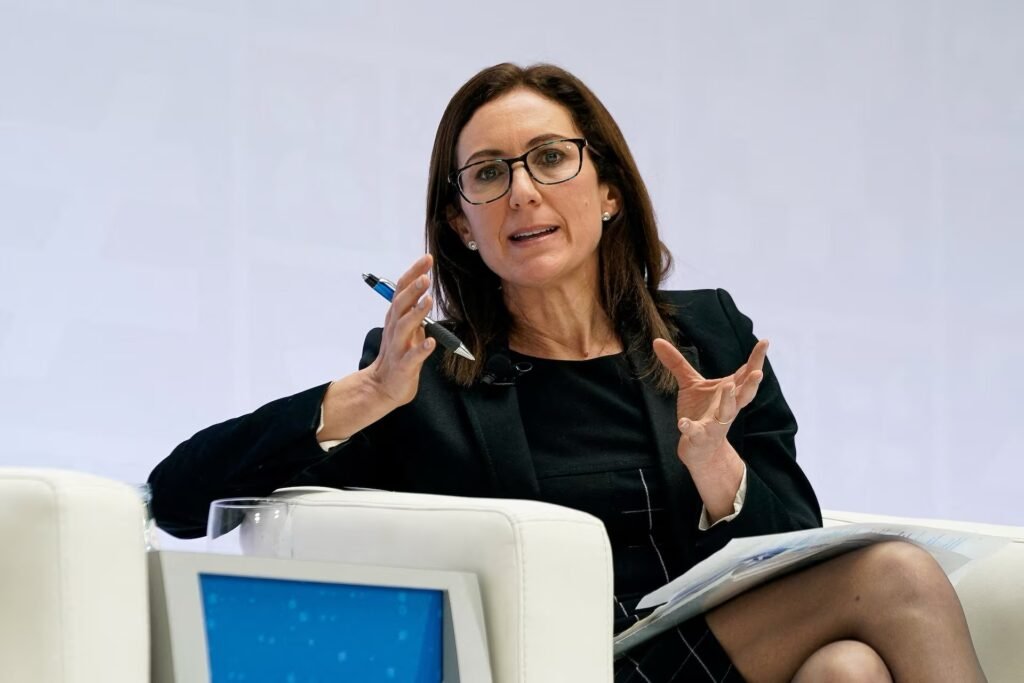
The International Monetary Fund (IMF) is projecting a global growth of 3 percent in 2026 and 3.4 percent in 2027 amid the ongoing Middle East tensions. This was disclosed by the Deputy Director, of the Fund’s Research Department, Petya Koeva Brooks in the July 2026 Update of the World’s Economic Outlook. “We are projecting global growth of 3 percent in 2026 and 3.4 percent in 2027, broadly unchanged from April on a cumulative basis.” she stated Petya Koeva Brooks stated that this development is being shaped by the ongoing war in the Middle East and the effects it’s having on energy supplies and technology-driven investment boom. “The global outlook is being shaped by two powerful forces pulling in opposite directions: the lingering effects of the energy shock from the war in the Middle East and a technology-driven investment boom”. she added She however insisted that the effects of these forces varies significantly across countries depending on their exposure to the war and their position in the technology value chain. She also explained however that despite the ongoing Middle East conflict,a larger spike in oil prices was avoided thanks to inventory drawdowns, expanded production outside the Gulf, and actions taken to soften oil demand. Petya Koeva Brooks disclosed that the IMF’s forecast assumes the Strait of Hormuz begins reopening in mid-July, with conditions normalising to the pre-war state by March 2027. On the risks to the outlook,She warned that a renewed escalation in the Middle East conflict could reignite commodity price volatility, tighten financial conditions, strain policy buffers, and worsen food insecurity in low-income countries. Petya Koeva Brooks then concluded by urging central banks globally to remain focused on price stability though she noted the appropriate response will vary by country depending on how commodity prices, technology-driven demand, and inflation expectations interact.
World

Silvana Tenreyro Appointed IMF Economic Counsellor and Research Department Head

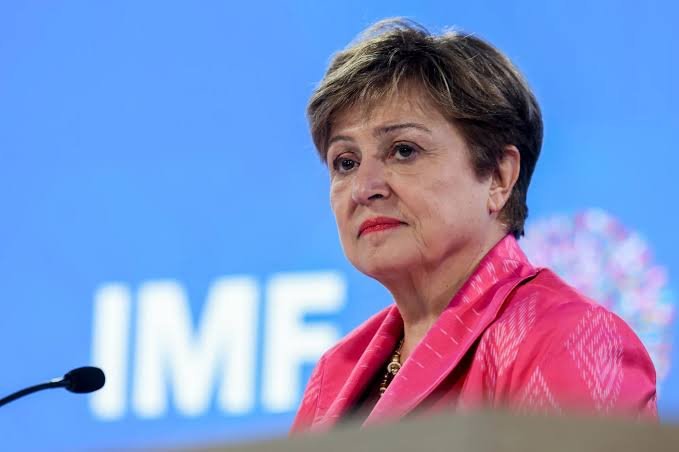
The Managing Director of the International Monetary Fund (IMF), Kristalina Georgieva has announced the appointment of Silvana Tenreyro as the Fund’s Economic Counsellor and Director of the Research Department (RES). This follows Pierre‑Olivier Gourinchas’s decision to return back to academia after stepping down from the same role earlier this year. Speaking on the appointment, Kristalina Georgieva expressed her delight at the appointment stating that the appointment comes at a critical moment for the global economy. “I am delighted to announce that Silvana Tenreyro will join the Fund as our next Chief Economist,” said Ms. Georgieva. “Silvana is a globally respected economist who combines outstanding academic achievements with extensive policy making experience and a close engagement with leading international institutions. At a time of profound transformation and heightened uncertainty in the global economy, Silvana’s mix of intellectual leadership and policy experience will help ensure that the Fund’s analytical work and multilateral surveillance and policy advice will remain at the cutting edge in support of our membership.” Prior to her appointment,Ms. Tenreyro served as the James E. Meade Professor of Economics at the London School of Economics, where she has been on the faculty since 2004. She also served as President of the European Economic Association as well. Her research has been widely published in leading journals and recognized with international honors, including the Yrjö Jahnsson Award, the Bernhard Harms Prize, and the Birgit Grodal Award. She is a Fellow of the British Academy, the Econometric Society, and the Royal Economic Society, and a Foreign Honorary Member of the American Economic Association. Beyond academia, Ms. Tenreyro brings substantial policy and leadership experience having previously served as an external member of the Bank of England’s Monetary Policy Committee from 2017 to 2023. An Argentine, British, and Italian national, Ms. Tenreyro earned her Ph.D. and M.A. in Economics from Harvard University, following a degree in economics from the National University of Tucumán in Argentina. She will assume her role as the IMF’s new Economic Counsellor and Director of the Research Department on August 10, 2026.

World

IEA, IMF, World Bank, WTO renew call for resolution of Middle East war, reopening of Strait of Hormuz

The Heads of the International Energy Agency (IEA), International Monetary Fund (IMF), World Bank Group (WBG), and World Trade Organization (WTO) have reiterated their call for an end to the ongoing war in the Middle East, alongside the reopening of the Strait of Hormuz. In a joint statement issued on July 8, 2026, following a meeting held in Washington, DC on July 7, The Heads stated that the meeting was aimed at taking stock of energy, trade, and economic developments, discussing the situation in vulnerable countries, and further coordinating support to those in need. The institutions noted that per their assessment the overall impact of the conflict has been highly uneven, affecting energy supplies, food security, various commodities, and economic activity across many countries and regions, and creating deeper concerns about growth and price stability. On energy prices, the Heads however flagged the continued uncertainty, adding that the war’s consequences may not fade quickly. They further stated that energy markets and the transit of goods are still facing strains, urging governments and the international community to remain vigilant. The institutions stressed the need for continued cooperation to uphold the principle of freedom of navigation in the Strait and globally, support economic recovery, protect jobs and livelihoods, strengthen energy and food security, and increase broader resilience to future shocks. They assured that they will continue working with each other and with their member countries to closely monitor energy, trade, and economic developments, and will strengthen their readiness to act further if needed.

World

Ford rehires human engineers after AI fails to match quality checks

Ford says it has hired back some human engineers after AI failed to match their skills and experience. In a bid to reap the benefits of the tech, which developers claim can cut costs and boost productivity, the US carmaker adopted it across some parts of its operations including for quality checks. But, according to Bloomberg, its executives said the firm has rehired more than 300 “veteran” quality inspectors in recent years to make up for the pitfalls of automated systems. “Artificial intelligence is a fantastic tool, but it’s only as good as the information you use to train it,” Charles Poon, vice president of vehicle hardware engineering, told reporters. “Over prior years, we didn’t pay as much attention as we should have to the experience of our most knowledgeable engineers that have been with us through many product cycles,” he said. The US automaker is among many to have seized on the buzz around AI, particularly amid Wall Street fervour about the tech’s potential to increase margins. “AI will leave a lot of white collar people behind,” Ford boss Jim Farley said in an interview with author Walter Isaacson last June. In an October earnings call, chief operating officer Kumar Galhotra said the firm was “deploying AI across the entire industrial system”. This included rolling out 900 AI-powered cameras in its plants “to detect quality issues at the source and help us mitigate supply disruptions”, Galhotra told investors. But Poon told reporters on Wednesday the firm’s AI-driven checks had failed to live up to expectations. “Mistakenly, we thought that by just introducing artificial intelligence and ingesting the design requirements that we had, that would produce a high-quality product,” he said. Poon reportedly pointed to automated tools lacking the training and expertise of veteran technicians – many of whom he said had left the company before their knowledge could be used to improve its tech. He said these human workers had since been reintroduced to train up its systems, as well as mentor younger workers. “We recognised that for us to enhance some of our automation and machine learning and artificial intelligence tools we needed to ensure that they were trained by the most experienced individuals,” he said, per Bloomberg. Ford’s admission of its AI failings came as it lauded its return to the top of an index used as an industry benchmark to measure vehicle quality. It said it was the number one mainstream automaker in the US JD Power Initial Quality Study – a ranking it has not held since 2010. In a press release marking the news, the company said “reaching best-in-class quality required a significant talent refresh”. This involved replacing senior leaders across engineering, supply chain and manufacturing, it said, as well as hiring the roughly 300 veteran engineers “who carry the hard-earned wisdom of decades of design”. SOURCE: BBC

World

WhatsApp to be led by Indian start-up founder as Will Cathcart steps back

WhatsApp boss Will Cathcart has announced that he is leaving his role. Cathcart has overseen Meta’s popular messaging platform for nearly seven years – and scaled its private chat functions to more than three billion users worldwide.He said in posts on social media on Monday that while the platform was in “the strongest position it’s ever been” it also “felt like the right moment to step back”. Cathcart will continue to play a role within Meta’s leadership ranks, with Kunal Shah, founder of Indian fintech start-up Cred, taking over as head of WhatsApp. Facebook founder and Meta chief executive Mark Zuckerberg said Shah had created “one of India’s most important technology companies” with Cred. He added that the fintech founder “brings the kind of builder mentality and global perspective that will serve him well in running the world’s biggest messaging app”. Cathcart has overseen Meta’s popular messaging platform for nearly seven years – and scaled its private chat functions to more than three billion users worldwide. He said in posts on social media on Monday that while the platform was in “the strongest position it’s ever been” it also “felt like the right moment to step back”. Cathcart will continue to play a role within Meta’s leadership ranks, with Kunal Shah, founder of Indian fintech start-up Cred, taking over as head of WhatsApp. Facebook founder and Meta chief executive Mark Zuckerberg said Shah had created “one of India’s most important technology companies” with Cred. He added that the fintech founder “brings the kind of builder mentality and global perspective that will serve him well in running the world’s biggest messaging app”. Shah noted that while Meta would join as a minority investor in Cred, it would have “no access to member data”.Meta’s shake-up of WhatsApp’s leadership comes as it looks to strengthen the app’s already booming presence in India. Falling under Meta’s “family of apps” – its set of social networks including Facebook, Instagram and Messenger that boast billions of users – WhatsApp has been an area where the firm has tried to boost revenue with ads, paid subscriptions and AI tools. The app is widely used in India, with about 853 million users, according to World Population Review. But it has also faced some recent scrutiny in the country over its privacy and data sharing practices with its parent company, Meta. Source: BBC

World

IMF, World Bank, WFP Warn of Global Food and Energy Crisis Amid Middle East War

The heads of the International Monetary Fund (IMF), World Bank Group (WBG), and World Food Programme (WFP) have issued a joint warning over the sweeping economic and food security consequences of the ongoing war in the Middle East, cautioning that its effects are already widespread far beyond the region. In a joint statement issued on Wednesday April 8,2026, the three institutions described the conflict as having triggered “one of the largest disruptions to global energy markets in modern history,” with sharp increases in oil, gas, and fertiliser prices compounded by transport bottlenecks expected to drive food prices higher and deepen food insecurity worldwide singling out low-income, import-dependent economies as bearing the heaviest burden of the crisis. The IMF, WBG, and WFP however assured that the three institutions would continue to monitor the situation closely and coordinate the deployment of all available tools to support those affected. They also pledged to protect lives and livelihoods while laying the groundwork for a resilient recovery anchored in stability, growth, and job creation.​​​​​​​​​​​​​​​​

World

IMF Chief Kristalina Georgieva Names Zeine Zeidane to Lead African Department

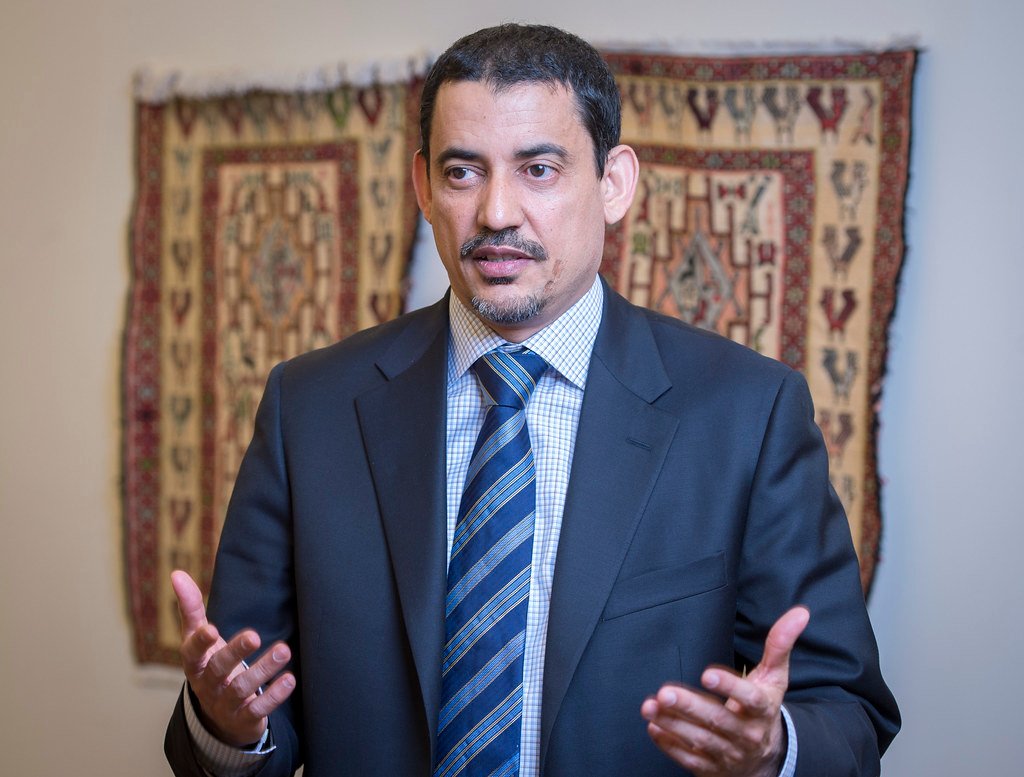
International Monetary Fund Managing Director Kristalina Georgieva has announced plans to appoint Zeine Zeidane as Director of the African Department, succeeding Abebe Aemro Selassie, who will retire on May 1, 2026. Mr. Zeidane, a Mauritanian national, brings over 20 years of experience in macroeconomic policy and international cooperation. He currently serves as Deputy Director in the IMF’s Middle East and Central Asia Department and previously held a similar role in the African Department. Before joining the IMF in 2012, he served as Prime Minister, Central Bank Governor, and Economic Advisor in Mauritania, and also worked with the World Bank and in commercial banking. Ms. Georgieva highlighted his strong policy expertise and leadership, expressing confidence in his ability to lead the department effectively. “I have informed the Executive Board of my intention to appoint Mr. Zeine Zeidane as the Director of the African Department, Zeine will bring deep institutional knowledge, sound judgment, and strong policymaking experience to the department as it continues to respond to sub-Saharan Africa’s growing demands for tailored policy advice, financing, and capacity development. Zeine’s calm and measured approach has proven especially effective in addressing difficult and sensitive challenges,I am confident that he will successfully lead AFR with a shared sense of purpose in advancing its mandate and serving our membership.” She stated Mr. Zeidane holds a PhD in Applied Mathematics and a postgraduate degree in Macroeconomics from the University of Nice.

World

IMF To Establish New RCDC In Rome

The International Monetary Fund (IMF) is set to establish a new regional capacity development center (RCDC) in Rome, Italy, aimed at strengthening economic institutions and policymaking across Southeast Europe. Im a statement released on March 23,2026, The Fund explained that the new Southeast Europe Technical Assistance Center (SEETAC) will serve Western Balkan countries including Albania, Bosnia and Herzegovina, Kosovo, Montenegro, North Macedonia, and Serbia ,as well as Moldova, all of which are pursuing European Union membership. The center is expected to begin operations by January 2027. Speaking to this, the IMF Managing Director Kristalina Georgieva explained the center will help address the significant capacity development needs of member countries in the region, supporting macroeconomic stability, resilience, growth, and progress toward EU accession. “I am very pleased to announce creation of SEETAC, which will help meet the substantial capacity development needs of IMF member countries in Southeast Europe, boosting macroeconomic stability and resilience, growth prospects, and progress towards EU accession,” she stated SEETAC will join a network of 17 IMF RCDCs currently operating worldwide, delivering tailored technical assistance in key areas including fiscal policy, monetary and financial sector policies, macroeconomic frameworks and forecasting, statistics, and legal matters. It will also complement training already being provided to the region by the IMF’s Joint Vienna Institute (JVI).​​​​​​​​​​​​​​​​

World

IMF Approves Final Review of Mali’s Staff Monitored Program

Management of the International Monetary Fund (IMF) has approved the second and final review of Mali’s Staff Monitored Program (SMP), describing the program implementation as robust. In a statement released on March 18, 2026, the IMF explained that the SMP, which was approved in March 2025, aims to ensure fiscal sustainability, strengthen governance and public financial management, and protect the most vulnerable. The Fund highlighted that all quantitative and indicative targets under the second review, including priority social spending, net tax revenues, domestic and external arrears, and the primary fiscal deficit, were observed, with overperformance recorded in some instances. The IMF also noted that all structural benchmarks were met, including the digitalization of tax receipts, interconnectivity of tax administration and the development of an action plan related to the census of public accounts. The Fund however cautioned that whiles fiscal policy remains appropriate, careful management of potential windfalls is needed amid high gold prices, warning that elevated borrowing costs and large development and security needs continue to limit fiscal space. The IMF further noted that Mali’s economy is rebounding from setbacks experienced in late 2025, following easing security tensions and a recovery in gold production, with inflation remaining below 3 percent. The Fund called on Malian authorities to remain committed to prudent fiscal management whiles it commended them for their strong performance under the program.

World

Tax Revenues Rise Slightly as Grants to Developing Countries Decline – IMF Report

New data from the International Monetary Fund (IMF) has revealed that Global government revenues have remained broadly stable at about 30 percent of GDP since 2000. In its 2026 update of The World Revenue Longitudinal Database (WoRLD) its also highlighted that that tax revenues have also increased slightly over the same period, rising by about 1.8 percentage points of GDP to reach 17.5 percent of GDP in 2024. The data further revealed that taxes continue to account for the largest share of government income, representing between 55 and 60 percent of total revenues since the early 2000s. However, a significant portion of government revenue still comes from non-tax sources, including grants, natural resource revenues, and social security contributions. One notable trend identified in the database is the sharp decline in grants, which are a major revenue source for many low-income developing countries with Grants falling by about 50 percent since the early 2000s, dropping from roughly 6 percent of GDP to about 3 percent. These insights which come from the IMF’s World Revenue Longitudinal Database , a database which is built using IMF surveillance data and calculated under the Government Finance Statistics Manual aims at tracking global government revenue trends dating back to the early 1980s. In its 2026 update, the database expanded country coverage to include Aruba and Liechtenstein, while extending the data series to 2024. According to the IMF, the database tracks nine key components of tax and non-tax revenues, which together account for more than 80 percent of global government revenues. The IMF says the database will be updated annually to provide insights into developments affecting governments’ fiscal positions worldwide.