
Business Outlook Africa

Profiles

Profiles

UGBS Professor of Marketing, Kobby Mensah Named Among Top 12 Global Leaders by the Place Brand Observer

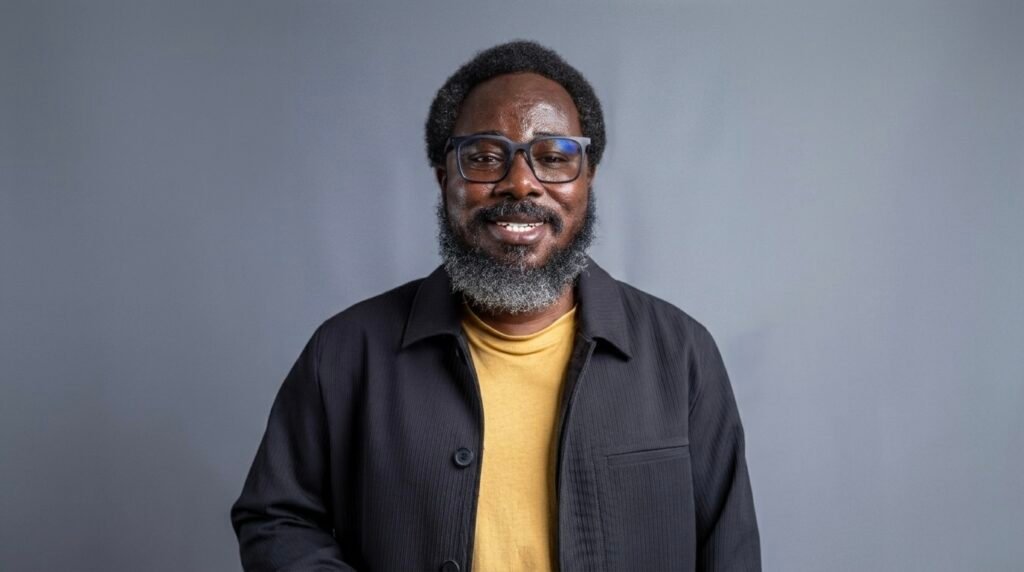
Professor of Marketing at the University of Ghana Business School (UGBS),Prof. Kobby Mensah, has been named among the 2026 Twelve Leaders Shaping Place Branding by The Place Brand Observer(TPBO). This was unveiled on 28th April 2026 by the TPBO’s expert community to recognise and spotlight practitioners, policymakers, and researchers. Prof. Mensah is the only West African tourism development executive featured in this year’s cohort. According to TPBO, “Prof. Kobby Mensah represents a convergence of academic insight and applied leadership in destination development. His move into leading GTDC signals a broader shift in Ghana’s approach, positioning tourism as part of an integrated system connecting investment, innovation and experience design.” Prof. Mensah joins the TPBO Who’s Who in Place Branding, a peer-recognised global network of over 500 professionals operating at the intersection of place, strategy, and leadership. He is a Chartered Marketer with the Chartered Institute of Marketing, and a leading voice on political marketing, digital engagement, and brand positioning in Africa. He is widely credited for pioneering digital tourism education in Ghana. Beyond academia, he serves as Chief Executive Officer of the Ghana Tourism Development Company integrating academic expertise with practical experience to drive national development. His leadership continues to champion innovation, sustainability, and collaborative stakeholder models within Ghana’s tourism ecosystem. Reacting to the recognition, Prof. Mensah stated: “I am humbled to stand alongside colleagues who are redefining how nations and cities build credibility. For Ghana, this is a call to action. This recognition belongs to the team at GTDC, to UGBS, and to every young Ghanaian innovator proving that place branding is not about slogans—it is about systems.” Prof. Mensah was profiled alongside notable global leaders from the Gambia, Estonia, Sweden, the United Kingdom, Chile, Thailand, Sierra Leone, and the United States. All twelve honourees were independently nominated by TPBO’s expert community and will be featured in the Place Brand Leaders Yearbook 2026, scheduled for release. UGBS warmly congratulates Prof. Kobby Mensah on this global recognition and commends his continued contribution to advancing place branding, tourism development and marketing scholarship. Source: https://ugbs.ug.edu.gh


Patricia,Ladybird Logistics
Profiles

From Newsroom to Fuel Tanker: The Bold Reinvention of a Ghanaian Woman Who Refused to Be Defined

She once produced morning shows.
She read the news.
She was the only female reporter in a newsroom of seven men. Today, she drives fuel tankers across Ghana. Her journey from Kiss FM and Adom News to Ladybird Logistics, a subsidiary of Zen Petroleum Ghana, is not just a career change story. It is a statement about sacrifice, resilience, and redefining prestige. Between 2013 and 2017, Patricia Nketsiah,built a solid broadcasting career. She produced breakfast shows, handled afternoon and evening bulletins, presented late-night announcements, and stepped in when news anchors were absent. In many ways, she had what many young professionals chase visibility, credibility, and status. But she wanted more. “I love to see women do extra things in life,” she says. “So I asked myself — what about you? What are you doing that is extra?” That question would lead her away from the microphone and into one of Ghana’s most male-dominated sectors: fuel logistics. She joined Ladybird Logistics not as a driver, but as a fuel attendant. And that is when the whispers began. One day, a former colleague drove in to buy fuel and froze in disbelief. “Is this Patricia of Kiss FM?” she asked.
“Yes,” she replied.
“Why are you here? Why are you selling fuel? You’ve come this low.” Patricia didn’t flinch. “I’m not low,” she responded. “Sometimes in life, you just have to sacrifice. This is my sacrifice today. Tomorrow, you’ll see me somewhere else.” That “somewhere else” came sooner than expected. Within a short period, she transitioned from fuel attendant to fuel tanker driver — moving petroleum products across the country under a company intentionally recruiting and training women to operate heavy-duty vehicles. The shift was not about abandoning media. It was about confronting comfort. In Ghana, professional identity often carries social weight. Driving fuel tankers is not traditionally viewed the same way especially for women. But what her story exposes is something deeper: resistance to women who defy expectation. Today, she navigates highways, manages high-risk cargo, and operates machinery that many once believed women should not handle. And in doing so, she is quietly shifting narratives about gender, work, and dignity. Her journey also underscores a larger conversation unfolding in Ghana’s business ecosystem about women in non-traditional industries, about redefining success, and about the courage required to pivot. The lesson? Career growth is not always linear. Prestige is not always progress. And sometimes the path upward begins with what looks, to others, like a step down. The colleague who once questioned her choice saw her again — this time behind the wheel of a fuel tanker. There was nothing left to say. In a country where many young professionals cling to titles, Patricia chose transformation over perception. And in doing so, she did not fall. She evolved. https://businessoutlookafrica.com/wp-content/uploads/2026/02/WhatsApp-Video-2026-02-24-at-06.58.22.mp4

Anthony Dzamefe, Founder and CEO, Caveman Watches
Profiles

Most Entrepreneurs Fail Because of Emotional Shocks — Here’s What the Caveman Watches CEO Wants You to Know

The Founder and CEO of Caveman Watches, Anthony Dzamefe, has stated that he believes most people fail in business and entrepreneurship because of emotional shocks that come along with business which they do not prepare for. Speaking on Business Outlook with VKL on the 13th of February 2026, Anthony recounted his early journey in entrepreneurship and how what he describes as his “stubbornness” and resilience helped him overcome those shocks. He then called on all young people who are willing to venture into business to invest in and build their emotional strength and resilience if they hope to survive the realities of entrepreneurship. According to him, many young entrepreneurs fail not because of the lack of intellect or system but because of emotional shocks. “Generally, it’s difficult being a businessperson. Only a fellow businessperson would understand you. Every other person wouldn’t understand why you have some mood swings, why you were happy a few seconds ago then suddenly you are unhappy.It’s just a whole lot of emotions you know. I say that most people fail at business not because of their lack of intellect or systems but of the emotional shock that they did not prepare for, the emotional investments that they were unaware of. What do you need to be able to build a business in Ghana? A lot of resilience. You should be very hard-headed. You know, without resilience or stubbornness, you’re not getting anywhere.” He then advised young entrepreneurs to embrace small beginnings as a strategic advantage rather than a limitation and cautioned against constantly seeking approval and validation from others. Dzamefe,explained that it is normal for people not to see what young entrepreneurs see in their ideas. However, he stressed that this should not be a source of discouragement. But rather encouraged them to rather use the doubt from others as motivation to prove themselves through results instead of allowing it to become a disadvantage. “I would tell the person to start small, have a bigger picture in mind, but start small. Starting small is very important. Start small, believe in yourself, don’t look for validation from people. It’s okay for people not to see what you are seeing. It shouldn’t be discouragement, but once you know what you’re doing, just keep to it,” he said. He further emphasised that starting small gives entrepreneurs the opportunity to learn, grow and build strong foundations and hence shouldn’t be underestimated. “If you start small , I’ll stress on that ,starting small is very crucial to the success of your brand. It’s actually an advantage,” he added. His message to young entrepreneurs is simple but firm: dream big, but begin small — and trust the process by being resilient enough. Watch the full interview below: