Business Outlook Africa

Africa

Africa

IMF Projects 5.5% GDP Growth for Liberia in 2026 as Fourth ECF Review Mission Concludes

An International Monetary Fund (IMF) staff team, led by Mission Chief for Liberia Mr. Daehaeng Kim, has concluded a two-week mission to Monrovia, conducting the Fourth Review under the Extended Credit Facility (ECF) arrangement and the First Review under the Resilience and Sustainability Facility (RSF) arrangement. The mission, which ran from June 10 to 23, 2026, assessed macroeconomic developments and held programme discussions with the Liberian authorities on policies underpinning the fourth ECF review. Real GDP growth is projected to remain buoyant at 5.5 percent in 2026, supported by continued strong expansion in mining activities alongside growth in manufacturing and construction. Inflation increased only modestly to 5.3 percent year-on-year in May 2026, up from 4 percent at end-2025, despite the recent surge in global fuel prices. The Mission Chief noted that the limited increase reflects the low weight of fuel in Liberia’s Consumer Price Index basket and limited second-round effects, supported by a stable exchange rate. Fiscal performance is expected to remain in line with programme objectives, underpinned by continued progress in domestic revenue mobilisation. The IMF noted that Liberia’s current account deficit is projected to widen significantly in 2026 to approximately 18 percent of GDP, up from 7 percent of GDP in 2025 with Mr. Kim attributing this to higher fuel imports and increased capital goods imports related to mining expansion and construction activities. Despite the projected widening, the Mission Chief stated that the medium-term outlook remains positive. Mr. Kim further stated that IMF staff and the Liberian authorities held constructive programme discussions and reached understanding on the policies underpinning the fourth ECF review, with discussions set to continue in the coming days. The IMF mission held meetings with President Joseph N. Boakai, Minister of Finance and Development Planning Augustine K. Ngafuan, Central Bank of Liberia Executive Governor Henry F. Saamoi, and other senior government officials and development partners during the visit.  

Africa

IMF, São Tomé and Príncipe Reach Agreement on $6.1 Million Disbursement Under Extended Credit Facility

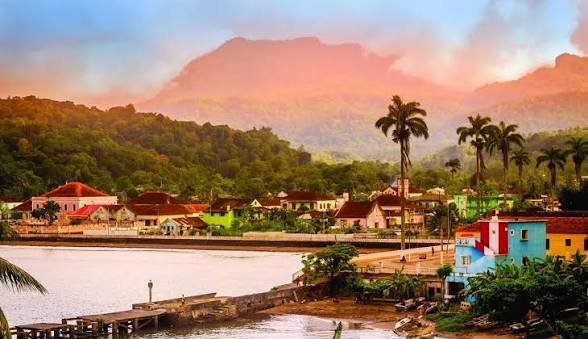
The International Monetary Fund (IMF) and the São Toméan authorities have reached a staff-level agreement on the third review of São Tomé and Príncipe’s economic programme supported by the Extended Credit Facility (ECF), paving the way for a disbursement of approximately US$6.1 million to support the island nation’s economic reform efforts. The agreement followed an IMF staff mission to São Tomé from March 26 to April 8, 2026, led by Mission Chief Mr. Slavi Slavov, and subsequent virtual discussions. It is subject to the completion of agreed prior actions and approval by the IMF Executive Board. The total IMF financial support disbursed under the current arrangement would consequently rise to approximately US$19.9 million upon completion of the review. The ECF arrangement was originally approved by the IMF Executive Board on December 19, 2024, for a total amount of SDR 18.5 million around US$25 million covering a 52-month programme. The Board further approved a 12-month extension and augmentation of SDR 4.4 million in December 2025. Mr. Slavov stated during the visit that the ongoing war in the Middle East and prolonged power outages pose severe risks to economic recovery. “The global oil price shock resulting from the war in the Middle East and the prolonged power outages pose severe risks to economic recovery,” he stated. The Mission Chief further warned that higher fuel costs and rising import prices for essential goods could reverse the inflation trend, with core inflation remaining elevated. He added that reforming the energy sector remains essential to overcoming the impact of global shocks, unlocking growth, and alleviating pressures on public debt and foreign exchange reserves. The IMF Mission Chief added that most quantitative targets for the third review have been met, and significant progress has been made on a range of macro-structural issues. “The Fund-supported programme continues to play a pivotal role in supporting macroeconomic stability, helping the country to confront external shocks, foster structural reforms, and catalyse support from other development partners,” he added. The IMF team held meetings with President Carlos Vila Nova, Prime Minister Américo d’Oliveira dos Ramos, Minister of State for Economy and Finance Gareth Haddad do Espírito Santo Guadalupe, Central Bank Governor Agostinho Fernandes, and other senior government officials and private sector representatives during the mission.  

Africa

IMF Holds Talks with Senegal on Economic Challenges, New Programme Under Consideration

The IMF Mission Chief,Ms. Mercedes Vera Martin has revealed that Senegal has expressed an interest in a new IMF-supported programme. Speaking during a staff visit by the International Monetary Fund (IMF), led by herself she explained that this move forms part of the country’s plans to navigate an increasingly challenging economic environment. “These include measures to support fiscal consolidation and address debt vulnerabilities, strengthen debt management, enhance public governance, and promote inclusive and sustainable growth,” she added. The mission, which ran from June 15 to 19, 2026, assessed recent economic trends and engaged senior government officials on reforms spanning fiscal consolidation, debt management, and public financial governance. A look at Senegal’s economy during the visit revealed that they recorded real GDP growth of 6.7 percent in 2025, supported by a strong expansion of the hydrocarbon sector with the current account deficit also narrowing down significantly during the year, driven by oil exports and import compression. The overall fiscal deficit also narrowed sharply from 13.4 percent of GDP in 2024 to 6.4 percent of GDP in 2025, largely on the back of spending rationalisation. The IMF however, noted and warned that fiscal and debt vulnerabilities remain elevated. Discussions during the visit also focused on assessing the impact of the Middle East conflict on Senegal’s economy, reviewing financing needs for the remainder of 2026, and designing reforms to enhance growth, reinforce social safety nets, and strengthen governance. The IMF team held meetings with Prime Minister Ahmadou Al Aminou Lo, Minister of Economy, Finance and Planning Cheikh Diba, and several other senior government officials and BCEAO representatives during the visit.

Africa

IMF, Niger Reach Agreement on $33 Million Disbursement Under Extended Credit Facility

  The International Monetary Fund (IMF) has reached a staff-level agreement with the Nigerien authorities which will see to the disbursement of approximately US$33 million to support the West African nation’s external financing needs under its ninth review of Niger’s economic reform programme . The agreement which was announced following an IMF staff mission to Niamey from June 2 to 12, 2026, led by Ms. Julia Bersch will see to the country being onboarded on the Fund’s Extended Credit Facility programme once approved . Economy Growing Strongly Niger’s economy recorded solid growth of 6.9 percent in 2025, driven largely by agriculture and the extractive sector, and is projected to expand further to 7 percent in 2026. Over the medium term, growth is expected to average around 6.1 percent, though the IMF has flagged downside risks including heightened security threats, regional conflicts, and climate shocks. Inflation also declined significantly in 2025, averaging -4.7 percent, though prices have begun rising again and inflation is projected to average -1.9 percent in 2026. The IMF noted that the ongoing war in the Middle East is affecting Niger primarily through higher oil prices with a net positive effect overall while higher transportation and import costs are weighing on the most vulnerable households. Fiscal Position Niger’s fiscal deficit stood at 2.9 percent of GDP in 2025, coming in 0.4 percentage points below projections and within the WAEMU fiscal convergence threshold of 3 percent of GDP. The IMF attributed this to strong domestic revenue mobilisation efforts and higher proceeds from crude oil exports. For 2026, the fiscal deficit is projected to widen to 3.4 percent of GDP to accommodate reconstruction spending following last year’s natural disasters and to provide relief to households affected by the current commodity price shock. Authorities have indicated they will use part of expected oil windfall revenues to build fiscal buffers while maintaining prudent borrowing policies. Structural Reforms on Track Programme performance against end-December 2025 and end-March 2026 targets was described as satisfactory. The Nigerien authorities have made progress in strengthening cash flow management, clearing arrears, and improving transparency including through the publication of oil contracts signed between the state and oil companies. The ECF-supported programme aims to strengthen macroeconomic stability and lay the groundwork for resilient, inclusive, and private sector-led growth. Efforts to strengthen the banking sector and improve support for micro, small, and medium-sized enterprises are also ongoing, backed by the World Bank.

Africa

IMF to hold second annual MENA Research Conference at Rabat, Morocco

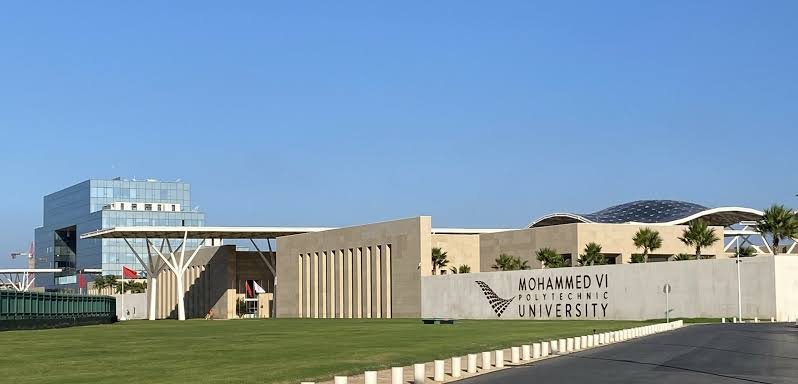
The International Monetary Fund (IMF) will partner the Mohammed VI Polytechnic University to hold the second annual MENA Research Conference scheduled for June 29-30, 2026 in Rabat, Morocco. The conference, which will be held under the theme “Rethinking MENA Integration in a Fast‑Changing Global Environment”, will examine the impact of global trade, geoeconomic fragmentation, and technology, including artificial intelligence, on the MENA region with other featured sessions to also discuss the role of monetary, fiscal, and labor market policies in promoting macroeconomic stability in an increasingly uncertain global environment. Speaking ahead of the conference, Director of the Middle East and Central Asia Department of the International Monetary Fund ,Jihad Azour and the Executive Vice-President of Mohammed VI Polytechnic University,Karim El Aynaoui,issued the following statement today: “The war in the Middle East threatens to leave lasting scars on the region’s economic trajectory. This unprecedented shock is forcing countries across the region to reassess their path forward amid an already complex and challenging environment shaped by rapid technological change and shifts in global trade patterns.” they said The two officials also reaffirmed the IMF’s commitment to the region, describing the annual conference as a critical platform for research, policy dialogue, and collaboration. “The IMF’s engagement with the MENA region reflects its longstanding commitment to supporting countries’ efforts to maintain macroeconomic stability, enhance resilience and growth, accelerate reforms and raise living standards in an increasingly challenging regional economic environment,” they added. The  second edition of the conference comes after the inaugural edition which was  held last year, in partnership with the Onsi Sawiris School of Business at The American University in Cairo,Egypt.The International Monetary Fund (IMF) Middle East and North Africa (MENA) Research Conference is an annual economic research conference which is held in partnership with leading universities in the region and aims to establish a forum for dialogue and knowledge exchange among academics, researchers, and policymakers on significant regional and global economic issues. It also seeks to strengthen economic research capacities in ministries of finance and central banks in the region.  

Africa

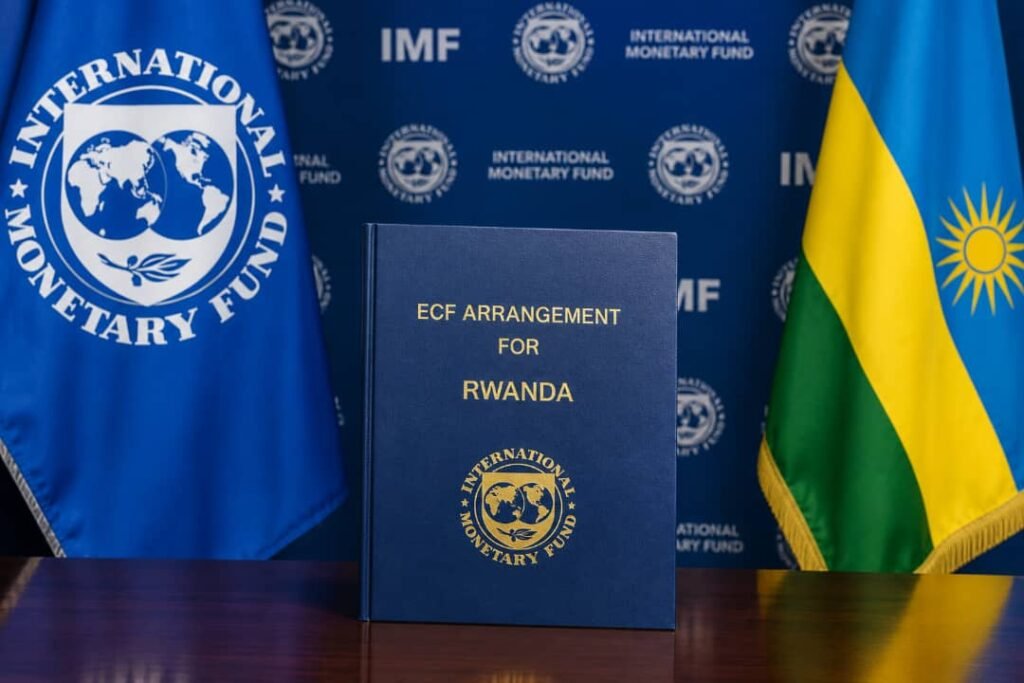
IMF Approves $250 Million ECF Arrangement for Rwanda Amid Global Headwinds

The Executive Board of the International Monetary Fund has approved a 38-month arrangement under the Extended Credit Facility for Rwanda, with access of SDR 185.031 million equivalent to 115.5 percent of the country’s quota alongside an immediate disbursement of SDR 26.433 million, approximately US$35.7 million. The facility is designed to help Rwanda adapt to tighter global financing conditions while sustaining growth, protecting priority social and development spending, and rebuilding policy buffers. Rwanda’s economy has maintained a strong performance, with growth reaching 9.4 percent in 2025 well above initial projections. However, inflation has emerged as a growing concern, surpassing the central bank’s target range and climbing to 13.2 percent year-on-year in April 2026. On the external front, the country’s position improved last year, supported by strong exports of coffee and minerals, though imports remained elevated driven largely by equipment and materials needed for local businesses. Foreign exchange reserves held steady, covering just over four months of imports. Despite the strong outturn, Rwanda’s near-term economic outlook is clouded by the ongoing conflict in the Middle East. Growth is expected to moderate to below 6.8 percent in 2026, with higher international oil and fertilizer prices driven by the war hence adding to fiscal, inflationary, and current account pressures. The ECF-supported program by the IMF will be anchored around three key pillars which is strengthening a coherent macroeconomic policy mix, managing fiscal and debt risks to sustain growth, and promoting private-sector-led growth with transparent fiscal oversight of state-owned enterprises. Speaking after the Executive Board’s discussion, IMF Deputy Managing Director and Acting Chair, Mr. Bo Li, stressed the need for a credible medium-term consolidation path, anchored around stronger revenue mobilization, improved public investment management, and enhanced monitoring of capital spending. “A credible medium-term fiscal consolidation path will be pivotal to reducing external imbalances and safeguarding Rwanda’s moderate risk of debt distress, while safeguarding social objectives,” he said. He also called for tighter monetary policy to rein in inflation, noting that rapid credit growth and concentrated exposures warranted close monitoring, even as the financial sector remained stable. “An appropriately tight and forward-looking monetary policy will help address elevated inflationary pressures. Strengthening policy communication and reinforcing the credibility of the inflation target will be essential to better anchor inflation expectations,” Mr. Li added. On structural reforms, he urged Rwanda to push ahead with improving public investment efficiency, strengthening institutional frameworks, and accelerating state-owned enterprise reforms to contain fiscal risks and foster a more dynamic economic environment. “The ECF-supported program, underpinned by the authorities’ strong policy commitment and continued engagement with development partners, provides an appropriate policy anchor to support orderly adjustment, sustain reform momentum, and catalyze more financing,” he concluded.

Africa

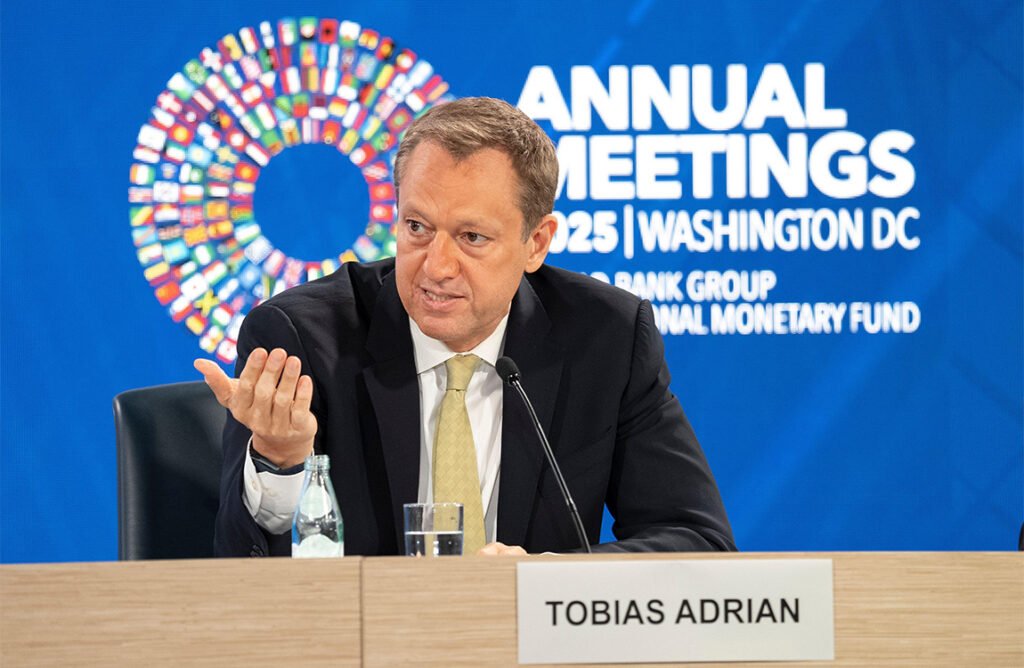
IMF’s Tobias Adrian to Step Down as Financial Counsellor

The Managing Director of the International Monetary Fund, Ms. Kristalina Georgieva, has announced that departure of the Financial Counsellor and Director of the IMF’s Monetary and Capital Markets Department,Tobias Adrian from the Fund effective August 31, 2026. In a press release dated June 8,2026 ,Ms. Kristalina Georgieva explained that the man who led the Fund under some of its most turbulent periods in recent global economic history has decided to step down from his role after 9 years. “Since taking on this role in 2017, Tobias has provided exceptional intellectual leadership at a time of extraordinary global uncertainty.From the COVID-19 pandemic and its aftermath to the surge in global inflation, tighter financial conditions, and rising geo-economic fragmentation, he has ensured that the Fund’s work on macro-financial issues remained rigorous, timely, and highly relevant for our membership.”Ms. Georgieva said Under his tenure,the German-U.S. dual national, led the Fund’s work on financial sector surveillance, monetary and macroprudential policy, digital finance, capital markets, and financial stability. Under his watch also, the Monetary and Capital Markets Department strengthened its support to the Fund’s membership, delivering policy advice, surveillance, program support, and capacity development across more than 100 countries annually. Tobias Adrian also elevated the Global Financial Stability Report as a leading voice on macro-financial risks and played a central role in advancing the IMF’s Integrated Policy Framework, a framework aimed at helping countries navigate fluctuations in international capital flows. Beyond traditional financial stability work, Mr. Adrian played a defining role in shaping the IMF’s approach to digital money and financial innovation, helping position the institution at the forefront of global policy discussions in a rapidly evolving space. Prior to joining the IMF, Mr. Adrian held several senior positions at the Federal Reserve Bank of New York. He has published extensively and taught at leading academic institutions including MIT, Princeton University, and New York University.

Africa

IMF and Guinea-Bissau Reach Staff-Level Agreement on Eleventh Review of Extended Credit Facility

The International Monetary Fund and Guinea-Bissau have reached a staff-level agreement on economic policies that could support the approval of the Eleventh Review of the Extended Credit Facility arrangement, unlocking access to approximately US$1.6 million upon completion of the review by the IMF Executive Board. The agreement follows discussions held in Bissau from April 21 to 29, 2026, by an IMF team led by Niko Hobdari, mission chief for Guinea-Bissau, on macroeconomic policies under the ECF arrangement. The staff-level agreement is contingent on the implementation of agreed prior actions and remains subject to IMF Management approval and Executive Board consideration. The ECF arrangement was originally approved by the IMF Executive Board for a total amount of SDR 28.4 million  about US$37.3 million  on January 30, 2023, and was subsequently augmented to 140 percent of quota or SDR 39.76 million on November 29, 2023. Completion of the Eleventh Review would bring total disbursements under the arrangement to SDR 38.58 million  about US$52.8 million. At the conclusion of the mission, Mr. Hobdari noted that all end-March 2026 programme targets were met, with the authorities satisfying all quantitative performance criteria, indicative targets, structural benchmarks and continuous performance criteria, reflecting sustained commitment to the ECF-supported reform agenda. “I am pleased to announce that we have reached a staff-level agreement with the Guinea-Bissau authorities on economic and financial policies that could support the approval of the Eleventh Review of the ECF program,” Mr. Hobdari said. Economic growth in 2025 is estimated to have remained strong at 5.8 percent, supported by robust agricultural production particularly cashew exports and solid private investment. The IMF however cautioned that growth is projected to moderate in 2026 amid a more challenging external environment, including higher global fuel prices linked to the conflict in the Middle East and potential disruptions to the cashew marketing campaign due to production and logistical constraints. Mr. Hobdari noted that the authorities remain committed to achieving the 2026 domestic primary surplus target through strengthened revenue mobilisation and strict expenditure prioritisation, with prior actions focused on reinforcing tax administration, tightening expenditure controls, strengthening debt management and preserving investor confidence. Looking ahead the IMF flagged significant downside risks to Guinea-Bissau’s economic outlook including adverse weather conditions, negative terms-of-trade developments and tighter financing conditions. Against the backdrop of a tight fiscal space the Fund noted that the authorities’ commitment to curtail non-priority spending until cashew-related revenues materialise, alongside proactive cash management practices, would help ease financing pressures. The IMF also called for continued efforts to promote economic diversification into fisheries and extractive sectors  including oil, phosphate and bauxite as key to strengthening the country’s resilience over the medium term.

Africa

Iran says Strait of Hormuz is ‘open’ but tracking shows few ships moving

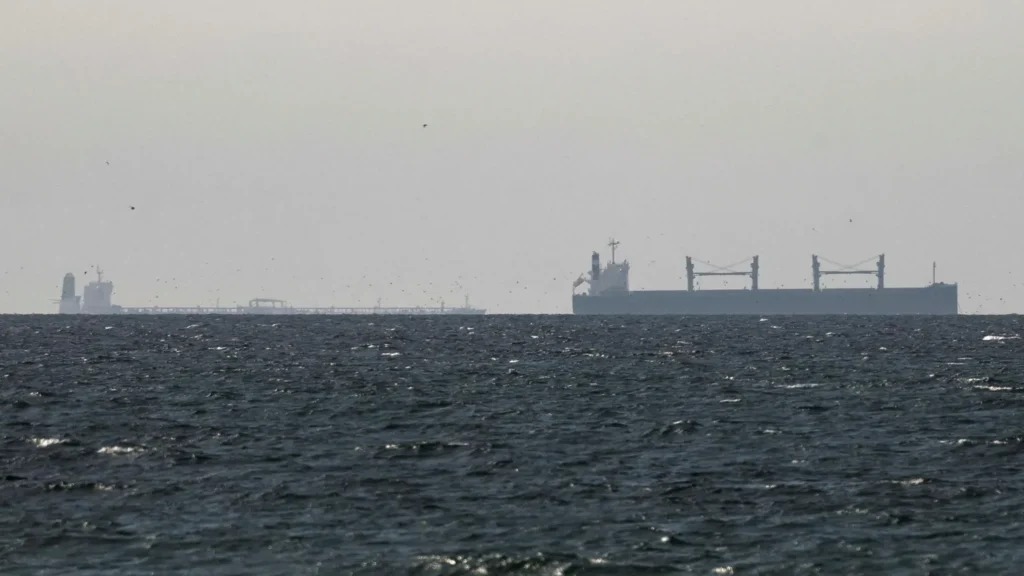
Iran’s foreign minister has said the Strait of Hormuz has reopened for commercial vessels, but added that ships should use designated safe lanes. Tehran has effectively blocked the key oil shipping channel since the US and Israel attacked the country on 28 February. A ceasefire between the US and Iran is due to expire on 22 April. US President Donald Trump said a naval blockade of Iranian ports would continue until a peace deal was agreed between the two countries but that it was “a great and brilliant day for the world”. Maritime groups say they are still verifying whether it is safe for vessels to travel through the strait, and tracking shows minimal ship movement. The announcement by Abbas Araghchi, Iran’s foreign minister, came on Friday – the first full day of a 10-day ceasefire between Israel and Lebanon. “In line with the ceasefire in Lebanon, the passage for all commercial vessels through Strait of Hormuz is declared completely open for the remaining period of ceasefire on the coordinated route as already announced by Ports and Maritime Organisation of the Islamic Rep of Iran,” he wrote on X. Iranian state TV later quoted a “senior military official” as saying that the passage of these vessels would be through a “designated route” and that the passage of military vessels through the Strait would still be “prohibited.” This is likely referring to a map and two routes designated by Iran’s Islamic Revolutionary Guard Corps (IRGC) and widely reported by Iranian media last week. Some Iranian news outlets have criticised Araghchi’s post. Tasnim News Agency, affiliated with the IRGC, called it “bad and incomplete”, saying such passage would be considered “void” should the US naval blockade continue. Others called for the Iranian authorities to clarify the matter. Iranian Parliament Speaker Mohammad Bagher Ghalibaf, who headed Iran’s delegation in the recent talks with the US in Islamabad, said on X that Donald Trump “made seven claims in one hour, all seven of which were false”. On the Strait of Hormuz, he said that, with the “continuation of the [US] blockade”, the Strait “will not remain open”. Iran is an ally of Hezbollah, a Shia Muslim political and military group based in southern Lebanon. Israel launched strikes on Lebanon on 2 March in response to those carried out by Hezbollah, which itself was retaliating against the US and Israel for its attacks on Iran. Meanwhile, Trump said talks with Iran to end the war would continue over the course of the weekend, adding that he did not think there were too many significant differences between the two sides. It comes after Iran’s foreign ministry said the country’s stockpile of enriched uranium would not be transferred “anywhere under any circumstances”, denying Trump’s claim on Friday that the regime had agreed to hand it over to the US. Trump also told CBS News, the BBC’s US partner, that no ground troops would be needed to remove the enriched uranium, saying that the US and Iran would “work together to go get it”. “And then we’ll take it to the United States,” he added. About 20% of the world’s oil and liquefied natural gas (LNG) usually passes through the strait, but the number of ships transporting this has dramatically decreased during the recent hostilities. Iran has threatened to attack tankers and other ships, as well as warning that it has laid mines. This has sent shock waves across the global economy, causing fuel prices to soar. While the cost of oil plummeted on Friday following Araghchi’s announcement, questions remain about the validity of it and whether a temporary reopening would allow ships to transit through. “I need further clarification for the shipping industry that there will be no risks for the ships to navigate and it will be in accordance with international law,” Arsenio Dominguez, the head of the International Maritime Organisation (IMO), told BBC World Business report. The IMO has information that some ships have started to sail but that it still needed to verify this as “some ships turn off their identification systems in order not to be targeted”, he said. Cormac McGarry, director for maritime security at the consultancy firm Control Risks, said he was “no more optimistic than he was yesterday” about the strait reopening, despite Araghchi’s announcement. He told BBC’s 5 Live Drive that the statement “basically changes nothing” as the implicit threat of mines remain. “Right now, the scenarios are looking pretty bleak for shipping over the next few weeks,” McGarry added. UK Prime Minister Sir Keir Starmer said on Friday that his country and France would lead a multinational mission to protect commercial shipping routes in the Strait of Hormuz. Speaking after a meeting of 49 countries, Starmer underlined the work would be “strictly peaceful and defensive” and would only be put in place once fighting in the region ends. Source : BBC

Africa

Africa’s Growth Momentum to Slow in 2026, IMF Warns

The International Monetary Fund (IMF) has projected a slowdown in Africa’s economic growth momentum for 2026, contrary to earlier forecasts, citing the ripple effects of the Middle East conflict and persistent structural vulnerabilities across the continent. This was contained in a joint statement issued by Chairman of the African Caucus and Minister of Finance and Economic Affairs of The Gambia, Mr. Seedy Keita, and the Managing Director of the IMF, Ms. Kristalina Georgieva, at the conclusion of the African Consultative Group meeting. According to the statement, real GDP growth on the continent is projected to decline from 4.5 percent in 2025 to 4.2 percent in 2026, with Sub-Saharan Africa and North Africa recording growth rates of 4.3 percent and 4.1 percent respectively,down from 4.5 percent each in 2025. The Fund attributed the revised outlook to high debt service burdens, limited access to affordable financing, and growing development needs that continue to constrain policy space, particularly in low-income and fragile states. The ongoing war in the Middle East, the statement warned, adds another layer of complexity, with the potential for severe scarring including the return of inflation, food shortages, and social tensions. In response to the deteriorating outlook, the African Consultative Group urged policymakers to focus on near-term shock response while simultaneously building medium-term resilience. The Group called for keeping inflation expectations anchored and protecting the most vulnerable through targeted, time-bound support measures. On fiscal policy, the statement drew a clear distinction between oil-exporting and oil-importing economies advising exporting economies to save temporary windfalls and rebuild fiscal buffers, while urging importing economies like to safeguard priority social and development spending, mobilise domestic revenues, and improve spending efficiency. The African Consultative Group was formed in 2007 to enhance the IMF’s policy dialogue with the African Caucus, comprising Fund Governors from a subset of 12 African countries, African finance ministers, central bank governors, and Fund management.