Business Outlook Africa

Author name: Business Outlook Africa

Head of Mortgage Banking and Customer Experience at Republic Bank Ghana,Dan Adjetey Mohenu
News

Stop Rushing Repayments, Stick to Your Payment Plan — Dan Adjetey to Mortgagees

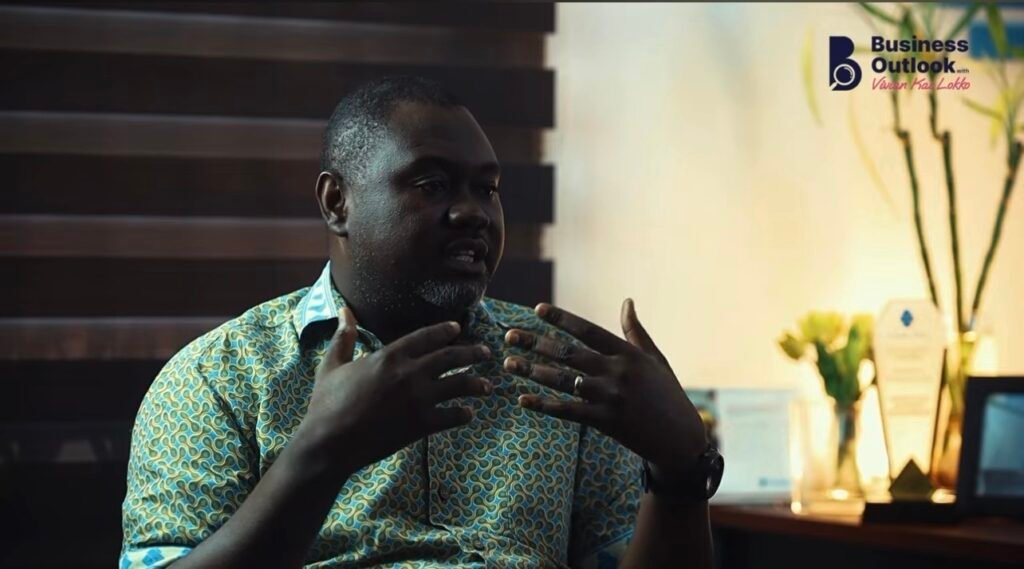
Head of Mortgage Banking and Customer Experience at Republic Bank Ghana,Dan Adjetey Mohenu has urged mortgagees to resist the urge to accelerate repayments and instead stick to their scheduled monthly installments. Speaking exclusively to Business Outlook Africa, Dan Adjetey argued that tying up excess liquidity in a mortgage payment can put undue pressure on their cash flow. “Let me put it that way fear in the sense that the individuals do not want to go the long term. I’ve seen mortgagees who come for the loan for 20 years and it’s like they are in a hurry to pay off and so instead of sticking to say their are GHC 2,000 monthly payment,Immediately, they take the mortgage,they want to increase it to GHC 5,000 so that they can pay off on time.These are assets.They are not bringing you any money now.So why are you committing a lot of liquidity ?” Dan stated Comparing Ghana’s mortgage industry to that of other African countries,Dan Adjetey placed Ghana’s industry way ahead arguing that that country does better in terms of financing than the rest. “I would place us a bit high, than all of them, compared to the likes of probably Nigeria, South Africa.You know, Nigeria is quite heavy on cash.And so you would have a number of people purchasing homes with cash, not necessarily going through mortgage.And I’m placing us high because of the financing aspect, not because of home acquisition.” Dan added Dan Adjetey however stated that despite improvements in mortgage awareness, significantly more work remains to be done not only in Ghana but on the whole continent particularly on the financing side . He noted that Africa as a continent continues to grapple with a massive housing deficit, pointing to a systemic failure across most African economies to provide long-term financing solutions for housing. “I would say that there’s still more to do, because when you read around, every country in Africa has a very huge housing deficit.And so it tells you that we are not practically doing what we have to do when it comes to access to the financing. And most of the African countries, to our economy, are more short-term basis.” He added Despite the challenges, Dan Adjetey expressed optimism about the trajectory of Ghana’s mortgage industry, projecting significant improvement within the next five to six years. He attributed this optimism to a generational shift currently underway in Ghana’s workforce, noting that young graduates entering the job market have already being exposed to mortgage financing education at the tertiary level. “And I know and I believe that in the next five, six years, we will get better when it comes to the financial system.Six years because, you know, we have young people now coming into the system, people who have left the university, they are looking for jobs. So usually it takes about five, six years for them to settle in. So our education has been from the school.So from the universities, from the tertiary institutions, trying to make them understand the opportunities that you have through mortgage financing.” he added        
Head of Mortgage Banking and Customer Experience at Republic Bank Ghana,Dan Adjetey Mohenu
Real Estate

Republic Bank Ghana Mortgage Head Blames Housing Crisis on Demand-Supply Disconnect — Calls for Cheaper Land and Local Materials

Head of Mortgage Banking and Customer Experience at Republic Bank Ghana,Dan Adjetey Mohenu has stated that a major problem fueling the housing crisis in Ghana has to do with the disconnect between demand and supply. Speaking exclusively to Business Outlook Africa, Dan Adjetey explained that this is as a result of developers overpricing the houses making it difficult for those in demand to afford it. “Now there is a disconnect between supply and demand. I say so because the suppliers say the developers, those who put up the houses, end up pricing them higher than what the demand can afford.” Dan stated The Head of Mortgage Banking added that this growing disconnect leaves suppliers no other option than to sell to people in the diaspora who end up not staying in these apartments whiles the real people who need to stay in these facilities end up not being able to . “So we end up relying on the diasporas who have the purchasing power to purchase these houses and nobody stays in them. So the actual people who live and work in Ghana are unable to afford the prices of what the suppliers bring to the table. So it continues to create that gap.” Dan added On what can be done on the supply side to increase affordability, Dan Adjetey called for cheaper lands and the use of indigenous resources in putting in these houses arguing that this when done will go a long way to reduce house prices,mortgages and increase affordability. “Now we need to look at the supply side where are we getting cheaper lands? Where are we getting cheaper building materials to put up these houses?” He added On what he describes as affordable given his expertise in the field, Dan Adjetey stated anything not more than GHC 350,000 can be considered affordable arguing that with this people who earn between GHC 3,000 and GHC 4,000 can easily access mortgages without having much burden. On the current state of the mortgage industry, Dan Adjetey stated that it’s in a better state explaining that most people now know of the industry and what it entails than before. “Well, the point where people now understand what mortgages are.I won’t say everybody, but at least you have the diasporas understanding how mortgages work in Ghana.You have people who work and live in Ghana also understanding and seeing the mortgage as the first option when it comes to home acquisition.” he stated      

Banking & Finance

“Make No Mistake” — Nduom Insists Standard Chartered’s Retail Business Must Go to a Ghanaian Buyer

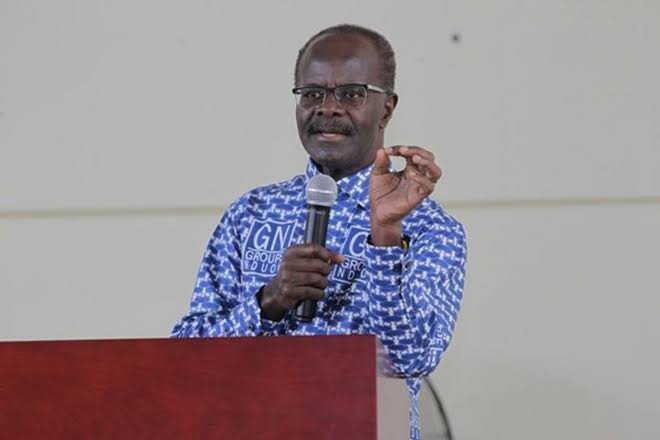
Renowned Ghanaian businessman and Founder of Groupe Nduom, Dr. Papa Kwesi Nduom has urged indigenous Ghanaian companies to be prioritised in the acquisition process for Standard Chartered Ghana’s retail banking business following its announced intention to divest. In a post made on Facebook, the renowned Ghanaian businessman argued this opportunity presents the country a unique opportunity to strengthen local ownership within its local retail banking space. “Make no mistake about this: if Standard Chartered is selling its retail banking business, the buyer should be an indigenous Ghanaian company.” Dr. Nduom stated Ghana’s banking sector has seen a significant erosion of indigenous ownership, a trend accelerated by the 2017-2020 banking crisis which wiped out several domestically owned institutions. The comments by Dr. Papa Kwesi Nduom follow Standard Chartered Bank Ghana’s announcement of its intention to explore the sale of its Wealth and Retail Banking business as the bank shifts focus to its Corporate and Investment Banking operations. With a great career spanning from business to politics,this call carries particular weight especially coming from a man owned one of the largest indigenous financial institutions in Ghana before its licence was revoked during the 2017-2020 banking sector cleanup.

News

President Mahama Cuts Sod for Phase II of the Sentuo Oil Refinery

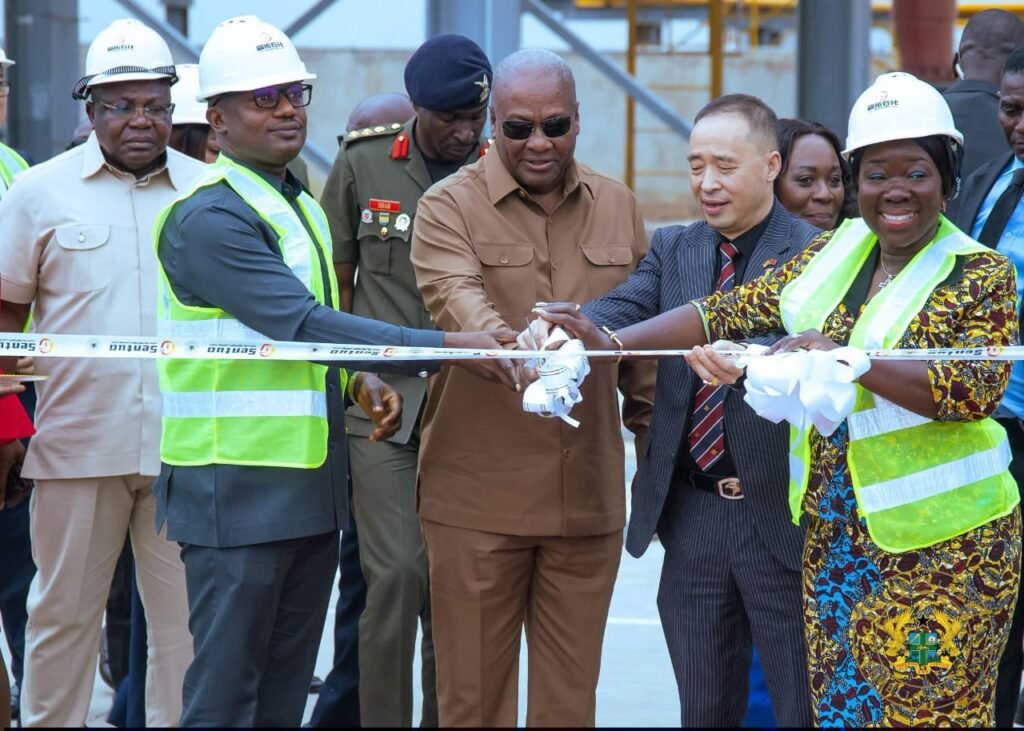
President John Dramani Mahama has cut the sod for the Phase II of the Sentuo Oil Refinery, reaffirming Government’s commitment to industrialization, energy security, and value addition. The Sod Cutting ceremony which took place on June 26,2026 brought together key stakeholders across the industry including the Minister for Trade and Agribusiness and the Minster for Energy. Passing on his remarks at the ceremony, President Mahama emphasized that Ghana’s development strategy is centered on moving beyond the export of raw materials to building a resilient economy that processes, manufactures, and creates value within its borders. The expansion will increase the refinery’s processing capacity from 40,000 to 100,000 barrels per day, strengthen Ghana’s energy sector while also creating thousands of jobs, and support the nation’s broader economic transformation agenda. The project is expected to boost employment at the refinery upon completion, while contributing significantly to the country’s energy independence and industrial growth. The Sentuo Oil Refinery Limited (SORL) is a massive, modern petrochemical facility located in the Tema Heavy Industrial Area in Ghana. Originally commissioned in early 2024 with an initial investment of nearly $2 billion by the Chinese conglomerate Sentuo Group, it has quickly established itself as the country’s largest active refining facility.  

Economy

Building Inflation Rises to 2.7% in May 2026

  Ghana’s building inflation rose to 2.7 percent in May 2026, up from 2.2 percent in April, though remaining significantly lower than the 22.0 percent recorded in the same period last year, according to the Ghana Statistical Service (GSS). The figures were disclosed in the May 2026 Prime Building Cost Index (PBCI) and Inflation report, with Government Statistician Dr. Alhassan Iddrisu noting that while annual inflation remains low, recent monthly trends signal that cost pressures are gradually re-emerging in the construction sector. The data indicated that the price of building inputs increased by 1.4 percent during April and May 2026, extending a series of rising prices for a fifth straight month. Electrical works was by far the biggest contributor to the 63.1 percent cost push in total building inflation for May 2026, having done so alone. Metalwork was next at 34.8 percent and plumbing at 29.2 percent of building inflation, while glazing was at 35.6 percent. The report showed there was a difference between prices of various groups of building materials. Pressure on finishing materials continued with plumbing up 22.8 percent and roofing sheets up 19.9 percent year-on-year. The price of steel, however, was down 8.1 percent on year, while that of cement was down 14.5 percent on year. Dr Iddrisu, therefore, emphasized that at 2.7 per cent, building inflation is still low and that the current situation is conducive and cannot be missed. He advised the Government to expedite infrastructure development projects under the Big Push initiative now while the cost conditions are favourable, and urged companies to ensure contracts and secure supply before the costs once again increase. “It is time for households to begin or continue building, beginning with structure – the window is open, use it,” he said.

Banking & Finance

Standard Chartered Bank Ghana Explores Sale of Wealth and Retail Banking Business

Standard Chartered Bank Ghana PLC has announced its intention to explore options for the sale of its Wealth and Retail Banking (WRB) business, in a development that may have a material effect on the price of the Company’s securities. The announcement, issued on June 25, 2026, follows a decision by the Company’s majority shareholder, Standard Chartered PLC  together with its subsidiaries, the SC Group  which stated as part of its 2025 results on February 24, 2026, that it will continue to focus the resources of its WRB business on Affluent Wealth Management clients. Standard Chartered Bank Ghana stated that the WRB divestment process will be launched shortly, and that any potential transaction will be subject to regulatory approvals and market conditions. The bank further stated that in the interim, the WRB business will continue to operate as usual pending the completion of any sale. The bank emphasised that the announcement does not affect its Corporate and Investment Banking (CIB) business, which will continue to operate in Ghana in the event of a WRB sale. Shareholders of Standard Chartered Bank Ghana have consequently been advised to exercise caution when dealing in the Company’s securities until a further announcement is made.

Africa

IMF Projects 5.5% GDP Growth for Liberia in 2026 as Fourth ECF Review Mission Concludes

An International Monetary Fund (IMF) staff team, led by Mission Chief for Liberia Mr. Daehaeng Kim, has concluded a two-week mission to Monrovia, conducting the Fourth Review under the Extended Credit Facility (ECF) arrangement and the First Review under the Resilience and Sustainability Facility (RSF) arrangement. The mission, which ran from June 10 to 23, 2026, assessed macroeconomic developments and held programme discussions with the Liberian authorities on policies underpinning the fourth ECF review. Real GDP growth is projected to remain buoyant at 5.5 percent in 2026, supported by continued strong expansion in mining activities alongside growth in manufacturing and construction. Inflation increased only modestly to 5.3 percent year-on-year in May 2026, up from 4 percent at end-2025, despite the recent surge in global fuel prices. The Mission Chief noted that the limited increase reflects the low weight of fuel in Liberia’s Consumer Price Index basket and limited second-round effects, supported by a stable exchange rate. Fiscal performance is expected to remain in line with programme objectives, underpinned by continued progress in domestic revenue mobilisation. The IMF noted that Liberia’s current account deficit is projected to widen significantly in 2026 to approximately 18 percent of GDP, up from 7 percent of GDP in 2025 with Mr. Kim attributing this to higher fuel imports and increased capital goods imports related to mining expansion and construction activities. Despite the projected widening, the Mission Chief stated that the medium-term outlook remains positive. Mr. Kim further stated that IMF staff and the Liberian authorities held constructive programme discussions and reached understanding on the policies underpinning the fourth ECF review, with discussions set to continue in the coming days. The IMF mission held meetings with President Joseph N. Boakai, Minister of Finance and Development Planning Augustine K. Ngafuan, Central Bank of Liberia Executive Governor Henry F. Saamoi, and other senior government officials and development partners during the visit.  

Agriculture

Ghana Pushes for Fair and High-Integrity Carbon Markets at London Climate Action Week

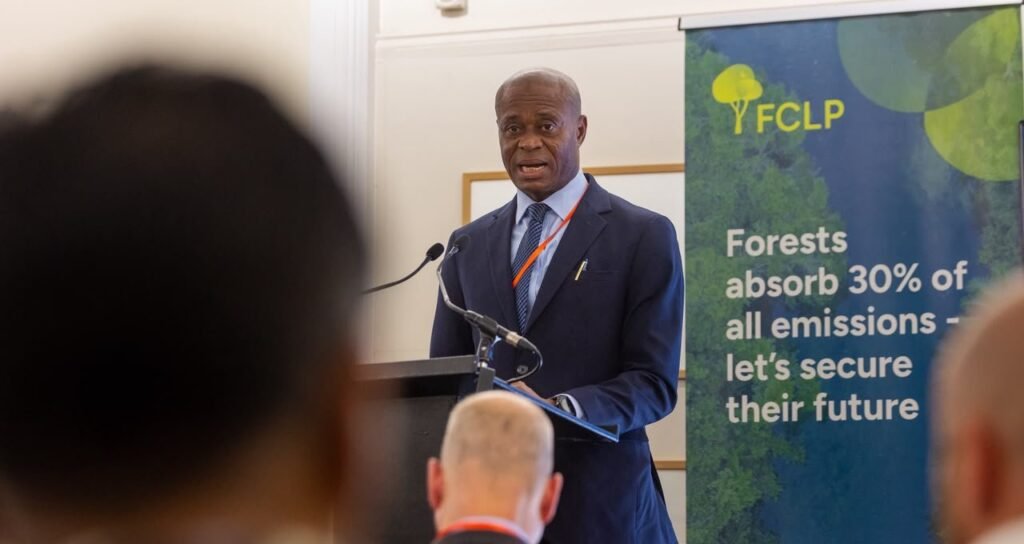
Ghana has renewed its call for a fair, transparent and high-integrity global carbon market, saying it is essential for mobilising climate finance and helping developing countries meet their emissions reduction targets. Speaking at a meeting of the Coalition to Grow Carbon Markets during London Climate Action Week on June 23, 2026, the Deputy Minister for Lands and Natural Resources, Yusif Sulemana, described carbon markets as a practical tool for unlocking investment, accelerating mitigation, and delivering real benefits for communities and nature. He revealed that Ghana had taken bold steps to integrate carbon markets into its national climate strategy, assigning 24 million tonnes of its emission reduction target to Article 6 cooperation under the Paris Agreement. According to him, the country has doubled that ambition in its revised Nationally Determined Contributions (NDCs). The Deputy Minister also highlighted Ghana’s four bilateral carbon market agreements with Switzerland, Sweden, Singapore and South Korea, describing them as evidence of the country’s readiness and commitment to transparency and environmental integrity. He added Ghana’s focus is now on scaling investment in carbon finance projects, including clean cooking, renewable energy, forest conservation and methane reduction. “We want to see more high-quality mitigation activities,” the Deputy Minister said. He, however, stressed that credibility must remain at the heart of market growth. “Integrity is the foundation of trust, and trust is the currency of carbon markets”,Sulemana added. He called for fair carbon pricing and equitable benefits for host communities. The Coalition to Grow Carbon Markets is a government-led initiative launched at London Climate Action Week. Its primary goal is to spur global corporate demand for high-integrity carbon credits to help close the estimated $1.3 trillion climate finance gap.

News

Ghana Strikes Deal with Large-Scale Miners to Buy 30% of Gold Output Effective July 1

The Government of Ghana, through the Ghana Gold Board (GoldBod), has reached a landmark agreement with the Ghana Chamber of Mines to purchase 30 percent of the gold output of all large-scale mining companies operating in Ghana, effective July 1, 2026. The agreement was reached under the joint direction of the Minister of Finance and the Minister for Lands and Natural Resources. GoldBod stated that under the new arrangement, each large-scale mining company will sell 30 percent of their gold output to the GoldBod locally in Ghana in doré  raw form, at a discount of 0.55 percent. All gold purchases under the agreement will be conducted in Ghana Cedis and at the Bank of Ghana Reference Rate. The new arrangement differs significantly from the previous 2022 agreement between the Bank of Ghana and the Ghana Chamber of Mines, under which purchases were structured differently. GoldBod further stated that the arrangement has been strategically curated by the government to ensure that Ghana achieves LBMA accreditation for at least one local gold refinery by the year 2030. All doré gold purchased by GoldBod will consequently be refined locally to ensure local value retention, shipped to an LBMA-accredited refinery for melting and stamping, and delivered to the Bank of Ghana as part of the country’s gold reserves. Further details of the Memorandum of Understanding signed between the Ministry of Finance, the Ministry of Lands and Natural Resources, the Ghana Gold Board, the Bank of Ghana, and the Ghana Chamber of Mines are expected to be made public on Monday, June 29, 2026.

News

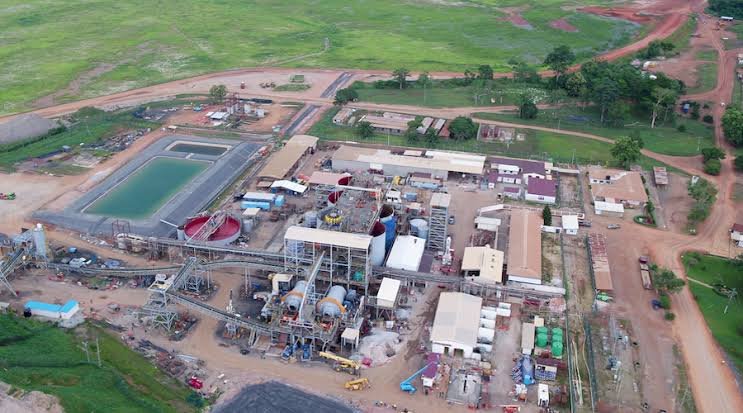
Asante Gold defers $50M in capex amid strategic review

Asante Gold Corporation has cancelled approximately $50 million in planned 2026 capital expenditures as part of an ongoing strategic review. The mining company released a statement on June 25, 2026, indicating that its gold production in Q1 2026 was broadly stable compared to the previous quarter from its operations at Bibiani and Chirano gold mines in Ghana. Acting Chief Executive Officer Campbell Baird said the first three months of the review focused on stabilizing operations and restoring capital discipline. “Projects have been rationalised, and the Company is beginning to move as one,” he said, adding that a late-July update would provide shareholders with a fuller picture of the company’s direction. The company added that it held cost management workshops at both Bibiani and Chirano, finding out the variations in the mining, processing, labour, general and administrative expenses (GAE), and capital expenditures (capex) and implemented corrective measures such as eliminating the hire of third-party equipment, renegotiating some contractor agreements, and re-evaluating procurement and supply chain processes. It also added that a stage-gate capital governance framework is also being implemented across both operations. A review of Bibiani also reveals that the company is now considering a phased development over the three previously planned portal design, starting with a single portal in Q4 2026. Work is also underway to recover approximately 5,000 ounces of gold accumulated within the processing circuit, which is expected to provide a one-off production benefit in Q4 2026. Asante said Phase 1 construction under its Bibiani Resettlement Action Plan is complete, with relocation of approximately 300 households expected to begin in early July. The company said it has invested approximately $50 million in the resettlement program to date. Glenn Baldwin was appointed Chief Development Officer in June 2026 and is leading the capital project review. Q2 2026 production results are expected to be reported in August 2026. The company said its banking syndicate remains supportive.