Business Outlook Africa

Author name: Business Outlook Africa

News

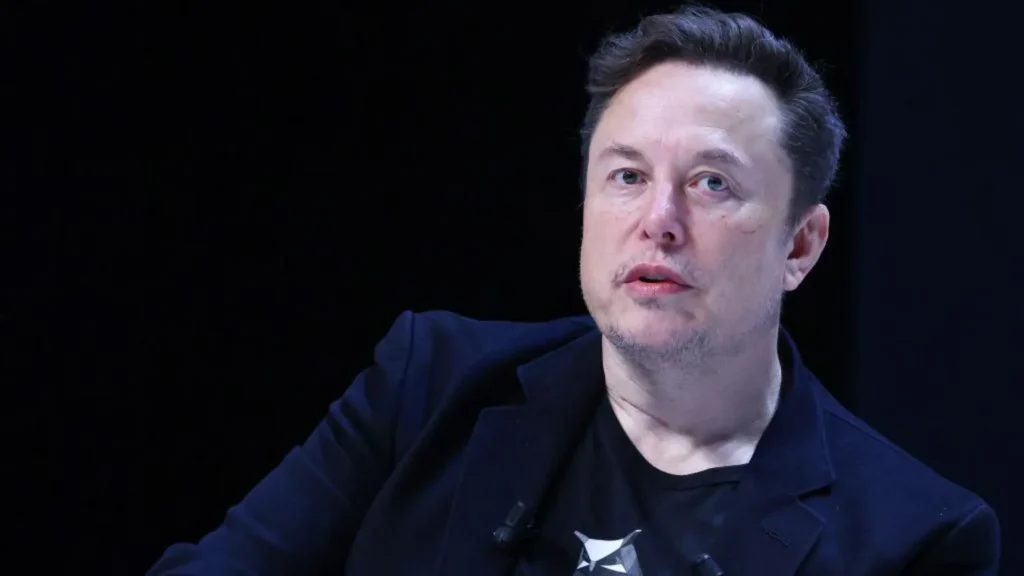
Elon Musk loses trillionaire status as global tech rout hits SpaceX

Tech entrepreneur Elon Musk lost his trillionaire status on Tuesday, less than two weeks after becoming the first person to achieve it following SpaceX’s public debut, according to data from Bloomberg. The Bloomberg Billionaires Index – updated daily at 17:30 in New York (22:30 BST) – valued his fortune at $957bn (£727bn) on Tuesday, down from the $1.11tn valuation less than 14 days ago. The reversal followed a sharp retreat in SpaceX and Tesla shares as technology stocks broadly tumbled, fuelled by growing doubts over the long-term profitability of artificial intelligence. Despite the loss, Musk remains the world’s richest person, and his wealth still dwarfs that of his nearest rivals. The billionaire originally made history on 12 June with the highly anticipated public market debut of his rocket company, SpaceX, on the Nasdaq exchange. The blockbuster initial public offering (IPO) was priced at $135 per share and opened at $150 when it began trading. The debut valued the rocket and satellite giant at more than $1.77 trillion. Because Musk owned roughly 42% of SpaceX, the listing instantly propelled his paper fortune past the $1 trillion mark. By 16 June, surging investor enthusiasm drove SpaceX shares to a peak of $225.64, pushing Musk’s total net worth to a peak of $1.32 trillion. However, the market rally did not last. Concerns over capital spending, artificial intelligence infrastructure costs, and stubborn interest rates triggered a widespread tech sell-off and hit high-flying technology giants such as Nvidia, Intel, and AMD, particularly hard. But SpaceX shares bore the brunt of the correction, plunging more than 30% from their mid-June peak to trade around $156. On a single turbulent Monday, 22 June, a 16% single-day drop erased an estimated $240 billion from Musk’s personal balance sheet. Concurrently, shares of his electric vehicle venture, Tesla, slid nearly 6% just a day later, compounding the financial damage. Musk owned about 12% of Tesla’s outstanding shares. Musk’s trillionaire status is uniquely vulnerable due to the extreme concentration of his wealth. Unlike traditional billionaires with diversified portfolios, his fortune is almost entirely tied to equity in just two companies: SpaceX, which represents nearly 80% of his total net worth, and Tesla. Market analysts note that post-IPO volatility is entirely standard for highly valued growth firms, though the scale of the movement reflects a deeper tug-of-war between hype and reality. “For a stock like SpaceX, a lot of decision making might have been emotional and based on the anticipation of huge leaps forward in space exploration and utilisation, but investing should be something treated with clear eyes and patience, even when such huge numbers are involved,” said Danni Hewson, head of financial analysis at AJ Bell. With restrictions lifting in late July that will allow company insiders to finally sell their shares in stages, market pressure may continue. However, because a modest 6% recovery in SpaceX stock would restore his 13-figure status, Musk may simply become the world’s first recurring trillionaire. SOURCE: BBC  

Banking & Finance

SEC Ghana Orders Online Investment and Trading Platforms to Obtain Licences Before August 31 — Warns Unregistered Operators to Desist

The Securities and Exchange Commission (SEC) Ghana has issued a directive ordering all market operators, financial technology service providers, and persons owning or operating online investment and trading platforms to obtain the appropriate registration and licensing from the Commission before August 31, 2026. The directive, issued on June 23, 2026, follows the Commission’s observation of a growing trend of unregistered online investment applications and trading platforms facilitating access to trading in securities listed in local and foreign markets. The SEC stated that considering the risks posed by fraudulent and unregulated online investment-related platforms, it is implementing measures to strengthen investor protection across Ghana’s securities market. Under the directive, a licensed market operator owning or operating any investor-facing investment technology or online platform must register and obtain a licence from the SEC for each technology or platform. Financial technology service providers or any person operating an online investment or trading platform that performs any SEC-licensed activity are consequently required to obtain the appropriate registration and licence from the Commission. Digital intermediaries operating digital platforms in the securities space are similarly required to comply. The SEC further cautioned that any person or entity including market operators who operates, whether directly or indirectly, an online investment application or trading platform that is not approved, licensed, or registered by the Commission must immediately desist from doing so. The Commission additionally urged the investing public to verify the authenticity of any investment products or platforms advertised through conventional or online media via the SEC’s official channels of communication. The SEC then outlined a five-step process for platforms seeking registration and licensing. Applicants are required to complete the Platform Owners’ Entry Form, after which the SEC will invite them for a demonstration of their platform or technology. The Commission will then provide feedback and guidance on regulatory steps to be taken, followed by payment of applicable registration or licensing fees, and the subsequent issuance of a Registration or ons. The SEC noted that the directive takes immediate effect and shall remain in force until otherwise revised, varied, amended, or revoked.

News

ICAG Warns Public Against Unauthorised Accountancy Bodies

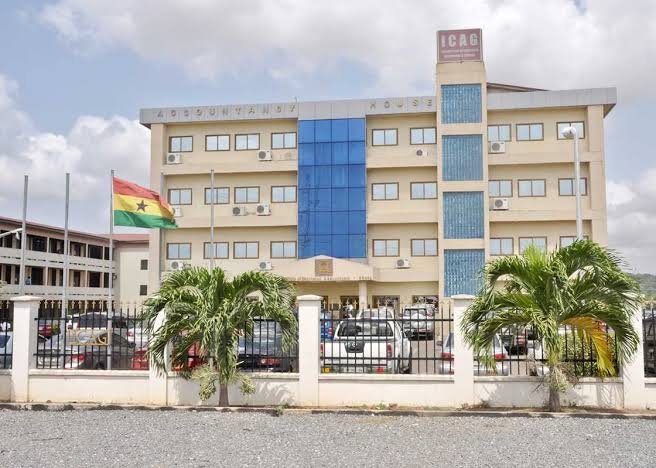
The Institute of Chartered Accountants(ICAG),Ghana have pointed out to the public,the ruling of the High Court with regard to the case of “Chartered Institute of Certified Tax Accountants, Ghana v. National Accreditation Board, Institute of Chartered Accountants, Ghana and Attorney-General” where it was held that all disciplines of accountancy, including tax accounting, fall within the Institute’s mandate. In a statement released on June 23,2026 the Institute stated that the court didn’t only rule in their favor but also classified the operations Chartered Institute of Certified Tax Accountants with regards to the regulation and certification of persons as Chartered Certified Tax Accountants as unlawful . ICAG then added that the legal position was further strengthened by the Institute of Chartered Accountants, Ghana Act, 2020 (Act 1058), which vests in the Institute the sole statutory mandate to regulate, train, examine, certify, and admit persons into the accountancy profession in Ghana. The Institute then went ahead to caution the general public, students, employers, and other stakeholders against enrolling with or relying on qualifications issued by any institution, body, or organisation that holds itself out as being authorised to train, certify, license, or regulate accounting professionals in Ghana without lawful authority. ICAG added that is is prepared to challenge and take the appropriate measures to prevent unauthorised persons or institutions from misrepresenting themselves as professional accountancy bodies or offering professional accountancy qualifications contrary to law. “ICAG remains committed to protecting the integrity of the accountancy profession and will take all appropriate measures to prevent unauthorised persons or institutions from misrepresenting themselves as professional accountancy bodies or offering professional accountancy qualifications contrary to law,” the Institute stated. The Institute of Chartered Accountants, Ghana was established by an Act of Parliament — the Chartered Accountants Act, 1963 (Act 170) — and was subsequently governed by the Institute of Chartered Accountants, Ghana Act, 2020 (Act 1058), which repealed Act 170. Its members are the only persons recognised under the Companies Act, 2019 (Act 992) for the purpose of auditing company accounts.      

Opinion

Why companies in Ghana should stop the ‘only successful applicants will be contacted’ policy

One of the most frustrating aspects of job hunting in Ghana is not simply the lack of jobs, but the lack of communication from many organizations after applications have been submitted. In most cases, companies contact only successful applicants and leave the rest in silence. This practice is unfair, unprofessional, and demoralizing for job seekers. If I apply to five companies, I should be able to know which ones selected me and which ones did not. It is only fair for organizations to send a simple rejection message so applicants can move forward. Even if 100 people apply and only 20 are chosen, the remaining 80 deserve to be notified. It does not require lengthy explanations—just a short message stating that the applicants did not meet the company’s requirements or standards would be enough. Unfortunately, many companies avoid this, but the cost is heavy: young people are left waiting endlessly for opportunities that will never come. This deepens frustration in society and leaves graduates stuck in uncertainty. It should not take months, let alone years, for an applicant to realize they have not been selected. A clear timeframe and transparent communication should be part of every recruitment process. For example, if a company states that unsuccessful applicants will be notified within one month, candidates can quickly move on and redirect their efforts elsewhere. Many young job seekers who have sent applications without any acknowledgment can attest that the silence is more discouraging than the rejection itself. If companies truly value the dignity of applicants, they must adopt a culture of communication and transparency. In Ghana, it is high time we ended the practice of ignoring unsuccessful applicants. Respectfully informing candidates of their status costs nothing but goes a long way in building trust, reducing frustration and mental stress, and improving the job market experience for everyone. — By Kwadwo Owusu Anane

Opinion

Ghana’s 2025 Tourism Report: Progress Worth Celebrating, Questions Worth Asking, and Priorities for 2026 — Marcel van Bussel Writes

The release of the Ghana Tourism Authority’s 2025 Tourism Report under the theme “Resilience and Sustainable Growth” provides an important opportunity for reflection on the state of Ghana’s tourism sector. As a tourism consultant, analyst, researcher, and President of the Africa Tourism Research Network (ATRN), I commend the Ghana Tourism Authority (GTA) for continuing the important tradition of documenting sector performance and making tourism data available to policymakers, investors, researchers, and industry practitioners. I must say though, the time of publication of the 2025 Tourism Report in June 2026 is NOT acceptable. The 2025 report presents encouraging developments, but it also raises critical questions that require deeper examination if Ghana is to achieve its ambition of becoming Africa’s preferred tourism destination. The Good News: Evidence of Sector Resilience The strongest message emerging from the report is that Ghana’s tourism sector continues to demonstrate resilience despite global economic uncertainties. International tourist arrivals increased from 1,288,804 in 2024 to 1,306,962 in 2025, representing a growth of 1.4 percent. While modest, this growth confirms that Ghana has maintained its position as one of Africa’s leading tourism destinations. Domestic tourism also remained strong, with approximately 1.79 million visits recorded across 55 tourist sites nationwide. What was particularly encouraging is the continued success of the “December in GH” initiative. December 2025 arrivals increased by over 11 percent compared to December 2024, demonstrating the growing attractiveness of Ghana’s festive tourism products and the effectiveness of diaspora-focused tourism campaigns. The growth in licensed tourism enterprises from 6,702 to 7,109 is another positive indicator. This expansion reflects increasing investor confidence and suggests that tourism remains an attractive sector for entrepreneurship and job creation. Similarly, growth in travel trade activities and the meetings, incentives, conferences, and exhibitions (MICE) segment demonstrates the diversification of Ghana’s tourism economy. The report also highlights progress in cruise tourism, with 18 cruise ship calls and more than 5,400 passengers arriving through the ports of Tema and Takoradi. This is significant because cruise tourism remains an underdeveloped but high-potential segment for Ghana and West Africa if harnessed. The Not-So-Good News: Growth Below Potential While growth is positive, it is important to place the figures in context. A 1.4 percent increase in international arrivals is significantly below the growth rates recorded by several competing African destinations and below overall African tourism growth trends. Ghana should not only be celebrating growth; it should be asking whether that growth is sufficient given the country’s investments in tourism promotion, infrastructure, opportunities available, and destination branding. The reality is that Ghana possesses world-class tourism assets, including heritage sites, cultural festivals, ecotourism attractions, wildlife resources, and a strong diaspora connection. Therefore, modest growth should not be the benchmark for success. The sector appears to have entered a period of stabilisation rather than acceleration. The challenge now is how to move from incremental growth to transformational growth. The Biggest Concern: Declining Tourism Receipts Perhaps the most concerning revelation in the report is the decline in international tourism receipts. According to the report, international tourism receipts fell from approximately US$4.83 billion in 2024 to US$4.34 billion in 2025 despite an increase in arrivals. This development raises several important questions: Are tourists spending less per visit? Are visitors staying for shorter periods — something that seems not to be reflected in the report? Is Ghana attracting lower-spending visitor segments? Are there weaknesses in tourism expenditure measurement? Is there revenue leakage within the tourism value chain? For researchers and policymakers, this should become a priority area for investigation. Tourism success cannot be measured solely by arrival numbers. What ultimately matters is visitor spending, economic impact, job creation, and local value retention. A destination that attracts more visitors but earns less revenue may be experiencing structural challenges that require urgent policy attention. Missing Pieces and Gaps in the Report While the report provides valuable statistical information, several important dimensions remain underdeveloped. 1. Limited Tourism Satellite Account (TSA) Analysis The report would have been significantly stronger if it included more detailed Tourism Satellite Account indicators. Modern tourism reports should not only present arrivals and receipts but also clearly demonstrate tourism’s contribution to GDP, tourism employment figures, tourism’s contribution to foreign exchange earnings, regional economic impacts, and value chain linkages. Ghana has made progress in developing tourism satellite accounting, and future reports should integrate these findings more comprehensively. The GTA should work closely with the Ghana Statistical Service. 2. Inadequate Regional Performance Analysis The report largely presents national-level statistics. However, tourism development is inherently regional. Stakeholders need to understand which regions are growing fastest, which attractions are performing best, regional tourism investment trends, and visitor distribution patterns. Such information would support evidence-based regional tourism planning. 3. Absence of Sustainability Indicators The report is titled “Resilience and Sustainable Growth,” yet sustainability indicators are totally absent. Future reports should measure environmental impacts, carbon footprint reduction initiatives, community benefits, conservation outcomes, and sustainable tourism certification uptake. Sustainability should move from a theme to a measurable performance indicator. 4. Weak Coverage of Digital Tourism Trends Globally, tourism is increasingly driven by digital technologies, artificial intelligence, smart tourism systems, and online consumer behaviour. Although Ghana has made strides in tourism digitisation, future reports should track online booking trends, digital marketing performance, social media influence, visitor digital experiences, and smart destination initiatives. Digital competitiveness is becoming a major determinant of tourism success. What Must Be Added to the 2026 Tourism Report To strengthen tourism intelligence and policymaking, the 2026 report should include the following: A Tourism Competitiveness Dashboard — covering direct employment, indirect employment, youth employment, women employment, and regional employment distribution to demonstrate tourism’s true socio-economic contribution. Investment Tracking — including data on new tourism investments, hotel development pipeline, foreign direct investment, and public tourism infrastructure investments. Investors need visibility into market opportunities. A Domestic Tourism Index — to track regional travel patterns, school tourism, religious tourism, weekend travel, and business travel. Domestic tourism is increasingly becoming the backbone of resilient tourism economies. A Visitor Satisfaction Index — measuring service quality, transportation

Trade

GoldBod Sets Pricing Threshold for Gold Purchases — Tier 2 Buyers Face GHS 30 Commission Cap

The Ghana Gold Board (GoldBod) has announced the introduction of an approved pricing threshold that will govern and fix the price at which all licensed gold buyers will be allowed to buy gold from the licensed gold miners and traders from June 24, 2026. The notice, issued on June 23, 2026, comes after extensive stakeholder engagements and consultations with licensed buyers across Ghana’s gold trading value chain. Under the new threshold, all licensed gold buyers are required to purchase gold at a price that does not exceed the aggregate of three components — the GoldBod published price at the time of purchase, the approved rate-gap bonus for licensed miners where applicable, and up to GHS 30.00 from the allotted commission for tier 2 buyers at the discretion of the tier 2 buyer. GoldBod added that any tier 2 buyer can add not more than GHS 30 to the gold buy or sell price and also no licensed gold buyer shall buy gold at a price above the sum of the three aforementioned. The Gold Board then warned that failure to comply with the approved pricing threshold constitutes a breach of the terms and conditions governing a buyer’s licence and shall amount to an offence under section 63(1)(c) and (2) of the Ghana Gold Board Act, 2025 (Act 1140) with offenders facing either prosecution, suspension of licence, or revocation of licence. GoldBod added that it counts on the cooperation of all licensed gold buyers to ensure the continued integrity, stability, and sustainability of Ghana’s gold trading ecosystem.

Banking & Finance

Bank of Ghana Tightens Sanctions on Dud Cheques — Third-Time Offenders Face Three-Year Ban and Credit Restrictions

The Bank of Ghana has taken steps to deal with the high rate of issuance of dud cheques by customers of banks and Specialised Deposit-Taking Institutions (SDIs), by tightening sanctions to include penalties escalating from a 10 percent levy on first-time offenders to a three-year cheque-issuing ban for repeat offenders. In a statement released on June 24, 2026,the central bank stated that despite previous measures to discourage the issuance of dud cheques, it has observed with grave concern the high issuance of dud cheques by some customers of banks and SDIs, a development it noted has consequential effects on the acceptance of cheques for transactions and confidence in the payment system. The Central Bank stated that on first offence, the bank or SDI shall levy the account holder 10 percent of the cheque’s face value and issue a Warning Notification to the affected customer on the consequences of repeating the offence. The bank or SDI shall additionally report the offence to the Credit Reference Bureaus and the Bank of Ghana, and place the customer under surveillance for a minimum period of one year. It futher stated that where a customer issues a dud cheque for the second time within one year of the first offence, the drawee bank or SDI shall impose a levy of 15 percent of the cheque’s face value and issue another Warning Notification to the customer. The offence shall again be reported to the Credit Reference Bureaus and the Bank of Ghana. On a third offence within one year of the first, however the drawee bank or SDI shall not only impose a levy of 20 percent of the cheque’s face value and report the offence to the Credit Reference Bureaus and the Bank of Ghana but also shall consequently ban any customer who reaches the third offence from issuing cheques within Ghana for a minimum period of three years. The customer may, however, continue to receive cheques and funds into the affected account and perform other electronic transactions. The central bank shall additionally ban such a customer from accessing new credit facilities from the banking system for one year, and shall notify all banks and SDIs of the ban. The Bank of Ghana also added that it may also publish the list of third-time offenders. The Bank of Ghana further indicated that customers who fail to return unused cheque books within ten working days of the notification date shall be reported to the central bank, which may ban them from operating any current account. Banks and SDIs are required to continue submitting data on customers who issue dud cheques to the Credit Reference Bureaus in accordance with Section 25(c) of the Credit Reporting Act, 2007 (Act 726).

Opinion

PAYING TWICE FOR THE SAME DARKNESS: The Real Math Behind the Next Tariff Hike and ECG’s “Sale”-IMANI Africa

Yesterday, PURC told us that, as of July 1, our electricity bills will increase by 3.49%. Their rationale? They anticipate the Cedi will struggle against the dollar. But here is the catch they want you to ignore–their own data shows that local inflation has actually dropped to 3.43%, and the natural gas they use to run the power plants is now 1.58% cheaper. The math simply isn’t mathing, and we are going to challenge it formally. But there is a much bigger trap ahead of us. By 2027, under pressure from the IMF, the government plans to hand over ECG to a private manager. They are hawking this “privatisation” as the ultimate magic cure for our power troubles. But when you look at the raw numbers, it’s clear that just changing the driver won’t fix a car with no engine. Before anybody hands over our national grid, the people on the street demand answers to these four critical questions: 1. The 8% Myth vs Our 21.5% Reality Anywhere else in the world, power grids lose about 8% of their electricity to technical and some marginal commercial reasons —and that is the accepted standard. But right here in Ghana, PURC legally allows ECG to lose a massive 21.5% of the power they buy, and they add the cost of that wasted power straight to your monthly bill. (And we know the actual loss on the ground is way higher. When the private manager takes over, will PURC immediately require them to meet the 8% global standard? If not, how long is the “grace period”? Why should the ordinary Ghanaian keep paying for 21.5% waste just to guarantee a private company makes its profit margin? 2. The January “Double-Dip”. Remember January 2026? They slapped us with a 9.86% tariff increase and told us it was to raise money upfront to buy new transformers and fix the grid. ECG is currently using our money to do those upgrades. So, if we are already funding the fixes out of our pockets, why isn’t PURC reducing the “loss charges” on our current bills? We are paying for the cure, but still being billed for the sickness. 3. The 1 Cedi Fuel Tax Trap Because ECG fails to collect its money properly, it owes billions to the power producers (IPPs). To pay off this massive legacy debt, the government forced a GH¢1.00 “Energy Sector Levy” on every litre of petrol and diesel we buy. If a private manager takes over ECG, their only job is to look forward; they are not going to use their profits to pay off the government’s old debt. Does this mean we will end up paying the new manager’s expensive overheads on our electricity bills, while *still* paying that 1 Cedi tax at the pump for the sector’s old failures?  4. The “Big Men” Firewall. The biggest reason ECG loses money isn’t just illegal connections in the neighbourhoods; it’s government ministries, state institutions, and political heavyweights refusing to pay their massive bills. For a private manager to succeed, they have to be ruthless—they must be able to climb the pole and disconnect a defaulting Ministry or state agency without interference. The government doesn’t allow ECG to do that today. Will they honestly allow a foreign private company to cut power to a state agency tomorrow? The Bottom Line If the government doesn’t have the political spine to enforce commercial discipline on its own agencies, bringing in a private manager in 2027 is just hiring a very expensive middleman to manage the exact same mess. The ordinary Ghanaian cannot continue paying twice for systemic failure. By: Sitsofe Mensah, Technology policy analyst &  Associate of IMANI

Trade

GoldBod Orders Licensed Gold Buyers to Book Transactions Within Five Minutes of Purchase

The Ghana Gold Board (GoldBod) has ordered all licensed gold buyers to ensure that each gold purchase transaction is communicated to their financing Tier 2 Buyer/Aggregator within 5 minutes of the transaction, effective immediately. The compliance notice, which was issued on 23rd June 2026, is aimed at reminding all licensed gold buyers of their responsibility to ensure that all gold purchases, from licensed miners and licensed gold traders are booked in a timely and accurate manner. GoldBod further added that the communication must be made by telephone call, text message, or any other approved communication channel for the purpose of booking the transaction. The GoldBod added that gold purchase bookings may be undertaken during the approved trading period commencing each morning and ending at 8:00 pm on every trading day. The directive also urged all licensed gold dealers, when buying, to provide a receipt for each transaction upon the completion of the transaction with the receipt also indicating the specific time of purchase among other details. GoldBod then advised gold buyers to fully comply to the directive warning that failure to promptly book purchases, maintain proper transaction records, or issue receipts containing the required information constitutes a violation of Section 64(1)(c) and (2) of the Ghana Gold Board Act, 2025 (Act 1140) and shall attract the applicable sanctions and enforcement measures prescribed under the Act.    

Africa

IMF, São Tomé and Príncipe Reach Agreement on $6.1 Million Disbursement Under Extended Credit Facility

The International Monetary Fund (IMF) and the São Toméan authorities have reached a staff-level agreement on the third review of São Tomé and Príncipe’s economic programme supported by the Extended Credit Facility (ECF), paving the way for a disbursement of approximately US$6.1 million to support the island nation’s economic reform efforts. The agreement followed an IMF staff mission to São Tomé from March 26 to April 8, 2026, led by Mission Chief Mr. Slavi Slavov, and subsequent virtual discussions. It is subject to the completion of agreed prior actions and approval by the IMF Executive Board. The total IMF financial support disbursed under the current arrangement would consequently rise to approximately US$19.9 million upon completion of the review. The ECF arrangement was originally approved by the IMF Executive Board on December 19, 2024, for a total amount of SDR 18.5 million around US$25 million covering a 52-month programme. The Board further approved a 12-month extension and augmentation of SDR 4.4 million in December 2025. Mr. Slavov stated during the visit that the ongoing war in the Middle East and prolonged power outages pose severe risks to economic recovery. “The global oil price shock resulting from the war in the Middle East and the prolonged power outages pose severe risks to economic recovery,” he stated. The Mission Chief further warned that higher fuel costs and rising import prices for essential goods could reverse the inflation trend, with core inflation remaining elevated. He added that reforming the energy sector remains essential to overcoming the impact of global shocks, unlocking growth, and alleviating pressures on public debt and foreign exchange reserves. The IMF Mission Chief added that most quantitative targets for the third review have been met, and significant progress has been made on a range of macro-structural issues. “The Fund-supported programme continues to play a pivotal role in supporting macroeconomic stability, helping the country to confront external shocks, foster structural reforms, and catalyse support from other development partners,” he added. The IMF team held meetings with President Carlos Vila Nova, Prime Minister Américo d’Oliveira dos Ramos, Minister of State for Economy and Finance Gareth Haddad do Espírito Santo Guadalupe, Central Bank Governor Agostinho Fernandes, and other senior government officials and private sector representatives during the mission.