
Business Outlook Africa

Author name: Business Outlook Africa

News

BoG Receives GH¢14,580,000 Dividend From GhIPSS

The Ghana Interbank Payment and Settlement Systems Limited (GhIPSS) has formally presented its 2025 dividend of GH¢14,580,000 to the Bank of Ghana, its sole shareholder. The presentation ceremony which took place on July 1 2026 , was held at The Bank Square and follows the successful conclusion of GhIPSS’ Annual General Meeting where the company’s overall financial performance for the past year was assessed. Welcoming the Board and Management of GhIPSS, the Governor of the Bank of Ghana,Dr. Johnson Pandit Asiama,stated that the ceremony marks “an important governance milestone, providing the opportunity for GhIPSS to formally present its approved dividend to its sole shareholder.” Governor Asiamah then congratulated the Board, Management and Staff “on another successful year and for their continued commitment to strengthening Ghana’s national payments infrastructure and supporting the growth of the country’s digital financial ecosystem.” In closing, the Governor formally received the dividend and commended GhIPSS for its performance: “I commend the Board, Management and Staff of GhIPSS for this achievement and for their continued commitment to operational excellence, innovation and sound corporate governance. As shareholder, we appreciate not only the financial return presented today but also the value GhIPSS continues to create through the development of secure, resilient and interoperable payment infrastructure that supports Ghana’s financial sector and the broader economy.” Dr. Asiama then encouraged the Board and Management “to remain focused on sustaining this performance and advancing the strategic priorities that will position GhIPSS for continued success.” The Ghana Interbank Payment and Settlement Systems Limited (GhIPSS) is the national payment infrastructure provider in Ghana. Founded in May 2007 as a wholly-owned subsidiary of the Bank of Ghana, its core mandate is to manage interoperable electronic payment systems across bank and non-bank financial institutions.  

News

Absa Bank Ghana Opens Doors at New ESG-Compliant Head Office on Independence Avenue

Absa Bank Ghana Limited has relocated its head office to Absa Place, an ultra-modern facility located at No. 64 Independence Avenue, Ridge, Accra. In a notice shared with its customers, the bank stated that the move reflects its continued commitment to enhancing operational efficiency and delivering an improved banking experience, while also strengthening its workplace environment for staff. The bank further stated that the new facility has been designed with green building principles in mind, aligning with its Environmental, Social, and Governance (ESG) goals, creating a healthier, more efficient, and environmentally responsible space for both clients and colleagues. Absa added that its state-of-the-art Absa Place Branch, located within the premises, is now open to the public and will offer Personal, Prestige, and Premier banking services. The bank however cautioned customers that Absa Place shares an entry point with the National Insurance Commission and is located before the Latter-Day Saints’ Church ,Accra Temple. Absa Bank Ghana Limited (formerly Barclays Bank of Ghana) is one of the country’s leading commercial banks, licensed and regulated by the Bank of Ghana. It provides a full suite of retail, corporate, investment, and wealth management services.

Economy

Ghana’s Inflation Rises to 5.3% in June 2026, Marking Third Consecutive Monthly Increase

Ghana’s inflation has risen to 5.3% in June 2026,up from the 3.7% recorded in May 2026. This is according to the latest monthly Consumer Price Index(CPI) report by the Ghana Statistical Service(GSS) released on June 26,2026,marking a third consecutive increase after 17 consecutive months of decline. Although the June 2026 inflation is far below the 13.7% recorded during the same period last year, the Statistical Service sounded a caution concerning the recent upward trend . Whiles year-on-year inflation fell drastically, the month-on-month side painted a different picture with inflation rising marginally by 0.2%. Shaping inflation was the services sector which increased by 9.4%, followed sharply by transport which jumped to 9.1% during the period and goods which increased by 3.7%. The biggest story however had to do with locally produced items which accounted for 86.6% of the total inflation after a rise by 6.7%. Imports on the other hand also rose by 2.3%. A look into food inflation also reveals a 102.5% rise in ginger while kontomire fell by 38%. While these figures indicate an uptick due to rising fuel and non-food costs, it remains well within the Bank of Ghana medium-term target band of 8% ± 2%.

Africa

Togo Meets Most IMF Targets as Executive Board Completes Combined Reviews and Releases $109.5 Million

The Executive Board of the International Monetary Fund (IMF) has completed the combined third and fourth reviews under the Extended Credit Facility (ECF) arrangement for Togo, enabling an immediate disbursement of SDR 80.74 million approximately USD 109.5 million to the country. In a statement released on July 29,2026 the fund added that the following this agreement, the total disbursements under the arrangement now stands at SDR 220.2 million, or approximately USD 298.63 million. The ECF arrangement was originally approved by the Executive Board in March 2024 for a total amount of SDR 293.6 million approximately USD 403.4 million to support Togo’s economic reform agenda aimed at addressing the legacies of the COVID-19 pandemic and the increase in global food and fuel prices while laying the foundations for stronger and more inclusive growth. In completing the review, the Deputy Managing Director and Acting Chair of the fund, Mr. Kenji Okamura stated that despite a challenging regional and external environment, performance under the ECF-supported programme has been broadly satisfactory and the economy has remained resilient in the face of successive shocks. Economy Resilient Despite Headwinds A look into the macroeconomic environment revealed a real GDP growth by approximately 6 percent in 2025, led by the services sector, while inflation eased with this growth however expected to soften temporarily in 2026 and inflation to rise, mainly due to spillovers from heightened geopolitical tensions,particularly the war in the Middle East. Programme Performance Broadly Satisfactory The IMF stated that most quantitative performance criteria for the review period were met and progress on structural reforms has been strong. Since the completion of the second review, seven of eight structural reforms have been implemented,including measures to improve public financial management, fiscal transparency, and oversight of state-owned enterprises. Mr. Okamura further stated that sustaining fiscal consolidation to preserve debt sustainability and return to the WAEMU fiscal deficit convergence target remains essential. Banking Sector Vulnerabilities Flagged The Deputy Managing Director stated that addressing banking sector vulnerabilities requires prompt and decisive action, describing the launch of an independent asset quality review of a weak financial institution as an important step. “Timely analysis of risks and vulnerabilities, followed by a credible strategy that safeguards financial stability, ensures transparency, and contains fiscal costs, will be critical to move forward,” he stated. Structural Reforms and Governance Mr. Okamura emphasised that structural reforms should remain focused on areas critical to supporting growth and mitigating fiscal risks including strengthening governance and financial viability in the electricity sector, particularly for the state-owned utility company, and enhancing fiscal reporting, debt transparency, and oversight of state-owned enterprises. He additionally called for stronger anti-corruption frameworks, timely publication and implementation of the Governance Diagnostic Assessment recommendations, and improved anti-money laundering and counter-financing of terrorism effectiveness.

Banking & Finance

TotalEnergies Ghana Closes Share Register July 20–24 Ahead of GHS2.3375 Dividend Payment

TotalEnergies Marketing Ghana PLC has announced the payment of a final dividend of GHS2.3375 per share for the 2025 financial year, with payment set to commence from Monday, August 24, 2026. In a press release issued on the Ghana Stock Exchange on June 30, 2026, TotalEnergies stated that all shareholders registered in the company’s books at the close of business on Friday, July 17, 2026 will qualify for the final dividend. The company further stated that the register of shareholders will be closed from Monday, July 20, 2026 to Friday, July 24, 2026, both days inclusive, during which no transfers of shares will be processed. TotalEnergies also said the ex-dividend date was decided as Wednesday, July 15, 2026, which means that investors buying the shares after the date will not be eligible for the final dividend, while those who buy the shares in advance will be eligible. The dividend of GHS2.3375 per share will be paid from Monday, August 24, 2026. TotalEnergies Marketing Ghana PLC is one of the top Ghanaian petroleum downstream companies and a subsidiary of the global TotalEnergies Group. The company was established 31st December 1951 and has its head office in Accra and supplies petroleum fuels, lubricants and allied products throughout the country.

Banking & Finance

ZEN Petroleum Directors Acquire 240,000 Shares as Insider Ownership Deepens Post-IPO

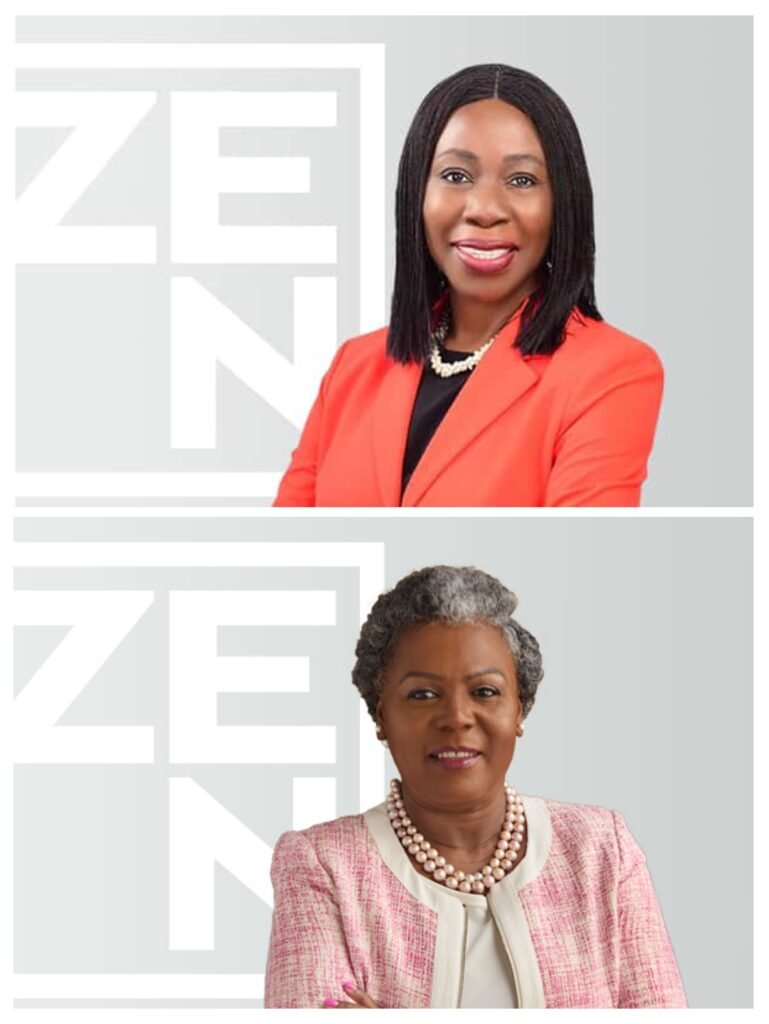
ZEN Petroleum Holdings PLC, has announced the acquisition of 240,000 ordinary shares of the company by two of its directors. In a press release dated June 26,2026, Zen Petroleum revealed that its directors,Mansa Nettey and Freda Duplan each acquired 200,000 and 40,000 ordinary shares respectively in the Company through the Ghana Stock Exchange. Mansa Nettey and Freda Duplan now join Frank Adu, who also acquired 2,000,000 ordinary shares in the company earlier this month as the latest directors to hold equity stakes in the company. A move several move analysts and market watchers have interpreted as a signal of confidence. This comes after the company’s official listing on the Ghana Stock Exchange on April 22, 2026 where it raised GH¢640 million from its Initial Public Offering(IPO). ZEN Petroleum Holdings PLC is a fully integrated Ghanaian energy group with operations across bulk distribution, storage, transport, logistics, retail and bunkering. Through its subsidiaries, the Group serves customers across Ghana’s mining, commercial and retail sectors, supported by a strong commitment to safety, reliability, governance and operational excellence.  

News

Star Oil Plans GSE Listing with Structural Protections to Shield Affordable Pricing Model

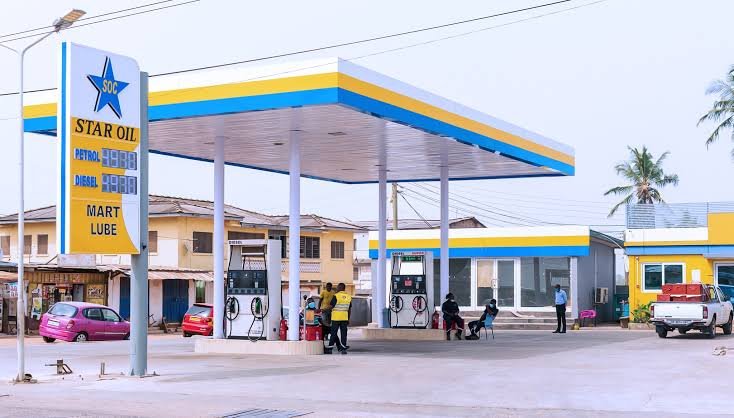
The Chief Executive Officer of Star Oil, Kwame Tieku, has revealed plans to list the company on the Ghana Stock Exchange (GSE) at some point in the future, while cautioning that the company will require strategic structural protections to safeguard its affordable pricing business model ahead of any public offering. In a post made on Facebook, Tieku disclosed that although Star Oil intends to go public, the company is wary of short-term profit-driven corporate investors whose interests could conflict with the company’s core mission of keeping fuel prices affordable for Ghanaians. “We want to go public at some point but we don’t want our affordable pricing business model to be highjacked and watered down by short term ‘profit seeking’ corporate investors. It requires some strategic structural protections,” he stated. His comments which comes after increasing calls from investing public for the company to be listed on the GSE ,signals that Star Oil’s path to the GSE will be a carefully managed one, with the company prioritising the preservation of its business philosophy over the speed of its public listing. Star Oil Company Limited is a leading, wholly Ghanaian-owned Oil Marketing Company (OMC) established on October 7, 1998, and currently holds the distinction of being the oldest independent OMC in Ghana operating without foreign or state involvement, boasting a network of over 250 fueling stations nationwide.

World

Ford rehires human engineers after AI fails to match quality checks

Ford says it has hired back some human engineers after AI failed to match their skills and experience. In a bid to reap the benefits of the tech, which developers claim can cut costs and boost productivity, the US carmaker adopted it across some parts of its operations including for quality checks. But, according to Bloomberg, its executives said the firm has rehired more than 300 “veteran” quality inspectors in recent years to make up for the pitfalls of automated systems. “Artificial intelligence is a fantastic tool, but it’s only as good as the information you use to train it,” Charles Poon, vice president of vehicle hardware engineering, told reporters. “Over prior years, we didn’t pay as much attention as we should have to the experience of our most knowledgeable engineers that have been with us through many product cycles,” he said. The US automaker is among many to have seized on the buzz around AI, particularly amid Wall Street fervour about the tech’s potential to increase margins. “AI will leave a lot of white collar people behind,” Ford boss Jim Farley said in an interview with author Walter Isaacson last June. In an October earnings call, chief operating officer Kumar Galhotra said the firm was “deploying AI across the entire industrial system”. This included rolling out 900 AI-powered cameras in its plants “to detect quality issues at the source and help us mitigate supply disruptions”, Galhotra told investors. But Poon told reporters on Wednesday the firm’s AI-driven checks had failed to live up to expectations. “Mistakenly, we thought that by just introducing artificial intelligence and ingesting the design requirements that we had, that would produce a high-quality product,” he said. Poon reportedly pointed to automated tools lacking the training and expertise of veteran technicians – many of whom he said had left the company before their knowledge could be used to improve its tech. He said these human workers had since been reintroduced to train up its systems, as well as mentor younger workers. “We recognised that for us to enhance some of our automation and machine learning and artificial intelligence tools we needed to ensure that they were trained by the most experienced individuals,” he said, per Bloomberg. Ford’s admission of its AI failings came as it lauded its return to the top of an index used as an industry benchmark to measure vehicle quality. It said it was the number one mainstream automaker in the US JD Power Initial Quality Study – a ranking it has not held since 2010. In a press release marking the news, the company said “reaching best-in-class quality required a significant talent refresh”. This involved replacing senior leaders across engineering, supply chain and manufacturing, it said, as well as hiring the roughly 300 veteran engineers “who carry the hard-earned wisdom of decades of design”. SOURCE: BBC

News

WhatsApp to let people chat without swapping phone numbers

WhatsApp is set to let people chat without having to reveal their phone number – by exchanging unique usernames instead. It will be rolled out globally to the platform’s three billion account holders over the next few months, the platform said. From Monday, users will start being able to reserve a name via the app, although it will not be compulsory. The firm said people would be able to remove or change their usernames at any time.Once it is fully activated, WhatsApp users will be able to connect after exchanging usernames only. There will still be options to block or report unwanted messages. Names will be limited to 35 characters and there will be few restrictions, with the exception of some high profile officials and celebrities whose names will not be made available to anyone else. So it’s unlikely WhatsApp will be overrun with users calling themselves Donald Trump, for example. The Meta-owned firm described usernames as a privacy feature. Alice Newton-Rex, WhatsApp’s head of product, said she had heard from users that they didn’t always want to share their phone numbers in order to be in contact with others, particularly in group chats. She said she hoped the feature would “give users control over how they choose to show up” on the app. The secure messaging app Signal introduced an identical service in 2024. “It is a good feature, but even if it does offer more privacy, remember WhatsApp is not a privacy-friendly app overall,” said Carisa Veliz, a professor at Oxford University and author of Privacy is Power. “It collects much metadata about users for marketing purposes. “We have to remember that WhatsApp is owned by Meta – one of the tech companies with the worst track records when it comes to privacy.” WhatsApp does not use the content of private chats for advertising. Those are protected by end-to-end-encryption, meaning the firm cannot read the contents of messages. But it does use data – such as who you message and when – to support advertising. Once the feature is fully rolled out, individual phone numbers will no longer be visible on WhatsApp. There will be no public username directory, and phone numbers will still be required in order to have a WhatsApp account in the first place. The minimum age for using the platform is 13, and messaging apps will not be included in the UK’s upcoming social media ban for under 16 year olds, due to be implemented next year. It recently announced Kunal Shah, the founder of an Indian fintech start-up, would be taking over as head of the platform – with Will Cathcart stepping down after seven years in the role. Source:BBC  

Banking & Finance

Pension Funds Are an Untapped Mortgage Resource — Republic Bank’s Dan Adjetey

Head of Mortgage Banking at Republic Bank Ghana, Dan Adjetey Mohenu, is calling on pension fund managers to make long-term funds more available to financial institutions for mortgage lending, arguing that contributors should not have to wait until retirement to benefit from their savings. According to Adjetey, the current structure of pension contributions leaves workers locked out of the value of their own savings until they retire, despite many needing that capital far earlier to acquire a home. “The managers of pension funds should be interested in providing some of these long-term funding or making them available to financial institutions to lend,” he stated. He explained that contributors paying into a pension scheme should be able to leverage those funds toward homeownership well before retirement age, rather than waiting decades to see any tangible benefit. “There’s one thing me paying my pension to you, but remember that I’ll be more than excited if I can leverage that pension to acquire a home. So that I don’t necessarily have to wait till when I’m going on retirement, then I can benefit,” he added. On technological advancement ,Adjetey called on financial institutions to come with innovative products that match the needs of their customers arguing that the technology already exists to support more flexible, accessible mortgage products. “What we should be looking at in terms of innovation are two areas for me. One, the nature of the mortgage products that are being churned out by financial institutions. We should be very proactive in doing a lot of these things,” he further stated. He noted that technological advancement has already transformed the front end of the mortgage process, with applications that once required physical visits to a bank branch now reduced to a matter of clicks. “Doing a mortgage application is quite seamless. You can on your own get to understand how much you qualify for by a simple click of a button. You can submit your requirements by a single click of a button,” Adjetey cautioned.