
Business Outlook Africa

Uncategorized

News, Uncategorized

BoG maintains policy rate at 14% as MPC cites global inflation risks

The Bank of Ghana (BoG) has maintained the Monetary Policy Rate (MPR) at 14 per cent following the conclusion of the 131st Monetary Policy Committee (MPC) meeting, citing heightened global uncertainties and the need to preserve price stability. Announcing the Committee’s decision at the 131st MPC briefing in Accra, Governor of the Bank of Ghana and Chairman of the MPC, Dr. Johnson Pandit Asiama said the current monetary policy stance remains appropriate despite Ghana’s improving macroeconomic performance. “The Committee, by a unanimous decision, maintained the Monetary Policy Rate at 14.0 per cent,“ According to the Governor, although economic growth has remained resilient, private sector credit has improved and inflation has stayed below the lower bound of the Bank’s medium-term target band, emerging global developments require policymakers to remain cautious. Dr. Asiama explained that escalating geopolitical tensions in the Middle East, rising crude oil prices, and the possibility of upward adjustments in utility tariffs present upside risks to Ghana’s inflation outlook. “The current policy rate remains appropriate to guide inflation towards the Bank’s medium-term target band while allowing policymakers time to assess evolving global risks,” The Committee noted that while inflation expectations remain broadly anchored and the country’s external sector continues to strengthen, it will continue to closely monitor both domestic and global developments before making any future adjustments to the benchmark interest rate. The Monetary Policy Rate serves as the benchmark rate that influences borrowing costs across the banking sector and remains one of the Bank of Ghana’s principal tools for managing inflation and maintaining macroeconomic stability.

News, Uncategorized

BoG Governor Warns Community Banks — Governance Standards Must Match New Identity

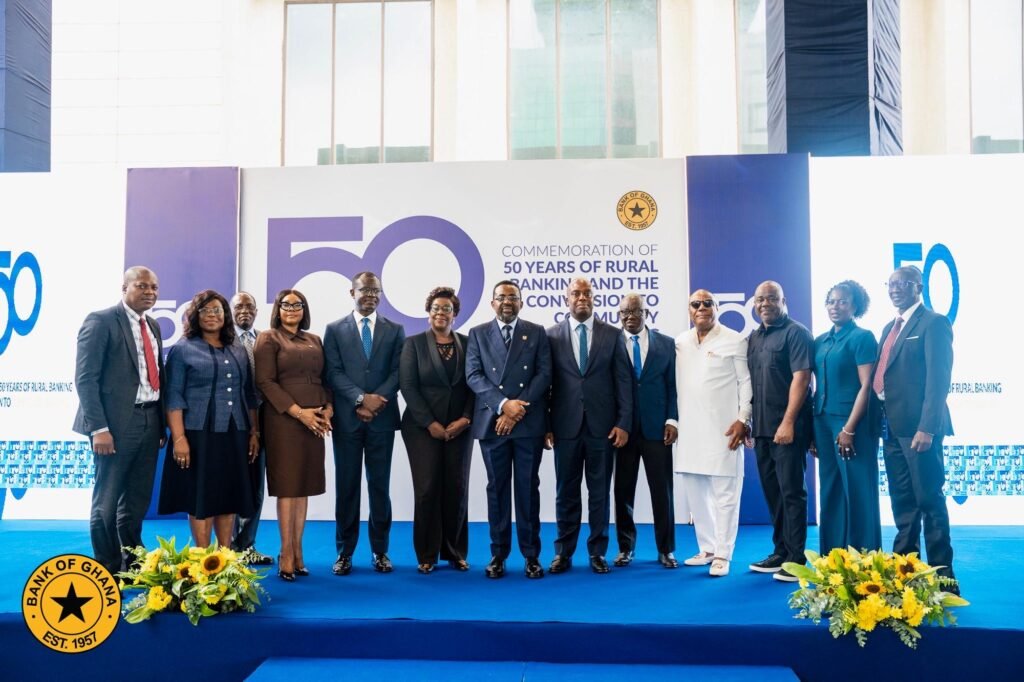
The Governor of the Bank of Ghana, Dr. Johnson Pandit Asiama, has underscored the importance of microfinance sector reforms in strengthening community banking, expanding financial inclusion, and promoting sustainable economic development. Speaking at the Commemoration of 50 Years of Rural Banking and the Conversion to Community Banking on July 16, 2026, Dr. Asiama urged the managers of the country’s 147 Rural Banks to embrace their new identity as Community Banks and to uphold the responsibilities that come with the transition. “Let me be plain about what the Bank of Ghana will and will not accept. Community ownership cannot mean weaker governance, and local knowledge is not a substitute for risk management. Social purpose does not excuse financial indiscipline,” he stated. The Governor further argued that Ghana’s financial system is too concentrated and that this concentration is a systemic risk that community banking is uniquely positioned to address. “A financial system resting on a small number of large institutions is not a resilient one. Depth is not only about size. It is also about spread,” he added. Dr. Asiama also disclosed that Ghana’s community banks will no longer be permanently confined to the communities that birthed them explaining that the strongest and best-performing among them can in time grow into national institutions. “The reforms open the door wider as well: to broaden what these institutions offer, to compete, and, for the strongest among them, to grow in time into something national,” he stated. The scale of what the sector has built over five decades makes that ambition credible. What started as one bank at Nyakrom in 1976 is today 147 licensed institutions with approximately 1,000 branches, over 8 million customers, and an asset base of approximately GHS 26 billion as at May 2026 ,numbers the Governor described not as a measure of institutional success but as a verdict on the original idea.

News, Uncategorized

Bank of Ghana Revokes Zeepay Ghana’s Electronic Money Licence Over Several Regulatory Breaches

The Bank of Ghana has announced the revocation of the Dedicated Electronic Money Issuer (DEMI) Licence of Zeepay Ghana LTD (Zeepay) citing various regulatory breaches. The Bank of Ghana added that the suspension which takes place effective today, 14th July 2026 is also as a result of Zeepay’s persistent failure to not only adhere to regulatory directives but also failure to abide by the terms and conditions of its DEMI Licence. “i.Issued electronic money without maintaining corresponding cash backing, resulting in a negative variance and failed to rectify the associated risk exposure to customers and the payment system.ii.Failed to comply with directives by the Bank of Ghana to:• Inject sufficient funds to fully back the e-money balances of customers, agents and merchants; and• Wind-down its e-money issuance business.” The statement read The central bank then highlighted that these breaches makes it necessary to protect the interests of users and providers in the payment and services ecosystem. “Zeepay’s continuous use of its DEMI licence constitutes a threat to the stability of the payment system.” BoG added The Central Banl however urged affected wallet holders to contact its support team reiterating its commitment towards the stability and integrity of the national payment system. Zeepay is a Ghanaian financial technology company that operates as a mobile money wallet and remittance service.

Uncategorized

GRA Launches Integrated Tax Administration System (ITAS)

The Ghana Revenue Authority (GRA) has official launched its  Integrated Tax Administration System (ITAS),a unified platform set to replace the existing GITMIS and Taxpayer Portal. Speaking at the launch which took place  at the Accra West Area Office and Kaneshie Taxpayer Service Centre (TSC), the Commissioner-General of the GRA,Mr. Anthony Kwasi Sarpong praised the ITAS project team for their exceptional pace, noting that the project was delivered in  roughly 9 months, 9 months less than the eighteen months projected timeline. “For too long, we have relied on manual and semi-manual ways of doing things. This comprehensive digital platform is a great milestone that will drastically improve revenue mobilisation.” He said The Commissioner-General  also reaffirmed GRA’s commitment to ease of use of its systems, pledging that the bureaucracy of the past would not follow the Authority into its digital future. According to the Authority, the project marks the beginning of a pilot phase that signals a definitive shift from manual and semi-manual tax administration processes toward a streamlined, taxpayer-centric future. The pilot phase at Kaneshie TSC is expected to run for two months, with a gradual rollout to all other TSCs with a full national rollout is targeted for September 2026.

Energy, Uncategorized

NPA Urges General Public To Disregard Media Commentary On Anticipated Gas Shortage.

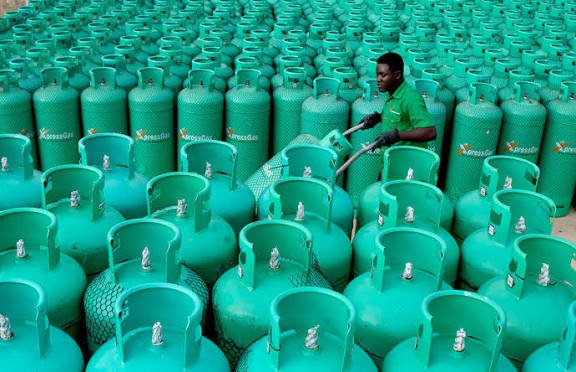
The National Petroleum Authority (NPA) has directed the general public to disregard media commentary on the anticipated gas shortage. In a statement released on February 20, 2026, in response to a news publication on a commentary made by the Chief Executive of the Chamber of Oil Marketing Companies (COMAC), Dr.Riverson Oppong, the NPA assured the public that there is enough Liquefied Petroleum Gas (LPG) in stock to meet demand, citing over a month’s supply cover and increased production from local refineries. The Authority further indicated that, under the current national import plan, an additional LPG cargo is expected within the next two weeks to strengthen existing stock levels and ensure continuous supply across the country. Consumers were therefore advised to desist from panic buying and remain calm, as there is no imminent LPG shortage in Ghana, with regulators maintaining close monitoring of the market to keep it well supplied.