Business Outlook Africa

Economy

Economy

Ghana’s Economy Grows 6.4% in Q1 2026 — GSS

The Ghana Statistical Service (GSS) has indicated a 6.4% growth in the country’s GDP for the first quarter of 2026, compared to a growth rate of 6.2% in the same quarter of 2025. In its latest Quarter 1 GDP Estimates and March 2026 Monthly Indicators of Economic Growth report, it also highlighted an expansion of non-oil GDP to 6.3%, indicating a broad-based expansion across the economy other than a single sector expansion. Largely accounting for the expansion and growth in the GDP for the period was the Services and Industry which recorded a growth of 7.1% and 6.9% respectively. The Services Sector accounted for 48.3% of the total growth with the Industry Sector also accounting for 34.1% of the total growth. At the sectoral level, Information and Communication recorded the strongest growth at 25.2%, followed by Transport and Storage at 13.0%, and Mining and Quarrying at 10.7%. During the quarter, monthly economic activity continued to be strong with a growth of 6.1% recorded in January, 7.7% in February and 5.4% in March. Despite the strong outturn, the Ghana Statistical Service flagged areas requiring attention hence identified three priorities emerging from the data which is sustaining macroeconomic stability, investing in high-growth sectors such as ICT, Trade, Transport and Mining, and addressing areas of weakness including Fishing, Accommodation and Food Services, and Water and Sewerage.

Economy

PCI Is Ghana’s Credibility Signal To The World — Finance Minister

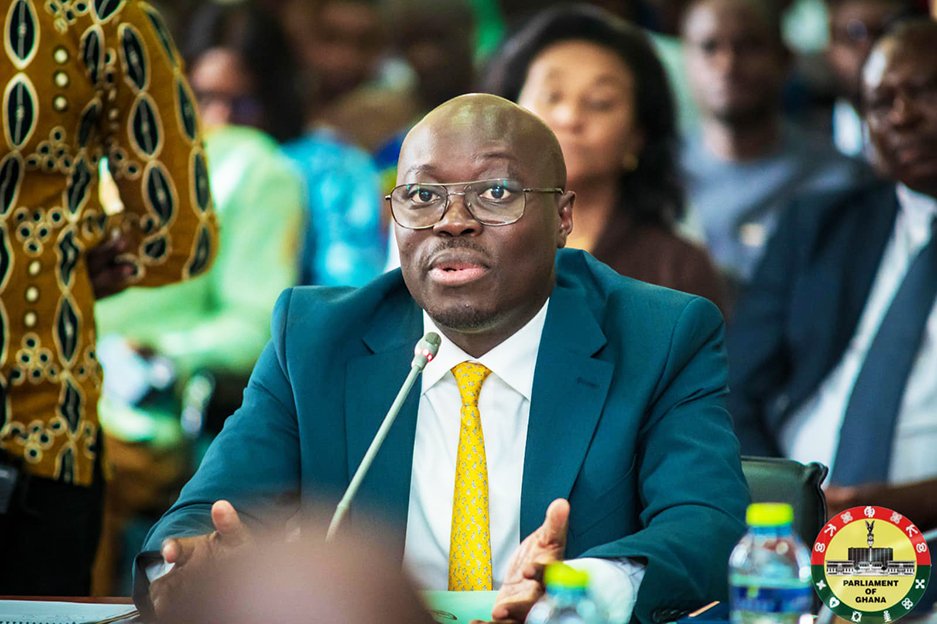
Minister of Finance Dr. Cassiel Ato Forson has indicated that Ghana’s decision to transition to a Policy Coordination Instrument (PCI) with the IMF after successfully completing its Extended Credit Facility (ECF) bailout programme is the need to signal to investors that the stabilisation is permanent. Speaking in an interview with Bloomberg, the Finance Minister explained that the transition to the PCI is to earn the stamp of credibility that reassures the global investor community that Ghana’s economic gains are sustainable and that the country is open for business. “Some investors are sceptical, we need to remove that concern, and in doing so, we need to walk them through a path of credibility, and we believe that though we have successfully recovered the economy and stabilised it, there’s the need to send a signal that this stabilisation is here to stay, and we’re going to sustain that.”He stated On the reforms, Dr. Cassiel Ato Forson, disclosed that government is pursuing a reform agenda for SOEs in collaboration with the IMF, drawing on international best practices and country perspectives to ensure the reforms are comprehensive and effective to address the problem of SOEs adding approximately 2.5% of GDP in additional debt to the country’s public debt burden . “For example, the state-owned enterprises. We have identified the fact that SOEs in particular have accounted for adding about 2.5% of GDP, additional debt, to the countries that pay.  And so what do we do to tackle this SOEs debt accumulation? And the fact that stock flow adjustment has been the major driver of public debt. First, we need to reform these SOEs, and some of the reforms that we need to go through, we need to do it together with the fund, bring the country perspective, other countries and what we can do together to reform the SOEs.” he added The Finance Minister also flagged the energy sector as a critical area for reform, revealing that government currently spends an average of $1.5 billion to $2 billion annually to support the sector. Dr. Forson stressed the need to eliminate or significantly reduce this expenditure, arguing that redirecting those funds to other critical sectors of the economy would go a long way in accelerating Ghana’s development agenda. “The energy sector today, the government of Ghana spent an average $1.5 billion, close to $2 billion USD to support the energy sector. We need to reform that. We need to make sure that going into the future, we can remove that $2 billion USD, and if you can reduce it to the barest minimum, that amount of money can also go a long way to other critical sectors of the economy.” He disclosed His comments follows Ghana’s official exit from the IMF following its conclusion of its $3 billion ECF program with the Fund hence transitioning to a non-financial PCI to lock in economic reforms without taking on new loans.      

Economy

Finance Minister Sees Inflation Rising But Sets 5% As The Ceiling For 2026

Minister of Finance Dr. Cassiel Ato Forson has indicated that the ongoing Middle East tensions are unlikely to pose a significant threat to Ghana’s economy, with any impact expected to be limited largely to inflationary pressure. Speaking in an interview with Bloomberg, the Finance Minister acknowledged that he foresees some upward movement in inflation as a result of the tensions but expressed confidence that the figure will not exceed 5% by the end of the year. “Where I think we may see a bit of pressure will be on the back of inflation. Yes, it will rise and we expect that inflation may inch up. Today it’s about 3.4. I still think we’ll be better off and I don’t think the country’s inflation will exceed 5% by the end of the year.” He stated Dr. Cassiel Ato Forson attributed Ghana’s resilience to the strong foreign exchange reserves the country has built up, and the fact that petroleum products are no longer subsidised hence reflecting market realities rather than government support. “We don’t have subsidies at all on petroleum product and so there’s not much of an impact on the national budget. But the good news is that we had built some significant reserves and so the reserves position is the country is able to support the purchases of this product through United State dollar by making the central market making available United State dollars and our gold production is also going up and gold prices is also very high and so we have seen trade balance inching up to about double-digit ten percent plus this year and so Ghana is in a comfortable position to be able to respond to those shocks.” He added The Minister further revealed that Ghana has never been better prepared for an economic shock than now adding that the nation is in a very strong position to deal with economic shocks like this. “And let me say that we’ve never been ready to withstand any form of shock than today. Today, the country is in a very healthy position to be able to withstand external shocks of this nature.” He further stated

Economy

Ghana Records Back-To-Back Inflation Increases As May 2026 CPI Hits 3.7%

Ghana’s inflation has increased for the second consecutive time after seventeen straight months of falls bringing it to 3.7% for May 2026. In its latest report on Inflation, the Ghana Statistical Service revealed that even though there was a 0.3 percentage points in inflation from April to May 2026, the increase still falls below the 18.4% recorded in May 2025. Between April and May 2026 prices increased slightly by 1.1% signaling moderate increases in prices. Significant among the drivers of Inflation is food- which rose from 2.2% to 3.3% with this figure representing not only increases in the prices of fresh tomatoes, green plantain, river fish, ginger, smoked herrings, and cooked rice but also declines in prices of maize, garden eggs, fresh okro, cocoyam leaves, fried fish, and beans. Across the regional divide, inflation remains uneven with the North East Region recording the highest inflation rate at 10.1%, while the Savannah Region recorded the lowest at -3.0%. In ending the Ghana Statistical Service highlighted that managing inflation is a shared responsibility hence calling on government to sustain fiscal discipline, businesses to improve efficiency and individuals to prioritize savings.

Economy

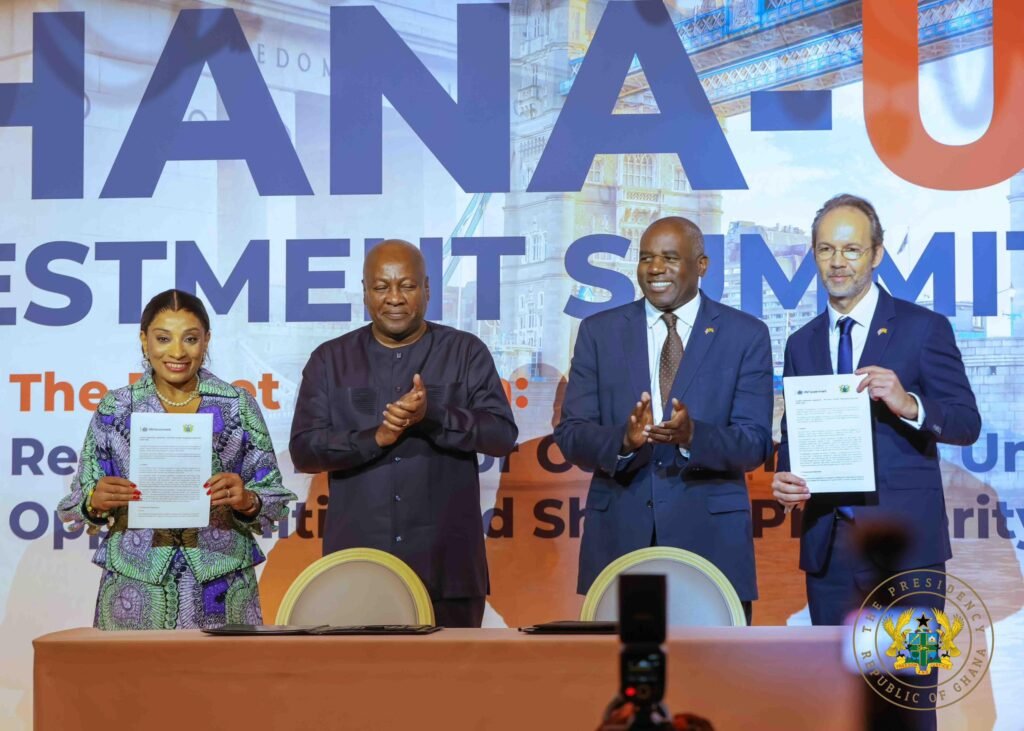
Ghana Lands £215 Million UK Deal Covering Maritime, Climate, AI And Health

President John Dramani Mahama has announced a landmark UK-Ghana Growth Partnership aimed at delivering tangible benefits for Ghanaians and businesses operating in the country. Secured during the Ghana-UK Investment Summit held in London, he announced that the deal which will serve as a strategic roadmap for the period 2026 to 2028 is worth up to £215 million and will focus on private-sector growth, infrastructure development, and skills development for Ghana’s youth. The President added that the deal with a £101 million UK-backed initiative will also see to establishment of the Gulf of Guinea’s first-ever commercial-scale ship repair and dry-docking facility. He further noted that the Takoradi Floating Dock Project is expected to generate up to 430 direct jobs, with 30 percent reserved for women. President Mahama also noted that the partnership will also unlock an £85 million reforestation fund alongside a £9 million investment dedicated to forest restoration in the Oti Region. On Artificial Intelligence , the partnership is set to help support the implementation of Ghana’s AI Strategy and strengthen science and technology collaboration across Ghanaian universities with an amount of £6 million. In the health sector, a £4 million partnership is aimed at funding specialist clinical engineering training with the New Transnational Education guidelines also to be launched to expand access for Ghanaian students to world-class training opportunities.   President Mahama described the partnership as delivering tangible benefits for Ghanaians and businesses operating in the country.

Economy

Bank of Ghana Holds Policy Rate at 14%, Sets Uniform Cash Reserve Ratio at 20%

The Bank of Ghana has left the policy rate unchanged at 14%, and raised the Cash Reserve Ratio (CRR) to 20%. The Monetary Policy Committee (MPC) of the Bank of Ghana has maintained the monetary policy rate at 14.0%, citing a broadly balanced risk profile for inflation and the economy. The move, announced after the committee’s 130th MPC meeting , reflects the central bank’s cautious yet progressive path in managing the monetary policy while the world continues to grapple with uncertainties. The committee highlighted potential spill over impacts of the prevailing geopolitical tensions as one of the concerns of the domestic economy. In addition to the rate hold, the committee reported a major change in the structure of the dynamic cash reserve ratio, which would be set at a uniform rate of 20% with currency maintained in the domestic currency. The new reserve requirement will come into effect on June 4, 2026. The next meeting of the MPC is scheduled for 20–22 July 2026, with the policy decision expected to be made on 22 July 2026.

Economy

Ghana’s Producer Inflation Hits 1.5% in March 2026 — GSS

The latest data released by the Ghana Statistical Service (GSS) has revealed that the Producer inflation in Ghana for March,2026 stood at 1.5%. The data from the GSS further revealed that on the month-on-month basis, producer prices rose by 0.7% between February and March 2026 with the GSS describing this short-term increase as an early signal that price pressures are beginning to build. Among the several sector-specific trends shaping the March 2026 PPI,the rising utility costs emerged as an upward driver. Moderate price changes were also recorded in the mining sector with prices declining in both manufacturing and transport. The GSS noted that falling transport costs continue to support business competitiveness, while stable manufacturing prices present opportunities for firms to plan and invest. The Service, however, cautioned that careful policy and pricing decisions remain essential as short-term pressures begin to emerge across sectors.

Economy

Moody’s revises Ghana’s outlook to ‘positive’ on improvement in domestic financing

Credit ratings agency Moody’s revised Ghana’s outlook to “positive” from “stable” ‌on Friday, citing an improvement in the country’s finances. The gold-, oil- and cocoa-producing nation in West Africa is emerging from its most severe economic crisis in decades. During ⁠a visit to parliament last November, Finance Minister Cassiel Ato Forson said Ghana was poised for sustained growth in 2026. “Domestic financing costs have declined amid monetary easing and an improved fiscal position, while the resumption of domestic bond issuances will, if sustained, ‌gradually ⁠reduce rollover risk,” Moody’s said in its report. The sovereign lifted restrictions on new domestic bond issuance in March and issued its first seven-year domestic bond ⁠in April, ending a pause implemented in 2023 following a debt default. However, the agency maintained Ghana’s ⁠ratings at “Caa1“, reflecting continuing credit constraints and high susceptibility to exchange rate and ⁠commodity price volatility, especially with the ongoing Middle East conflict. Source: Reuters

Economy

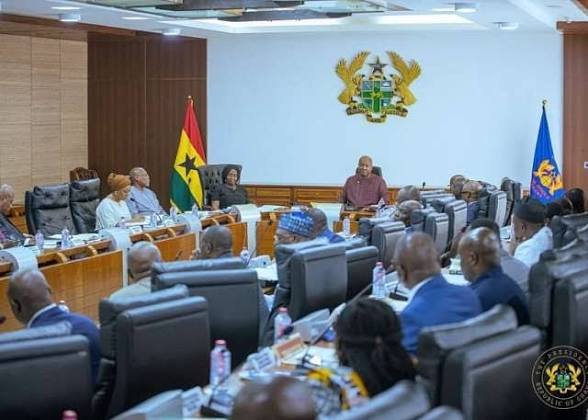
Cabinet Suspends Fuel Taxes, Orders Transport Fare Relief After Emergency Meeting

Ghana’s Cabinet has directed the Ministers of Finance and Energy to ensure a reduction in fuel prices at the next pricing window by suspending selected taxes and margins. Speaking during a press briefing following an emergency cabinet meeting on fuel prices this evening, Government’s Spokesperson Felix Ofosu Kwakye added this directive is expected to remain in place for four weeks, after which it will be reviewed based on developments in the Middle East conflict and trends in global crude oil prices. The Minister for Government Communications also added that the President has tasked the Minister in Charge of Transport to fast-track the deployment of 100 newly acquired Metro Mass Transit buses to high-traffic routes across the country in order to ease commuting pressures and provide more affordable travel options. He highlighted that cabinet directed that fares on these buses be kept below those charged by private transport operators. In addition cabinet also reiterated its directive requiring all ministers and senior government officials to comply strictly with President John Mahama’s earlier decision to cancel fuel allocations and allowances for political appointees. Further details regarding the suspended taxes and margins according to the minister is expected to be announced at the next fuel pricing window. The Emergency cabinet meeting on fuel prices took place on April 9,2026 and aimed at addressing growing concerns about fuel prices amid Middle East tensions

Economy

Ghana’s Economy Grows 7.5% in January 2026 — Services Lead Expansion

Ghana’s economy expanded by 7.5% in January 2026, though at a slightly slower pace than the 8.2% recorded in the same period last year, according to the latest Monthly Indicator of Economic Growth (MIEG) released by the Ghana Statistical Service (GSS). The MIEG is a high-frequency economic statistic that provides monthly snapshots of economic growth across Ghana’s three main productive sectors — Agriculture, Industry, and Services. The Services sector emerged as the fastest-growing and largest contributor to overall economic activity, expanding by 9.6% and accounting for 54.3% of total growth. The Industry sector followed with a 7.2% growth rate, contributing 29.0%, while Agriculture recorded 4.5% growth and contributed 14.0% to the overall expansion. Commenting on the figures, Government Statistician Dr. Alhassan Iddrisu said sustained growth would require a deliberate policy focus across all sectors. He called for efforts to strengthen industrial output, improve agricultural productivity, and leverage the momentum in the services sector to sustain economic progress through 2026. The MIEG serves as an early indicator of Ghana’s economic trajectory ahead of the official quarterly GDP estimates.