
Business Outlook Africa

Economy

Afreh Biney, Director-General, SSNIT
Economy

SSNIT Reports Improved Compliance

  The Director-General of the Social Security and National Insurance Trust (SSNIT), Kwesi Afreh Biney, has stated that there has been significant improvement in compliance with social security contributions. Addressing the press on 29th February 2026, he explained that the progress can largely be attributed to the growing recognition by employers of the Trust’s importance to employees. He noted that timely payment of contributions not only benefits workers but also helps create a positive workplace environment that motivates employees to perform at their best. “I think there’s been a lot of improvements with regards to compliance. Employers are understanding that by paying for your workers, you are actually creating the environment at the workplace that motivates people to give of their best,” he said. Mr. Afreh Biney also commended the Minister for Finance, Dr. Cassiel Ato Forson, for settling contributions of government employees during the 2025 financial year. He indicated that arrears dating back to 2024 and 2025 were cleared and expressed optimism that the current trend of timely payments would continue. “And let me also commend the Minister of Finance for his outstanding performance last year with regard to payments for SSNIT contributions of government employees. For 2025, every due obligation from government was paid. So at the end of 2025, government did not have any contribution arrears for 2025. In fact, contribution arrears from 2024, by March last year, the minister had cleared them. And based on engagement that we’ve even had this year, we are pretty confident that that trend will continue,” he stated. He further highlighted improvements within the private sector, noting that it now accounts for about two-thirds of the Trust’s membership and contributes 52 per cent of SSNIT’s monthly inflows. He added that the Trust is working to make its services more convenient and accessible to ensure the figures continue to improve. “The private sector has also improved. In fact, the private sector today accounts for two-thirds of our members, and they account for 52% of the contributions that come in each month. As we continue to make it convenient and accessible for all to engage us, we believe that these numbers will be improved,” he said.
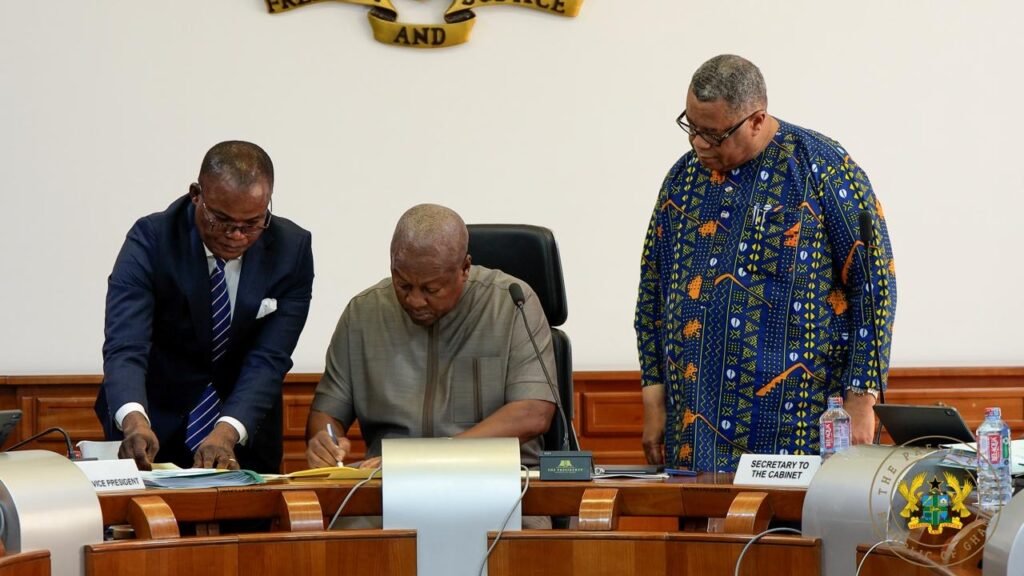
President Mahama signing the 24-Hour Authority Bill
Economy

President Mahama assents to 24-Hour Economy Authority Bill

President John Dramani Mahama has assented to the 24-Hour Economy Authority Bill, giving legal backing to one of the government’s key economic transformation policies. The bill  which was  signed on 19th February 2025, at the seat of government  will oversee the implementation of the policy, which aims to enable businesses to operate around the clock through a system of incentives and support mechanisms. Speaking after the signing, President Mahama said the move marks a transition from planning to implementation, noting that many Ghanaians had anticipated the legislation as a cornerstone of the administration’s strategy to boost productivity and job creation. “Cabinet Colleagues, I just appended my signature to give assent to the 24-Hour Authority Bill. This Bill Ghanaians have been waiting for, it was one of our flagship strategies for economic transformation,” the President stated. According to him, although the process took time, it was necessary to ensure the  required legal procedures are followed to  ensure the initiative is firmly grounded in law. “It has taking a while but we needed to go patiently through the process to give legal effect to it and so from now we must move from strategy to implementation,” President Mahama said. The President also  indicated that both local and foreign investors have been awaiting clarity on the incentive package tied to the policy, which is expected to encourage business expansion, increase output and generate employment, particularly for the youth. President Mahama congratulated the team that worked on the bill, particularly Goosie Tanoh and his colleagues, expressing gratitude for their efforts in bringing the legislation to fruition. The 24-Hour Economy is an economic policy aimed at allowing businesses, public institutions and services to operate around the clock (day and night) instead of the traditional 8-to-5 system.

Economy

Government Pays GH¢10 Billion DDEP Interest

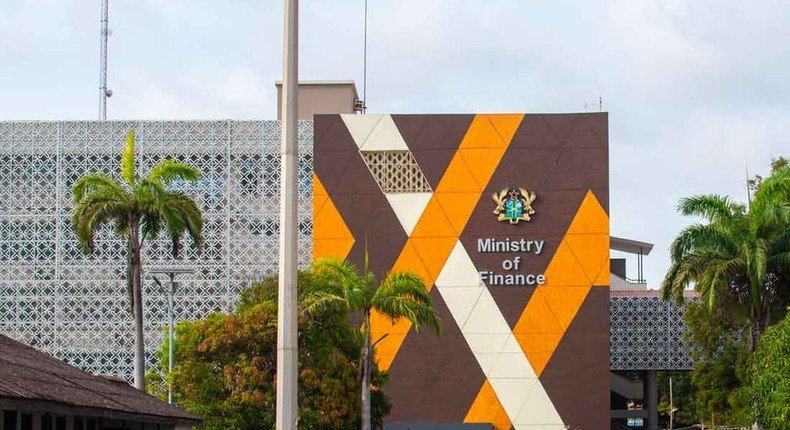
The Government of Ghana has paid GH¢10 billion in interest obligations under the Domestic Debt Exchange Programme (DDEP), signalling continued commitment to its debt restructuring process. In a statement released by the Ministry of Finance on Wednesday, 18th February 2026, the payment which was described as the sixth coupon settlement under the programme marked the second full cash payment made without any Payment-In-Kind component, an indication of improved fiscal strength and solvency. The Ministry explained that the settlement covers cedi-denominated DDEP coupon obligations in line with the restructuring memorandum and the country’s broader debt management and fiscal consolidation strategy. The Ministry also noted while that the timely payment of the debt sends a strong positive signal to investors, it is also expected to reinforce market confidence, support the country’s credit outlook, and enhance the financial sector stability, particularly among banks and pension funds. The Government also stated this move reaffirms its commitment towards meeting future DDEP obligations, citing strengthened financial buffers, improving macroeconomic fundamentals, declining inflation, lower interest rates, and a stable cedi as supporting factors.  

Economy

From Gold to Grain: Who’s Powering Ghana’s Economy?

Ghana’s economy is still growing — but the pace is slowing. Provisional data from the Ghana Statistical Service shows that in November 2025, the country’s year-on-year growth rate hit 4.2%, down sharply from 7.1% in November 2024. On the surface, the headline number signals moderation. But the real story lies beneath the aggregate figures — in the sectors that are driving growth and those that are holding it back.   Agriculture: The Quiet Stabilizer Amid the slowdown, agriculture stands out as a resilient force. The sector grew 4.1% in November 2025, slightly higher than 3.8% in 2024, contributing 32.4% of the total 4.2% growth. This steady performance underscores the sector’s importance: • Improved resilience against economic shocks • Continued expansion despite challenges • Vital role of food production in Ghana’s stability Nearly one-third of Ghana’s economic growth in November came from farms, crops, livestock, and fisheries.   Industry: The Sharpest Slowdown Industry, historically a key engine of growth, tells a different story. Growth in November 2025 barely registered at 0.4%, down from 6.2% in 2024. The slowdown is mainly due to declines in mining and quarrying, which once fueled industrial expansion. Industry contributed only 2.5 percentage points to overall growth, signaling weak momentum in Ghana’s extractive sector. For investors and policymakers, this is a cautionary note: without a rebound in industrial activity, sustaining broader economic growth may prove difficult.   Services: Still Leading, But Losing Steam The services sector continues to drive growth, expanding 6.7%, though this is slower than the 10.2% growth recorded last year. This sector, encompassing finance, trade, ICT, transport, and professional services, remains the largest contributor, accounting for 57.7% of total growth. While services are still expanding, the slowing pace hints that Ghana’s reliance on this sector alone may not be enough to maintain strong economic momentum.   What This Means for Ghana The numbers tell a story of moderation rather than contraction, but raise important questions: • Can industrial activity rebound? • Will agriculture continue to carry more weight? • Is Ghana entering a broader slowdown, or simply transitioning to a services-led economy? The message is clear: sustaining growth will require revitalizing industry while protecting gains in agriculture and services. Ghana is growing, but the balance of growth is shifting — from the traditional strength of mining and industry to the quiet stabilizer of agriculture and the dominant, but cooling, services sector. The future of the economy depends on how these sectors adapt and support one another in the months and years ahead.

NNPC Ltd
Economy

Nigeria: NNPC Unveils 2026 Gas Master Plan to Drive Industrial Growth, Energy Stability and Investment

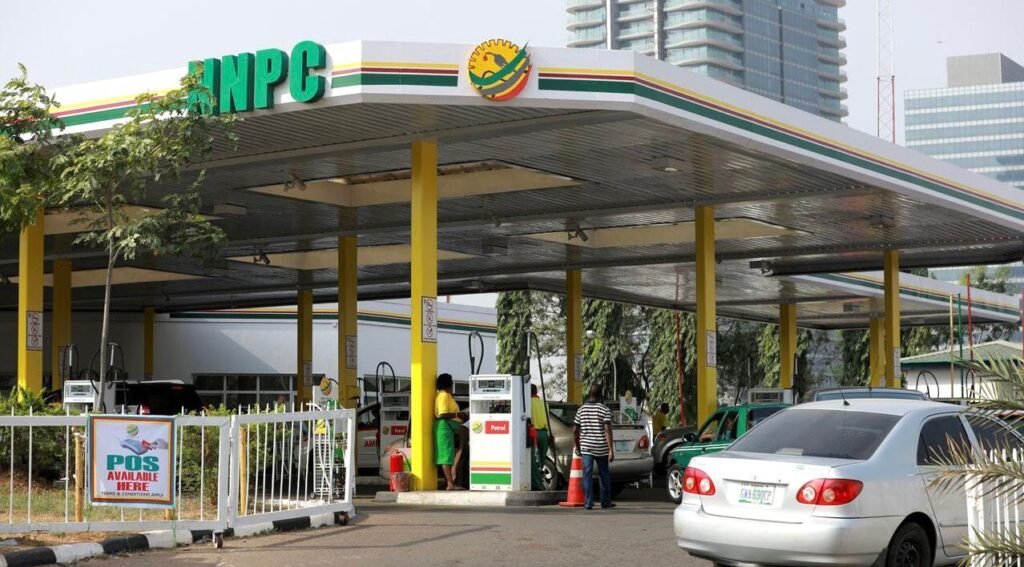
  The Nigerian National Petroleum Company Limited (NNPC Ltd) has introduced a new strategic framework aimed at transforming Nigeria’s natural gas industry into a central pillar of economic expansion and energy security. The initiative, known as the Gas Master Plan 2026 (NGMP 2026), was officially presented on Friday at the NNPC Towers in Abuja, drawing participation from government officials, energy executives and private-sector stakeholders. Industry observers described the launch as a significant policy and implementation milestone, signalling a stronger national commitment to harnessing Nigeria’s extensive gas reserves for domestic development while enhancing the country’s position in the international energy market. The programme is designed to move beyond broad policy declarations and focus on measurable execution across the entire gas value chain — from exploration and production to distribution and end-use consumption. Strategic Focus of the Plan According to NNPC Ltd, the NGMP 2026 outlines a structured pathway for converting natural gas resources into tangible economic value. Key pillars of the framework include infrastructure expansion, supply reliability, investment mobilisation, and the development of both domestic and export markets. The company stated that the plan emphasises operational efficiency, commercial sustainability and coordinated industry participation as essential elements for long-term success. In an official statement released by the company’s Chief Corporate Communications Officer, Andy Odeh, the initiative was described as a shift toward disciplined implementation rather than policy rhetoric. The plan is also intended to strengthen Nigeria’s competitiveness in the global gas market while addressing internal energy needs such as electricity generation, transportation fuel alternatives and industrial consumption. Government Position and Policy Alignment Speaking at the unveiling ceremony, the Minister of State for Petroleum Resources (Gas), Rt. Hon. Ekperikpe Ekpo, characterised the new blueprint as a decisive transition from policy articulation to practical delivery. He noted that Nigeria possesses some of Africa’s largest proven natural gas reserves and stressed that the central challenge has been converting that potential into dependable infrastructure and economic outcomes. Ekpo highlighted that the plan aligns with the Federal Government’s broader Decade of Gas Initiative — a national programme intended to deepen gas utilisation across sectors and position the resource as a bridge fuel in Nigeria’s energy transition strategy. The minister emphasised that reliable gas supply, flexible export capabilities and strategic partnerships would be vital to achieving sustainable industrialisation and energy security. Production Targets and Investment Goals NNPC Group Chief Executive Officer Bashir Ojulari described the NGMP 2026 as an execution-focused roadmap aimed at unlocking Nigeria’s extensive hydrocarbon potential. He revealed that the country currently holds approximately 210 trillion cubic feet (Tcf) of proven gas reserves, with estimates suggesting the figure could rise significantly as exploration continues. Ojulari stated that the plan supports presidential directives to increase national gas production to 10 billion cubic feet per day by 2027 and 12 billion cubic feet per day by 2030. He added that the initiative is expected to stimulate more than 60 billion dollars in new investments across the oil and gas sector before the decade concludes. Priority areas include cost optimisation, reserve growth, enhanced supply for power generation, and expanded availability of compressed natural gas (CNG), liquefied petroleum gas (LPG) and mini-LNG solutions for industrial and commercial use. Industry Reception and Collaboration Private-sector stakeholders at the event expressed optimism regarding the plan’s potential economic impact. Representatives from independent petroleum producers and multinational energy companies welcomed the structured approach, noting that a stable and transparent policy environment is crucial for attracting long-term capital and technological expertise. Industry leaders also emphasised the importance of a full value-chain strategy that connects upstream production with downstream distribution and end-user markets. Evolution of Earlier Frameworks The Gas Master Plan 2026 builds on the foundation of the original Nigerian Gas Master Plan introduced in 2008, which sought to maximise the economic benefits of the country’s gas reserves. The updated version reflects regulatory and market changes introduced under the Petroleum Industry Act, as well as evolving global energy trends that increasingly recognise natural gas as a transitional fuel in the shift toward cleaner energy systems. NNPC Ltd indicated that the NGMP 2026 will serve as the principal guide for coordinated development, policy execution and value creation in Nigeria’s gas sector over the coming decade. By integrating infrastructure development, regulatory reforms and investment incentives, the framework aims to strengthen Nigeria’s energy resilience while supporting industrial growth and broader economic diversification.