
Business Outlook Africa

Economic Reports

Economic Reports, News

Latest Afrobarometer Reports Shows Russia Lags Behind Global Powers in African Perception

Afrobarometer has revealed in its latest report that fewer than four in ten Africans view Russia’s economic and political influence in their countries as positive — significantly lower than perceptions of China, the United States, and major international organisations. According to the study, which gathered data from 38 countries across the continent, 36% of respondents described Russia’s influence as “somewhat positive” or “very positive,” while 23% viewed it as somewhat or very negative. A notable 42% did not offer an assessment. Comparatively, Russia ranks well below other global and regional actors in positive perception. China recorded 62%, regional economic organisations 56%, the African Union 55%, the United States 52%, and the European Union 50%. The report further indicated that among the seven in ten Africans who said they are aware of the Russia–Ukraine war, 72% believe their countries should remain neutral. Mali was the only surveyed country where a majority (72%) expressed support for one side which is Russia. Afrobarometer is a trusted, independent research network that collects reliable data on Africans’ views regarding democracy, governance, and quality of life. Through regular, face-to-face surveys conducted in multiple countries, it provides credible insights into public opinion across the continent.
Economic Reports, Africa

IMF Completes Final Reviews of Benin’s EFF, ECF and RSF Programmes

The Executive Board of the International Monetary Fund (IMF) completed the seventh and final review of Benin’s Extended Fund Facility (EFF) and Extended Credit Facility (ECF) arrangements, and the fourth and final review under the Resilience and Sustainability Facility (RSF) arrangement. Benin has completed its seventh and final review of its Extended Credit Facility (ECF) arrangements, and the fourth and final review under the Resilience and Sustainability Facility (RSF) arrangement with the IMF. The review which was led by the Executive Board of the IMF will oversee the immediate disbursement US$ 118 million to the Benin government with US$ 36.3 million being under the EEF/ECF arrangement and the remaining US$ 81.6 million under the RSF arrangement. This now brings Benin’s total disbursement to about US$ 664.7 million under the EEF/ ECF arrangement and about US$ 204 million under the RSF arrangement. Other economic milestones achieved under the program includes a reduction in its fiscal deficit to 3.1 percent of GDP in 2024 and a sustained Domestic revenue mobilization. According to the press release, Program performance under the EFF/ECF has also been strong, with all end-June 2025 quantitative performance criteria and end-September 2025 indicative targets met and structural benchmarks implemented, despite the fact that there has been a short delay for one benchmark. With the RSF, the authorities completed the remaining six reform measures under the arrangement, making progress in enhancing climate-related public financial management, reforming water tariffs, rolling out an agricultural insurance scheme, strengthening social protection, and improving the climate-financial-information architecture. Following the Executive Board Discussion Deputy Managing Director, Mr. Okamura charged the Benin authorities to maintain the fiscal discipline and the reform momentum and strengthen inclusive policies, while remaining vigilant of regional and global risks. “Benin has completed its Fund-supported programs with a strong performance. The authorities’ commitment to economic reform has yielded tangible dividends, with higher and more stable growth, favourable access to international markets, and continuous support from development partners. Going forward, the authorities must maintain fiscal discipline and the reform momentum and strengthen inclusive policies, while remaining vigilant of regional and global risks” –He added Benin’s programme with the International Monetary Fund began in 2022, when the country secured support under the EFF and ECF to strengthen fiscal stability, support structural reforms and sustain economic growth following global shocks. The arrangement was later complemented by the RSF, aimed at helping Benin address climate risks and build long-term economic resilience.

Economic Reports, Africa

Sub-Saharan Africa Records Slow Progress on Women’s Economic Rights

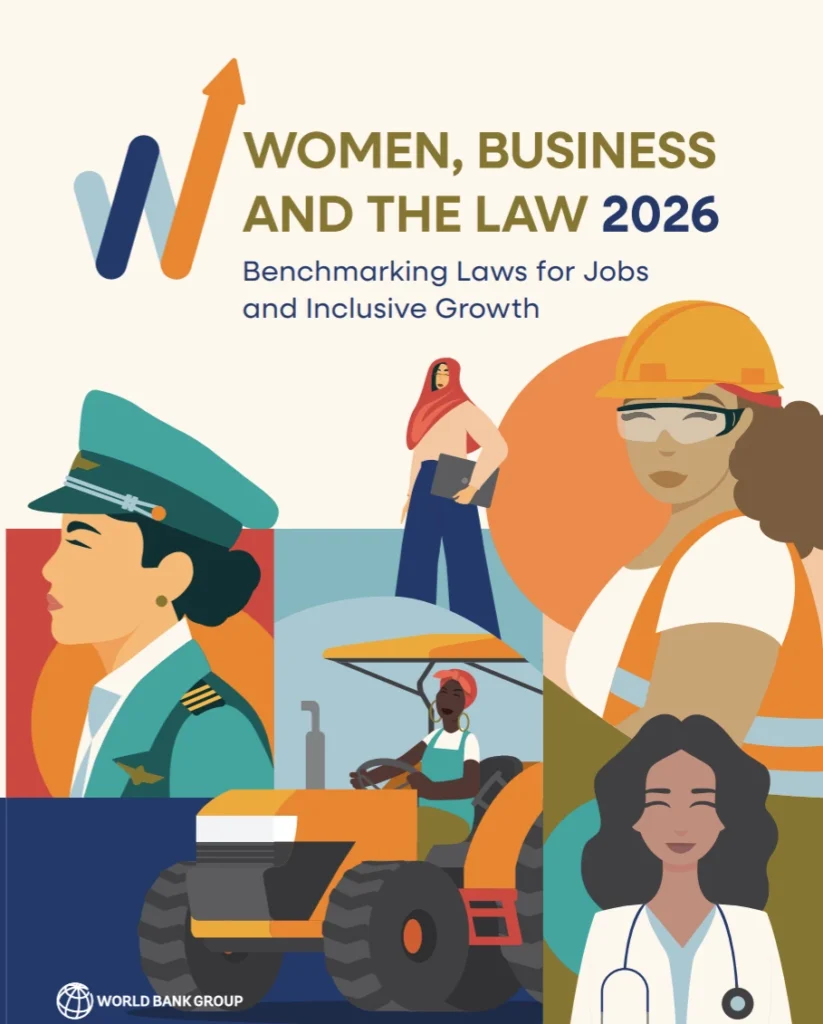
The World Bank Group has released the 2026 edition of its Women, Business and the Law report, highlighting reforms implemented between October 2, 2023 and October 1, 2025. The report revealed persistent global gender gaps, with women enjoying only about two-thirds of the legal rights available to men. The legal frameworks index score stands at 67 out of 100, underscoring the distance still to be covered toward full equality. It also found that none of the 190 economies assessed provides women with equal economic opportunities, while only four percent of women live in countries approaching full legal equality. Although many economies have introduced equal-opportunity laws, the report notes that most have yet to establish even half of the policies, institutions, access to justice systems, services and data required to make those laws effective. For the first time, the 2026 edition goes beyond assessing laws on paper to examine how well they are enforced. Surveyed legal experts estimate that laws supporting women’s economic participation are implemented only about half the time, reflected in an enforcement perceptions index score of 53.3. In Sub-Saharan Africa, women hold less than two-thirds (59.6/100) of the economic rights afforded to men. Only about one-third of mechanisms needed to support these rights are in place, while enforcement is perceived to occur at less than half of its full potential. Since October 2023, 15 of the region’s 48 economies have enacted 33 reforms aimed at expanding women’s economic opportunities, including measures on equal pay, workplace protections, parental leave and flexible working arrangements. Across the 10 thematic areas, the region performs relatively strongly in Mobility, with an average score of 69.5. Ghana, Nigeria and Rwanda each recorded perfect scores in this area, indicating that policies supporting women’s freedom of movement are largely in place. However, significant gaps remain in childcare, workplace support and protection from violence, areas the report identifies as critical to enabling women’s full participation in the economy. The report concludes that while legislative progress is evident, sustained investment in institutions, services and enforcement will be necessary to translate legal reforms into tangible economic outcomes for women.

Economic Reports, Telecommunications

Ghana Tops 2025 GSMA Mobile Money Regulatory Index (MMRI)

Ghana has maintained its position as the world’s leading country in mobile money regulation, according to the GSMA Mobile Money Regulatory Index (MMRI) 2025. In a statement released by the communications department of the Central Bank dated February 20, 2026, it cited a 1.04% increase in the country’s overall score from its previous 95.06% in the past year to 96.10% this year . The statement explained that the 1.04% improvement reflects the country’s strong policies and regulatory systems that support the growth of mobile money services across the country. It stated  that these measures help  deepen financial inclusion by allowing more people to access digital financial services safely and easily. According to the statement , the MMRI assesses how effective mobile money regulations are in over 90 countries, focusing on areas such as consumer protection, operational efficiency and innovation in digital finance. The central bank added that Ghana’s continued top ranking shows the country’s commitment to building a reliable and secure mobile money ecosystem which benefits businesses, service providers and customers. The Bank said it will continue working with industry stakeholders to strengthen policies and ensure steady progress toward a fully inclusive and digitally driven economy.