Business Outlook Africa

Author name: Business Outlook Africa

Profiles

UGBS Professor of Marketing, Kobby Mensah Named Among Top 12 Global Leaders by the Place Brand Observer

Professor of Marketing at the University of Ghana Business School (UGBS),Prof. Kobby Mensah, has been named among the 2026 Twelve Leaders Shaping Place Branding by The Place Brand Observer(TPBO). This was unveiled on 28th April 2026 by the TPBO’s expert community to recognise and spotlight practitioners, policymakers, and researchers. Prof. Mensah is the only West African tourism development executive featured in this year’s cohort. According to TPBO, “Prof. Kobby Mensah represents a convergence of academic insight and applied leadership in destination development. His move into leading GTDC signals a broader shift in Ghana’s approach, positioning tourism as part of an integrated system connecting investment, innovation and experience design.” Prof. Mensah joins the TPBO Who’s Who in Place Branding, a peer-recognised global network of over 500 professionals operating at the intersection of place, strategy, and leadership. He is a Chartered Marketer with the Chartered Institute of Marketing, and a leading voice on political marketing, digital engagement, and brand positioning in Africa. He is widely credited for pioneering digital tourism education in Ghana. Beyond academia, he serves as Chief Executive Officer of the Ghana Tourism Development Company integrating academic expertise with practical experience to drive national development. His leadership continues to champion innovation, sustainability, and collaborative stakeholder models within Ghana’s tourism ecosystem. Reacting to the recognition, Prof. Mensah stated: “I am humbled to stand alongside colleagues who are redefining how nations and cities build credibility. For Ghana, this is a call to action. This recognition belongs to the team at GTDC, to UGBS, and to every young Ghanaian innovator proving that place branding is not about slogans—it is about systems.” Prof. Mensah was profiled alongside notable global leaders from the Gambia, Estonia, Sweden, the United Kingdom, Chile, Thailand, Sierra Leone, and the United States. All twelve honourees were independently nominated by TPBO’s expert community and will be featured in the Place Brand Leaders Yearbook 2026, scheduled for release. UGBS warmly congratulates Prof. Kobby Mensah on this global recognition and commends his continued contribution to advancing place branding, tourism development and marketing scholarship. Source: https://ugbs.ug.edu.gh

Banking & Finance

First Atlantic Bank PLC to payout GHS 0.29 per share as Dividend for the 2025 Financial Year

  First Atlantic Bank PLC has announced the payment of a final dividend of GHS 0.29 per share to its shareholders for the 2025 financial year. In a statement released,the bank having recently listed on the Stock Market just last year explained that this follows approval from the Central Bank to payout its first ever dividends. The total amount to be paid out as dividend for the 2025 financial year is One Hundred Million Ghana Cedis (GHS 100,000,000.00) and is expected to be paid out on the 21st of May 2026 rather than the 7th of May 2026, that was communicated earlier in its Annual Report. The Bank explained that the pushback in dividend was as a result of timing of the approval by the Bank of Ghana which occurred on May 6,2027. This comes after the bank demonstrated outstanding financial resilience and growth in the 2025 financial year recording a profit after tax of GH¢482.9 million.

Banking & Finance

Ghana, Rwanda Central Banks in Talks to Ease Cross-Border Fintech Operations

The National Bank of Rwanda (NBR) has revealed that it is in active discussions with the Bank of Ghana to establish a framework that will allow fintech companies from both countries to operate across each other’s borders. Speaking 3i Africa Summit yesterday,the Deputy Governor of the NBR, Nick Barigye, made the highlighted the growing urgency for regulatory cooperation as financial technology innovation continues to outpace existing cross-border frameworks. “As regulation is still fragmented, and together as two central banks, we are working to see how we facilitate a fintech in Ghana to come and operate in Rwanda, how a fintech in Rwanda can operate in Ghana,” Barigye stated. The Deputy Governor identified regulatory fragmentation as the central challenge confronting African central banks in their efforts to support fintech growth, noting that while innovation has become increasingly borderless, regulation has largely remained domestic in scope. “Innovation is moving beyond borders, but regulation does not. So that’s the challenge that we see in Rwanda that we are grappling with,” he said, adding that the NBR has been actively engaging peer central banks to develop coordinated solutions. Barigye expressed appreciation for the collaborative relationships being built between African monetary authorities, describing the challenge as ongoing but one the central bank is committed to addressing.

Banking & Finance

Bank of Ghana Governor Considers Separate Legislation for Fintechs

The Governor of the Bank of Ghana, Dr. Johnson Pandit Asiamah, has announced that the central bank is exploring the option of introducing a dedicated legislation specifically for regulating financial technology companies, separate from the existing Payment Systems Act. Speaking during a roundtable discussion on fintechs on Day 1 of the 3I African Summit in Accra, Dr. Asiamah explained that he has been in discussions with his head of fintech about the possibility of creating a more dynamic and targeted regulatory framework for the sector. “We’ll look at our regulation. With that, I was discussing with my head of Fintech the other day, and I said, you know what? I want to have a separate legislation for Fintechs. We regulate them currently under the Payment Systems Act. And I said, no, can I see more dynamism? Can we have a separate law just for Fintechs? So that’s the idea — thinking about what next,” the Governor stated. Dr. Asiamah also expressed confidence that fintechs represent a critical vehicle for achieving longstanding central bank objectives that traditional approaches have failed to deliver including deepening financial inclusion across the country. “We think that through technology, through fintechs, we can achieve some of the aims, some of the things that have eluded us for so long. We can use fintechs to accelerate that,” he added. The Governor further stressed the growing importance of fintechs in driving financial inclusion, noting that the central bank can no longer rely solely on traditional banking institutions to extend financial services to underserved populations across Ghana. The 3I African Summit which is only happening for a second time is a major financial technology and digital economy event taking place in Accra from May 6 to May 8, 2026. Hosted at the Destiny Arena, the summit is organised by the Bank of Ghana and the Development Bank Ghana in partnership with Elevandi. The name 3I represents the summit’s three core pillars — Innovation, Investment and Impact.

Africa

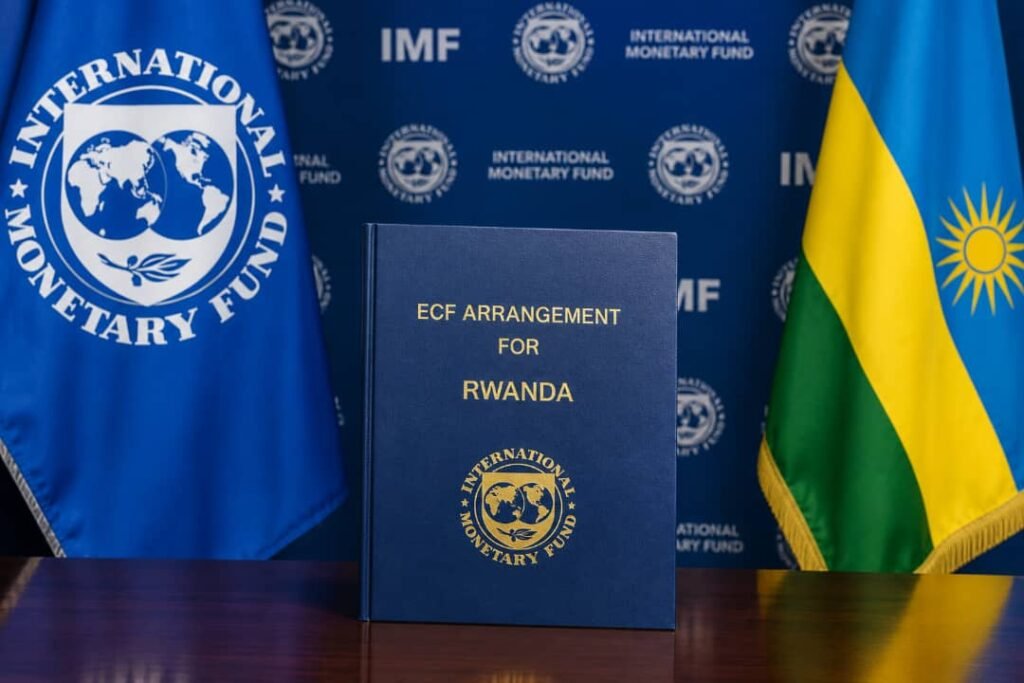
IMF and Guinea-Bissau Reach Staff-Level Agreement on Eleventh Review of Extended Credit Facility

The International Monetary Fund and Guinea-Bissau have reached a staff-level agreement on economic policies that could support the approval of the Eleventh Review of the Extended Credit Facility arrangement, unlocking access to approximately US$1.6 million upon completion of the review by the IMF Executive Board. The agreement follows discussions held in Bissau from April 21 to 29, 2026, by an IMF team led by Niko Hobdari, mission chief for Guinea-Bissau, on macroeconomic policies under the ECF arrangement. The staff-level agreement is contingent on the implementation of agreed prior actions and remains subject to IMF Management approval and Executive Board consideration. The ECF arrangement was originally approved by the IMF Executive Board for a total amount of SDR 28.4 million  about US$37.3 million  on January 30, 2023, and was subsequently augmented to 140 percent of quota or SDR 39.76 million on November 29, 2023. Completion of the Eleventh Review would bring total disbursements under the arrangement to SDR 38.58 million  about US$52.8 million. At the conclusion of the mission, Mr. Hobdari noted that all end-March 2026 programme targets were met, with the authorities satisfying all quantitative performance criteria, indicative targets, structural benchmarks and continuous performance criteria, reflecting sustained commitment to the ECF-supported reform agenda. “I am pleased to announce that we have reached a staff-level agreement with the Guinea-Bissau authorities on economic and financial policies that could support the approval of the Eleventh Review of the ECF program,” Mr. Hobdari said. Economic growth in 2025 is estimated to have remained strong at 5.8 percent, supported by robust agricultural production particularly cashew exports and solid private investment. The IMF however cautioned that growth is projected to moderate in 2026 amid a more challenging external environment, including higher global fuel prices linked to the conflict in the Middle East and potential disruptions to the cashew marketing campaign due to production and logistical constraints. Mr. Hobdari noted that the authorities remain committed to achieving the 2026 domestic primary surplus target through strengthened revenue mobilisation and strict expenditure prioritisation, with prior actions focused on reinforcing tax administration, tightening expenditure controls, strengthening debt management and preserving investor confidence. Looking ahead the IMF flagged significant downside risks to Guinea-Bissau’s economic outlook including adverse weather conditions, negative terms-of-trade developments and tighter financing conditions. Against the backdrop of a tight fiscal space the Fund noted that the authorities’ commitment to curtail non-priority spending until cashew-related revenues materialise, alongside proactive cash management practices, would help ease financing pressures. The IMF also called for continued efforts to promote economic diversification into fisheries and extractive sectors  including oil, phosphate and bauxite as key to strengthening the country’s resilience over the medium term.

Trade

Ghana to Pilot Continental Digital Trade Corridor — Vice President

The Vice President of Ghana, Professor Jane Naana Opoku Agyemang, has announced that the country will work its continental partners to pilot a digital trade corridor aimed at deepening Africa’s financial and digital integration. Speaking at the 3I African Summit on Wednesday May 6, 2026 in Accra under the theme “The Next Frontier: Shaping Africa’s Integrated FinTech Future,” the Vice President described the initiative as a concrete step towards positioning Africa as an active participant in the global digital economy on its own terms. According to the Vice President,the pilot corridor will focus on three key areas namely mobile money interoperability, mutual recognition of digital identity for cross-border Know Your Customer (KYC) processes and harmonised electronic invoicing across participating countries. “Ghana will work with everyone, Rwanda, Zambia and other partners to pilot a continental digital trade corridor. This pilot, which will be implemented,tested and measured, will focus on mobile money, interoperability, mutual recognition of digital identity for cross-border KYC and harmonised electronic invoicing.” The Vice President said. Touching on digital identity, the Vice President noted that interoperable identity systems are essential to unlocking participation at a large scale ,arguing that without shared and mutually recognised digital identity infrastructure cross-border financial transactions will remain fragmented and exclusionary. “Interoperable identity systems are therefore essential to unlock participation at scale.” She added The Vice President concluded by saying that “Economic sovereignty now also depends on integration, particularly digital integration, because this is where value is created, exchanged and controlled.” The 3I African Summit is a major financial technology and digital economy event organized annually by the Ghanaian Bank Of Ghana in partnership with other institutions which focuses on Innovation, Investment, and Impact.

Consumer

Fan Milk PLC to Pay GHS 0.11 Final Dividend Per Share for 2025 Financial Year

  Fan Milk PLC has announced the payment of a final dividend of GHS 0.11 per share for the 2025 financial year, subject to shareholder approval at the company’s upcoming Annual General Meeting. According to a press release filed with the Ghana Stock Exchange, shareholders registered in the books of Fan Milk at the close of business on Thursday 14 May 2026 will qualify for the final dividend with the register of shareholders set to be closed from Friday 15 May 2026 to Monday 18 May 2026, both days inclusive. The ex-dividend date has also been set as Tuesday 12 May 2026.The dividend of GHS 0.11 per share is scheduled to be paid on Tuesday 30 June 2026. Fan Milk PLC’s Annual General Meeting will be held on Monday 18 May 2026 at Wesley Towers, Accra at 11am, where directors will formally recommend the dividend payment to shareholders for approval.

Banking & Finance

Kasapreko PLC Launches GHS 700 Million IPO on Ghana Stock Exchange

Kasapreko PLC, one of Ghana’s leading manufacturers and distributors of alcoholic and non-alcoholic beverages, has launched an Initial Public Offering on the Ghana Stock Exchange, seeking to raise up to GHS 700 million to fund the expansion of its production capacity across the country. According to the IPO announcement filed with the Ghana Stock Exchange, the company is offering 583,333,333 new ordinary shares to the public at an offer price of GHS 1.20 per share, with a minimum application of 2,000 shares and additional multiples of 1,000 shares. The offering is open to both retail and institutional investors in Ghana. The implied market capitalisation of Kasapreko PLC at the offer price stands at GHS 4.96 billion signalling the scale and commercial weight of one of Ghana’s most recognisable beverage brands ahead of its public market debut. The company added that it intends to deploy the proceeds from the offering towards the expansion of its water and carbonated soft drink production plants, including the construction of a new factory at Adeiso. The offer opened on Monday 4th May 2026 and will close on Monday 1st June 2026 with allotment scheduled for Thursday 4th June 2026 and l settlement on Friday 5th June 2026. Shares are expected to commence listing and trading on the Ghana Stock Exchange on Wednesday 17th June 2026.  

Banking & Finance

Letshego Ghana Posts GH₵80 Million Profit in 2025 as Lending Income Surges

Letshego Ghana Savings and Loans PLC has recorded a profit of GH₵80 million for the 2025 financial year signifying a 76.3% jump from the GH₵45 million recorded in the 2024 financial year. In it’s 2025 financial report ending, December 31,2025,the company’s interest income grew from the GH₵771 million recorded in 2024 to GH₵1 billion in the 2025 financial year. Interest expense for the period however remained relatively stable ,declining marginally from GH₵267 million to GH₵271 million.The report also showed a rise in Income from lending activities from the previous GH₵308 million to GH₵494 million. Operating income grew from GH₵326 million to GH₵471 million over the period with total operating expenses also rising from GH₵261 million to GH₵357 million. The earnings per share for the period also rose to GH₵0.25 from the GH₵0.16 recorded in 2024, reflecting stronger returns for shareholders. On the balance sheets,Letshego Ghana’s total assets also grew from GH₵1.5 billion to GH₵1.8 billion over the period, driven largely by growth in gross advances to customers which rose from GH₵1.3 billion to GH₵1.6 billion. Customer deposits also expanded from GH₵697 million to GH₵820 million, signaling improved customer confidence in the institution. Total equity also strengthened from GH₵319 million to GH₵366 million, while total liabilities rose from GH₵1.2 billion to GH₵1.5 billion over the same period, driven primarily by growth in borrowings and customer deposits as the company scales its funding base to support loan book expansion. Letshego Ghana’s key prudential indicators presented a mixed picture for the period. The cost to income ratio improved sharply from 57.2% to 46.0% ,the leverage ratio also remained healthy at 20.4% compared to 21.2% in the prior period with the capital adequacy ratio on the other hand declining from 23.2% to 18.8%. The concern however was the rise in the institution’s non-performing loan ratio which rose from 14.2% to 17.7% during the financial year.  

Energy

GOIL PLC Records GH₵90,672,000 Net Profit in 2025 Despite Revenue Decline

Ghana’s leading downstream petroleum company, GOIL PLC, has recorded a net profit after tax of GH₵90,672,000 for the 2025 financial year representing a 7.04% increase from the GH₵84,698,000 posted in the corresponding period of 2024. According to the company’s 2025 consolidated financial statements even though net profit increased by 7.04% gross revenue however decreased by 8.91%,falling from GH₵20,364,600,000 in the 2024 financial year to GH₵18,549,204,000 in the 2025 financial year. On operating expenses,staff, selling and administrative expenses declined from GH₵488,336,000 to GH₵456,924,000 while depot and station expenses fell from GH₵159,660,000 to GH₵142,407,000, contributing to an operating profit before financing costs of GH₵230,020,000 compared to GH₵244,919,000 in the prior year. On the balance sheet, GOIL’s total assets grew marginally from GH₵4,808,209,000 to GH₵4,881,934,000, supported by growth in property, plant and equipment which rose from GH₵1,630,174,000 to GH₵1,781,759,000 — reflecting continued investment in the company’s infrastructure and service network. Total equity strengthened from GH₵894,082,000 to GH₵991,541,000, driven by retained earnings which climbed from GH₵643,215,000 to GH₵707,662,000. Total liabilities for the period also decreased by GH₵23,734,000 falling from GH₵3,914,127,000 in 2024 to GH₵3,890,393,000 in 2025. The improved bottom line translated into better returns for shareholders. Earnings per share rose to GH₵0.231 from GH₵0.216 in 2024, while dividend per share increased to GH₵0.060 from GH₵0.056.