Business Outlook Africa

Author name: Business Outlook Africa

Banking & Finance

GSE Reports Internet Connectivity Issues, Assures Trading Continues

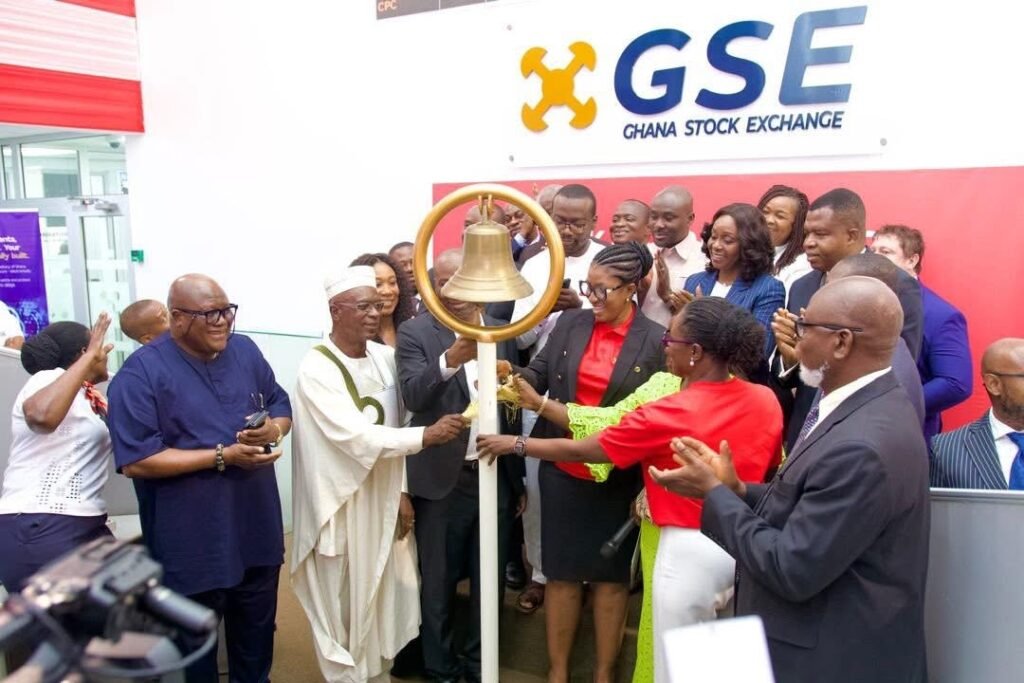
  The Ghana Stock Exchange has issued a market notice informing the public of an internet connectivity disruption affecting some of its services. In the notice, the Exchange said its Internet Service Provider is actively working to resolve the issue as quickly as possible, while assuring market participants that its trading system remains fully accessible via its Wide Area Network connection. The GSE also confirmed that its MarketWatch platform is up and running, meaning investors can continue to monitor market activity without interruption. The Exchange apologised for any inconvenience caused and indicated that updates would be shared as soon as the issue is resolved.

Explainers

Meet the Top 10 OMCs Running Ghana’s Petrol Pumps

  As global tensions continue to shake energy markets, fuel prices remain one of the most sensitive economic indicators worldwide and Ghana is no exception. The recent Iran-Israel-US conflict sent crude oil prices surging internationally, pushing fuel prices upward across several economies, including Ghana. For businesses and households alike, changes at the fuel pump quickly translate into higher transport fares, rising production costs, and increased prices of goods and services. In Ghana, fuel pricing remains a critical driver of inflation and economic activity. But behind the pumps are the Oil Marketing Companies (OMCs) competing aggressively for market share in one of West Africa’s most dynamic downstream petroleum industries. According to data from the National Petroleum Authority (NPA), 177 OMCs were operating in Ghana as of the end of March 2026. However, a handful of dominant players continue to control a significant share of the petrol market. Business Outlook Africa takes a closer look at the top 10 OMCs dominating the market when it comes to petrol (Gasoline RON 91) at the end of March 2026. Star Oil – 17.54% Market Share Leading Ghana’s petrol retail market is Star Oil. Founded in 1998, Star Oil prides itself as the oldest fully indigenous independent Oil Marketing Company in Ghana without foreign or state ownership. Over the years, the company has built a strong nationwide presence with more than 185 fuel stations across the country. Its rapid expansion strategy, competitive pricing model, and strong local brand positioning have helped it emerge as the market leader in Ghana’s highly competitive fuel sector. The company is led by CEO Philip Tieku. 2. GOIL PLC – 13.83% Market Share GOIL remains one of Ghana’s most recognized and strategic petroleum brands. Originally established in Ghana in 1960 as the marketing outfit of AGIP PETROLI, the company became wholly owned by the Government of Ghana in 1974 and was renamed Ghana Oil Company Limited. Today, GOIL PLC is listed on the Ghana Stock Exchange and has expanded beyond retail fuel marketing into bulk distribution, upstream operations, and bitumen production through its subsidiaries: * GOEnergy Limited * GOIL Upstream Limited * GOBitumen Limited The company is headed by Group CEO and Managing Director Edward Abambire Bawa, with Nana Philip Archer serving as Board Chairman. GOIL’s extensive national footprint and state-backed legacy continue to position it as a major force in Ghana’s energy sector. 3. Vivo Energy Ghana (Shell) – 6.83% Market Share Vivo Energy Ghana, the exclusive marketer and distributor of Shell-branded products in Ghana, remains one of the strongest multinational brands in the sector. Though incorporated in 2013, Shell’s presence in Ghana dates back to 1928. Beyond fuel retail, Vivo Energy has diversified into lubricants, aviation fuel supply, convenience retail, and commercial fuel solutions serving sectors including mining, manufacturing, and construction. Its global brand recognition and service innovation continue to make it one of the premium players in Ghana’s downstream petroleum industry. 4. TotalEnergies Marketing Ghana PLC – 4.83% Market Share Operating in Ghana for more than 70 years, TotalEnergies Marketing Ghana PLC remains one of the most established international energy brands in the country. The company is affiliated with the global TotalEnergies Group, which operates in about 120 countries with more than 100,000 employees worldwide. Listed on the Ghana Stock Exchange, TotalEnergies Ghana has built a strong reputation around quality service delivery, lubricants, convenience retail, and energy solutions. Its long-standing market presence continues to make it one of Ghana’s most influential OMCs. 5. IBM Petroleum – 3.66% Market Share IBM Petroleum is one of the relatively newer but rapidly growing indigenous OMCs in Ghana. Established in 2018, the company has steadily expanded its operations and visibility within Ghana’s competitive fuel retail market. The company is led by Managing Director Michael Owusu Asiedu. 6. ZEN Petroleum – 3.19% Market Share ZEN Petroleum has evolved from a local startup into one of Ghana’s fastest-growing integrated downstream petroleum groups. Founded in 2010 by William Tewiah, who currently serves as Managing Director, the company now operates across multiple subsidiaries including: * ZEN Petroleum * ZEN Terminals * Astra Oil Services * Ladybird Logistics * ZEN Transport As of 2025, the company employed approximately 1,500 people. In a major milestone, ZEN Petroleum listed on the Ghana Stock Exchange on April 23, 2026 a move seen as a significant step toward expanding indigenous Ghanaian participation in the energy sector. Its Board is chaired by renowned banker Frank Adu, with corporate executives Freda Duplan and Mansa Nettey serving as Board Members. 7. Dukes Petroleum – 3.17% Market Share Licensed in 2004, Dukes Petroleum has steadily expanded its operations over the years and now operates more than 50 fuel stations across Ghana. The company continues to strengthen its presence within Ghana’s retail petroleum market through network expansion and customer-focused services. 8. Benab Oil – 3.03% Market Share Benab Oil Company Limited remains one of the notable Ghanaian-owned petroleum distribution companies operating in the downstream sector. The company has continued to expand its footprint as indigenous participation in Ghana’s petroleum retail industry increases. 9. Goodness Energy – 2.33% Market Share Goodness Energy continues to grow its visibility in Ghana’s petroleum market, emerging as one of the key indigenous players contributing to competition and market expansion within the sector. 10. Allied Oil – 2.24% Market Share Allied Oil holds the distinction of being the first indigenous private OMC. The company is headquartered in Dzorwulu with over 50 retail outlets. Established in 1996 and licensed in 1998, the company has remained a longstanding local player in Ghana’s fuel retail business. In 2014, Allied underwent a major rebranding exercise and introduced premium fuel products through a strategic partnership with Afton Chemical USA. Its DriveMore Super+ and DriveMore Diesel+ fuels were positioned as performance-enhancing products designed to improve engine efficiency, reduce emissions, and enhance vehicle longevity. The company’s Executive Chairman is Dan Kofi Okudzeto, while Elliot Mawuli Okudzeto serves as Chief Executive Officer. A Highly Competitive Industry With Strategic Economic Importance Ghana’s downstream petroleum sector has become increasingly competitive

Real Estate

Ghana’s Building Inflation Holds Steady at 2.2% in April 2026 — GSS

The Ghana Statistical Service has reported that building inflation recorded in April 2026 has remained flat at 2.2%, unchanged from that of March 2026, but down from 24.4% in the same month of the preceding year. The Ghana Statistical Service reported in the April 2026 Prime Building Cost Index, that construction costs have been on the increase but at a much lesser rate compared to a year ago. The report also showed that prices for building materials increased 1.5% in the month leading up to April 2026, which suggested that building prices had experienced short-term changes and price pressures in the sector. The main contributors to building inflation over the period were identified as electrical work, glazing, plumbing, metal work and tiles. The electrical work made up 52.8% of total inflation in the building sector, and the combined effect of glazing, metalwork, plumbing, and tiles was 100.5%. The figures indicate a construction industry characterised by rising costs despite a year-on-year improvement, but still highly focused on finishing and installation items, which are essential to the delivery of housing and the development of infrastructure throughout the country.

Consumer

Ghana Water Ltd Opens Weija Dam Spillways as Water Level Exceeds Maximum Operating Capacity

  The Management of Ghana Water Limited has announced the controlled spillage of excess water from the Weija Dam, after the water level rose above the maximum operating level of 48 feet. In a press release dated 27th May 2026, the company said all spill gates of the dam have been opened to allow for the controlled release of excess water in order to safeguard the structural integrity and safety of the dam. “The public may recall that every year during the rainy season, and anytime the water level exceeds 45 feet, Ghana Water Ltd undertakes controlled spilling operations to prevent undue pressure on the dam and avert any potential disaster,” the statement noted. Ghana Water Ltd further disclosed that the Ghana Meteorological Agency has forecast continued torrential rains upstream, warning that increased inflows into the dam area are expected. The company said the spilling exercise will continue until the water level recedes to a safe operating level, adding that the process may persist for several months depending on rainfall patterns and inflow volumes. The company is urging all persons living along the course of the river downstream of the dam to evacuate from vulnerable areas immediately to forestall any eventuality and ensure the safety of lives and property. Ghana Water Ltd also disclosed that the National Disaster Management Organisation and the various District Assemblies have been informed, with plans underway to clear structures and obstructions hindering the free flow of water into the sea. The company called on relevant authorities to act as early as practicable to minimise the risk of flooding and protect affected communities. The public has been urged to cooperate fully with all emergency directives and advisories issued by relevant state institutions.

Special Features

Sokoban Carpentry Chairman Calls for Reinstatement of Collapsed Banks to Ease Credit Burden on Artisans

Chairman of the Sokoban Wood Village Carpenters Association, Daniel K. Dagodzo is calling on government and regulatory bodies to reinstate the licenses of banks collapsed during Ghana’s 2017-2019 banking sector cleanup, arguing that their absence has severely limited affordable credit access for small-scale artisans. Speaking exclusively to Business Outlook Africa, Dagodzo traced the credit crisis facing artisans to the decimation of Ghana’s banking landscape, explaining that when there were more banks, competition drove interest rates down and made loans more accessible. But with fewer institutions now in the market due to the sector cleanup, that advantage has disappeared. “At first they were a lot of banks, but just some years ago, under the former President, the Central Bank and regulators revoked the license of many banks, but they were actually the ones helping us with saving and also because they were a lot, it brought about a healthy competition and it helped us because the interest rate when it came to interest on loans there were a lot of competitive alternatives for us the names.” He stated Beyond trade concerns, Dagodzo raised a land dispute threatening the association’s future. According to him, a plot of land secured by the Presidency some years ago at Asago for the association’s development and expansion has allegedly been taken over by a local chief who according to him ,is now selling portions to individuals. He noted that all available avenues for redress have been exhausted, with the association even facing harassment from landguards deployed to the site. “ Our last plea is that Presidency secured a land to develop for us some time ago, at Asago, to help us expand but the Chief has currently claimed ownership of the land and is selling to individuals to build on, we’ve tried all possible means but to no avail. They even brought landguards to harass us so we are pleading with the government to please come to our aid.”

Banking & Finance

Bank of Ghana Halts MoMo Fintech’s Wallet-to-Bank Transfer Fee Days Before Rollout

The Bank of Ghana has directed Mobile Money Fintech Ltd a subsidiary of the MTN Group to suspend the implementation of its proposed 0.75 percent fee on direct wallet-to-bank transfers. In a statement released on Tuesday May 26th 2026 the Central Bank announced that the fee which was supposed to be implemented effective June 1,2026 is currently undergoing considerations after which it will be determined if it should be implemented or not. The Central Bank added that this move is being put in place to ensure “ changes to charges in the mobile financial services ecosystem are introduced fairly, protect consumers, and support their financial wellbeing” . This comes after Mobile Money Fintech Ltd a subsidiary under the MTN Group announced plans to introduce a 0.75 percent fee on all direct wallet-to-bank transfers effective 1st June 2026.

Agriculture

BOPP Approves Final Dividend of GHS0.9085 Per Share, Replaces Ernst & Young with PwC at 2025 AGM

Benso Oil Palm Plantation PLC (BOPP) has approved a final dividend of GHS0.9085 per share for the financial year ended 31st December 2025, as part of its key resolutions adopted at its Annual General Meeting held on Friday, 22nd May 2026 at The Palms by Eagles Hotel, Takoradi in the Western Region. Shareholders ratified an interim dividend of GHS1.0627 per share, which had already been paid, and approved the Board’s recommended final dividend of GHS0.9085 per share for the 2025 financial year. The General Meeting also saw to the approval of the re-election of Ms. Esine Okudzeto as Non-Executive Director and Dr. Alfred Mahamadu Braimah as Independent Non-Executive Director, both of whom were retiring by rotation in accordance with the Companies Act, 2019 (Act 992). Shareholders also approved a proposed increase in directors’ fees for the Financial Year 2026. In a significant governance development, the General Meeting approved the appointment of PricewaterhouseCoopers (PwC) as External Auditor, replacing Ernst & Young (EY) whose tenure had come to an end.

Consumer

Ghana Bans Takeaway Packs Products Effective 1st January 2027 — EPA

Ghana has announced a comprehensive ban on the production, importation, distribution, sale, and use of polystyrene foam products, popularly known as styrofoam or takeaway packs, effective 1st January 2027. The Environmental Protection Authority (EPA) issued the directive on 25th May 2026, following a policy announcement made by President John Dramani Mahama on 5th June 2025 during the World Environment Day celebration, where he declared the ban as a critical measure to combat plastic pollution and safeguard the environment. The ban covers all forms of expanded polystyrene foam products used for human and commercial activities including food packaging containers and takeaway packs, disposable cups and plates, foam packs used by restaurants, chop bars and food vendors, ceiling and insulation materials, foam mattresses and bedding materials, as well as packaging and cushioning materials. Medical, scientific, laboratory and diagnostic polystyrene products are however exempted from the ban. The EPA has directed all manufacturers, importers, distributors and users of polystyrene products to begin transitioning to safer, reusable, recyclable and environmentally sustainable alternatives ahead of the January 2027 deadline. During the transition period, the Authority will undertake nationwide stakeholder engagements, public education and technical consultations while strengthening compliance monitoring and enforcement preparedness. The EPA added that it will collaborate with Metropolitan, Municipal and District Assemblies, port authorities, customs officials and industry regulators to ensure effective nationwide enforcement of the ban upon commencement.

Banking & Finance

Ghana Stock Exchange Records Mixed Session as Financial Index Slips

Trading on the Ghana Stock Exchange on the closing day of last week(22nd May 2026 )ended on a mixed note as the benchmark GSE-Composite Index edged up while the Financial Stock Index retreated. Equity Market The GSE-Composite Index gained 0.20% to close at 14,518.96 points, up from 14,489.47 the previous day. Year-to-date, the index has gained an impressive 65.55%. The GSE-Financial Stock Index however declined by 0.76% to settle at 7,881.22 points, down from 7,941.28, though it remains 69.59% higher year-to-date. Trading activity slowed significantly with volume traded dropping 51.70% to 2,351,894 shares from 4,869,431 the previous session. Despite the lower volumes, value traded surged 151.60% to GHS 13,967,514.42 from GHS 5,551,489.69. Fixed Income Market Total fixed income market volume rose 10.99% to GHS 794,928,231 from GHS 716,243,249 the previous day. DDEP Bonds recorded the strongest growth, climbing 50.02% to 294,390,861. Treasury Bills however declined 3.38% to 495,695,951 while Corporate Bonds fell sharply by 39.58% to 4,244,900.

Opinion

The Draft NITA Bill Should be Shredded

One of Ghana’s veteran business journalists, now based in New York, reached out and asked if I have been following the NITA bill debate. Sadly, I hadn’t. Too much going on. He pressed, subtly but firmly, so I did. I appreciate the ambition of the current management at the Ministry. I am sure they want their names in neon above Black Star Square. But there is a serious katanomicodour blowing from the bill they are promoting. They would do well to assemble a group of truly independent tech folks from the ICT chamber, not just a bunch of their friends, listen hard, talk less, and take the advice. If they did, they would gut that manuscript and return to the drawing board. Here is why, based on my quick take on the bill. Bottom line The Ministry of Communications, Digital Technology, & Innovations (MOC) does not merely appear to be proposing to “license IT professionals.” The draft NITA Bill is much bigger. The plan is to convert NITA from a coordinating ICT agency into a broad digital-sector regulator with powers over ICT infrastructure, cloud, SaaS, digital platforms, public-sector technology procurement, professional certification, business premises, mergers, ownership, standards, audits, sanctions, and even the structure of government digital infrastructure. It is a wholesale revamp. No one would have quarrelled with the bill if it had focused on the big problems in the sector: public sector procurement indiscipline and a lack of incentives for R&D and support for local tech innovations. Ghana certainly needs improved standards and practices in digital assurance, interoperability, and accountability for critical systems (already captured in the “critical infrastructure” policy). The katanomics arise when instead of learning from national mistakes and proposing workable solutions, one jumps the process to venture into a whole range of areas where the country absolutely lack policy experience. 1. MOC’s Proposals The draft/consultation bill proposes as follows: A stronger NITA “Authority” The Bill would establish NITA as a regulatory authority for ICT and digital services, with objects including regulation, coordination, promotion, standards, licensing, certification, interoperability, digital innovation, and public-sector ICT personnel management. Mandatory licensing of ICT business activity Section 35 (the bombshell that has sparked so much controversy). It says no person may engage in business or a related activity in the ICT sector unless granted a licence. It expressly includes installation of ICT infrastructure, development or provision of ICT products and services, and activities requiring licensing or certification. Doing any of these without a license could get one jailed, or at best fined. Who is to be licensed? Section 36 lists categories such as public/commercial ICT infrastructure, cloud hosting, SaaS providers, government digital services partnerships, national digital platform operators, data centre operators, and any other category the Authority later determines. Citizen-only ownership qualification Section 37 says a licence applicant must be an adult Ghanaian citizen, or a company/partnership/association/body “wholly owned by a citizen.” Essentially, it would now be illegal to engage remote experts to work on a system deployed in Ghana. Essentially, half the whiz kids in Silicon Valley would have been ineligible to build their genius gizmos had America had a law like this. Certification of ICT professionals Section 46 says a person shall not be appointed as an ICT professional in a public or private institution unless certified by the Authority, and that NITA shall determine the criteria and procedure. (Funnily, this contradicts the definitions section where “certified professional” is confined to the public sector.) Closure, seizure, suspension and enforcement powers  NITA could close premises or facilities, seize ICT products/equipment, suspend business, revoke licences, and impose administrative penalties in specified circumstances. M&A and business-structure control  Section 49 appears to require NITA approval before sale, transfer, merger, amalgamation, or alteration of the nature of an ICT service provider’s business. There are also some less controversial proposals about setting up a special purpose national e-government vehicle, promoting transparency and interoperability, and preventing vendor lock-in. Let’s focus, however, on the areas of the Bill that have rankled so many ICT professionals and would clearly not have seen the light of the day if the Ministry bosses had done any serious sounding beyond their clique. 2. What do they mean by “ICT professional” anyway? “IT/ICT professional” is not like “nurse,” “electrician,” “lawyer,” “chartered accountant,” or “professional engineer.” Those occupations usually have a more defined body of practice, recognised training path, public-risk rationale, and a reserved act or protected title. “ICT” and “IT” are very loose umbrella terms. International occupational systems do not treat ICT as one unified profession. The International Standard Classification of Occupations classifies jobs by skill level and specialisation, not by one vague “IT professional” identity. Eurostat and O*NET both list many distinct computer and mathematical occupations within that bracket: software developers, network architects, cybersecurity analysts, database administrators, web developers, data scientists, support specialists, QA testers, IT project managers, and many more. Is the government of Ghana going to insist on licensing every single person in Ghana who builds a website, uses Microsoft Power BI to create some charts for a company, or deploys mermaid to craft some flyers for an event organiser? The whole idea is totally ridiculous. A more sensible approach would be to pry open the ICT chest open and only target the most critical functions. Example: Critical Public Digital Infrastructure management (with a clear and rigorous process properly defined as to how any system gets to be elevated to that status to begin with); Financial services cybersecurity auditing; Tier II & III datacenter operations; Public hospital digital health network administration; Public ERP procurement readiness certtification. The bill could then have said that for those functions, licensed professionals are required. The licensing regime would then have been constructed in an industry-led fashion much like we have in leading accounting jurisdictions. Frankly, the civil service is the last place to situate licensing for a dynamic sector like ICT. More importantly, under no circumstances should any government aspire to poke its long nose into stuff like “writing code,” “installing a router,”