
Business Outlook Africa

Author name: Business Outlook Africa

News

Bank of Ghana Converts Rural Banks to Community Banks, Marking New Chapter for Sector

The Bank of Ghana (BoG) has announced the conversion of the Rural Banking sector into the Community Banking sector, effective immediately following the Guideline on the Revised Microfinance Sector Framework, 2026. In a statement released on June 17,2026 it stated that all existing Rural Banks have therefore officially become Community Banks. As part of the transformation, the affected institutions are required to complete all statutory name changes, corporate rebranding, and other regulatory alignments by end-December 2026. The Bank of Ghana added that the conversion represents a strategic milestone under the ongoing microfinance sector reform. “This conversion also coincides with the 50th anniversary of the establishment of rural banking in Ghana, providing a timely moment to transition the subsector into its next chapter,” the central bank noted. Rural Banking was initiated in 1976 by the Government and the Bank of Ghana to expand access to financial services in rural communities and integrate them into the national financial system. Over the past five decades, the subsector has grown into a core pillar of the banking industry and national financial inclusion efforts. The sector currently comprises 147 licensed institutions, with about 1,000 branch networks nationwide, serving over eight million customers. Consequently, its growth and impact reflect a combination of sustained policy support, a development-oriented regulatory approach, and a unique synergy derived from shared community ownership and customer base. Through this conversion, the Bank of Ghana is repositioning the Community Banking sector as a modern banking segment. The central bank added that the move is also aimed at deepening inclusive finance in both rural and urban communities and integrating them into the national financial architecture.

Agriculture

Ghana, Côte d’Ivoire to Expand Cocoa Initiative to Other African Nations

Presidents Alassane Ouattara of Côte d’Ivoire and John Dramani Mahama of Ghana have signed a new joint declaration committing both countries to fairer farm-gate prices for cocoa farmers and deeper cooperation across the sector. The declaration was signed at the Côte d’Ivoire-Ghana High-Level Summit on the Cocoa Economy, which took place in Abidjan on Tuesday, June 16, 2026. The two Heads of State renewed their shared commitment to a sustainable cocoa economy, placing farmers at the centre of priorities for sector governance and value sharing, building on the original Abidjan Declaration of March 26, 2018, which has served as the foundation for cooperation between the two states. The declaration stated that Côte d’Ivoire and Ghana together account for about 60 percent of global cocoa production, a position it said confers shared leadership and a special responsibility for the future of the sector. It also noted notable achievements of the two countries’ joint efforts so far, including the creation of the Côte d’Ivoire-Ghana Cocoa Initiative (CIGCI), the establishment of the Living Income Differential (LID), the harmonization of marketing and price announcements to producers, the implementation of traceability, the African Regional Standards for Sustainable Cocoa (ARS-1000), and cooperation between research institutes to combat the Cocoa Swollen Shoot Virus Disease (CSSVD). The declaration further stated that the sector remains exposed to major challenges such as price volatility, illegal gold mining, the adverse effects of climate change, the rise in the use of cocoa substitutes and equivalents, and the increasing demands of international sustainability regulations. It added that Africa, which accounts for about 80 percent of global production, it still captures only a marginal share of the value in the cocoa-chocolate supply chain. The two leaders stated they were convinced that fair remuneration for farmers is a pillar of the sector’s sustainability and a requirement for economic justice and social stability. Consequently, Ouattara and Mahama agreed to harmonize farm-gate price policies to optimize producer remuneration, stabilize the market and strengthen commercial cooperation through several key measures, including market synergy, the alignment of premiums and the harmonization of crop-season calendars. They also committed to creating added value by increasing processing capacity, encouraging regional and continental trade, and stimulating national and regional consumption of cocoa-based products. With this declaration, Ouattara and Mahama have agreed to expand the Côte d’Ivoire-Ghana Cocoa Initiative to other African countries, to enhance regional cooperation, harmonize sector policies, strengthen collective bargaining power on global markets, and coordinate responses to the emerging challenges of the cocoa economy.

Banking & Finance

Societe Generale Ghana PLC Announces GHS0.24 Per Share Final Dividend for 2025

Societe Generale Ghana PLC (SOGEGH) has declared a final dividend of GHS0.24 per share for the 2025 financial year with the dividend scheduled to be paid on Monday, September 7, 2026. In a statement released on June 15, 2026, Societe Generale stated that only shareholders who are registered in its books at the close of business on Monday, July 6, 2026, will qualify to receive dividends. The company also added that its register of shareholders will be closed from Tuesday, July 7, to Wednesday, July 8, 2026. With the ex-dividend date set for Thursday, July 2, 2026,Investors who purchase SOGEGH shares before this date will be entitled to receive the dividend for the period. Societe Generale Ghana PLC (SOGEGH) is a top-tier retail and corporate bank listed on the Ghana Stock Exchange (GSE) and serves as a major subsidiary of the French multinational Société Générale Group.

Banking & Finance

Kasapreko PLC Makes History as GSE’s First Dual-Market Issuer

Kasapreko PLC has officially lifted on the Ghana Stock Exchange after a successful Initial Public Offering which saw the company raise GHS 700 million through the stock market. The listing which took place at the Cedi House on Monday,June 15,2026 brought together key stakeholders across the finance and trade industry including the Minister of Trade and Agribusiness, the Director General of the Securities and Exchange Commission, the Managing Director of Ghana Stock Exchange(GSE)among others. Delivering the welcome address, the Managing Director of the GSE, Abena Amoah highlighted on the exceptional performance of the exchange over the past few years explaining that the exchange has executed over 457,000 trades so far this year as compared to the 63,000 executed in the same period last year. “Ladies and gentlemen, this listing comes during a period of exceptional performance in our market. I suggest last Friday our composite index was up almost 65 percent, building on three consecutive years of strong growth. Even more striking for us at the exchange is the number of trades executed on the markets, on our equities markets so far to May this year.Over 457,000 trades have been executed compared to 63,000 only the same period last year, an increase of over 625 percent and a lot of this interest coming from retail investors.” She stated Abena Amoah also added that the exchange is actively engaging the government to oversee the listing of some State-Owned Enterprises as part efforts to improve market liquidity. “Also through the government, we are actively advancing the listing of SOEs, a programme strongly supported by His Excellency the President, a firm during his recent visit to the London Stock Exchange. We believe this initiative will unlock value, strengthen governance and deepen our markets further.” She added The Managing Director of Kasapreko PLC, Richard Adjei, also advocated for improved investor and stock market education to improve market liquidity. “We need stronger investor education to improve market liquidity” he stated Also Speaking at the listing, the founder of Kasapreko PLC, Dr. Kwabena Adjei stated the mission of the company is “to build one of Africa’s most respected beverage and consumer goods companies.” Dr. Kwabena Adjei also urged young people who wish to leave a mark in the world to dream big,remain resilient and stay focused arguing that this is the cheat code needed to becoming successful. “To the youth, the youth who is listening today, my advice is dare dream big, stay focused, remain resilient, give your dreams legs. Roll up your sleeves, because the world is waiting for you.”Dr. Kwabena Adjei added According to reports the listing of Kasapreko PLC will not only see to an expansion in the operations of the indigenous beverage company but will also create over to 1,000 direct jobs and 2,100 indirect jobs. With this,Kasapreko PLC becomes the first and only company on the Ghana Stock Exchange to raise capital through both the corporate bond market and the equities market.

Agriculture

Dr. Randy Abbey Calls For Greater Trust And Unity In Ghana–Côte D’Ivoire Cocoa Partnership

The Chief Executive of the Ghana Cocoa Board (COCOBOD), Dr. Randy Abbey, has called for deeper trust, transparency, and commitment between Ghana and Côte d’Ivoire as the two countries seek to strengthen cooperation and secure greater value for cocoa from the two countries on the international market. Addressing stakeholders at a meeting of the Côte d’Ivoire–Ghana Cocoa Initiative (CIGCI) in Abidjan, Dr. Abbey stressed that sustained collaboration between the world’s two largest cocoa-producing countries remains critical to improving farmer incomes, enhancing market influence, and promoting the long-term sustainability of the cocoa sector. According to him, while both countries have made significant strides in advancing their shared interests through the Initiative, the success of future efforts will depend largely on the ability of Ghana and Côte d’Ivoire to deepen mutual confidence and maintain a common strategic direction on key industry issues, particularly cocoa pricing. “Ghana and Côte d’Ivoire have a unique opportunity to shape the future of the global cocoa industry. However, this can only be achieved if we continue to work together in a spirit of openness, honesty, and trust,” Dr. Abbey stated. He noted that as countries responsible for producing more than sixty percent of the world’s cocoa, Ghana and Côte d’Ivoire possess considerable leverage within the global cocoa value chain. He therefore urged both nations to move beyond dialogue and demonstrate an unwavering commitment to coordinated action that protects the interests of cocoa farmers. “With one accord, the two countries can achieve a lot in terms of price on the international market,” he emphasized. Dr. Abbey observed that fragmented approaches to pricing and market engagement could weaken efforts to secure fair value for cocoa producers, while stronger cooperation would enhance the bargaining power of both countries and improve returns from cocoa exports. He further underscored the need for transparency in all collaborative arrangements, indicating that trust remains the foundation upon which successful partnerships are built. “The discussions we hold must be matched by practical actions and mutual confidence. Without trust and transparency, it becomes difficult to achieve the common objectives we seek for our farmers and our economies,” he added. The COCOBOD Chief Executive also highlighted the importance of sustaining cooperation on broader issues affecting the sector, including sustainability, traceability, climate resilience, and farmer welfare. Established to deepen strategic collaboration between Ghana and Côte d’Ivoire, the Côte d’Ivoire–Ghana Cocoa Initiative serves as a platform for addressing common challenges confronting the cocoa industry and promoting policies that enhance the livelihoods of cocoa farmers in both countries. Industry stakeholders have consistently argued that closer coordination between the two leading cocoa producers is essential to strengthening their influence within the global cocoa market, improving value retention within producing countries, and ensuring that farmers receive a fairer share of the wealth generated from cocoa. As global demand for sustainably sourced cocoa continues to grow and regulatory requirements become increasingly stringent, observers believe that a stronger and more united Ghana–Côte d’Ivoire partnership will be pivotal in shaping the future of the international cocoa trade and advancing the welfare of millions of cocoa farming households across West Africa.

News

Bank of Ghana Extends IMTO Registration Deadline to July 31

The Bank of Ghana has extended the deadline for the registration of International Money Transfer Operators (IMTOs) in Ghana to the 31st of July 2026, giving existing operators additional time to regularise their operations. The extension, which was communicated on 12th June 2026, follows an earlier directive issued on 20th January 2026 under, which outlined the guidelines for the registration and operations of IMTOs in Ghana. The central bank is now urging all existing IMTOs to take advantage of the extension and submit all required documentation before the stated deadline. However, the Bank has issued a stern warning to operators who fail to comply stating that IMTOs that do not meet the registration requirements within the stipulated timeframe will not be permitted to operate in Ghana. More critically, it added that as a result any existing arrangements or partnerships with Banks, Specialised Deposit-Taking Institutions and Payment Service Providers shall be rendered null and void, with further regulatory and enforcement actions to follow. The Central Bank also directed all regulated institutions to ensure to the strict adherence of this directive.

Africa

IMF, Niger Reach Agreement on $33 Million Disbursement Under Extended Credit Facility

  The International Monetary Fund (IMF) has reached a staff-level agreement with the Nigerien authorities which will see to the disbursement of approximately US$33 million to support the West African nation’s external financing needs under its ninth review of Niger’s economic reform programme . The agreement which was announced following an IMF staff mission to Niamey from June 2 to 12, 2026, led by Ms. Julia Bersch will see to the country being onboarded on the Fund’s Extended Credit Facility programme once approved . Economy Growing Strongly Niger’s economy recorded solid growth of 6.9 percent in 2025, driven largely by agriculture and the extractive sector, and is projected to expand further to 7 percent in 2026. Over the medium term, growth is expected to average around 6.1 percent, though the IMF has flagged downside risks including heightened security threats, regional conflicts, and climate shocks. Inflation also declined significantly in 2025, averaging -4.7 percent, though prices have begun rising again and inflation is projected to average -1.9 percent in 2026. The IMF noted that the ongoing war in the Middle East is affecting Niger primarily through higher oil prices with a net positive effect overall while higher transportation and import costs are weighing on the most vulnerable households. Fiscal Position Niger’s fiscal deficit stood at 2.9 percent of GDP in 2025, coming in 0.4 percentage points below projections and within the WAEMU fiscal convergence threshold of 3 percent of GDP. The IMF attributed this to strong domestic revenue mobilisation efforts and higher proceeds from crude oil exports. For 2026, the fiscal deficit is projected to widen to 3.4 percent of GDP to accommodate reconstruction spending following last year’s natural disasters and to provide relief to households affected by the current commodity price shock. Authorities have indicated they will use part of expected oil windfall revenues to build fiscal buffers while maintaining prudent borrowing policies. Structural Reforms on Track Programme performance against end-December 2025 and end-March 2026 targets was described as satisfactory. The Nigerien authorities have made progress in strengthening cash flow management, clearing arrears, and improving transparency including through the publication of oil contracts signed between the state and oil companies. The ECF-supported programme aims to strengthen macroeconomic stability and lay the groundwork for resilient, inclusive, and private sector-led growth. Efforts to strengthen the banking sector and improve support for micro, small, and medium-sized enterprises are also ongoing, backed by the World Bank.

News

Elon Musk becomes world’s first trillionaire as SpaceX soars in stock market debut

Elon Musk on Friday became the world’s first trillionaire after shares in his SpaceX rocket company soared during the biggest-ever stock market debut. The Tesla and SpaceX founder comfortably cemented his status as the world’s richest man, with his total net worth standing at $1.11tn (£828bn) according to the Bloomberg rich list.It came as the rocket, telecommunications and artificial intelligence (AI) company listed on the Nasdaq stock exchange with a value of $2.2tn. The company said its shares would be offered at $135 each, but trading opened at $150 and briefly reached $176.50 in a show of investor enthusiasm for potential business related to space and companies associated with Musk. SpaceX shares closed on Friday at about $161. The initial public offering (IPO) of SpaceX raised $75bn from investors and underwriters of the deal before shares of the company hit the open stock market on Friday. Musk’s 42% ownership stake in SpaceX gives him essentially unilateral control over everything it does. He can spend the money being invested however he likes. According to Bloomberg, his shares in SpaceX were worth $767.1bn at close of trade, and he has another $53.8 in SpaceX options. He also has $168bn in Tesla shares, and a further $116.4bn in Tesla options. Wealth boost sparks debate Musk’s status as the world’s first trillionaire immediately sparked debate about wealth inequality. His wealth is now similar to the entire economic output of Poland or Switzerland. Such unheard of wealth has already turned Musk into a powerful and divisive figure in global politics. He gave hundreds of millions of dollars to the re-election campaign of US President Donald Trump after criticising the country’s leadership, and for several months last year, Musk led the Department for Government Efficiency (Doge).Through drastic cuts to government spending, Musk was responsible for the closure of the US Agency for International Development (USAID). Such cuts could cause more than 14 million additional deaths by 2030, according to a warning published by researchers in the Lancet medical journal. He has also criticised leadership in the UK and elsewhere, often on topics of immigration and promoting of racial divisions. Musk has repeatedly clashed with UK Prime Minister Sir Keir Starmer, including over the murderof 18-year-old British student Henry Nowak. Democratic US senators Bernie Sanders and Elizabeth Warren were among a slew of politicians to condemn the trillionaire milestone. Warren said it should be a “wake up call” and argued it underlines the need for wealth taxes. However, Musk is a trillionaire only on paper, as it is almost entirely tied to the value of his stockholdings in Tesla and now SpaceX. He is unable to sell any of his SpaceX stock for at least a year. SpaceX’s public listing is also expected to have made millionaires of more than 4,400 of its current and former staff through the shares in the company they had been given as part of their pay. SpaceX’s valuation is largely based on optimism about its potential future earnings, as opposed to financial results it has demonstrated so far. It is currently not profitable, meaning it loses more money from its operations than it makes. The company lost more than $9bn in 2025 and 2026 so far, according to its financial filings, due to its huge spending on AI and other infrastructure investments. The biggest focus of its business is the manufacture and launch of rockets with reusable parts. SpaceX also manufactures and launches Starlink internet satellites, and through this year’s acquisition of xAI, another company Musk owned and operated, SpaceX entered into the AI business, too. SpaceX has said it will use the money to “fuel its growth strategy” around rockets, satellites for its growing Starlink internet service, and AI, including speculative plans to build data centres in orbit. Nancy Tengler, who heads Laffer Tengler Investments and put in an order to buy shares of SpaceX, called the company’s AI business a “cash incinerator” despite Musk’s ambitions for the segment. “It’s important to take some of the projections with a grain of salt,” Tengler said. Nevertheless, she is buying into the company for its long-term potential. “Our investment horizon is three, five, and even ten years,” Tengler said. She is also expecting SpaceX to merge with Tesla in the next two years, potentially creating a company worth more than either one on its own. But the ambitions of SpaceX are currently more lofty than satellites or mergers. As stated in its IPO prospectus, the mission of SpaceX is: “To build the systems and technologies necessary to make life multiplanetary, to understand the true nature of the universe and to extend the light of consciousness to the stars.” SpaceX even said that its future growth and success is based in large part on building what it refers to as the “lunar economy.” Essentially, such an economy would entail getting people and cargo to the moon and Mars, something that would need to be a regular occurrence for a true economy to develop around it. SpaceX admits that it is unsure such a thing will ever succeed. “Many of our initiatives… involve significant technical complexity, unproven technologies or technologies that do not exist, and such initiatives may not achieve commercial viability,” the company wrote in its prospectus. This level of uncertainty did not seem to trouble investors on Friday. Susannah Streeter, chief investment strategist at asset manager Wealth Club said the share price jump was “indicative of huge interest in Elon Musk’s vision”. “He has long been reaching for the stars with his extra-terrestrial ambitions, and it appears plenty of investors share his enthusiasm for the future,” she said. But she warned Friday’s rally was “being driven as much by hype and scarcity as fundamentals“. While many individual investors were eager to be a part of SpaceX’s listing and snap up stock, others had expressed concerns about the number of investors who will be exposed to the company perhaps unintentionally. Pension pots and savings accounts often invest in index-linked funds, which buy

News

Joyce Ababio Calls for Fabric Manufacturing Centres to Boost Ghana’s Fashion Industry

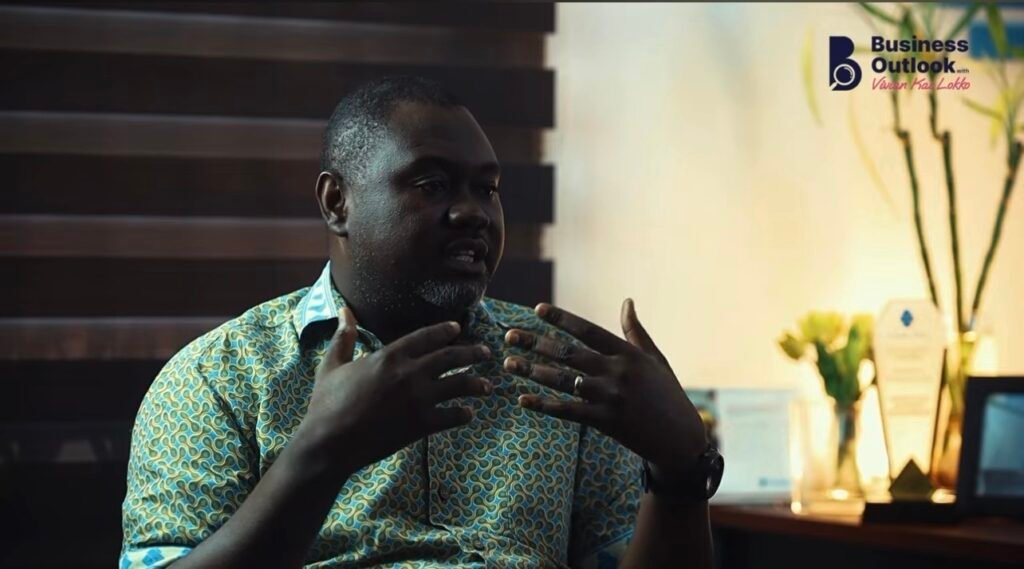
The President of JACCD Design Institute Africa, Madam Joyce Ababio, is calling on government to establish fabric and accessories manufacturing centres in Ghana or attract foreign manufacturers to set up locally.   Speaking exclusively to Business Outlook Africa, Madam Ababio argued that the current reality where designers must travel abroad to source raw materials is making Ghanaian fashion uncompetitive on the global market.     Adding that the cost burden of sourcing fabrics abroad which spans from converting dollars to paying import duties and taxes leaves local designers at a disadvantage and makes them unable to match the prices of international brands selling comparable garments at a fraction of the cost.   “ If let’s say we want to be the fashion hub of Africa, it will mean a lot of things.We would want to bring in people who bring in garments, accessories, fabrics, different other things, because Ghana’s challenge for we, the people who produce and manufacture is we have to step out of Ghana to go and buy the fabric from somewhere. You change the dollar to go and buy it. You come back and pay duty, taxes, whatever it is.By the time you are done with this, you can’t compete. No, you can’t. You are still here in Ghana.It’s the only thing you can do. You can’t step out. That’s our biggest challenge.So if we are going to be like some sort of fashion hub, we want to be able to bring in companies that produce those fabrics and stuff so that it’s easy for us to buy it here.” She stated   The President of JACCD Design Institute Africa also called for a rethink in the tax and duty regime for the fashion industry, urging policymakers to take a cue from countries that offer zero duty and zero VAT on inputs for registered manufacturers, a policy she believes is critical to helping Ghanaian designers scale up and compete on the export market.   “Then we have to look at these duties and taxes and whatever it is. Other countries do it for zero duty, zero VAT for those who are manufacturing, based on whether you are registered for it and all that sort of stuff.It makes it easy for us to scale up and move our things out of the country. Those are the things that I think they need to look at. It’s just ridiculous to be manufacturing and you are not able to actually scale up anyhow because the cost involved is too much.” She added   Madam Ababio then acknowledged that Ghana’s fashion industry has made significant strides since she first arrived in the country, pointing to the growing number of Ghanaian designers making their mark on the global stage. She however noted that sustaining that momentum requires deliberate government policy interventions, as the remaining challenges are beyond what individuals in the industry can resolve alone.   Watch the full interview here:

News

GWL Inaugurates Governing Council of Ghana Water Institute

The Ghana Water Company Ltd has inaugurated the Governing Council of its Ghana Water Institute (GWI), charging members to position the institution as the leading centre for water-sector training, research, consultancy and professional development in West Africa. The inauguration of the Governing Council of the Institute which is expected to provide training, research, professional development and consultancy services while promoting innovation and knowledge-sharing marks a significant step in Ghana Water’s efforts to strengthen institutional capacity, promote innovation and develop the human resources required to improve water service delivery in Ghana and across the sub-region. The Institute will also support Ghana’s efforts to build a highly skilled workforce capable of addressing emerging challenges in water resources management and utility operations. The Governing Council will be headed by Prof. Afishata Mohammed Abujaja who will serve as Chairperson with other members including Prof. Jasper Ayelazuno, Prof. Moro Adams, and Dr. Joseph Kojo Ansong, who will serve in their capacity as Executive Directors, and Dr. Nashiru Zulkarnein, who will serve as Rector. Speaking at the ceremony the Chairman of the Board of Directors of GWL, Mr Eric J. Biliguo, stated that the Government’s vision for the water sector extended beyond the production and distribution of potable water to include innovation, knowledge creation, human capital development and institutional excellence. “The establishment of the Ghana Water Institute is not accidental. It is a deliberate strategic intervention aimed at strengthening the future of the water sector and ensuring that Ghana Water Ltd evolves into a modern, diversified and financially sustainable enterprise,” he said He also urged the Council to develop internationally recognised training programmes and certifications, establish strategic partnerships with universities and development partners, promote research that addresses operational challenges within the water sector and generate sustainable revenue through consultancy and knowledge services. Managing Director of Ghana Water Limited, Mr Adam Mutawakilu, described the inauguration as another important milestone in the Company’s transformation agenda. He said the Institute would serve as a strategic centre of excellence in water-sector training, research, innovation and professional development, while positioning Ghana as a regional hub for technical expertise and leadership development. “The establishment and operationalisation of these subsidiaries reflect our deliberate efforts to strengthen institutional efficiency, diversify revenue streams, enhance capacity development and create long-term value for the people of Ghana,” Mr Mutawakilu stated. Chairperson of the Governing Council, Prof. Afishata Mohammed Abujaja expressed gratitude for the confidence reposed in the Council and pledged to provide strategic direction, policy guidance and institutional oversight to support the growth of the Institute. She said the Council recognised the critical role of human resource development in achieving sustainable water service delivery and improving sector performance. “The water sector is central to public health, economic development and national progress. However, sustainable water service delivery requires more than infrastructure. It requires skilled professionals, strong institutions, sound systems, innovation, ethical leadership and continuous learning,” she said. The Council was also challenged by the Ghana Water Ltd Board to position the Institute as the leading water-sector training, research and consultancy institution in West Africa within the next three years ,a target officials believe is achievable through strong governance, innovation and strategic partnerships.