Business Outlook Africa

World

World

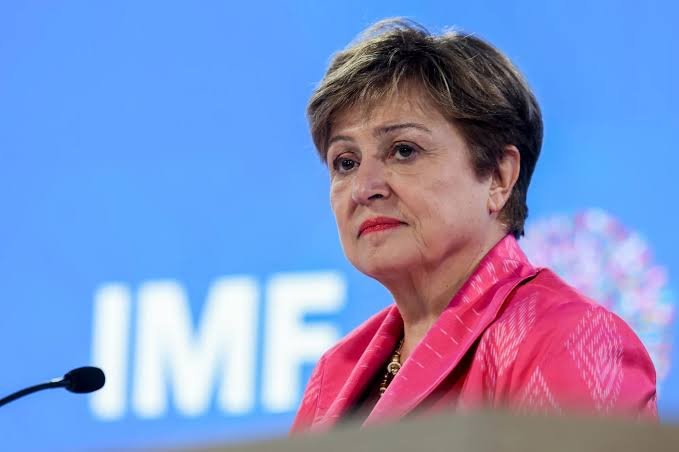
IMF To Establish New RCDC In Rome

The International Monetary Fund (IMF) is set to establish a new regional capacity development center (RCDC) in Rome, Italy, aimed at strengthening economic institutions and policymaking across Southeast Europe. Im a statement released on March 23,2026, The Fund explained that the new Southeast Europe Technical Assistance Center (SEETAC) will serve Western Balkan countries including Albania, Bosnia and Herzegovina, Kosovo, Montenegro, North Macedonia, and Serbia ,as well as Moldova, all of which are pursuing European Union membership. The center is expected to begin operations by January 2027. Speaking to this, the IMF Managing Director Kristalina Georgieva explained the center will help address the significant capacity development needs of member countries in the region, supporting macroeconomic stability, resilience, growth, and progress toward EU accession. “I am very pleased to announce creation of SEETAC, which will help meet the substantial capacity development needs of IMF member countries in Southeast Europe, boosting macroeconomic stability and resilience, growth prospects, and progress towards EU accession,” she stated SEETAC will join a network of 17 IMF RCDCs currently operating worldwide, delivering tailored technical assistance in key areas including fiscal policy, monetary and financial sector policies, macroeconomic frameworks and forecasting, statistics, and legal matters. It will also complement training already being provided to the region by the IMF’s Joint Vienna Institute (JVI).​​​​​​​​​​​​​​​​

World

IMF Approves Final Review of Mali’s Staff Monitored Program

Management of the International Monetary Fund (IMF) has approved the second and final review of Mali’s Staff Monitored Program (SMP), describing the program implementation as robust. In a statement released on March 18, 2026, the IMF explained that the SMP, which was approved in March 2025, aims to ensure fiscal sustainability, strengthen governance and public financial management, and protect the most vulnerable. The Fund highlighted that all quantitative and indicative targets under the second review, including priority social spending, net tax revenues, domestic and external arrears, and the primary fiscal deficit, were observed, with overperformance recorded in some instances. The IMF also noted that all structural benchmarks were met, including the digitalization of tax receipts, interconnectivity of tax administration and the development of an action plan related to the census of public accounts. The Fund however cautioned that whiles fiscal policy remains appropriate, careful management of potential windfalls is needed amid high gold prices, warning that elevated borrowing costs and large development and security needs continue to limit fiscal space. The IMF further noted that Mali’s economy is rebounding from setbacks experienced in late 2025, following easing security tensions and a recovery in gold production, with inflation remaining below 3 percent. The Fund called on Malian authorities to remain committed to prudent fiscal management whiles it commended them for their strong performance under the program.

World

Tax Revenues Rise Slightly as Grants to Developing Countries Decline – IMF Report

New data from the International Monetary Fund (IMF) has revealed that Global government revenues have remained broadly stable at about 30 percent of GDP since 2000. In its 2026 update of The World Revenue Longitudinal Database (WoRLD) its also highlighted that that tax revenues have also increased slightly over the same period, rising by about 1.8 percentage points of GDP to reach 17.5 percent of GDP in 2024. The data further revealed that taxes continue to account for the largest share of government income, representing between 55 and 60 percent of total revenues since the early 2000s. However, a significant portion of government revenue still comes from non-tax sources, including grants, natural resource revenues, and social security contributions. One notable trend identified in the database is the sharp decline in grants, which are a major revenue source for many low-income developing countries with Grants falling by about 50 percent since the early 2000s, dropping from roughly 6 percent of GDP to about 3 percent. These insights which come from the IMF’s World Revenue Longitudinal Database , a database which is built using IMF surveillance data and calculated under the Government Finance Statistics Manual aims at tracking global government revenue trends dating back to the early 1980s. In its 2026 update, the database expanded country coverage to include Aruba and Liechtenstein, while extending the data series to 2024. According to the IMF, the database tracks nine key components of tax and non-tax revenues, which together account for more than 80 percent of global government revenues. The IMF says the database will be updated annually to provide insights into developments affecting governments’ fiscal positions worldwide.

World

World Bank Group MD to Visit Ghana and Liberia

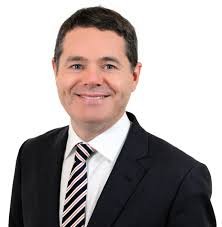
The Managing Director(MD) and Chief Knowledge Officer of the World Bank Group, Paschal Donohoe, is set to visit Ghana and Liberia from March 15 to March 20, 2026, in a move aimed at strengthening the institution’s support for development and economic reforms in both countries. The visit which is expected to be Mr. Donohoe’s first to West Africa since he assumed office in November 2025,aims at assessing how the Group’s support for Ghana’s is translating into economic growth and job creation. In Ghana, Mr. Donohoe is expected to first of pay a visit to the President and then hold high-level discussions with senior government officials on key development priorities, including job creation, electricity access under Mission 300, and strengthening economic governance after which he is also scheduled to engage with the Minister of Finance, the Speaker of Parliament, development partners, civil society organisations, members of the business community and African-based think tanks to discuss scalable solutions to development challenges. The World Bank MD will also deliver a lecture titled “Building Skills, Creating Jobs, and Empowering Africa’s Future” at the University of Ghana. After he’s done with Ghana,Mr. Donohoe will then head to Liberia, where he is also scheduled to meet President Joseph Boakai and hold discussions with the Minister of Finance and Development Planning, the Executive Governor of the Central Bank of Liberia and private sector leaders on development priorities such as education, energy and private sector investment. He will also tour the Mount Coffee Hydropower Plant, which supplies about 88 megawatts of electricity to Monrovia and surrounding communities and is currently hosting the construction of a 20-megawatt solar photovoltaic plant. This visit forms part of the World Bank Group’s efforts to deepen engagement with West African countries and support economic recovery, job creation and sustainable development.

World

G7 nations to hold emergency meeting on oil as stock markets sink

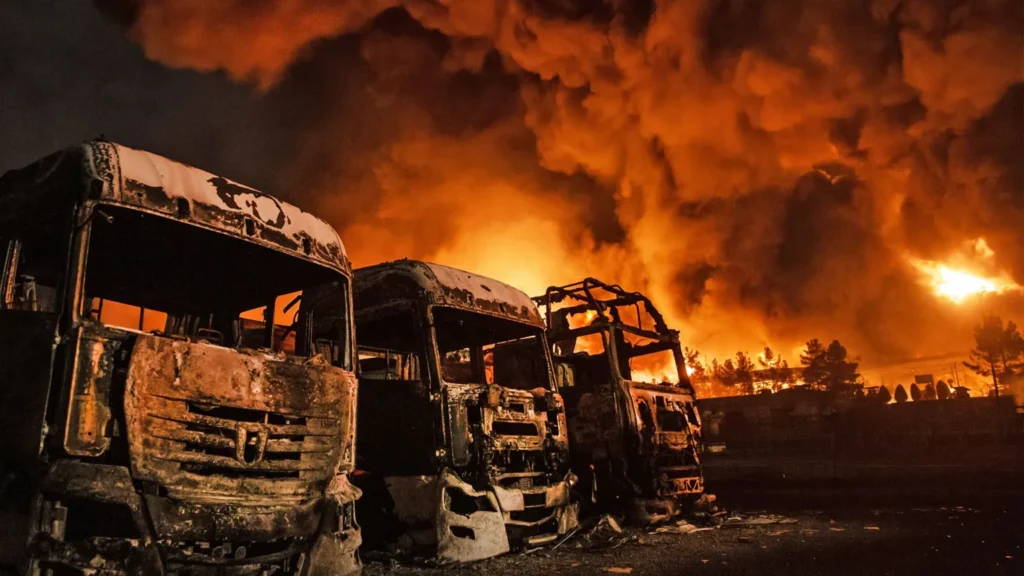
G7 nations will hold an emergency meeting on Monday to discuss surging oil prices as crude jumped above $100 a barrel and stock markets slumped over the escalating US-Israeli war with Iran.  Finance ministers from leading industrialised countries, including UK Chancellor Rachel Reeves, will gather to discuss the economic impact of the conflict. Global oil prices reached nearly $120 on Monday over fears of a prolonged disruption to energy supplies through the key Strait of Hormuz shipping route and the UK’s FTSE 100 share index fell 1.3%. The Financial Times reported the G7 meeting will discuss a joint release of petroleum from reserves, co-ordinated by the International Energy Agency (IEA). If reserves are released by IEA members it would be the first time since 2022, when action was taken following Russia’s full-scale invasion of Ukraine. Major disruption to energy supplies from the region threatens to push up prices for consumers and businesses around the world. Rising inflation could lead to fewer interest rate cuts by central banks. About a fifth of the world’s oil supply is usually shipped through the Strait of Hormuz. But traffic through the narrow passage has all but halted since the war started more than a week ago. On Sunday, Iran named Mojtaba Khamenei to succeed his father Ali Khamenei as Supreme Leader, signalling that more than a week into the conflict hardliners remain in charge of the country. The US and Israel launched fresh waves of airstrikes across Iran over the weekend, hitting multiple targets including oil depots. Meanwhile, Iran targeted energy infrastructure in neighbouring Gulf states. Overnight, Saudi Arabia said it had intercepted and destroyed two waves of drones heading towards a major oilfield. Last week the markets had been relatively relaxed about the seemingly nightmare scenario of millions of barrels of crude and liquefied gas trapped in the Gulf, unable or unwilling to transit the Straits of Hormuz. But the escalations over the weekend, alongside scenes of destruction of energy infrastructure both in Iran and across the Gulf, saw the markets take rapid fright. On Monday morning in Asia, the price of Brent crude jumped by more than 25% to touch $119.50 a barrel at one point before falling back to around $107. US West Texas Intermediate (WTI) crude saw similar movements and was trading at about $104 a barrel. “The question everyone is asking themselves is, what is the duration of this conflict?” Paul Gooden, head of natural resources at NinetyOne Asset Management, told the BBC’s Today programme. “The longer it goes on, the more nervous the oil markets are going to be.” He added that the oil price could rise to a level where “you see so-called demand destruction”, where consumers cut back their consumption of oil, which he considered to be $120-$150 a barrel. “I think temporarily you could see an oil price in that range. I don’t think it can stay there… at some point there’ll be a resolution.” Gas prices also jumped. UK gas prices for month-ahead delivery surged by nearly 25% to 171p a therm when trading started on Monday, before slipping back to about 156p a therm. Gas prices have now doubled since before the war in Iran began, although they remain well below the 640p peak reached in 2022 following Russia’s invasion of Ukraine. European stock markets were lower, following steep falls earlier in Asia. Germany’s Dax index dropped 1.6% while France’s Cac 40 indexes was down 2%. In London, the vast majority of shares in the FTSE 100 were down, although oil giants BP and Shell were among the few companies to see an increase. Earlier, Japan’s Nikkei 225 index dropped 5.2%, while South Korea’s Kospi index closed down 6%. At one point trading on the Kospi was halted for 20 minutes by a so-called circuit breaker – a mechanism designed to curb panic selling. UK government borrowing costs have continued to rise. On Monday, the yield – or interest rate – on two-year government bonds, which indicates how much it would cost to borrow money for two years, rose to 4.12% from 3.87%. The yield on benchmark 10-year bonds has now risen to 4.76%, up from a rate of about 4.3% before the conflict began. Adnan Mazarei from the Peterson Institute for International Economics said the jump in oil prices was expected, given how production has been halted in some Gulf countries and the signs of a prolonged conflict in the region. “People are realising that this won’t end quickly,” he said, adding that the promises of insurances and objectives laid out by the US are “becoming more unrealistic.” US President Donald Trump, who campaigned on bringing down the cost of living, has repeatedly dismissed concerns about rising oil prices. On Sunday, he posted on his Truth Social platform: “Short term oil prices, which will drop rapidly when the destruction of the Iran nuclear threat is over, is a very small price to pay for U.S.A., and World, Safety and Peace. ONLY FOOLS WOULD THINK DIFFERENTLY!” His Energy Secretary, Chris Wright, told US broadcasters on Sunday that Israel, not the US, was targeting Iran’s energy infrastructure, amid some concern about rising domestic pump prices caused by the war. Data from motorists group AAA showed the average price for regular gasoline in the US rose 11% last week to $3.32 a gallon. Source: BBC

News, World

Government urges Ghanaians to avoid Non- Essentials travels to and from Middle East Amid Ongoing Tensions

The Government of Ghana has urged all Ghanaians to avoid non essentials travels to and from the Middle East amid ongoing tensions between Iran and US and Israel . The government also through the Ministry of Foreign Affairs urged Ghanaian nationals who find themselves in the region particularly Bahrain, Israel, Kuwait, Qatar, and the United Arab Emirates to remain indoors where possible,comply with directives issued by local authorities and remain vigilant at all times. The Ministry also encouraged nationals in these affected areas to avoid large gatherings, stay clear of sensitive locations , closely monitor official communications, most importantly keep travel documents readily accessible and maintain contact with the nearest Ghana diplomatic mission. The ministry further highlighted that an emergency preparedness plan has been activated and assessment are ongoing concerning the evacuation of Ghanaian nationals where necessary. The Government of Ghana also called on all parties to return to diplomatic engagement in the interest of protecting lives, ensuring economic stability and lasting regional peace. The Ministry then urged Ghanaian nationals requiring emergency consular support to contact: Ghana +233 240 913 284 +233 240 793 072 Israel +972 54 931 6007 Kuwait +965 256 211 59 +965 515 027 93 United Arab Emirates – Abu Dhabi +971 50702 2055 United Arab Emirates – Dubai +971 56165 7159 Qatar +974 5111 9817 +974 5575 5816 +974 5054 1911 Iran +98 992 656 6203