Business Outlook Africa

News

News

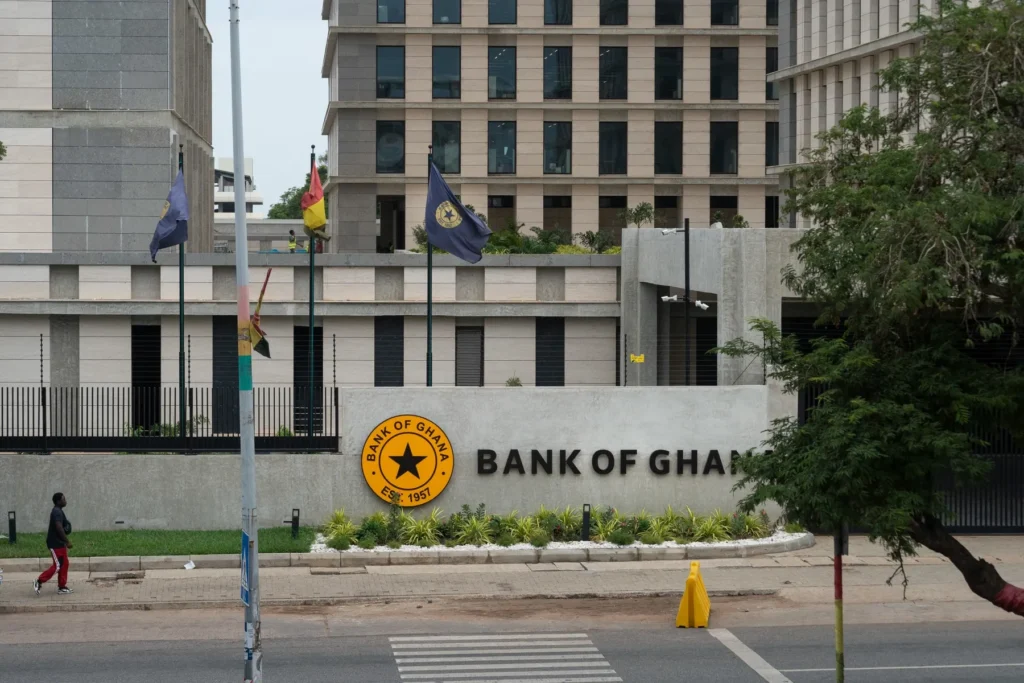
BoG Balance Sheet Hits GH¢321 Billion in March, Driven by Foreign Asset Rebound

The latest Monthly Statistical Bulletin of the Bank of Ghana has revealed an expansion in the balance sheet of the Bank in March 2026, driven largely by stronger foreign asset holdings, increased gold reserves and a sharp rise in investments in foreign securities. According to the Central Bank’s latest Monthly Statistical Bulletin, total assets climbed to GH¢321.38 billion in March 2026, up from GH¢310.58 billion in February representing a month-on-month increase of GH¢10.8 billion. On an annual basis, total assets grew by GH¢7.98 billion from GH¢313.40 billion recorded in March 2025, representing year-on-year growth of 2.6%. A closer look at the figures further revealed an expansion in foreign assets, which rose to GH¢128billion in March 2026 from GH¢109.48 billion in February, representing an increase of GH¢18.52 billion or nearly 17% within a single month. Although the latest figure remains marginally below the GH¢129.73 billion recorded in March 2025, the sharp monthly increase signals a strong recovery in the composition of the central bank’s external asset portfolio. The value of foreign securities held by the Bank of Ghana also rose to GH¢81.56 billion in March 2026, compared with GH¢65.98 billion in February and GH¢48.52 billion in January.

News

Bank of Ghana Converts Rural Banks to Community Banks, Marking New Chapter for Sector

The Bank of Ghana (BoG) has announced the conversion of the Rural Banking sector into the Community Banking sector, effective immediately following the Guideline on the Revised Microfinance Sector Framework, 2026. In a statement released on June 17,2026 it stated that all existing Rural Banks have therefore officially become Community Banks. As part of the transformation, the affected institutions are required to complete all statutory name changes, corporate rebranding, and other regulatory alignments by end-December 2026. The Bank of Ghana added that the conversion represents a strategic milestone under the ongoing microfinance sector reform. “This conversion also coincides with the 50th anniversary of the establishment of rural banking in Ghana, providing a timely moment to transition the subsector into its next chapter,” the central bank noted. Rural Banking was initiated in 1976 by the Government and the Bank of Ghana to expand access to financial services in rural communities and integrate them into the national financial system. Over the past five decades, the subsector has grown into a core pillar of the banking industry and national financial inclusion efforts. The sector currently comprises 147 licensed institutions, with about 1,000 branch networks nationwide, serving over eight million customers. Consequently, its growth and impact reflect a combination of sustained policy support, a development-oriented regulatory approach, and a unique synergy derived from shared community ownership and customer base. Through this conversion, the Bank of Ghana is repositioning the Community Banking sector as a modern banking segment. The central bank added that the move is also aimed at deepening inclusive finance in both rural and urban communities and integrating them into the national financial architecture.

News

Bank of Ghana Extends IMTO Registration Deadline to July 31

The Bank of Ghana has extended the deadline for the registration of International Money Transfer Operators (IMTOs) in Ghana to the 31st of July 2026, giving existing operators additional time to regularise their operations. The extension, which was communicated on 12th June 2026, follows an earlier directive issued on 20th January 2026 under, which outlined the guidelines for the registration and operations of IMTOs in Ghana. The central bank is now urging all existing IMTOs to take advantage of the extension and submit all required documentation before the stated deadline. However, the Bank has issued a stern warning to operators who fail to comply stating that IMTOs that do not meet the registration requirements within the stipulated timeframe will not be permitted to operate in Ghana. More critically, it added that as a result any existing arrangements or partnerships with Banks, Specialised Deposit-Taking Institutions and Payment Service Providers shall be rendered null and void, with further regulatory and enforcement actions to follow. The Central Bank also directed all regulated institutions to ensure to the strict adherence of this directive.

News

Elon Musk becomes world’s first trillionaire as SpaceX soars in stock market debut

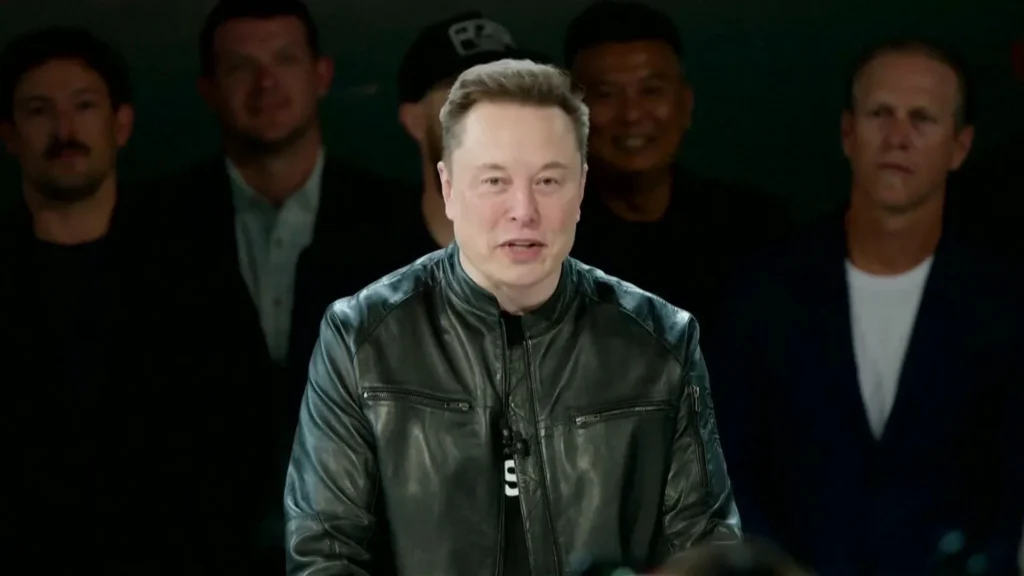
Elon Musk on Friday became the world’s first trillionaire after shares in his SpaceX rocket company soared during the biggest-ever stock market debut. The Tesla and SpaceX founder comfortably cemented his status as the world’s richest man, with his total net worth standing at $1.11tn (£828bn) according to the Bloomberg rich list.It came as the rocket, telecommunications and artificial intelligence (AI) company listed on the Nasdaq stock exchange with a value of $2.2tn. The company said its shares would be offered at $135 each, but trading opened at $150 and briefly reached $176.50 in a show of investor enthusiasm for potential business related to space and companies associated with Musk. SpaceX shares closed on Friday at about $161. The initial public offering (IPO) of SpaceX raised $75bn from investors and underwriters of the deal before shares of the company hit the open stock market on Friday. Musk’s 42% ownership stake in SpaceX gives him essentially unilateral control over everything it does. He can spend the money being invested however he likes. According to Bloomberg, his shares in SpaceX were worth $767.1bn at close of trade, and he has another $53.8 in SpaceX options. He also has $168bn in Tesla shares, and a further $116.4bn in Tesla options. Wealth boost sparks debate Musk’s status as the world’s first trillionaire immediately sparked debate about wealth inequality. His wealth is now similar to the entire economic output of Poland or Switzerland. Such unheard of wealth has already turned Musk into a powerful and divisive figure in global politics. He gave hundreds of millions of dollars to the re-election campaign of US President Donald Trump after criticising the country’s leadership, and for several months last year, Musk led the Department for Government Efficiency (Doge).Through drastic cuts to government spending, Musk was responsible for the closure of the US Agency for International Development (USAID). Such cuts could cause more than 14 million additional deaths by 2030, according to a warning published by researchers in the Lancet medical journal. He has also criticised leadership in the UK and elsewhere, often on topics of immigration and promoting of racial divisions. Musk has repeatedly clashed with UK Prime Minister Sir Keir Starmer, including over the murderof 18-year-old British student Henry Nowak. Democratic US senators Bernie Sanders and Elizabeth Warren were among a slew of politicians to condemn the trillionaire milestone. Warren said it should be a “wake up call” and argued it underlines the need for wealth taxes. However, Musk is a trillionaire only on paper, as it is almost entirely tied to the value of his stockholdings in Tesla and now SpaceX. He is unable to sell any of his SpaceX stock for at least a year. SpaceX’s public listing is also expected to have made millionaires of more than 4,400 of its current and former staff through the shares in the company they had been given as part of their pay. SpaceX’s valuation is largely based on optimism about its potential future earnings, as opposed to financial results it has demonstrated so far. It is currently not profitable, meaning it loses more money from its operations than it makes. The company lost more than $9bn in 2025 and 2026 so far, according to its financial filings, due to its huge spending on AI and other infrastructure investments. The biggest focus of its business is the manufacture and launch of rockets with reusable parts. SpaceX also manufactures and launches Starlink internet satellites, and through this year’s acquisition of xAI, another company Musk owned and operated, SpaceX entered into the AI business, too. SpaceX has said it will use the money to “fuel its growth strategy” around rockets, satellites for its growing Starlink internet service, and AI, including speculative plans to build data centres in orbit. Nancy Tengler, who heads Laffer Tengler Investments and put in an order to buy shares of SpaceX, called the company’s AI business a “cash incinerator” despite Musk’s ambitions for the segment. “It’s important to take some of the projections with a grain of salt,” Tengler said. Nevertheless, she is buying into the company for its long-term potential. “Our investment horizon is three, five, and even ten years,” Tengler said. She is also expecting SpaceX to merge with Tesla in the next two years, potentially creating a company worth more than either one on its own. But the ambitions of SpaceX are currently more lofty than satellites or mergers. As stated in its IPO prospectus, the mission of SpaceX is: “To build the systems and technologies necessary to make life multiplanetary, to understand the true nature of the universe and to extend the light of consciousness to the stars.” SpaceX even said that its future growth and success is based in large part on building what it refers to as the “lunar economy.” Essentially, such an economy would entail getting people and cargo to the moon and Mars, something that would need to be a regular occurrence for a true economy to develop around it. SpaceX admits that it is unsure such a thing will ever succeed. “Many of our initiatives… involve significant technical complexity, unproven technologies or technologies that do not exist, and such initiatives may not achieve commercial viability,” the company wrote in its prospectus. This level of uncertainty did not seem to trouble investors on Friday. Susannah Streeter, chief investment strategist at asset manager Wealth Club said the share price jump was “indicative of huge interest in Elon Musk’s vision”. “He has long been reaching for the stars with his extra-terrestrial ambitions, and it appears plenty of investors share his enthusiasm for the future,” she said. But she warned Friday’s rally was “being driven as much by hype and scarcity as fundamentals“. While many individual investors were eager to be a part of SpaceX’s listing and snap up stock, others had expressed concerns about the number of investors who will be exposed to the company perhaps unintentionally. Pension pots and savings accounts often invest in index-linked funds, which buy

News

Joyce Ababio Calls for Fabric Manufacturing Centres to Boost Ghana’s Fashion Industry

The President of JACCD Design Institute Africa, Madam Joyce Ababio, is calling on government to establish fabric and accessories manufacturing centres in Ghana or attract foreign manufacturers to set up locally.   Speaking exclusively to Business Outlook Africa, Madam Ababio argued that the current reality where designers must travel abroad to source raw materials is making Ghanaian fashion uncompetitive on the global market.     Adding that the cost burden of sourcing fabrics abroad which spans from converting dollars to paying import duties and taxes leaves local designers at a disadvantage and makes them unable to match the prices of international brands selling comparable garments at a fraction of the cost.   “ If let’s say we want to be the fashion hub of Africa, it will mean a lot of things.We would want to bring in people who bring in garments, accessories, fabrics, different other things, because Ghana’s challenge for we, the people who produce and manufacture is we have to step out of Ghana to go and buy the fabric from somewhere. You change the dollar to go and buy it. You come back and pay duty, taxes, whatever it is.By the time you are done with this, you can’t compete. No, you can’t. You are still here in Ghana.It’s the only thing you can do. You can’t step out. That’s our biggest challenge.So if we are going to be like some sort of fashion hub, we want to be able to bring in companies that produce those fabrics and stuff so that it’s easy for us to buy it here.” She stated   The President of JACCD Design Institute Africa also called for a rethink in the tax and duty regime for the fashion industry, urging policymakers to take a cue from countries that offer zero duty and zero VAT on inputs for registered manufacturers, a policy she believes is critical to helping Ghanaian designers scale up and compete on the export market.   “Then we have to look at these duties and taxes and whatever it is. Other countries do it for zero duty, zero VAT for those who are manufacturing, based on whether you are registered for it and all that sort of stuff.It makes it easy for us to scale up and move our things out of the country. Those are the things that I think they need to look at. It’s just ridiculous to be manufacturing and you are not able to actually scale up anyhow because the cost involved is too much.” She added   Madam Ababio then acknowledged that Ghana’s fashion industry has made significant strides since she first arrived in the country, pointing to the growing number of Ghanaian designers making their mark on the global stage. She however noted that sustaining that momentum requires deliberate government policy interventions, as the remaining challenges are beyond what individuals in the industry can resolve alone.   Watch the full interview here:

News

GWL Inaugurates Governing Council of Ghana Water Institute

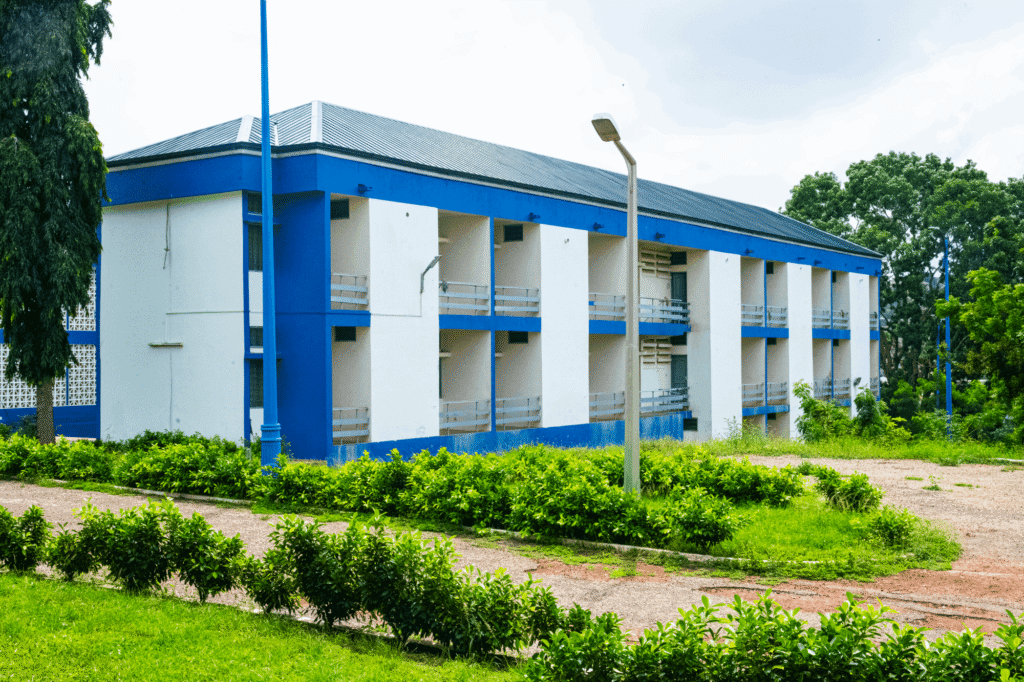
The Ghana Water Company Ltd has inaugurated the Governing Council of its Ghana Water Institute (GWI), charging members to position the institution as the leading centre for water-sector training, research, consultancy and professional development in West Africa. The inauguration of the Governing Council of the Institute which is expected to provide training, research, professional development and consultancy services while promoting innovation and knowledge-sharing marks a significant step in Ghana Water’s efforts to strengthen institutional capacity, promote innovation and develop the human resources required to improve water service delivery in Ghana and across the sub-region. The Institute will also support Ghana’s efforts to build a highly skilled workforce capable of addressing emerging challenges in water resources management and utility operations. The Governing Council will be headed by Prof. Afishata Mohammed Abujaja who will serve as Chairperson with other members including Prof. Jasper Ayelazuno, Prof. Moro Adams, and Dr. Joseph Kojo Ansong, who will serve in their capacity as Executive Directors, and Dr. Nashiru Zulkarnein, who will serve as Rector. Speaking at the ceremony the Chairman of the Board of Directors of GWL, Mr Eric J. Biliguo, stated that the Government’s vision for the water sector extended beyond the production and distribution of potable water to include innovation, knowledge creation, human capital development and institutional excellence. “The establishment of the Ghana Water Institute is not accidental. It is a deliberate strategic intervention aimed at strengthening the future of the water sector and ensuring that Ghana Water Ltd evolves into a modern, diversified and financially sustainable enterprise,” he said He also urged the Council to develop internationally recognised training programmes and certifications, establish strategic partnerships with universities and development partners, promote research that addresses operational challenges within the water sector and generate sustainable revenue through consultancy and knowledge services. Managing Director of Ghana Water Limited, Mr Adam Mutawakilu, described the inauguration as another important milestone in the Company’s transformation agenda. He said the Institute would serve as a strategic centre of excellence in water-sector training, research, innovation and professional development, while positioning Ghana as a regional hub for technical expertise and leadership development. “The establishment and operationalisation of these subsidiaries reflect our deliberate efforts to strengthen institutional efficiency, diversify revenue streams, enhance capacity development and create long-term value for the people of Ghana,” Mr Mutawakilu stated. Chairperson of the Governing Council, Prof. Afishata Mohammed Abujaja expressed gratitude for the confidence reposed in the Council and pledged to provide strategic direction, policy guidance and institutional oversight to support the growth of the Institute. She said the Council recognised the critical role of human resource development in achieving sustainable water service delivery and improving sector performance. “The water sector is central to public health, economic development and national progress. However, sustainable water service delivery requires more than infrastructure. It requires skilled professionals, strong institutions, sound systems, innovation, ethical leadership and continuous learning,” she said. The Council was also challenged by the Ghana Water Ltd Board to position the Institute as the leading water-sector training, research and consultancy institution in West Africa within the next three years ,a target officials believe is achievable through strong governance, innovation and strategic partnerships.  

News

Kasapreko PLC Successfully Completes Oversubscribed Initial Public Offer

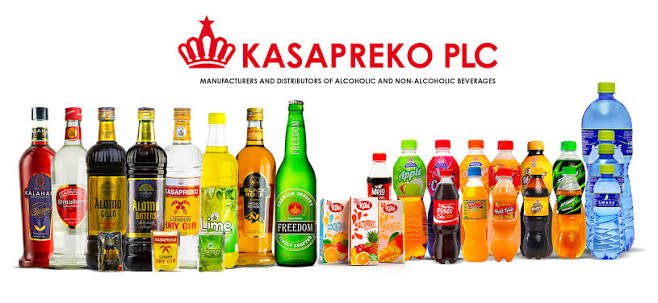
Kasapreko PLC has announced a successful conclusion of its Initial Public Offering(IPO) having raised GHS 700,000,000 through its issuance of 583,333,333 new ordinary shares at GHS 1.20 per share. In a statement released on June 9,2026 indigenous beverage manufacturer revealed that its IPO was oversubscribed by 146%,representing subscriptions of GHS 1.73 billion from 18,781 qualified applicants. The Beverage Manufacturer futher revealed that allotted shares using the uniform allocation rate of 40.56% across all investor categories spanning, Local Individual Investors,Local Institutional Investors, Foreign Individual Investors and Foreign Institutional Investors with each receiving 76,764,925 shares,440,683,648 shares,1,278,280 shares and 64,606,480 shares respectively. Kasapreko further added it has already credited each share allocated to the Central Securities Depository(CSD) accounts of all applicants and that it is actively working hand in hand with Brokers to ensure all refunds are completed by Thursday,June 11th,2026. With the refunds reflecting the difference between the applicant’s subscription amount and the value of the shares allotted to them. After a successful IPO, Kasapreko PLC is expected to list on the Ghana Stock Exchange on Monday,June 15,2026 where it will trade under the name KASA (ISIN: GHEKCPI00011). Kasapreko PLC is a Ghanaian multinational beverage company that produces a wide range of alcoholic and non-alcoholic idrinks.Established in 1989, Kasapreko is known for its flagship product, Alomo Bitters, a herbal alcoholic drink. Over the years, Kasapreko has expanded its portfolio to include additional beverage products, including whiskey, gin, wine, soft drinks, and drinking water.

News

SEC Sets Sights on First Virtual Asset Licences Before Year-End

The Deputy Director General, Operations at the Securities and Exchange Commission Ghana, Mr. Mensah Thompson has outlined the operational framework that will govern the licensing and regulation of virtual asset service providers in Ghana, revealing that the Commission expects to issue its first licences before the close of the year. Speaking with Business Outlook Africa on the back of the passage of the Virtual Assets Bill and the introduction of a regulatory sandbox, Mr. Mensah Thompson revealed that with the regulatory groundwork firmly in place, the Commission is now hopeful that it will issue the first virtual asset licences before the close of the year. “We should issue our first virtual asset licences before the end of the year,” Mr. Mensah Thompson confirmed. Mr. Mensah Thompson further confirmed that a key pillar of the new framework is a mandatory local partnership requirement for foreign companies seeking to operate in Ghana’s virtual assets space. Under the rules, any foreign firm applying for a Virtual Asset Service Provider licence must have a Ghanaian partner holding at least 30% equity in the business. “For foreign companies to have a licence as a virtual asset service provider in Ghana, you must have a local partner who is a Ghanaian, who owns 30% of the business. That’s a requirement we’ve put for all,” Mr. Mensah Thompson explained. He explained that the purpose behind the requirement is not only to ensure the mere participation of Ghanaians but also to ensure they build lasting capacity over time to take over the industry . “This 30% is to achieve two things. One, to ensure that Ghanaians are able to participate in these businesses as equity partners to those big giants coming in. And two, to ensure that these Ghanaians build capacity so that with time, they can also now stand on their own and set up some of these entities,” he added. Beyond ownership, the Deputy Director General added that the Commission is also working on a tiered licensing framework designed to accommodate operators of varying sizes and capacities. Mr. Mensah Thompson revealed that the structure, spanning Tier One, Tier Two, and Tier Three, will come with differentiated capital requirements to reflect the scale of each category. “When we begin the licensing, we are thinking of also tiering the licence — Tier One, Tier Two, Tier Three — with different requirements, especially in terms of minimum capital requirement,” he said. On the question of minimum capital requirement, Mr. Mensah Thompson stated that the bar will be set high, given the volumes of money involved in virtual asset transactions adding that the minimum capital expected of a local company is a million dollars. “The minimum capital requirement is huge for virtual assets, because you are going to be dealing with a lot of money. For a local company, at least a million dollars,” he disclosed. The Virtual Asset Service Providers Act, 2025 (Act 1154) was passed into law by Parliament on December 19, 2025, and subsequently received presidential assent on December 30, 2025. The landmark legislation establishes a comprehensive legal and regulatory framework to supervise, license, and register cryptocurrency and virtual asset operations in the country.

News

SEC Eyes University Partnerships to Drive Virtual Asset Innovation

The Deputy Director General, Operations at the Securities and Exchange Commission Ghana, Mr. Mensah Thompson has revealed that the Commission is currently in talks with some tertiary institutions across the country to establish incubation hubs and training centres on campuses, aimed at equipping students with the knowledge and skills needed to understand, navigate, and fully benefit from virtual assets. Speaking with Business Outlook Africa,on the back of the passage of the passage of the virtual assets bill and the introduction of a regulatory sandbox,The Deputy Director General, explained that the move is part of broader efforts aimed at positioning the youth at the centre of Ghana’s emerging virtual assets ecosystem. “Like I said, I mean, you just have to take interest in it and then feel free to dream, innovate. Once you have the idea, come to the SEC.The SEC is going to, with time, have partnerships with other educational institutions across the country to set up incubation hubs. I think we received a proposal from, I think, was it the KNUST or a business that they want to partner with the SEC to set up incubation hubs for virtual assets on campus to allow students to be able to freely go and innovate. We are open to some of these partnerships and we are going to make sure that, I mean, there’s proper knowledge transfer, there’s proper local content participation and proper systems in place to ensure that Ghanaians get the full benefits of virtual assets.” He stated Mr. Mensah Thompson further outlined how the framework opens doors across multiple sectors explaining it will not only help entrepreneurs and business owners with simplified cross-border payments but will also help start ups and tech developers with raising capital and bringing their ideas into “full market scaling”. “ Your payments are always going to be made easier.Your imports, exports, payments, aggregation are always going to be easier.For startups, there’s an opportunity to raise capital on virtual asset platforms to invest in your business. The innovation hubs and sandboxes are for you to dream, innovate and incubate your ideas and bring them into full market scaling.” he added He then urged investors to take advantage of the opportunities created by the country’s new virtual assets regulatory framework stressing that the new regulatory framework has fundamentally changed the landscape. “Investors, if they’ve been telling, if you’re hearing that oh virtual assets is fraud, it’s scam and what have you, I say please rethink your position on virtual assets. When virtual asset firms come to you for investment, now is the time to consider and fully make the necessary investment in them because you do not know.” He said The Virtual Asset Service Providers Act, 2025 (Act 1154) was passed into law by Parliament on December 19, 2025, and subsequently received presidential assent on December 30, 2025. This landmark legislation establishes a comprehensive legal and regulatory framework to supervise, license, and register cryptocurrency and virtual asset operations in the country.

News

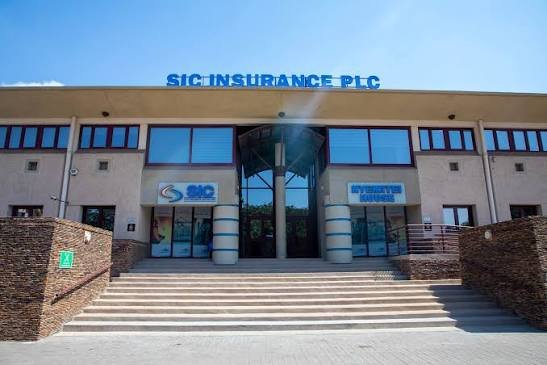
SIC Insurance Posts GHS 84 Million Profit In 2025 Financial Year

SIC Insurance PLC has posted a GHS 84.05 million Profit for the financial year ended December 31, 2025, reflecting a significant improvement in the insurer’s financial performance. The Financial Statement also revealed that the Group recorded Insurance Revenue of GHS 598.19 million in 2025, up from the GHS 559.48 million recorded in 2024. After accounting for Insurance Service Expenses of GHS 156.81 million, the Insurance Service Result before reinsurance also stood at GHS 441.38 million. It also added that the Investment Income came in at GHS 46.77 million while the Net Insurance and Investment Result stood at GHS 287.64 million, compared to GHS 277.01 million recorded in 2024. Profit Before Tax for the Group also stood at GHS 117.74 million. After income tax of GHS 27.74 million and a Growth and Sustainability Levy of GHS 5.95 million, the Group recorded a Profit for the Year of GHS 84.05 million, compared to GHS 53.41 million in 2024, a notable year-on-year improvement. The Balance Sheet of the Insurance Company also revealed that its Total Assets grew to GHS 1.27 billion from the GHS 1.12 billion recorded in the year 2024.Total Liabilities also stood at at GHS 479.34 million compared to GHS 445.35 million in the prior year. SIC Insurance PLC is one of Ghana’s oldest and largest non-life insurance companies, holding a dominant share of the country’s general insurance market.