
The Governor of the Bank of Ghana,Dr Johnson Pandit Asiama , has called for careful, evidence-based policy decisions amid global uncertainty and rising energy prices as the bank begins its the 131st Monetary Policy Committee (MPC) Meeting.
Speaking at the opening of the 3 days at policy review on Monday, 20 July 2026, Dr. Asiama added the Committee will review recent inflation trends, the impact of the Bank’s May policy reforms, evolving domestic liquidity conditions, and external risks to the economy.

“Our task this week is not simply to assess the latest data. It is to determine whether the framework we strengthened in May remains fit for the conditions now before us, and whether the choices we made then continue to serve the medium-term objectives on which our credibility depends,” the Governor stated.
Noting Ghana’s continued macroeconomic resilience, Governor Asiama however sounded a cautious note on the country’s inflation outlook, disclosing the prolonged disinflation phase that Ghana has experienced has now ended, with inflation returning towards the target band.
“The disinflation phase has ended, and inflation is now returning towards the target band. Headline inflation has risen for three consecutive months, from 3.2 percent in March to 5.3 percent in June, driven largely by transport and haulage prices.” He stated
The Governor also stated that the recent escalation of tensions in the Strait of Hormuz has brought back the volatility in energy market, a development with direct implications for Ghana’s import costs and domestic price levels.
“Renewed hostilities around the Strait of Hormuz have since reignited volatility in energy markets, with Brent rebounding above US$85 per barrel earlier this week. For Ghana, as a commodity-exporting yet energy-importing economy, these developments reinforce the need to assess carefully the extent to which external cost pressures may influence the domestic inflation outlook over the policy horizon.”
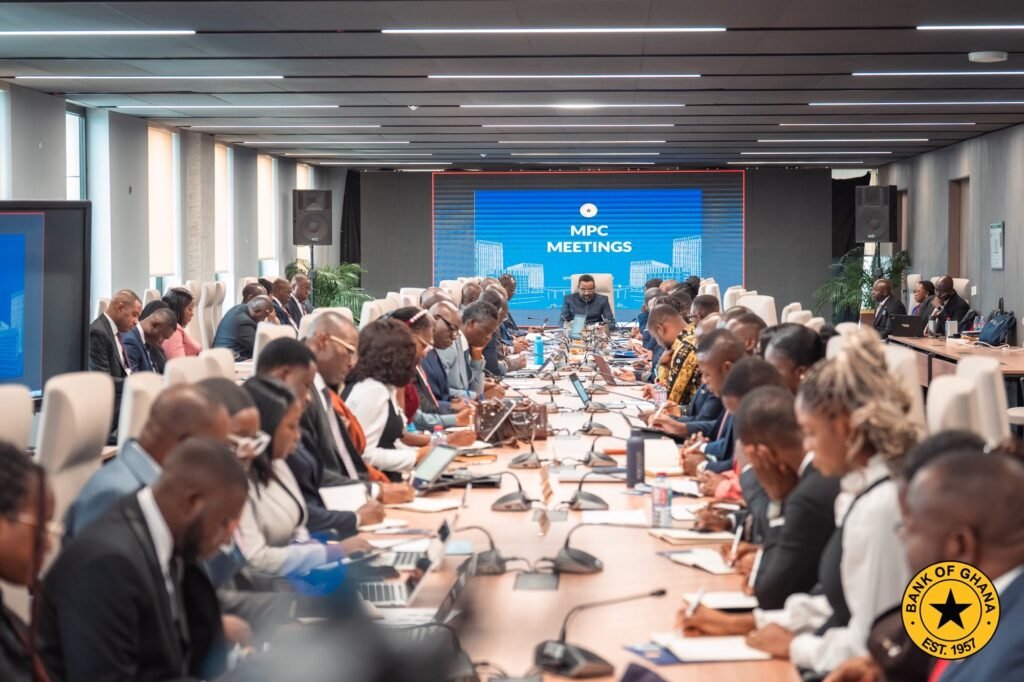
The MPC which meets bi-monthly is a committee set up by the Bank of Ghana Act which is aimed at formulating and implementing policy in the areas of money, banking and credit to promote and preserve monetary stability.
About The Author
