Business Outlook Africa

Author name: Business Outlook Africa

News

MobileMoney Fintech LTD Announces Rebranding of XtraBalance to ‘MoMo Boost’

MobileMoney Fintech LTD has announced a major upgrade to its financial services ecosystem. In a post made on Friday, July 10,2026 the Mobile money giant revealed its plans of rebranding that its popular “XtraBalance” to “MoMo Boost.” The Mobile money giant also added that as a result of this there will be temporary interruptions in its services from Sunday,July 12 to Tuesday ,July 14,2026. The Company however stated that all other MoMo services are expected to run smoothly as they won’t be affected by the temporary interruption. “You can still send money, buy airtime, pay bills, and use your regular wallets just like always.” The post read The company then expressed its appreciation towards its customers and reiterated its commitment towards bringing more value to its customers. MTN XtraBalance is an instant credit service provided by MTN MoMo in partnership with Forms Capital. It acts as an overdraft or extension on customer’s mobile wallet and also allows customers to complete transactions-like buying airtime, sending money, or paying bills-even when their balance is low.

Africa

Total IMF Support to Tanzania Crosses $1.7 Billion as Executive Board Completes Final Programme Reviews

The Executive Board of the International Monetary Fund (IMF) has completed the final sixth and seventh reviews under the Extended Credit Facility (ECF) arrangement and the final third and fourth reviews under the Resilience and Sustainability Facility (RSF) arrangement with Tanzania, enabling an immediate disbursement of SDR 324.9 million,approximately USD 443.9 million under both arrangements. The completion of the sixth and seventh ECF reviews now allows an immediate disbursement of SDR 113.37 million,approximately USD 154.1 million. This now brings Tanzania’s total access under the ECF arrangement to approximately USD 1.063 billion. The completion of the third and fourth RSF reviews additionally allows a disbursement of SDR 213.12 million,approximately USD 289.7 million,bringing total RSF access to approximately USD 636.5 million. The 40-month ECF arrangement was originally approved in July 2022 for a total access of SDR 795.58 million and extended twice,in June 2024 and May 2026. The 23-month RSF arrangement was also approved in June 2024 and similarly extended by three months in May 2026. Economy Growing Strongly Deputy Managing Director and Acting Chair Mr. Bo Li stated that amid external and domestic shocks, Tanzania’s reform programme supported by the ECF has enabled the authorities to maintain macroeconomic stability and advance reforms. Tanzania’s real GDP growth reached 5.9 percent in 2025 and is projected to reach approximately 6.2 percent over the medium term, supported by a strong outlook for mining, agriculture, and tourism. Headline inflation has been contained at 4.0 percent year-on-year in June 2026, though the impact of rising fuel prices from the war in the Middle East continues to be felt. Mr. Li further stated that the current account deficit is expected to remain broadly stable in 2025/2026 financial year , with gold exports providing a partial offset to import pressures. Programme Performance on Track The IMF stated that Tanzania’s economic reform programme under the ECF arrangement remained on track. All end-June 2025 quantitative performance criteria were met, all end-September 2025 indicative targets were met except the domestic primary balance, and all end-December 2025 quantitative performance criteria were met except for the criterion on net domestic assets . Five reform measures under the RSF arrangement were completed, while three reform measures related to the energy sector were not completed. The Deputy Managing Director noted that the recent non-approval of VAT administration, central bank governance, and public investment management reforms also remained outstanding concerns. Fiscal Consolidation Remains Critical Mr. Li stated that continued fiscal consolidation, supported by stronger domestic revenue mobilisation, VAT refund reforms, and improved public financial management, remains important highlighting that such efforts would create space for much-needed spending on education and health. Despite significant fiscal overspending in the first quarter of the 2025/2026 financial year , the end-December quantitative performance criterion for the domestic primary balance was met. Downside Risks Have Increased The Deputy Managing Director warned that while the medium-term outlook is positive, downside risks have increased,particularly the risk that a prolonged conflict in the Middle East would weaken the growth outlook and intensify inflation pressures. He additionally flagged Tanzania’s demographic challenge as a significant long-term risk, noting that the country’s population is expected to double by 2050, making the challenge of meeting Sustainable Development Goal targets and reducing poverty increasingly daunting. Monetary Policy and Private Sector Development Mr. Li stated that accommodative monetary policy remains appropriate, and that the Bank of Tanzania should stand ready to further adjust its stance as needed. He called for the maintenance of adequate reserve levels and exchange rate flexibility to cushion the economy against external shocks. On private sector development, the Deputy Managing Director emphasised that accelerated reforms to strengthen the business environment and support private sector growth are critical to ensuring sufficient jobs and opportunities for Tanzania’s rapidly growing population. “Continued reforms to further strengthen resilience to climate change and help mobilise climate finance will also be important to enhance broader economic resilience and reduce prospective balance of payments risks,” he added.

News

University of Ghana Gets 42-Unit ICT Lab as Telecel Ghana Strengthens Academic-Industry Ties

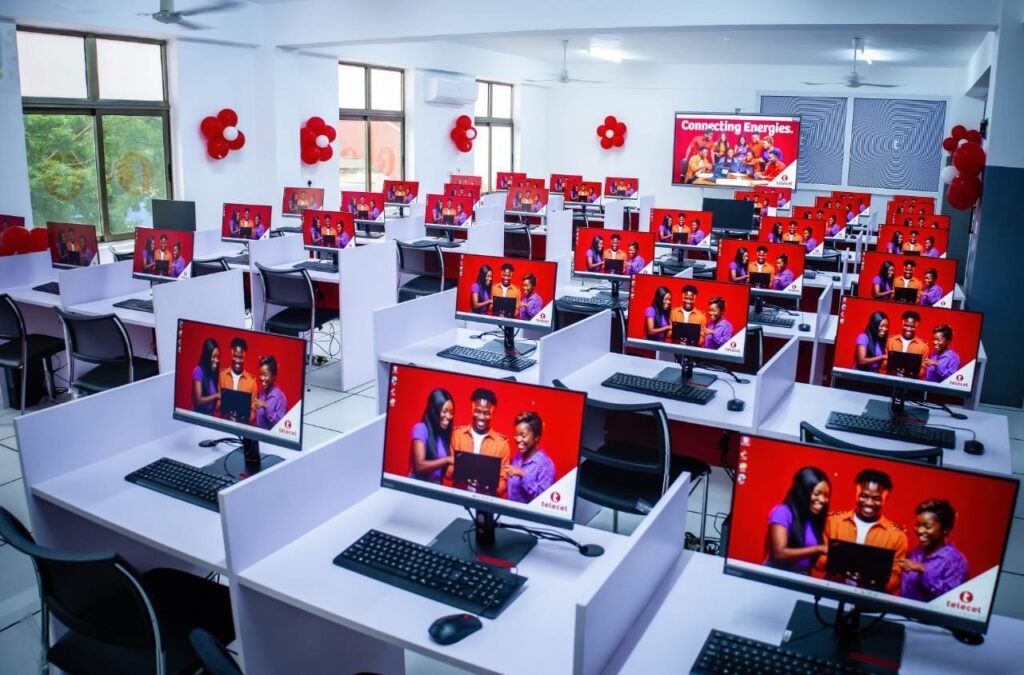
Telecel Ghana has handed over a fully equipped 42-unit ICT lab to the University of Ghana. This comes as a response to a request from the University’s leadership and forms part of the corporate social responsibility(CSR) of the telecommunications company. The Computer laboratory, is designed to advance digital learning, research, and innovation at Ghana’s premier university especially in this age of AI. The development marks the latest chapter in a partnership that has spanned more than 15 years, with dedicated internet and connectivity solutions at the University of Ghana at its core since 2010. Telecel then expressed its commitment towards improving internet connectivity and the digital education ecosystem in the country. “We remain committed to strengthening Ghana’s digital education ecosystem.”

Economy

Ghana’s Economy Expands by 4.7% in April 2026

Ghana’s economy expanded by 4.7 percent in April 2026, driven steadily forward by an expanding Services sector. This is according to the latest Monthly Indicator of Economic Growth by the Ghana Statistical Service, which further indicated a slower pace as compared to the 7.4 percent growth seen in April last year. The Services sector led the expansion with a growth rate of 6.0 percent, accounting for 61 percent of all growth in the month.This expansion was largely led  by information and communication. The Industry sector also accounted for nearly a third of the month’s expansion with a growth of 4.0 percent, nearly four times of the 1.1 percent that was recorded a year ago. This was as a result of strengthened mining activities . The Agriculture Sector however rebounded, with a growth rate of 1.7 percent after contracting by nearly 7 percent in the same period last year. The MIEG index rose to 113.3 in April 2026, up from 108.2 a year earlier. The Monthly Indicator of Economic Growth, is a high-frequency economic index developed by the Ghana Statistical Service (GSS) to track the country’s economic performance on a monthly basis. It aggregates data across Agriculture, Industry, and Services to give policymakers, investors, and researchers an early snapshot of national economic momentum ahead of official quarterly Gross Domestic Product (GDP) reports.

World

IMF Projects 3% Global Growth in 2026 as Middle East War Stalls Disinflation ,Urges Central Banks to Remain Focused on Price Stability

The International Monetary Fund (IMF) is projecting a global growth of 3 percent in 2026 and 3.4 percent in 2027 amid the ongoing Middle East tensions. This was disclosed by the Deputy Director, of the Fund’s Research Department, Petya Koeva Brooks in the July 2026 Update of the World’s Economic Outlook. “We are projecting global growth of 3 percent in 2026 and 3.4 percent in 2027, broadly unchanged from April on a cumulative basis.” she stated Petya Koeva Brooks stated that this development is being shaped by the ongoing war in the Middle East and the effects it’s having on energy supplies and technology-driven investment boom. “The global outlook is being shaped by two powerful forces pulling in opposite directions: the lingering effects of the energy shock from the war in the Middle East and a technology-driven investment boom”. she added She however insisted that the effects of these forces varies significantly across countries depending on their exposure to the war and their position in the technology value chain. She also explained however that despite the ongoing Middle East conflict,a larger spike in oil prices was avoided thanks to inventory drawdowns, expanded production outside the Gulf, and actions taken to soften oil demand. Petya Koeva Brooks disclosed that the IMF’s forecast assumes the Strait of Hormuz begins reopening in mid-July, with conditions normalising to the pre-war state by March 2027. On the risks to the outlook,She warned that a renewed escalation in the Middle East conflict could reignite commodity price volatility, tighten financial conditions, strain policy buffers, and worsen food insecurity in low-income countries. Petya Koeva Brooks then concluded by urging central banks globally to remain focused on price stability though she noted the appropriate response will vary by country depending on how commodity prices, technology-driven demand, and inflation expectations interact.

Banking & Finance

CCM Healthcare Investments acquires 26.84% stake in Intravenous Infusions PLC

CCM Healthcare Investments-FZCO (CCM) has announced an acquisition of a major stake in Intravenous Infusions PLC , after a successful conversion of its investment in the Company. In a statement released on July 7, 2026, pursuant to the relevant provisions of the Ghana Stock Exchange Listing Rules and the Securities Industry Act, 2016 (Act 929), the Company disclosed that out of a total of 375,074,367 shares issued by Intravenous Infusions PLC, CCM now holds 100,666,021 shares, representing a 26.84% ownership stake. CCM stated that it remains confident in the prospects of Ghana’s pharmaceutical manufacturing industry, and in the Company’s role as a leading player in strengthening local healthcare supply chains and expanding domestic pharmaceutical production capacity. CCM added that since the beginning of the year, it has worked closely with management and the Board to develop and execute a value creation plan focused on operational improvement, commercial growth, and long-term shareholder value creation. The Company noted that it is pleased with the early progress achieved so far and believes the initiatives are strengthening the Company’s future prospects. Intravenous Infusions PLC is a pharmaceutical Company producing and distributing Intravenous Fluids in Ghana and the West African sub-region.

Banking & Finance

Banks and SDIs dismiss 75 staff over fraud in 2025 — 2025 Fraud Report

The 2025 Fraud Report has disclosed the dismissal of 75 staff members by Banks and SDIs collectively various reasons. The report which was published by the Financial Stability Department of the Bank of Ghana noted that despite 219 staff members being implicated in fraudulent activities during the year, only 75, representing 34%, were actually dismissed. It further disclosed that out of the 75 dismissals recorded in 2025, 44 cases, were directly linked to cash theft-related fraud. On overall staff involvement in fraud, the report stated that the number of staff implicated in fraudulent activities across both Banks and SDIs fell from 365 in 2024 to 219 in 2025, representing a 40% decrease. The report added that out of the 219 cases of staff-related fraud recorded in 2025, 139, representing 63%, were involved in cash theft and cash suppression, as compared to 274, representing 75%, in 2024. It further disclosed that out of the 139 cases of cash suppression recorded across Banks and SDIs, only 22% were recorded in banks. However, with regard to the value at risk, approximately GH¢40.7 million, representing 96% of the total value at risk for cash suppression, was recorded in the banks. The Central Bank emphasized that effectively addressing fraud within Ghana’s financial sector demands a unified and sustained effort from all stakeholders, including financial institutions, law enforcement agencies, regulatory bodies, and the public.    

Banking & Finance

Electronic fraud cases surge 54% in 2025 as PSP sector’s value at risk nearly doubles — BoG report

The Bank of Ghana has disclosed a a 54% increase Payment Service Providers (PSPs) fraud incidents in 2025. This is according to the 2025 Fraud Report which further indicated a rise from the 15,673 cases recorded in 2024 to 24,124 cases in 2025. The report attributed the sharp rise in fraud numbers to the continued shift toward digital channels and increased usages within the payments space. On value at risk, the report highlighted that a near doubling of the GH¢19 million reported in 2024 for the 2025 year bringing it now to GH¢37 million.With this representing a 95% year-on-year rise in total value at risk. Ghana operates one of Africa’s most advanced and rapidly expanding digital payment ecosystems, regulated by the Bank of Ghana under the Payment Systems and Services Act, 2019 (Act 987).

News

Bank of Ghana Reports 48% Surge in Fraud Cases to 24,778 in 2025

The Bank of Ghana has released the 2025 Fraud Report for Banks, Specialised Deposit-Taking Institutions (SDIs) and Payment Service Providers(PsPs) with total fraud counts rising to 24,778 in 2025. The report also indicated a 48% increase in fraud counts compared to the previous 16,733 in 2024 and the previous 15,164 recorded in 2022. In terms of value, year-on-year value increased marginally from GH¢ 99 million in 2024 to GH¢ 101 million in 2025. The aggregate value of risk from 2022 to 2025 however tells a different story with a significant increase from GH¢ 82 million to GH¢ 101 million. An industry-to-industry analysis of the total fraud cases pointed out to Payment Service Platforms as the only industry to have recorded an increase in fraud cases having accounted for approximately 97.36% (24,124 )of the total fraud counts (24,778) for the year 2025. The Banks and SDIs on the other hand both saw a decline in fraud counts for the 2025 financial year with the former and later recording 472 counts and 182 counts as against the 716 counts and 344 counts recorded in 2024 respectively. Despite seeing a decline in fraud counts, the 95% for SDIs however increased by 77% for the same period bringing the total value at risk for SDIs to GH¢ 8m. PSPs also recorded a rise of 95% in its total value at risk having increased from the GH¢19m recorded in 2024 to the GH¢37m recorded this year. Banks on the other hand also saw a 24% decline in the total value at risk from the GH¢75m to a positive GH¢57m indicating a reduction in fraud counts for banking institutions. Published by the Financial Stability Department of the Bank of Ghana, the report highlights how increasing digitalisation and innovation in the financial landscape are continuously evolving fraud risks, making constant vigilance and strengthened controls necessary.

Banking & Finance

SDI fraud cases fall 47% in 2025, even as value at risk climbs to 77% — BoG report

Specialised Deposit-Taking Institutions (SDIs) recorded 182 fraud cases in 2025, down from 344 cases in 2024, representing a 47% decrease in the total number of fraud incidents within the sector. This is according to data from the Bank of Ghana’s 2025 Fraud Report, which provides statistical insights into fraud, insider involvement, and evolving risks within the financial sector. Despite the reduction in cases , the report however indicated an uptick in the total value at risk for SDIs, rising by 77% to approximately GH¢8.00 million in 2025, compared to GH¢4.5 million recorded in 2024. The report identified Forgery and Manipulation of Documents, Cash Suppression, and Burglary as the top three fraud types by value at risk within the SDI sector in 2025. Cash Suppression, long recognized as the leading fraud category in the SDI sector over the years, recorded a significant drop in case this time around , falling from 267 cases in 2024 to 109 cases in 2025, representing a 59% decrease. Despite the sharp decline in cash suppression cases, the value at risk associated with the fraud type still rose by 12% in 2025, climbing to GH¢1.7 million from GH¢1.6 million in 2024. Forgery and Manipulation of Documents recorded the highest value at risk in the sector for 2025, skyrocketing to GH¢4.2 million from just GH¢0.01 million in 2024, with the report noting that GH¢4.1 million of this figure was reported by a single institution. The value at risk associated with Burglary also increased, climbing to GH¢1.18 million in 2025, up from GH¢0.73 million recorded in 2024. The Bank of Ghana stated that it remains steadfast in its oversight role, and is committed to ensuring a resilient and safe financial sector through enhanced regulatory frameworks, improved supervision, and fraud prevention initiatives. The regulator emphasized that effectively addressing fraud within Ghana’s financial sector demands a unified and sustained effort from all stakeholders, including financial institutions, law enforcement agencies, regulatory bodies, and the public.