
Business Outlook Africa

Banking & Finance

Banking & Finance

BoG Cuts Policy Rate to 14% Amid Inflation Outlook Risks

The  Bank of Ghana  has reduced  the Monetary Policy Rate  by 150 basis point , bringing it to 14% from the  previous 15.5% announced earlier this year. Explaining the decision taken by the committee , The Governor said f the Bank of Ghana, Dr Johnson Pandit Asiama indicated that headline inflation is expected to remain within the medium-term target, despite growing external uncertainties. “However, rising geopolitical tensions in the Middle East have deepened uncertainty in the external sector. The bank’s latest forecast suggested that headline inflation would remain within the medium-term target.”he explained  The Governor also added that the committee  has taken notice of the potential risks that the country is likely to face as a result of the rising geopolitical tensions and external pressures but maintained that domestic conditions remain favourable with regards to reducing the policy rate. “An upside risk to the inflation outlook includes the likely pass-through of higher crude oil prices and escalating geopolitical tensions. In the view of the Committee, despite these upside risks to the inflation profile, the favourable domestic macroeconomic conditions, and also the high prevailing real interest rates, these provide scope to ease the policy rate further. Consequently, the MPC decided to reduce the monetary policy rate by 150 basis points to 14 percent.” The Committee stated that it will  continue to monitor developments closely and  come out with possible solutions in the next MPC meeting which is scheduled for May 18 to May 20 ,2026.  

Banking & Finance

GSE Composite Index Records 0.56% Gain in Latest Trading Session

The Ghana Stock Exchange (GSE) recorded gains in its benchmark indices at the close of trading on March 13, 2026. The GSE Composite Index (GSE-CI) rose by 0.56% to close at 15,611.32 points, up from 15,524.99 points recorded in the previous trading session bringing the index’s year-to-date return to 78.00%. Similarly, the GSE Financial Stock Index (GSE-FSI) increased by 1.38%, closing at 10,145.30 points, compared with 10,007.68 points in the previous session. The index has so far posted a year-to-date gain of 118.31%. A total of 20,271,692 shares were also traded on the day, representing a 297.13% increase compared to the 5,104,565 shares traded in the previous session. However, the value of shares traded declined to GH¢26.33 million, down 24.35% from GH¢34.80 million recorded in the previous trading session. In the fixed income market, Treasury Bills recorded a trading volume of 350,771,792, representing a 2.89% increase from the previous session. Meanwhile, New Government of Ghana Notes and Bonds declined sharply by 65.43% to 137,340,195. Overall, total fixed income market volume stood at 488,329,787, reflecting a 35.26% decline from the 754,296,955 recorded in the previous session.

Banking & Finance

12 Universities to Compete in 2026 National Banking and Ethics Challenge

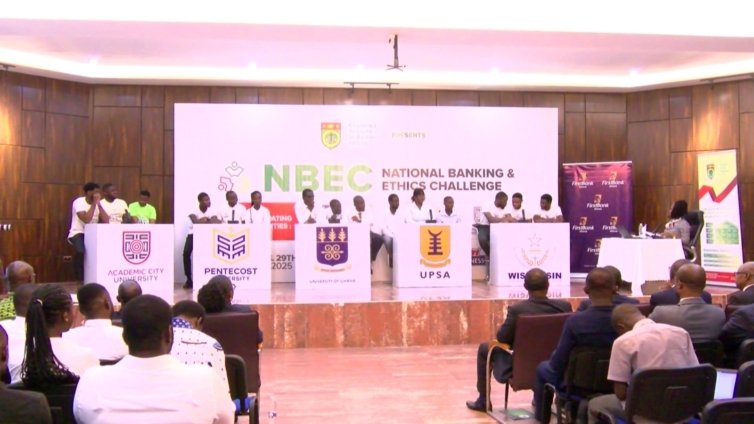
The second edition of the National Banking and Ethics Challenge (NBEC) is expected to kick off on Thursday, March 26, 2026. The competition, which is organized by the Chartered Institute of Bankers Ghana, takes place among universities in Ghana and is expected to feature an additional seven universities from the initial five that participated last year. It will this time feature other big wigs from other regions for the first time since its inception May 2025. This year’s edition will feature universities from five different regions including Ashanti, Central, Eastern, Volta and Greater Accra. The participating institutions include the University of Ghana, University of Cape Coast, Academic City University College, Ghana Communication Technology University, Central University, All Nations University, Pentecost University, Kwame Nkrumah University of Science and Technology, University for Development Studies, University of Professional Studies Accra, University of Education Winneba and Wisconsin International University College. The preliminary round of the competition will take place on Thursday, 26th March 2026, while the finals are scheduled for Friday, 27th March 2026, with both events being held at the CIB Ghana Auditorium, beginning at 9:00 a.m. The Chartered Institute of Bankers Ghana National Banking and Ethics Challenge (NBEC) is an annual competition for university students designed to promote financial literacy, ethics and professional standards in Ghana’s financial sector. The maiden edition, which was held on May 29, 2025, involved top universities addressing issues like financial fraud and trust, with Academic City University College emerging winners of the competition.

Banking & Finance

Bills Micro-Credit Investigates Viral Incident Between Staff and Woman Carrying Baby

The Management of Bills Micro-Credit Limited has launched an internal investigation following a viral video showing an altercation between some of its field officers and a woman carrying a baby. In a statement issued on Saturday, March 14,2026 the company stated that it has taken notice of a video which appears to show the woman attempting to retrieve a mobile phone from one of the officers, during which she reportedly fell while holding the child. In response ,the micro-credit firm described the incident as deeply regrettable and assured the public that it is working to establish the full facts. Bills Micro-Credit also noted that it has begun efforts to reach out to the victim involved to ensure the matter is handled appropriately. Management also assured the public that the firm is committed in ensuring professionalism and ethical standards in its operations.

Banking & Finance

BoG Financial Position to Improve as Inflation Falls – BOG Governor

The Governor of the Bank of Ghana , Dr. Johnson Pandit Asiama has stated that the central bank’s financial position is expected to gradually improve over the medium term as economic conditions stabilize. In a meeting with the Parliamentary Committee on Economy and Development of the Parliament of Ghana on Monday,March 9,2026,the Governor explained that the Bank’s income will increase as its assets mature and are reinvested at current market interest rates, helping to boost investment returns. According to Dr. Asiama ,improved management of the Bank’s foreign reserve assets is also expected to strengthen earnings over time. “ The Bank’s income position is expected to improve as its earning assets gradually reprice over time. As domestic securities and foreign reserve assets mature and are replaced, they will be reinvested at prevailing market yields. This natural portfolio turnover will support a gradual recovery in investment income. Enhancements in reserve asset management are expected to support stronger investment income over time. As global interest rate conditions evolve and the Bank’s reserve portfolio is actively managed, returns on foreign assets are expected to improve,strengthening the Bank’s income position.” The Governor added that the costs associated with liquidity management operations are being worked on and are likely to decline as inflation falls and interest rates normalize. “ In addition, the cost pressures associated with liquidity management operations are expected to ease as macroeconomic conditions stabilise. As inflation declines and policy interest rates gradually normalize, the interest expense associated with absorbing excess liquidity in the banking system will also decline naturally.” The Governor further noted that the cost structure of the Domestic Gold Purchase Programme has been reduced and will reflect more positively in the Bank’s finances from 2026. He indicated that the Government of Ghana will also support the Bank in covering part of the programme’s costs. “ The cost structure of the Domestic Gold Purchase Programme has already been reduced, and these improvements are expected to flow through more fully to the Bank’s financial position in 2026 and beyond. As the programme has evolved into an important national initiative supporting reserve accumulation and external stability, the Government of Ghana will also partner with the Bank in carrying a portion of the associated costs going forward.” Dr Asiama then assured the committee and the general public of the Bank of Ghana’s commitment in pursuing prudent and data-driven monetary policies to sustain economic stability and recovery.

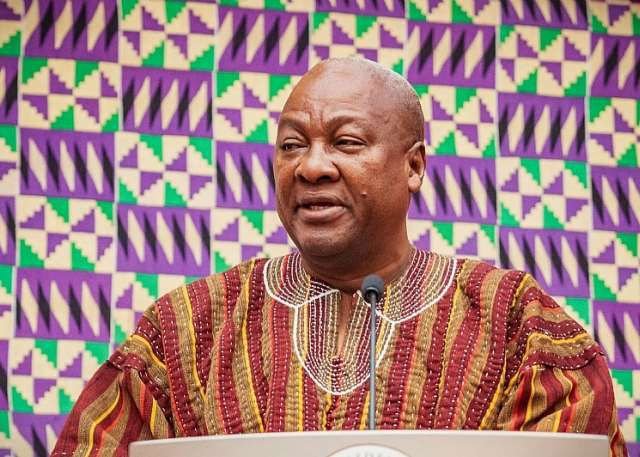
President of Ghana, H.E John Dramani Mahama
Banking & Finance

Government Nears Completion of Women’s Development Bank

President Mahama has announced that the establishment of the Women’s Development Bank is in its final phase. Speaking at the 69th Independence Day celebration of the country, he explained that the project which is being spearheaded by Ghana’s first female president, Prof .Jane Naana Opoku-Agyemang aims at providing accessible financing, mentorship, and business development support tailored specifically to women-led enterprises. According to the President, women entrepreneurs have historically been the backbone of Ghana’s informal economy, yet many of them continue to face significant barriers in accessing affordable credit to expand their businesses. “ I’m also pleased to announce that we’re in the final stages of setting up the women’s development bank.This work has been under the leadership of our hardworking vice president Jane Naana Opoku-Agyemang.Our women entrepreneurs have historically been the backbone of Ghana’s informal economy and yet too many of them face barriers to affordable credit.This women’s development bank will provide accessible financing, mentorship and business support that is tailored to women led enterprises.” President Mahama also noted that empowering women economically will not only strengthen families but also contribute to national development. “When women succeed,families thrive and nation improves . Women of Ghana we are committed to investing so that you realize your full potential.” He reaffirmed the government’s commitment to investing in Ghanaian women and ensuring they have the necessary resources to realize their full potential.

Banking & Finance

Bank of Ghana Reaffirms Commitment to Macroeconomic Stability in Meeting with UK-Ghana Chamber of Commerce

The Governor of the bank of Ghana, Dr. Johnson Asiama has highlighted the Bank’s commitment to consolidating macroeconomic gains and strengthening the country’s long-term economic resilience. In a meeting with members of the UK-Ghana Chamber of Commerce at the Bank Square aimed at discuss key industry challenges and opportunities held on the 23 February 2026 ,he attributed the sharp decline in inflation and improved business and consumer confidence to disciplined monetary policy and recent regulatory reforms. “Durability requires stronger business models, broader ownership, deeper intermediation, disciplined innovation, and sound governance,” Governor Asiama emphasised, highlighting the pillars needed for sustainable growth in Ghana’s financial sector.” The Governor also assured the Chamber of the Bank’s commitment to transparency, stakeholder collaboration, and policies aimed at enhancing competitiveness, stability, and growth in the economy. The engagement provided an opportunity for private sector leaders and regulators to exchange views on ways to bolster investment, innovation, and financial sector development in Ghana.

Banking & Finance

BoG and SEC Warn Virtual Asset Providers Against Unauthorised Promotions

The Bank of Ghana (BoG) and the Securities and Exchange Commission (SEC) have cautioned Virtual Asset Service Providers (VASPs) against mass marketing and public promotional campaigns for virtual assets, unless explicitly authorised by the regulators. In a joint statement released on Friday, 20th February 2026, the two regulators in the financial market explained that the directive is aimed at addressing growing concerns over the increasing advertisement of virtual assets and stablecoins. This includes the use of large billboards in Accra and other parts of the country by some VASPs. The statement also noted that virtual asset advocacy is a regulated activity requiring registration by both the BoG and SEC with detailed rules on advocacy and advertising to be soon issued in due course. VASPs who have already erected billboards or other public advertisements are also instructed to remove them within 48 hours of the notice. The regulators warned that failure to comply will attract strict sanctions. This directive forms part of broader efforts to ensure consumer protection, maintain financial stability, and promote responsible innovation within Ghana’s emerging virtual asset ecosystem.          

Mr. Mensah Thompson, Deputy Director-General, Operations at the Securities and Exchange Commission (SEC)
Banking & Finance

SEC Reaffirms Commitment to Regulated Virtual Asset Ecosystem in Ghana

The Deputy Director-General, Operations at the Securities and Exchange Commission (SEC), Mr. Mensah Thompson, has reiterated the Commission’s commitment to building a credible and well-regulated virtual asset ecosystem in Ghana at the Ghana Virtual Assets & Financial Services Symposium held on 17th February 2026 at the Mövenpick Ambassador Hotel, Accra. In his keynote address, Mr. Thompson highlighted ongoing regulatory measures, including the development of Guidelines for Digital and Online Foreign Exchange Trading Activities and the operationalisation of the Virtual Asset Service Providers Act, 2025. “Regulatory clarity is not an obstacle to growth. It is the foundation of sustainable growth,” he stated. He noted that the SEC is finalising a Regulatory Sandbox framework and strengthening supervisory and enforcement actions to protect investors and uphold market integrity. The Deputy Director-General also emphasised collaboration with the Bank of Ghana and other stakeholders, including implementation of a National Virtual Asset Literacy Programme and compliance with global AML/CFT standards. He reaffirmed that the SEC remains committed to fostering innovation within a framework of trust, transparency and financial stability.   Source: Securities and Exchange Commission (SEC), Ghana

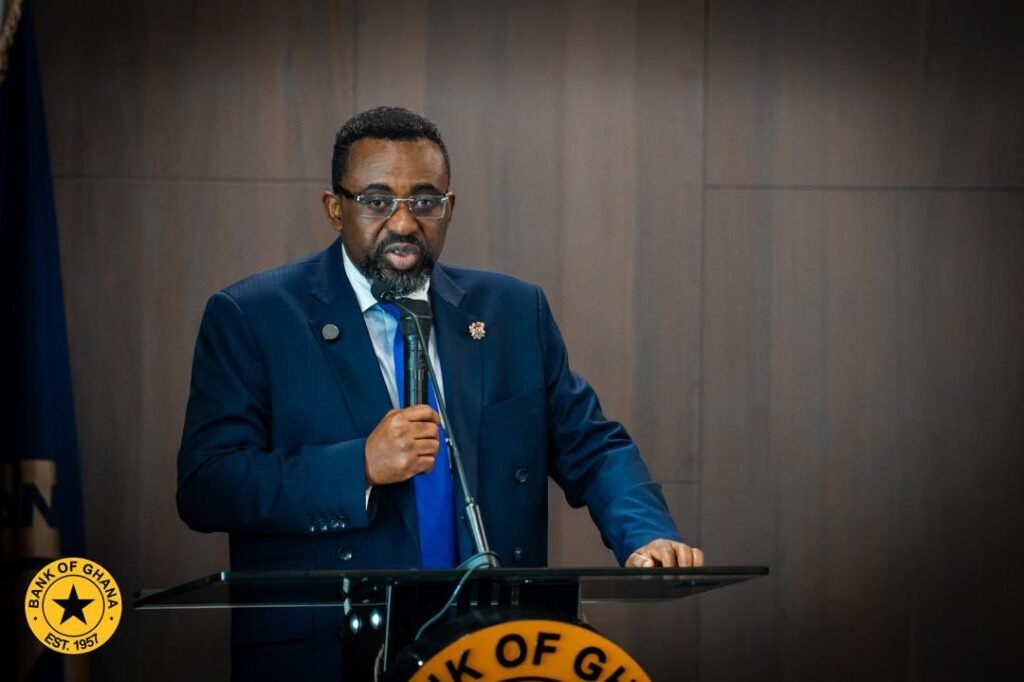
Dr. Johnson Pandit Asiama ,Governor, Bank Of Ghana
Banking & Finance

Dr. Asiama Calls for Structural Strengthening and Disciplined Lending in Ghana’s Banks

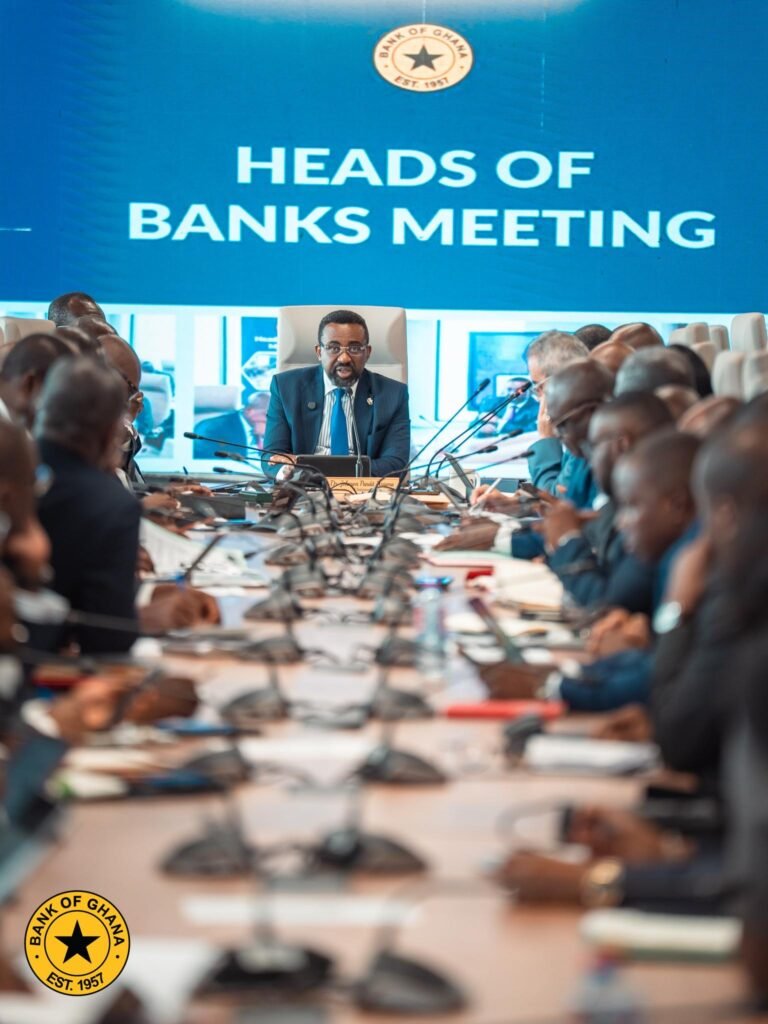
The Governor of the Bank of Ghana, Dr. Johnson Pandit Asiama, has outlined a new phase for Ghana’s banking sector, urging institutions to move beyond recovery and focus on structural strengthening to support long-term economic growth. Speaking at the Post-MPC Engagement with the Heads of Banks, Dr. Asiama stated that with improved macroeconomic stability,the sector must now not only prioritise structural reforms and stronger institutional foundations but also prioritise durability through stronger business models, broader ownership and disciplined innovation. “Colleagues, with macroeconomic stability improving and regulatory reliefs now behind us, the conversation must shift from resilience to structure. Stability has been restored. The task ahead is to strengthen the underlying architecture of the banking sector. The task now is durability. Durability requires stronger business models, broader ownership, deeper intermediation, disciplined innovation, and sound governance. The Bank of Ghana will continue to engage as a firm, fair, and forward-looking partner, supportive where necessary, but clear in its expectations.” He stated He also added that although non-performing loans are on the decline recently, they remain above benchmark levels, making disciplined lending critical as credit growth resumes. The Governor stressed that renewed lending must support productive sectors without undermining asset quality. “Similarly, while non-performing loans have declined, they remain above benchmark levels. As credit expansion resumes, underwriting discipline and sectoral risk assessment will be critical. Stability must now translate into purposeful intermediation, supporting agriculture, manufacturing, SMEs, and value-adding sectors, without reintroducing asset quality pressures.” Dr. Asiama also highlighted progress on financial sector reforms, noting that Ghana has enacted legislation to regulate digital asset activities. He said the focus has now shifted to implementing the framework and preparing institutions for the evolving digital finance landscape. “In addition, the Virtual Asset Service Providers Act has now been enacted, establishing a formal regulatory perimeter for digital asset activities in Ghana. The next phase is operationalisation. We are working on the regulatory frameworks, supervisory processes, and coordination mechanisms necessary to bring the Act fully into effect in a structured and orderly manner.” He then concluded that regulators and financial institutions share responsibility for strengthening the sector’s long-term foundations and ensuring it supports national development.