
Business Outlook Africa

Banking & Finance

Banking & Finance

Ghana, Rwanda Central Banks in Talks to Ease Cross-Border Fintech Operations

The National Bank of Rwanda (NBR) has revealed that it is in active discussions with the Bank of Ghana to establish a framework that will allow fintech companies from both countries to operate across each other’s borders. Speaking 3i Africa Summit yesterday,the Deputy Governor of the NBR, Nick Barigye, made the highlighted the growing urgency for regulatory cooperation as financial technology innovation continues to outpace existing cross-border frameworks. “As regulation is still fragmented, and together as two central banks, we are working to see how we facilitate a fintech in Ghana to come and operate in Rwanda, how a fintech in Rwanda can operate in Ghana,” Barigye stated. The Deputy Governor identified regulatory fragmentation as the central challenge confronting African central banks in their efforts to support fintech growth, noting that while innovation has become increasingly borderless, regulation has largely remained domestic in scope. “Innovation is moving beyond borders, but regulation does not. So that’s the challenge that we see in Rwanda that we are grappling with,” he said, adding that the NBR has been actively engaging peer central banks to develop coordinated solutions. Barigye expressed appreciation for the collaborative relationships being built between African monetary authorities, describing the challenge as ongoing but one the central bank is committed to addressing.

Banking & Finance

Bank of Ghana Governor Considers Separate Legislation for Fintechs

The Governor of the Bank of Ghana, Dr. Johnson Pandit Asiamah, has announced that the central bank is exploring the option of introducing a dedicated legislation specifically for regulating financial technology companies, separate from the existing Payment Systems Act. Speaking during a roundtable discussion on fintechs on Day 1 of the 3I African Summit in Accra, Dr. Asiamah explained that he has been in discussions with his head of fintech about the possibility of creating a more dynamic and targeted regulatory framework for the sector. “We’ll look at our regulation. With that, I was discussing with my head of Fintech the other day, and I said, you know what? I want to have a separate legislation for Fintechs. We regulate them currently under the Payment Systems Act. And I said, no, can I see more dynamism? Can we have a separate law just for Fintechs? So that’s the idea — thinking about what next,” the Governor stated. Dr. Asiamah also expressed confidence that fintechs represent a critical vehicle for achieving longstanding central bank objectives that traditional approaches have failed to deliver including deepening financial inclusion across the country. “We think that through technology, through fintechs, we can achieve some of the aims, some of the things that have eluded us for so long. We can use fintechs to accelerate that,” he added. The Governor further stressed the growing importance of fintechs in driving financial inclusion, noting that the central bank can no longer rely solely on traditional banking institutions to extend financial services to underserved populations across Ghana. The 3I African Summit which is only happening for a second time is a major financial technology and digital economy event taking place in Accra from May 6 to May 8, 2026. Hosted at the Destiny Arena, the summit is organised by the Bank of Ghana and the Development Bank Ghana in partnership with Elevandi. The name 3I represents the summit’s three core pillars — Innovation, Investment and Impact.

Banking & Finance

Kasapreko PLC Launches GHS 700 Million IPO on Ghana Stock Exchange

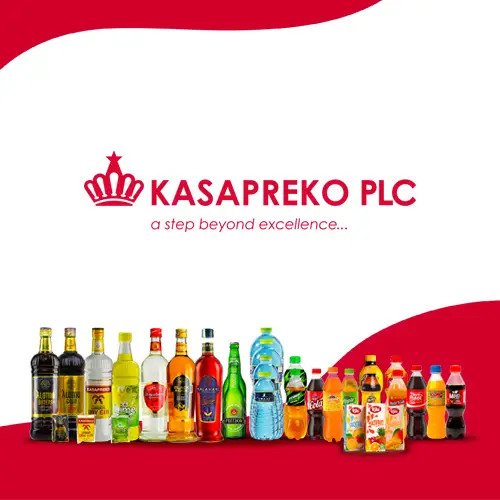
Kasapreko PLC, one of Ghana’s leading manufacturers and distributors of alcoholic and non-alcoholic beverages, has launched an Initial Public Offering on the Ghana Stock Exchange, seeking to raise up to GHS 700 million to fund the expansion of its production capacity across the country. According to the IPO announcement filed with the Ghana Stock Exchange, the company is offering 583,333,333 new ordinary shares to the public at an offer price of GHS 1.20 per share, with a minimum application of 2,000 shares and additional multiples of 1,000 shares. The offering is open to both retail and institutional investors in Ghana. The implied market capitalisation of Kasapreko PLC at the offer price stands at GHS 4.96 billion signalling the scale and commercial weight of one of Ghana’s most recognisable beverage brands ahead of its public market debut. The company added that it intends to deploy the proceeds from the offering towards the expansion of its water and carbonated soft drink production plants, including the construction of a new factory at Adeiso. The offer opened on Monday 4th May 2026 and will close on Monday 1st June 2026 with allotment scheduled for Thursday 4th June 2026 and l settlement on Friday 5th June 2026. Shares are expected to commence listing and trading on the Ghana Stock Exchange on Wednesday 17th June 2026.  

Banking & Finance

Letshego Ghana Posts GH₵80 Million Profit in 2025 as Lending Income Surges

Letshego Ghana Savings and Loans PLC has recorded a profit of GH₵80 million for the 2025 financial year signifying a 76.3% jump from the GH₵45 million recorded in the 2024 financial year. In it’s 2025 financial report ending, December 31,2025,the company’s interest income grew from the GH₵771 million recorded in 2024 to GH₵1 billion in the 2025 financial year. Interest expense for the period however remained relatively stable ,declining marginally from GH₵267 million to GH₵271 million.The report also showed a rise in Income from lending activities from the previous GH₵308 million to GH₵494 million. Operating income grew from GH₵326 million to GH₵471 million over the period with total operating expenses also rising from GH₵261 million to GH₵357 million. The earnings per share for the period also rose to GH₵0.25 from the GH₵0.16 recorded in 2024, reflecting stronger returns for shareholders. On the balance sheets,Letshego Ghana’s total assets also grew from GH₵1.5 billion to GH₵1.8 billion over the period, driven largely by growth in gross advances to customers which rose from GH₵1.3 billion to GH₵1.6 billion. Customer deposits also expanded from GH₵697 million to GH₵820 million, signaling improved customer confidence in the institution. Total equity also strengthened from GH₵319 million to GH₵366 million, while total liabilities rose from GH₵1.2 billion to GH₵1.5 billion over the same period, driven primarily by growth in borrowings and customer deposits as the company scales its funding base to support loan book expansion. Letshego Ghana’s key prudential indicators presented a mixed picture for the period. The cost to income ratio improved sharply from 57.2% to 46.0% ,the leverage ratio also remained healthy at 20.4% compared to 21.2% in the prior period with the capital adequacy ratio on the other hand declining from 23.2% to 18.8%. The concern however was the rise in the institution’s non-performing loan ratio which rose from 14.2% to 17.7% during the financial year.  

Banking & Finance

Ecobank Ghana Posts GH₵433.7 Million Profit in First Quarter of 2026

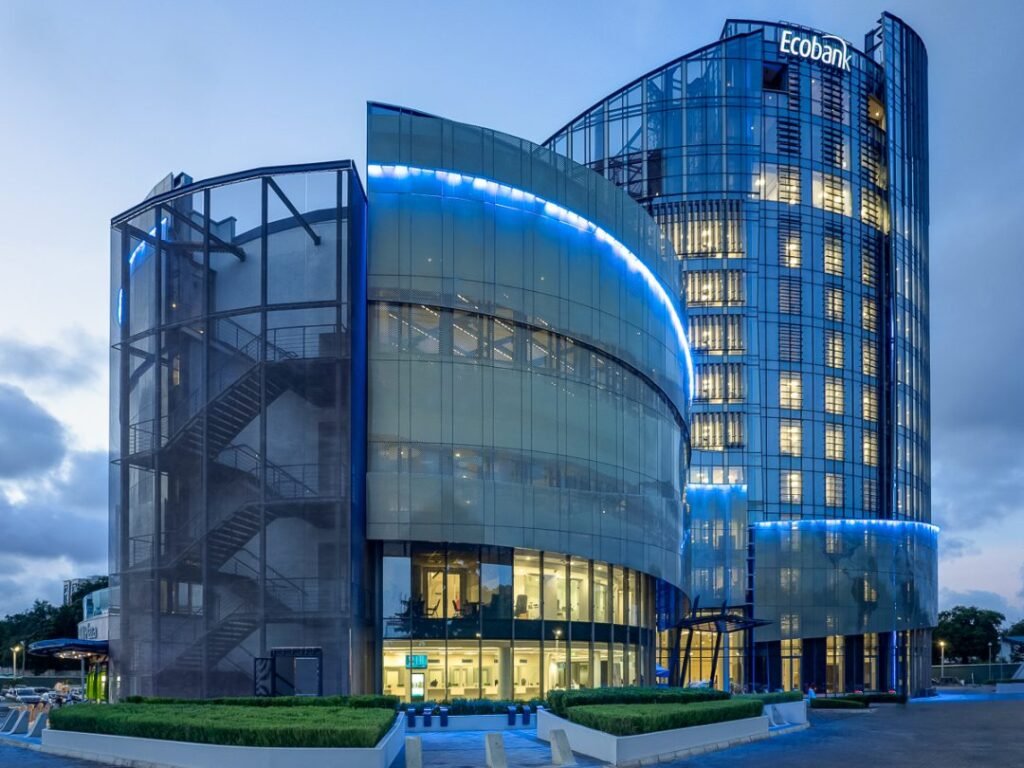
Ghana’s biggest bank in terms of assets,Ecobank Ghana PLC has recorded a profit after tax of GH₵433,701,000 for the first quarter of the 2026 financial year ending March 31,2026 – a 33.80% surge from the GH₵324,140,000 recorded in the same period in the 2025 financial year. In its later financial report for the first quarter of the 2026 financial year ending March 31,2026, it was revealed that the total operating expenses for the period fell sharply by GH₵249,810,000 from the GH₵ 671,137,000 recorded in the same period for the 2025 financial period with the biggest driver of expense for the period being personnel expenses which accounted for 47.24% of the total expenses. The total operating income for the period also decreased from the GH₵ 1,169,814,000 recorded in same period in 2025 to GH₵ 1,110,160,00 representing a 5.1%decline in income. The Bank’s statement of financial position also revealed a growth in assets by approximately GH₵4.95 billion, from GH₵45,842,665,000 to GH₵50,797,630,000. This was driven largely by by growth in loans and advances to customers which rose from GH₵10,316,580,000 to GH₵13,080,722,000. The total deposits from customers also expanded from GH₵32,521,985,000 to GH₵35,809,935,000. On liabilities and equity,Ecobank Ghana’s equity base grew nearly four times faster than its liabilities signalling a significantly stronger and more resilient balance sheet position compared to the prior year. The bank’s key prudential indicators also improved over the period. Capital Adequacy Ratio rose from 16.80% to 20.50%, comfortably above the regulatory minimum, while the liquidity ratio stood at 95.19% compared to 88.22% in the prior period. The non-performing loan ratio declined from 24.01% to 20.50% — suggesting meaningful progress in resolving problem loans The Common Equity Tier 1 ratio — a key measure of a bank’s core financial strength — improved from 14.04% to 18.50%, indicating a significantly stronger capital base.

Banking & Finance

Enterprise Group Records GH₵71.3 Million Profit in First Quarter of 2026 Despite Earnings Decline

Ghana’s leading diversified financial services group,Enterprise Group PLC has posted it’s financial report for the first quarter of 2026 ending 31 March 2026 with the Group recording a total profit of GH₵71,271,000, a 49.13% decline from the GH₵140,094,000 recorded in the same period in 2025. Despite the overall profit decline, Enterprise Group’s insurance service result more than doubled over the period, rising to GH₵123,904,000 from GH₵55,851,000 in 2025 driven largely a significant reduction in insurance service expenses, which fell from GH₵318,027,000 to GH₵235,702,000, with insurance revenue also falling marginally from GH₵441,245,000 to GH₵419,438,000. The drag on overall profitability came primarily from investment income, which fell from GH₵130,781,000 to GH₵96,699,000 at the group level representing a decline of about GH₵34 million. After deducting investment expenses of GH₵2,058,000, net investment income stood at GH₵94,641,000 compared to GH₵129,006,000 in the prior period. Operating expenses also rose sharply to GH₵92,550,000 from GH₵81,854,000, further pressuring the bottom line. Despite the profit decline, Enterprise Group’s balance sheet expanded considerably. Total group assets grew from GH₵4,310,647,000 to GH₵5,311,467,000 — an increase of approximately GH₵1 billion — driven largely by a surge in investment securities which rose from GH₵2,667,033,000 to GH₵3,444,984,000, reflecting the group’s continued strategy of growing its investment portfolio. Total equity also strengthened to GH₵1,896,174,000 from GH₵1,706,367,000, with equity attributable to owners of the parent rising to GH₵1,392,188,000 from GH₵1,251,645,000 — indicating sustained value creation for shareholders even in a period of lower earnings. On the liabilities side, insurance contract liabilities — the largest single liability — rose from GH₵1,815,224,000 to GH₵2,263,187,000, consistent with the group’s growing insurance book and expanded policy obligations.

Banking & Finance

Bank of Ghana Records GH₵15.6 Billion Loss in 2025 Financial Report

The Bank of Ghana has posted a total loss of GH₵15,630,122,000 in its 2025 financial report, representing a significant deterioration from the GH₵9,487,462,000 loss recorded in the previous year. The entire loss was attributed to equity shareholders of the bank. Expenses Outpace Revenue According to the report, total operating expenses for the period stood at GH₵37,910,534,000 — exceeding the previous year’s figure by GH₵19,022,179,000. The surge was driven primarily by the cost of open market operations, which amounted to GH₵16,730,526,000, and a net loss on gold deals totalling GH₵9,052,774,000. Despite the loss, the bank recorded a notable improvement in operating revenue, which rose by GH₵12,879,519,000 to GH₵22,280,412,000 from GH₵9,400,893,000 in 2024. The increase was largely attributed to net gains from the sale of refined gold and interest income calculated using the effective interest method. Assets, Liabilities and Equity The bank’s total assets were valued at GH₵237,229,232,000 for the period, up from GH₵215,060,478,000 in 2024. Total liabilities also increased by GH₵57,121,129,000 from the GH₵276,384,482,000 recorded in the previous accounting period. Equity, however, saw a positive movement, rising to GH₵96,276,379,000 from GH₵61,324,004,000 the prior year. Currency in Circulation The report placed total currency in circulation — covering banknotes and coins held by the general public and financial institutions — at GH₵83,824,595,000, of which GH₵1,146,058,000 comprised coins and the remainder banknotes. Among the notable trends in currency usage was a sharp decline in the circulation of the GH₵2 note, which fell dramatically from GH₵51,558,000 to just GH₵499,000 within a single year — suggesting a near-total phase-out of the denomination from everyday use. Operational and Governance Gains Beyond its financial performance, the report also highlighted progress on the bank’s operational and institutional fronts. These included the completion of the Resource Efficiency Audit and Carbon Footprint Accounting Project (REACP), designed to establish baselines for energy and water usage as well as waste management across the bank’s facilities, and the calculation of its carbon footprint. The bank also developed an Environmental Management System (EMS) Framework to manage the environmental impacts arising from its operations.

Banking & Finance

Zen Petroleum Holdings PLC Lists on Ghana Stock Exchange, Raises GHS 640 Million

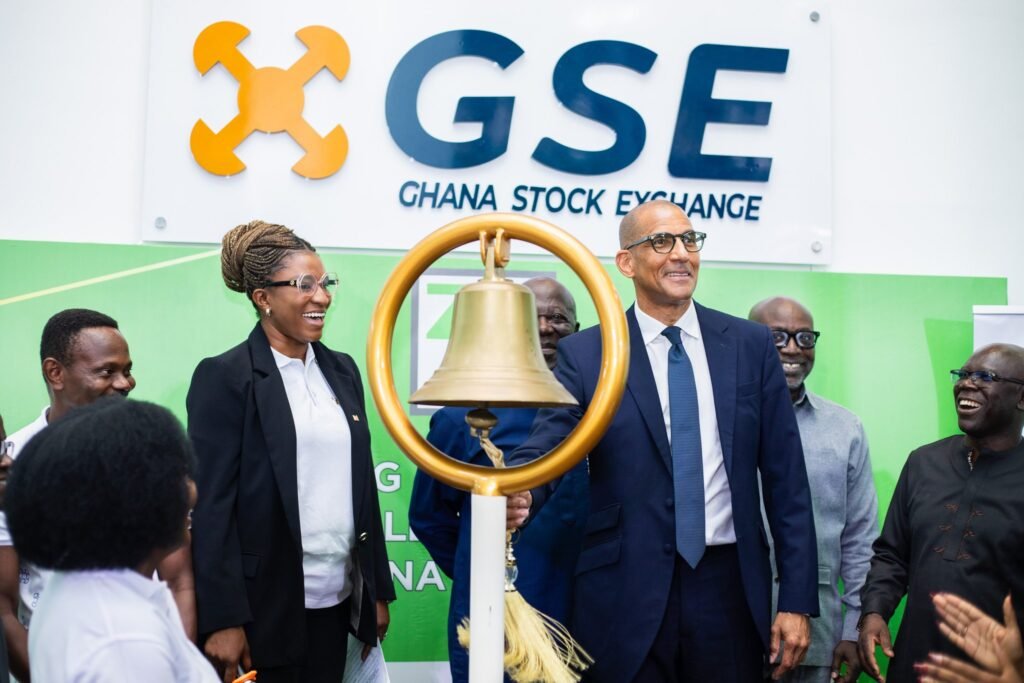
Indigenous oil marketing company Zen Petroleum Holdings PLC has been officially listed on the Ghana Stock Exchange (GSE), marking a significant milestone in the company’s push to deepen its presence within Ghana’s capital markets. The listing ceremony, held on Wednesday, April 22, 2026, at Cedi House in Accra, brought together investors, regulators, and key stakeholders in the Ghanaian capital market. Speaking at the ceremony, Founder and Chief Executive Officer of Zen Petroleum, William Tawiah, described the listing as a commitment to sustainable growth and institutional longevity. “To strengthen our position across the downstream petroleum value chain. To continue investing in infrastructure that improves efficiency and reliability. To expand opportunities for Ghanaian participation in the energy sector. And to build a business that is not only profitable but impactful.” Mr. Tawiah stated. Also addressing the gathering, Sir Sam Jonah urged the Ghana Stock Exchange to fulfil its responsibility to companies that choose to list on the bourse, stressing that the exchange must take that obligation seriously. “When a young, dynamic company like Zen chooses to invest in our stock exchange, it is making a bet — not just of its own future, but of the infrastructure and the ecosystem that the estate provides. The exchange must continue to provide the support, the services, and the regulatory environment and the market development that new companies need to thrive,” he said. Sir Sam Jonah further called on the GSE to broaden its investor education initiatives, noting that many Ghanaians still lack basic understanding of the importance of the stock market. Zen Petroleum disclosed that it successfully raised GHS 640 million, representing 20 percent of its issued share capital through the listing. The company’s Initial Public Offering (IPO) was oversubscribed by 94 percent, attracting bids valued at GHS 970,244,645, with institutional investors accounting for 99.3 percent of the total subscription figure.

Banking & Finance

GCB Bank Declares GHS1.00 Final Dividend for 2025 Financial Year

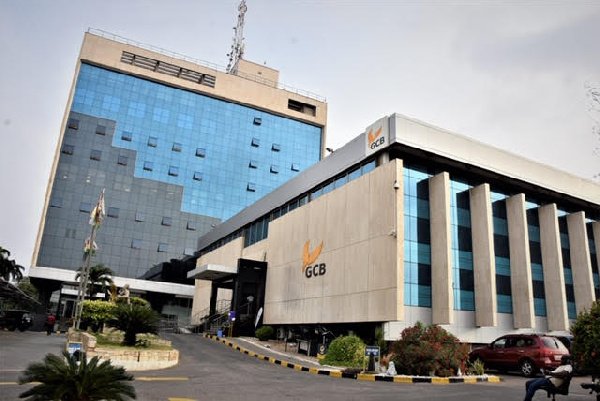
  GCB Bank PLC has announced a final dividend of GHS1.00 per share for the 2025 financial year, the Ghana Stock Exchange (GSE) has disclosed. In a statement released on April 20, 2026, the commercial bank stated that all shareholders who are registered in its books at the close of business on Thursday, April 30, 2026, will qualify to receive the final dividend. The bank added that it will then proceed to close its Register of Shareholders will from Monday, May 4 to Tuesday, May 5, 2026, both dates inclusive, to help facilitate the dividend processing. The ex-dividend date has also been set as Tuesday, April 28, 2026. This means investors who purchase GCB shares before that date will be entitled to the dividend, while those who buy on or after April 28 will not qualify. The final dividend of GHS1.00 per share is scheduled for payment on Tuesday, June 30, 2026. This comes after the bank recorded historic figures including a net profit of GHS 2.04 billion, gross profit of GHS 3.2 billion and a healthy operating income of GHS 6 billion in the 2024 financial year.

Banking & Finance

GSE Composite Index Climbs 2.61% to 14,024 as Equity Volumes More Than Double

GSE Composite Index Surges 2.61% as Equities Rally;
Fixed Income Volumes Contract Sharply The Ghana Stock Exchange recorded broad-based gains on Thursday, with its benchmark indices extending a multi-session recovery. Fixed income activity, however, declined significantly from prior-day levels. The equities market closed higher as the GSE Composite Index (GSE-CI) gained 357.20 points to settle at 14,024.22 — a daily advance of 2.61 percent from the previous session’s close of 13,667.02. On a year-to-date basis, the index has now gained 59.91 percent, reflecting sustained investor appetite for Ghanaian equities amid an improving macroeconomic backdrop. The GSE Financial Stock Index (GSE-FSI), which tracks the performance of listed financial sector firms, also moved higher, adding 241.84 points to close at 8,314.05, a gain of 2.99 percent. The FSI’s year-to-date return now stands at 78.91 percent, outpacing the broader composite index and signalling continued confidence in financial sector stocks following recent monetary policy easing by the Bank of Ghana. Trading activity surged markedly, with total volume traded reaching 3,215,320 shares ,a jump of 123.07 percent compared to Wednesday’s 1,441,383. Value traded correspondingly spiked to GH₵15.83 million from GH₵7.11 million, representing a 122.61 percent day-on-day increase. The uptick in volumes suggests a broad re-engagement from market participants, likely encouraged by positive index momentum. Activity in the fixed income secondary market contracted sharply on Thursday. Total volume across all instruments fell 24.86 percent from GH₵800.63 million on Wednesday to GH₵601.58 million, as trading in most government securities declined. Treasury Bills accounted for GH₵449.84 million of total fixed income turnover representing a 30.39 percent decline from Wednesday’s GH₵646.20 million. The Domestic Debt Exchange Programme (DDEP) Bonds also bucked the downward trend, with volumes rising 50.17 percent to GH₵144.33 million from GH₵96.12 million in the prior session. New Government of Ghana (GOG) Notes and Bonds saw the steepest contraction, plunging 97.32 percent from GH₵46.46 million to just GH₵1.25 million. Corporate bond activity also fell sharply by 57.93 percent to GH₵4.80 million. Legacy GOG Notes and Bonds, however, recorded a 211.79 percent surge to GH₵1.36 million from GH₵437,343 the prior day.