Business Outlook Africa

Banking & Finance

Banking & Finance

Pension Funds Are an Untapped Mortgage Resource — Republic Bank’s Dan Adjetey

Head of Mortgage Banking at Republic Bank Ghana, Dan Adjetey Mohenu, is calling on pension fund managers to make long-term funds more available to financial institutions for mortgage lending, arguing that contributors should not have to wait until retirement to benefit from their savings. According to Adjetey, the current structure of pension contributions leaves workers locked out of the value of their own savings until they retire, despite many needing that capital far earlier to acquire a home. “The managers of pension funds should be interested in providing some of these long-term funding or making them available to financial institutions to lend,” he stated. He explained that contributors paying into a pension scheme should be able to leverage those funds toward homeownership well before retirement age, rather than waiting decades to see any tangible benefit. “There’s one thing me paying my pension to you, but remember that I’ll be more than excited if I can leverage that pension to acquire a home. So that I don’t necessarily have to wait till when I’m going on retirement, then I can benefit,” he added. On technological advancement ,Adjetey called on financial institutions to come with innovative products that match the needs of their customers arguing that the technology already exists to support more flexible, accessible mortgage products. “What we should be looking at in terms of innovation are two areas for me. One, the nature of the mortgage products that are being churned out by financial institutions. We should be very proactive in doing a lot of these things,” he further stated. He noted that technological advancement has already transformed the front end of the mortgage process, with applications that once required physical visits to a bank branch now reduced to a matter of clicks. “Doing a mortgage application is quite seamless. You can on your own get to understand how much you qualify for by a simple click of a button. You can submit your requirements by a single click of a button,” Adjetey cautioned.

Head of Mortgage Banking and Customer Experience at Republic Bank Ghana,Dan Adjetey Mohenu
Banking & Finance

Republic Bank Ghana Mortgage Head Urges BoG to Push Interest Rates Lower to Widen Mortgage Access

Head of Mortgage Banking at Republic Bank Ghana, Dan Adjetey Mohenu, has commended the Bank of Ghana for its efforts in driving down interest rates, while also urging the central bank to push them even lower, arguing that reduced interest rates make mortgages more accessible. Speaking exclusively to Business Outlook Africa, Dan Adjetey explained that interest rates are a key component in determining who gets access to mortgages and who doesn’t.He addressed that when interest rates are high only high-income earners or middle income earners can make use of mortgages but when they are low, low income earners can make use of mortgages as well. “You will find interest rates hovering around the 12s, 13s, 14s. Three years ago, you could borrow at as high as 27%. Currently, we are in the teens.Now, my comfort is if these current rates can be sustainable.If they are sustainable and they can even further be driven downwards, you have a lot more low-income earners falling into the brackets to be able to borrow. You see, mortgages are a factor of your income, your age, and also your credit rating. Once interest rate comes down, which is the key factor in the determinant, you have a lot more people joining the backlog.” Dan stated On the exchange rate and its effects on mortgages, Dan Adjetey advised potential mortgagees to not take mortgages in dollars or any other foreign currency if they earn in cedis. “We advice that, to anybody who wants to take a mortgage from us, if you want a USD facility which the exchange rate will have an impact on, then you should be earning the USD or any foreign currency so that the exchange rate does not impact you. If you earn in cedis , then take a cedi mortgage.” Dan added Adjetey explained that this is to ensure that mortgagees are shielded against exchange rate volatilities which might end up making them pay more in terms of monthly installments. “Because you see, if you earn cedis and you take a USD mortgage, aside the fact that you’ll be paying more, you still have the exchange fluctuations affecting you.” he added. Ghana’s mortgage industry is an emerging but heavily constrained market. Mortgages account for only about 1% of the country’s GDP due to macroeconomic instability, short loan tenures, and high-interest rates ranging from 15% to over 30%. Despite the challenges, Dan Adjetey expressed optimism about the trajectory of Ghana’s mortgage industry, projecting significant improvement within the next five to six years.        

Banking & Finance

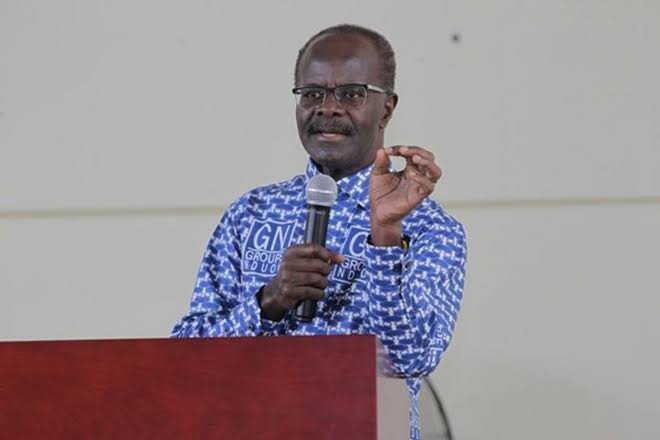
“Make No Mistake” — Nduom Insists Standard Chartered’s Retail Business Must Go to a Ghanaian Buyer

Renowned Ghanaian businessman and Founder of Groupe Nduom, Dr. Papa Kwesi Nduom has urged indigenous Ghanaian companies to be prioritised in the acquisition process for Standard Chartered Ghana’s retail banking business following its announced intention to divest. In a post made on Facebook, the renowned Ghanaian businessman argued this opportunity presents the country a unique opportunity to strengthen local ownership within its local retail banking space. “Make no mistake about this: if Standard Chartered is selling its retail banking business, the buyer should be an indigenous Ghanaian company.” Dr. Nduom stated Ghana’s banking sector has seen a significant erosion of indigenous ownership, a trend accelerated by the 2017-2020 banking crisis which wiped out several domestically owned institutions. The comments by Dr. Papa Kwesi Nduom follow Standard Chartered Bank Ghana’s announcement of its intention to explore the sale of its Wealth and Retail Banking business as the bank shifts focus to its Corporate and Investment Banking operations. With a great career spanning from business to politics,this call carries particular weight especially coming from a man owned one of the largest indigenous financial institutions in Ghana before its licence was revoked during the 2017-2020 banking sector cleanup.

Banking & Finance

Standard Chartered Bank Ghana Explores Sale of Wealth and Retail Banking Business

Standard Chartered Bank Ghana PLC has announced its intention to explore options for the sale of its Wealth and Retail Banking (WRB) business, in a development that may have a material effect on the price of the Company’s securities. The announcement, issued on June 25, 2026, follows a decision by the Company’s majority shareholder, Standard Chartered PLC  together with its subsidiaries, the SC Group  which stated as part of its 2025 results on February 24, 2026, that it will continue to focus the resources of its WRB business on Affluent Wealth Management clients. Standard Chartered Bank Ghana stated that the WRB divestment process will be launched shortly, and that any potential transaction will be subject to regulatory approvals and market conditions. The bank further stated that in the interim, the WRB business will continue to operate as usual pending the completion of any sale. The bank emphasised that the announcement does not affect its Corporate and Investment Banking (CIB) business, which will continue to operate in Ghana in the event of a WRB sale. Shareholders of Standard Chartered Bank Ghana have consequently been advised to exercise caution when dealing in the Company’s securities until a further announcement is made.

Banking & Finance

SEC Ghana Orders Online Investment and Trading Platforms to Obtain Licences Before August 31 — Warns Unregistered Operators to Desist

The Securities and Exchange Commission (SEC) Ghana has issued a directive ordering all market operators, financial technology service providers, and persons owning or operating online investment and trading platforms to obtain the appropriate registration and licensing from the Commission before August 31, 2026. The directive, issued on June 23, 2026, follows the Commission’s observation of a growing trend of unregistered online investment applications and trading platforms facilitating access to trading in securities listed in local and foreign markets. The SEC stated that considering the risks posed by fraudulent and unregulated online investment-related platforms, it is implementing measures to strengthen investor protection across Ghana’s securities market. Under the directive, a licensed market operator owning or operating any investor-facing investment technology or online platform must register and obtain a licence from the SEC for each technology or platform. Financial technology service providers or any person operating an online investment or trading platform that performs any SEC-licensed activity are consequently required to obtain the appropriate registration and licence from the Commission. Digital intermediaries operating digital platforms in the securities space are similarly required to comply. The SEC further cautioned that any person or entity including market operators who operates, whether directly or indirectly, an online investment application or trading platform that is not approved, licensed, or registered by the Commission must immediately desist from doing so. The Commission additionally urged the investing public to verify the authenticity of any investment products or platforms advertised through conventional or online media via the SEC’s official channels of communication. The SEC then outlined a five-step process for platforms seeking registration and licensing. Applicants are required to complete the Platform Owners’ Entry Form, after which the SEC will invite them for a demonstration of their platform or technology. The Commission will then provide feedback and guidance on regulatory steps to be taken, followed by payment of applicable registration or licensing fees, and the subsequent issuance of a Registration or ons. The SEC noted that the directive takes immediate effect and shall remain in force until otherwise revised, varied, amended, or revoked.

Banking & Finance

Bank of Ghana Tightens Sanctions on Dud Cheques — Third-Time Offenders Face Three-Year Ban and Credit Restrictions

The Bank of Ghana has taken steps to deal with the high rate of issuance of dud cheques by customers of banks and Specialised Deposit-Taking Institutions (SDIs), by tightening sanctions to include penalties escalating from a 10 percent levy on first-time offenders to a three-year cheque-issuing ban for repeat offenders. In a statement released on June 24, 2026,the central bank stated that despite previous measures to discourage the issuance of dud cheques, it has observed with grave concern the high issuance of dud cheques by some customers of banks and SDIs, a development it noted has consequential effects on the acceptance of cheques for transactions and confidence in the payment system. The Central Bank stated that on first offence, the bank or SDI shall levy the account holder 10 percent of the cheque’s face value and issue a Warning Notification to the affected customer on the consequences of repeating the offence. The bank or SDI shall additionally report the offence to the Credit Reference Bureaus and the Bank of Ghana, and place the customer under surveillance for a minimum period of one year. It futher stated that where a customer issues a dud cheque for the second time within one year of the first offence, the drawee bank or SDI shall impose a levy of 15 percent of the cheque’s face value and issue another Warning Notification to the customer. The offence shall again be reported to the Credit Reference Bureaus and the Bank of Ghana. On a third offence within one year of the first, however the drawee bank or SDI shall not only impose a levy of 20 percent of the cheque’s face value and report the offence to the Credit Reference Bureaus and the Bank of Ghana but also shall consequently ban any customer who reaches the third offence from issuing cheques within Ghana for a minimum period of three years. The customer may, however, continue to receive cheques and funds into the affected account and perform other electronic transactions. The central bank shall additionally ban such a customer from accessing new credit facilities from the banking system for one year, and shall notify all banks and SDIs of the ban. The Bank of Ghana also added that it may also publish the list of third-time offenders. The Bank of Ghana further indicated that customers who fail to return unused cheque books within ten working days of the notification date shall be reported to the central bank, which may ban them from operating any current account. Banks and SDIs are required to continue submitting data on customers who issue dud cheques to the Credit Reference Bureaus in accordance with Section 25(c) of the Credit Reporting Act, 2007 (Act 726).

Banking & Finance

“We Must Not Displace the Cedi” — Bank of Ghana Deputy Governor Calls for Trust-Driven Digital Asset Economy at Standard Chartered Summit

The First Deputy Governor of the Bank of Ghana, Dr.Zakari Mumuni has emphasised that Africa’s digital asset economy must be built on “trust, inclusion, and sound institutions,” rather than speculation. Speaking at the Standard Chartered Digital Assets Summit in Accra over the weekend,where he addressed industry leaders, regulators, innovators, and financial institutions,Dr. Mumuni stated that the Bank had strengthened collaboration among key regulators, created a dedicated Virtual Assets Department, and continued to leverage its Regulatory Sandbox to support responsible innovation. “The question is no longer whether digital assets will shape African finance. They already are. The real question is whether we will shape that future deliberately,” Dr. Mumuni stated. The First Deputy Governor further stressed that while digital innovation presents significant opportunities for cross-border payments, financial inclusion, and capital market development, it must complement, not replace, the Ghana cedi. “Whatever we build, tokenise, or otherwise, we must not displace the cedi. A strong digital ecosystem should strengthen public money, not compete with it,” he said. The First Deputy Governor further called for greater collaboration among regulators, financial institutions, and innovators across the continent to build a secure and interoperable digital financial ecosystem that supports Africa’s economic transformation.    

Banking & Finance

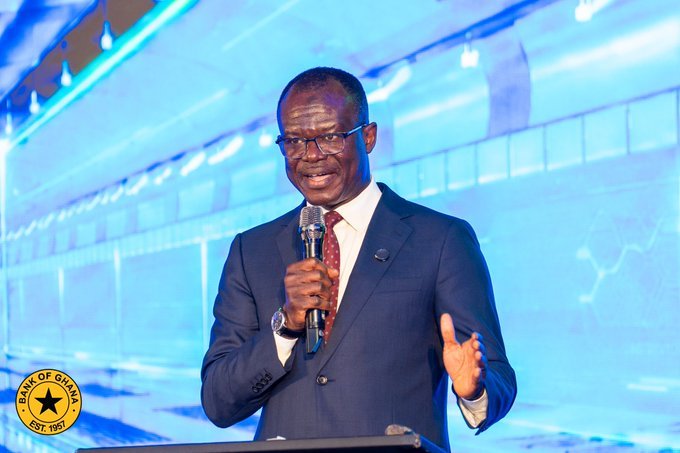
BoG Eyes Remittance-Linked Investment Products as Asiamah Presses Banks on Credit Risk

The Governor of the Bank of Ghana, Dr.Johnson Pandit Asiamah has urged banks to build robust credit facility systems aimed at reducing the rate of Nono performing loans in the sector. In a meeting with the Head of Banks post the 130th MPC meeting, Dr.Asiamah stated that credit risk and non performing loans continue are still issues of great concern in the sector. “Nevertheless, we must not become complacent. Elevated credit risks remain a concern, and banks must continue to strengthen credit underwriting standards, improve recovery processes, and comply fully with regulatory requirements aimed at reducing non-performing loans to tolerable prudential targets.”Dr.Asiamah stated The Governor also urged banks to remember their fundamental role of financial intermediation and capitalize on the macroeconomic gains achieved to innovate and meet the financial needs of businesses and households. “As we sustain stable macroeconomic conditions, let me reiterate that the banking industry must increasingly turn its attention to its fundamental role of financial intermediation and support for productive economic activity. I therefore urge banks to leverage the gains from macroeconomic stability, declining interest rates,and advances in financial technology to develop innovative products that meet the evolving needsof households and businesses.” He added Dr Johnson Pandit Asiamah also announced plans of a possible collaboration with banks to “strengthen channels that convert remittance inflows into productive investments.” Explaining that this when done will go a long way to deepen the financial market, strengthen economic resilience and support sustainable growth. “By creating innovative investment-linked remittance products, we can mobilise a larger share of these flows toward business expansion, infrastructure development, and long-term capital formation. Such efforts will not only deepen our financial markets but also strengthen economic resilience and support sustainable growth.” The governor added Dr.Asiamah also called on banks to “ formalise robust policies governing third-party collateral, strengthen due diligence procedures, enforce strict verification standards, address control weaknesses, and take decisive disciplinary action against staff involved in misconduct” to address the ongoing The Governor then expressed the central bank’s commitment to working closely with all stakeholders to build a resilient, inclusive, and globally competitive financial sector that serves the aspirations of the Ghanaian people.

Banking & Finance

Societe Generale Ghana PLC Announces GHS0.24 Per Share Final Dividend for 2025

Societe Generale Ghana PLC (SOGEGH) has declared a final dividend of GHS0.24 per share for the 2025 financial year with the dividend scheduled to be paid on Monday, September 7, 2026. In a statement released on June 15, 2026, Societe Generale stated that only shareholders who are registered in its books at the close of business on Monday, July 6, 2026, will qualify to receive dividends. The company also added that its register of shareholders will be closed from Tuesday, July 7, to Wednesday, July 8, 2026. With the ex-dividend date set for Thursday, July 2, 2026,Investors who purchase SOGEGH shares before this date will be entitled to receive the dividend for the period. Societe Generale Ghana PLC (SOGEGH) is a top-tier retail and corporate bank listed on the Ghana Stock Exchange (GSE) and serves as a major subsidiary of the French multinational Société Générale Group.

Banking & Finance

Kasapreko PLC Makes History as GSE’s First Dual-Market Issuer

Kasapreko PLC has officially lifted on the Ghana Stock Exchange after a successful Initial Public Offering which saw the company raise GHS 700 million through the stock market. The listing which took place at the Cedi House on Monday,June 15,2026 brought together key stakeholders across the finance and trade industry including the Minister of Trade and Agribusiness, the Director General of the Securities and Exchange Commission, the Managing Director of Ghana Stock Exchange(GSE)among others. Delivering the welcome address, the Managing Director of the GSE, Abena Amoah highlighted on the exceptional performance of the exchange over the past few years explaining that the exchange has executed over 457,000 trades so far this year as compared to the 63,000 executed in the same period last year. “Ladies and gentlemen, this listing comes during a period of exceptional performance in our market. I suggest last Friday our composite index was up almost 65 percent, building on three consecutive years of strong growth. Even more striking for us at the exchange is the number of trades executed on the markets, on our equities markets so far to May this year.Over 457,000 trades have been executed compared to 63,000 only the same period last year, an increase of over 625 percent and a lot of this interest coming from retail investors.” She stated Abena Amoah also added that the exchange is actively engaging the government to oversee the listing of some State-Owned Enterprises as part efforts to improve market liquidity. “Also through the government, we are actively advancing the listing of SOEs, a programme strongly supported by His Excellency the President, a firm during his recent visit to the London Stock Exchange. We believe this initiative will unlock value, strengthen governance and deepen our markets further.” She added The Managing Director of Kasapreko PLC, Richard Adjei, also advocated for improved investor and stock market education to improve market liquidity. “We need stronger investor education to improve market liquidity” he stated Also Speaking at the listing, the founder of Kasapreko PLC, Dr. Kwabena Adjei stated the mission of the company is “to build one of Africa’s most respected beverage and consumer goods companies.” Dr. Kwabena Adjei also urged young people who wish to leave a mark in the world to dream big,remain resilient and stay focused arguing that this is the cheat code needed to becoming successful. “To the youth, the youth who is listening today, my advice is dare dream big, stay focused, remain resilient, give your dreams legs. Roll up your sleeves, because the world is waiting for you.”Dr. Kwabena Adjei added According to reports the listing of Kasapreko PLC will not only see to an expansion in the operations of the indigenous beverage company but will also create over to 1,000 direct jobs and 2,100 indirect jobs. With this,Kasapreko PLC becomes the first and only company on the Ghana Stock Exchange to raise capital through both the corporate bond market and the equities market.