Business Outlook Africa

Author name: Business Outlook Africa

Telecommunications

MTN Ghana Set to Hold 8th Annual General Meeting

Scancom PLC (MTN Ghana) is set to hold its 8th Annual General Meeting (AGM) on Tuesday, March 24, 2026, at 11:00 GMT. The meeting will take place physically at the University of Professional Studies, Accra (UPSA) Auditorium and will also be accessible virtually via the company’s AGM platform. The AGM will consider key matters including the audited financial statements for the year ended December 31, 2025, the declaration of a final dividend, and the re-election of several board members. Shareholders will also be asked to approve directors’ fees for 2026 and authorize the remuneration of auditors. In addition, the meeting will deliberate on a revised Non-Executive Directors’ Fee Policy as part of its special business. Shareholders who are unable to attend in person may appoint proxies to participate and vote on their behalf. The company has also provided virtual access options, including free participation for shareholders on its network and a dial-in option for those without smartphones. Voting will be conducted electronically via USSD, while shareholders attending physically are required to present their Ghana Card for identification. The company has made its 2025 audited financial statements available online ahead of the meeting.

News

UG Developing Digital Youth Village to Prepare Students for Job Market

The Vice-Chancellor of the University of Ghana, Prof Nana Aba Appiah Amfo, has announced that the university is collaborating with key institutions and stakeholders to develop a Digital Youth Village—a national platform aimed at equipping students with a wide range of digital skills. Speaking at the Vice-Chancellor’s Occasional Lecture held on Monday, March 16, 2026, Prof. Amfo explained that the initiative forms part of the university’s broader strategy to bridge the gap between academia and industry while preparing graduates for the demands of the evolving job market. The lecture, which featured, Managing Director and Chief Knowledge Officer of the World Bank Group Paschal Donohoe, was delivered under the theme: “Building Skills, Creating Jobs and Empowering Ghana’s Future.” According to Prof. Amfo, the Digital Youth Village will serve as a central hub for training students in diverse digital competencies, enhancing their employability and readiness for emerging opportunities. “We are engaging with others. For example, we are developing the Digital Youth Village, which would actually be a national platform for training students in all kinds of digital skills,” she stated. She further noted that the initiative aligns with the university’s commitment to producing graduates who are not only academically sound but also industry-ready. The development comes at a time when calls for stronger collaboration between educational institutions and industry players continue to grow, particularly in response to rapid technological advancements and changing workforce needs.

News

GoldBod Signs Deal with GGSA for Gold Exploration in Funsi, Atuna, Bensere East

The Ghana GoldBod has signed an agreement with the Ghana Geological Survey Authority (GGSA) to conduct geological investigations in Funsi, Atuna and Bensere East areas (Phase 1). Signed on Monday, March 16,2026,the agreement by the Goldbod is a major step towards supporting responsible and data-driven mining in Ghana. The project aims at generating credible geological data for the establishment of model mines in the country with the cost of Phase one (1) of the geological investigation services which will be provided by the GGSA over a four (4) months period estimated to be GHS27.5 million. The three (3) blocked-out mineralized areas are part of 20 areas released to the GoldBod by the Minerals Commission of Ghana. The GoldBod expressed its commitment towards promoting sustainability, while maximizing national gold output for the benefit of Ghanaians.

News

World Bank MD Advocates Stronger Job Creation Systems and Closer University–Industry Ties

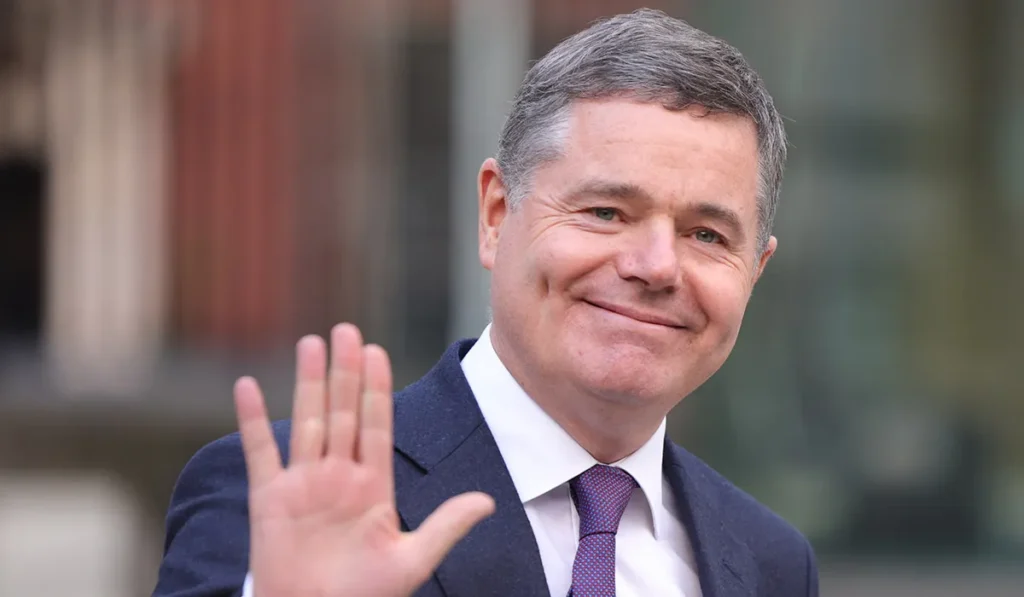
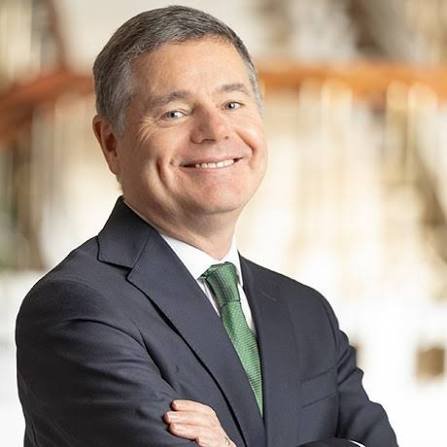
The Managing Director and Chief Knowledge Officer of the World Bank Group, Paschal Donohoe has called for stronger collaboration between universities and industry to better prepare students for the evolving job market. Speaking at the University of Ghana on the Topic “Building Skills, Creating Jobs and Empowering Ghana’s Future” on Monday , March 16,2026, as part of his scheduled activities for his first visit to West Africa since his appointment,Mr Donohoe explained that institutions such as the University of Ghana play a critical role in driving innovation by co-designing curricula with industry, expanding internship opportunities, and supporting research that promotes economic transformation. “Great institutions like this have such a critical role to play. Co-designing curricula with industry, expanding internships, preparing researchers and innovators who drive transformation. These standards are at the heart of an institution such as the University of Ghana.” He said   Mr. Donohoe also urged policymakers to strengthen systems that create opportunities for young people, including industry-linked training, strong foundational skills, and improved labour market information. He stressed that while there is clear evidence on policies that support job creation, the challenge lies in sustaining focus and building the institutional capacity to implement them effectively. “ And then to the policy makers in this room, the architecture of opportunity is yours to build. The data is clear on what works.Industry linked training, strong foundational skills, good information about the jobs markets and having the private sector involved. The question is not what to do, it’s whether we have the sustained focus and the institutional capacity to do it at scale. “He added The World Bank executive concluded by reaffirming the World Bank Group’s continued commitment to supporting Africa’s development and expanding opportunities for young people across the continent.

News

World Bank MD Urges Students to Build Skills Beyond Their Degrees

The Managing Director and Chief Knowledge Officer of the World Bank Group, Paschal Donohoe, has urged students to view their university degrees as their starting point in their professional journey rather than their final destination. Speaking at the University of Ghana on the Topic “Building Skills, Creating Jobs and Empowering Ghana’s Future” on Monday , March 16,2026 as part of his first time visit to West Africa since his visit ,Mr. Donohoe stressed that long-term success in today’s economy depends more on continuously developing skills such as critical thinking, communication, and the ability to learn new knowledge. According to him, these skills are not completed at graduation but must be built throughout one’s career to ensure one achieves long term success. “First, your degree is your starting point. It’s not your destination. The skills that will determine your journey in life of critical thinking, of communication, of the ability to learn what you do not yet know, they’re built, they are developed continuously.They don’t come to an end at graduation. “ he stated Mr. Donohoe added that the most valuable professionals in the modern economy are those who can combine different areas of knowledge and bridge disciplines. Mr. Donohoe also noted that individuals who can apply technical expertise to real-world problems, while also exercising human judgment in areas often dominated by technology and algorithms, will have a significant advantage in the job market. “Second, the most valuable professionals in this new economy are those who can bridge worlds. Who bring technical knowledge to problems that others approach only with intuition or who can bring human judgement to domains that others can only see through algorithms. A combination of disciplines, of languages, a combination of contexts is a competitive asset. “ He also urged students to explore opportunities beyond traditional employment paths, stating that many emerging sectors are creating new demand for skilled professionals. He then identified agribusiness and the creative economy as areas with growing opportunities for analytically capable and innovative individuals. Mr. Donohoe further encouraged young graduates to be willing to build their own career paths instead of waiting for perfect job opportunities to emerge. “ And then don’t wait for the perfect formal job to appear. Your most dynamic opportunities are often in sectors that have yet to have established hiring plans.  Agribusiness, the creative economy, these are generating real demand for people who are analytically capable and highly skilled. Be willing to build your own path, don’t always follow one.” The World Bank executive concluded by reaffirming the World Bank Group’s continued commitment to supporting Africa’s development and expanding opportunities for young people across the continent.  

News

BoG’s 129th MPC Meeting Begins Against Tide of Falling Inflation and Rising Global Risks

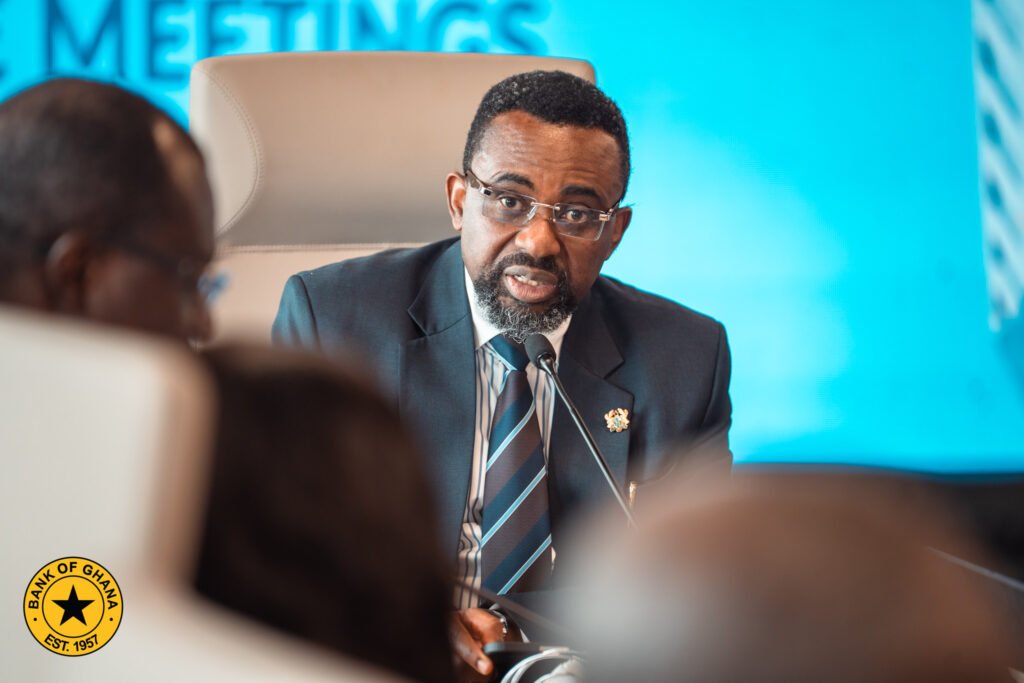
The Governor of the Bank of Ghana, Dr. Johnson Pandit Asiama has explained that country could face renewed inflationary pressures as due disruptions of global energy and shipping routes as a result of the ongoing tensions in the Middle East . Passing oh his remarks during the opening of the 129th Monetary Policy Committee Meetings on Monday, March 16,2026 the governor highlighted that even l geopolitical uncertainty may support higher gold prices which will benefit Ghana’s export earnings and trade balance,the overall impact of the external shock is expected to be inflationary for the economy. “ Colleagues, the external environment has evolved significantly since our last meeting in January.The escalation of conflict in the Middle East has disrupted key energy and shipping corridors, increased volatility in global oil markets, and introduced new uncertainty into the trajectory of For Ghana, the spillover channels are clear. Sustained oil price increases raise the risk of imported inflation, which could necessitate policy tightening with implications for financial conditions.There is a partial offset – geopolitical uncertainty tends to support gold prices, which benefits our trade balance – however, the net balance of risks from this external shock is inflationary.” Dr Asiama also added that the discussions for the meetings will primarily centere on the geopolitical risk channel and its implications for policy calibration, the Ghana Accelerated National Reserve Accumulation Programme and the effectiveness of monetary policy transmission. “Against this backdrop, I would like to draw members’ attention to areas that will be central to our discussion: • First geopolitical risk channel and its implications for policy calibration. The external shock we face today is different from the conditions we confronted in January. Back then, the principal risk was complacency in the face of success. Today, there is a live external threat to the disinflation trajectory. Whatever decision the Committee takes, our communication must reflect both the progress achieved and the risks that remain. • Second, the Ghana Accelerated National Reserve Accumulation Programme. Since our last meeting, the Government has announced Ghana Accelerated National Reserve Accumulation Programme (GANRAP), which seeks to raise international reserves to 15 months of import cover by 2028, from the current level of around 5.8 months. Strengthening external buffers is an important element of macroeconomic resilience. At the same time, initiatives of this scale raise questions regarding liquidity conditions, the Bank’s balance sheet, and the interaction between reserve accumulation and monetary policy operations. • Third, the effectiveness of monetary policy transmission. The banking sector remains sound, profitable, and well-capitalised, with asset quality improving meaningfully over the past year. This matters not only for financial stability, but also for the effectiveness of monetary policy, the extent to which changes in the policy rate translate into the credit conditions experienced by households and businesses.Understanding the factors constraining credit expansion, whether on the supply or demand side, will therefore be important in assessing the real economy impact of any policy decisions taken today.” The Governor then urged committee members to ensure that their decision would remain sound under different possible global economic scenarios.

Economy

World Bank MD Commends Finance Minister During First Africa Visit

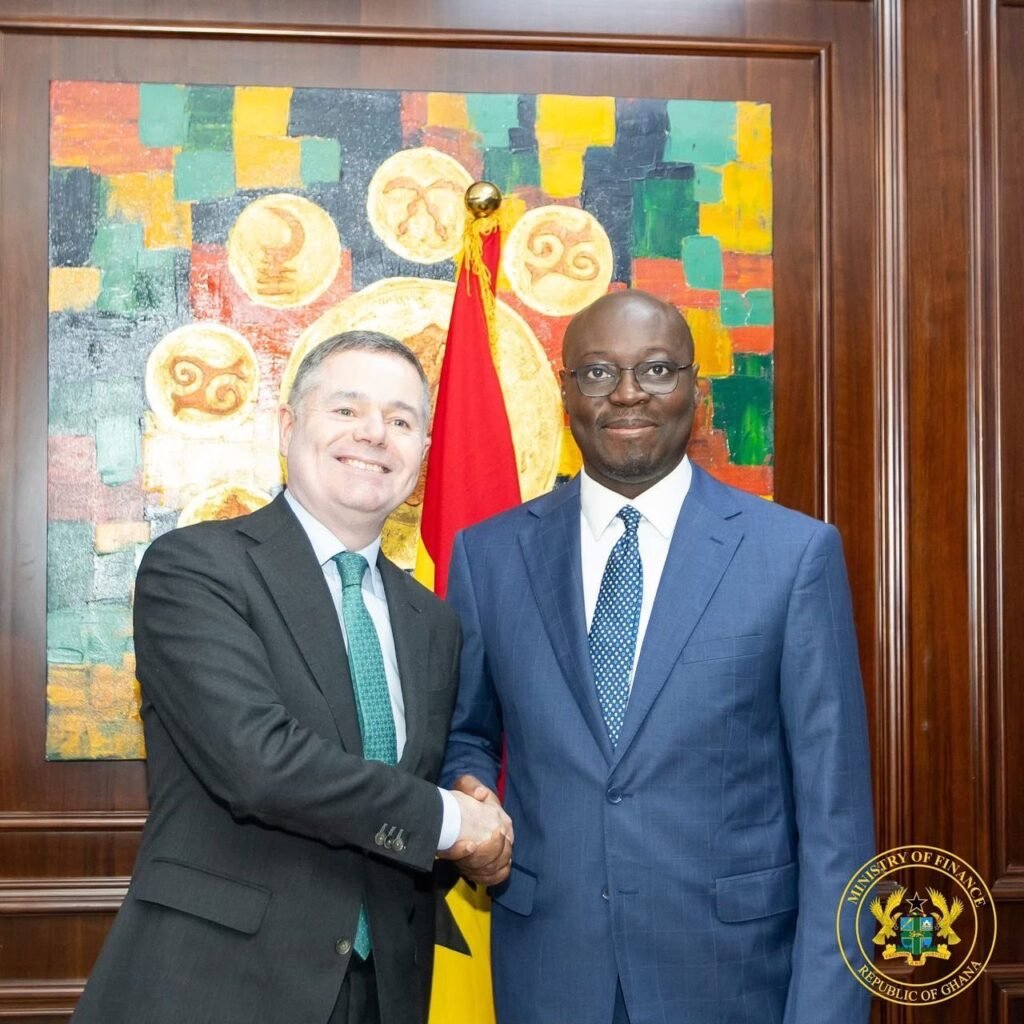
The Managing Director and Chief Knowledge Officer of the World Bank Group, Mr. Paschal Donohoe, has commended Ghana’s Finance Minister, Dr. Cassiel Ato Forson, for what he described as the remarkable improvement in the country’s national finances. Mr. Donohoe made the remarks during a meeting with the Finance Minister as part of his first official visit to Africa, where the two held discussions on Ghana’s economic transformation and the next phase of the country’s development agenda. During the meeting, Dr. Forson explained that the government spent the past year focused on resetting the economy and placing it firmly on a path toward sustainability. He noted that while significant progress has been made in stabilising the economy, unemployment, particularly among young people, remains one of Ghana’s most pressing challenges. The Finance Minister pointed out that Africa’s rapidly growing youthful population means public sector employment alone cannot provide sufficient opportunities for young people, stressing the need for deliberate policies to support job creation. He said the government is therefore putting in place major policies and programmes aimed at sustainably creating jobs and expanding opportunities for the country’s youth. Mr. Donohoe congratulated the Finance Minister on the notable progress made in improving Ghana’s national finances and reaffirmed the World Bank’s commitment to supporting the country’s economic agenda. He noted that the World Bank stands ready to continue assisting Ghana, including through a Jobs and Growth Analysis that will help identify new opportunities for job creation and support long-term economic growth. Dr. Forson welcomed the continued partnership with the World Bank, noting that the collaboration will be important as Ghana works to create jobs, expand opportunities, and secure a more prosperous future for its people. SOURCE: MINISTRY OF FINANCE

News

Police Arrests 4 in Connection with Viral Bill’s Microfinance Incident

The Ghana Police service has announced the arrest of four suspects over an alleged assault in connection with the viral footage involving involving officials of Bill’s Microfinance. The Police Service in a statement released on March 15,2026 explained that the arrest of the four men which was carried out on March 14 ,2026 follows a report filled by the victim 2026, Madam Hagar Emaser on March 13,2026. The statement by the police service identified these four suspects as Denis Wornyo, Albert Amarh,Ebenezer Amartei, and Atsu Lawson. The Police added that the suspects are currently assisting with investigations processes and futher urged victims of assaults to report to authorities. The Service also advised persons with grievances relating to loan transactions or other civil matters to seek lawful and peaceful means of resolution.

World

Tax Revenues Rise Slightly as Grants to Developing Countries Decline – IMF Report

New data from the International Monetary Fund (IMF) has revealed that Global government revenues have remained broadly stable at about 30 percent of GDP since 2000. In its 2026 update of The World Revenue Longitudinal Database (WoRLD) its also highlighted that that tax revenues have also increased slightly over the same period, rising by about 1.8 percentage points of GDP to reach 17.5 percent of GDP in 2024. The data further revealed that taxes continue to account for the largest share of government income, representing between 55 and 60 percent of total revenues since the early 2000s. However, a significant portion of government revenue still comes from non-tax sources, including grants, natural resource revenues, and social security contributions. One notable trend identified in the database is the sharp decline in grants, which are a major revenue source for many low-income developing countries with Grants falling by about 50 percent since the early 2000s, dropping from roughly 6 percent of GDP to about 3 percent. These insights which come from the IMF’s World Revenue Longitudinal Database , a database which is built using IMF surveillance data and calculated under the Government Finance Statistics Manual aims at tracking global government revenue trends dating back to the early 1980s. In its 2026 update, the database expanded country coverage to include Aruba and Liechtenstein, while extending the data series to 2024. According to the IMF, the database tracks nine key components of tax and non-tax revenues, which together account for more than 80 percent of global government revenues. The IMF says the database will be updated annually to provide insights into developments affecting governments’ fiscal positions worldwide.

Banking & Finance

GSE Composite Index Records 0.56% Gain in Latest Trading Session

The Ghana Stock Exchange (GSE) recorded gains in its benchmark indices at the close of trading on March 13, 2026. The GSE Composite Index (GSE-CI) rose by 0.56% to close at 15,611.32 points, up from 15,524.99 points recorded in the previous trading session bringing the index’s year-to-date return to 78.00%. Similarly, the GSE Financial Stock Index (GSE-FSI) increased by 1.38%, closing at 10,145.30 points, compared with 10,007.68 points in the previous session. The index has so far posted a year-to-date gain of 118.31%. A total of 20,271,692 shares were also traded on the day, representing a 297.13% increase compared to the 5,104,565 shares traded in the previous session. However, the value of shares traded declined to GH¢26.33 million, down 24.35% from GH¢34.80 million recorded in the previous trading session. In the fixed income market, Treasury Bills recorded a trading volume of 350,771,792, representing a 2.89% increase from the previous session. Meanwhile, New Government of Ghana Notes and Bonds declined sharply by 65.43% to 137,340,195. Overall, total fixed income market volume stood at 488,329,787, reflecting a 35.26% decline from the 754,296,955 recorded in the previous session.