Business Outlook Africa

Author name: Business Outlook Africa

Banking & Finance

Letshego Ghana Posts GH₵80 Million Profit in 2025 as Lending Income Surges

Letshego Ghana Savings and Loans PLC has recorded a profit of GH₵80 million for the 2025 financial year signifying a 76.3% jump from the GH₵45 million recorded in the 2024 financial year. In it’s 2025 financial report ending, December 31,2025,the company’s interest income grew from the GH₵771 million recorded in 2024 to GH₵1 billion in the 2025 financial year. Interest expense for the period however remained relatively stable ,declining marginally from GH₵267 million to GH₵271 million.The report also showed a rise in Income from lending activities from the previous GH₵308 million to GH₵494 million. Operating income grew from GH₵326 million to GH₵471 million over the period with total operating expenses also rising from GH₵261 million to GH₵357 million. The earnings per share for the period also rose to GH₵0.25 from the GH₵0.16 recorded in 2024, reflecting stronger returns for shareholders. On the balance sheets,Letshego Ghana’s total assets also grew from GH₵1.5 billion to GH₵1.8 billion over the period, driven largely by growth in gross advances to customers which rose from GH₵1.3 billion to GH₵1.6 billion. Customer deposits also expanded from GH₵697 million to GH₵820 million, signaling improved customer confidence in the institution. Total equity also strengthened from GH₵319 million to GH₵366 million, while total liabilities rose from GH₵1.2 billion to GH₵1.5 billion over the same period, driven primarily by growth in borrowings and customer deposits as the company scales its funding base to support loan book expansion. Letshego Ghana’s key prudential indicators presented a mixed picture for the period. The cost to income ratio improved sharply from 57.2% to 46.0% ,the leverage ratio also remained healthy at 20.4% compared to 21.2% in the prior period with the capital adequacy ratio on the other hand declining from 23.2% to 18.8%. The concern however was the rise in the institution’s non-performing loan ratio which rose from 14.2% to 17.7% during the financial year.  
Energy

GOIL PLC Records GH₵90,672,000 Net Profit in 2025 Despite Revenue Decline

Ghana’s leading downstream petroleum company, GOIL PLC, has recorded a net profit after tax of GH₵90,672,000 for the 2025 financial year representing a 7.04% increase from the GH₵84,698,000 posted in the corresponding period of 2024. According to the company’s 2025 consolidated financial statements even though net profit increased by 7.04% gross revenue however decreased by 8.91%,falling from GH₵20,364,600,000 in the 2024 financial year to GH₵18,549,204,000 in the 2025 financial year. On operating expenses,staff, selling and administrative expenses declined from GH₵488,336,000 to GH₵456,924,000 while depot and station expenses fell from GH₵159,660,000 to GH₵142,407,000, contributing to an operating profit before financing costs of GH₵230,020,000 compared to GH₵244,919,000 in the prior year. On the balance sheet, GOIL’s total assets grew marginally from GH₵4,808,209,000 to GH₵4,881,934,000, supported by growth in property, plant and equipment which rose from GH₵1,630,174,000 to GH₵1,781,759,000 — reflecting continued investment in the company’s infrastructure and service network. Total equity strengthened from GH₵894,082,000 to GH₵991,541,000, driven by retained earnings which climbed from GH₵643,215,000 to GH₵707,662,000. Total liabilities for the period also decreased by GH₵23,734,000 falling from GH₵3,914,127,000 in 2024 to GH₵3,890,393,000 in 2025. The improved bottom line translated into better returns for shareholders. Earnings per share rose to GH₵0.231 from GH₵0.216 in 2024, while dividend per share increased to GH₵0.060 from GH₵0.056.

Banking & Finance

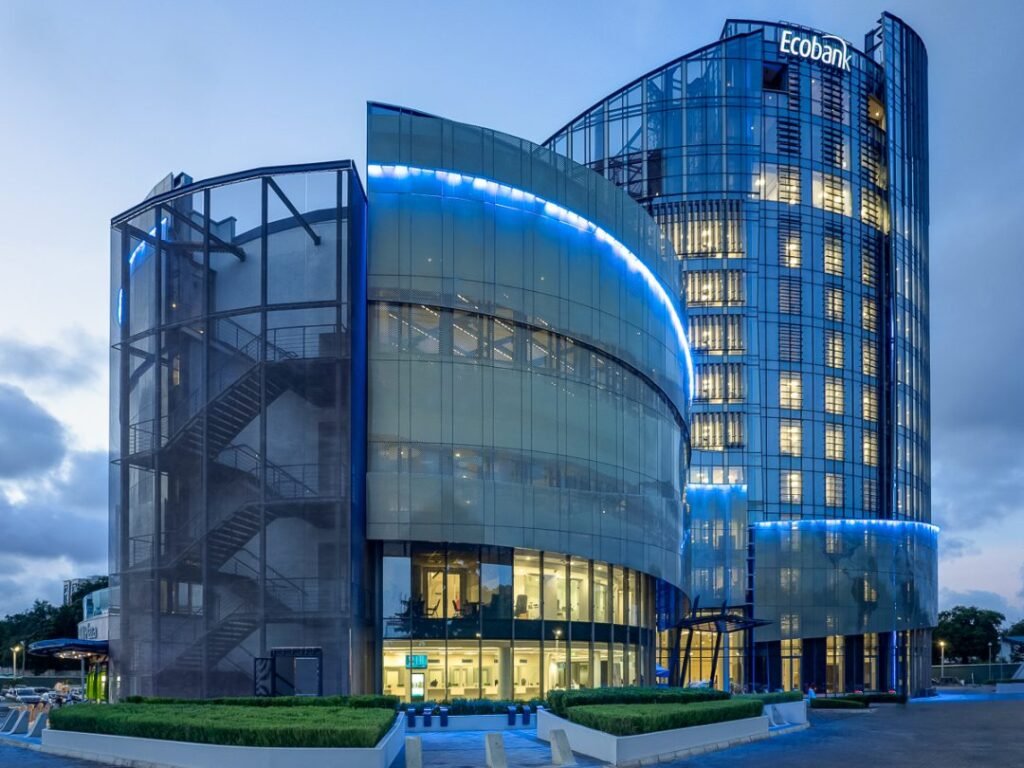
Ecobank Ghana Posts GH₵433.7 Million Profit in First Quarter of 2026

Ghana’s biggest bank in terms of assets,Ecobank Ghana PLC has recorded a profit after tax of GH₵433,701,000 for the first quarter of the 2026 financial year ending March 31,2026 – a 33.80% surge from the GH₵324,140,000 recorded in the same period in the 2025 financial year. In its later financial report for the first quarter of the 2026 financial year ending March 31,2026, it was revealed that the total operating expenses for the period fell sharply by GH₵249,810,000 from the GH₵ 671,137,000 recorded in the same period for the 2025 financial period with the biggest driver of expense for the period being personnel expenses which accounted for 47.24% of the total expenses. The total operating income for the period also decreased from the GH₵ 1,169,814,000 recorded in same period in 2025 to GH₵ 1,110,160,00 representing a 5.1%decline in income. The Bank’s statement of financial position also revealed a growth in assets by approximately GH₵4.95 billion, from GH₵45,842,665,000 to GH₵50,797,630,000. This was driven largely by by growth in loans and advances to customers which rose from GH₵10,316,580,000 to GH₵13,080,722,000. The total deposits from customers also expanded from GH₵32,521,985,000 to GH₵35,809,935,000. On liabilities and equity,Ecobank Ghana’s equity base grew nearly four times faster than its liabilities signalling a significantly stronger and more resilient balance sheet position compared to the prior year. The bank’s key prudential indicators also improved over the period. Capital Adequacy Ratio rose from 16.80% to 20.50%, comfortably above the regulatory minimum, while the liquidity ratio stood at 95.19% compared to 88.22% in the prior period. The non-performing loan ratio declined from 24.01% to 20.50% — suggesting meaningful progress in resolving problem loans The Common Equity Tier 1 ratio — a key measure of a bank’s core financial strength — improved from 14.04% to 18.50%, indicating a significantly stronger capital base.

Banking & Finance

Enterprise Group Records GH₵71.3 Million Profit in First Quarter of 2026 Despite Earnings Decline

Ghana’s leading diversified financial services group,Enterprise Group PLC has posted it’s financial report for the first quarter of 2026 ending 31 March 2026 with the Group recording a total profit of GH₵71,271,000, a 49.13% decline from the GH₵140,094,000 recorded in the same period in 2025. Despite the overall profit decline, Enterprise Group’s insurance service result more than doubled over the period, rising to GH₵123,904,000 from GH₵55,851,000 in 2025 driven largely a significant reduction in insurance service expenses, which fell from GH₵318,027,000 to GH₵235,702,000, with insurance revenue also falling marginally from GH₵441,245,000 to GH₵419,438,000. The drag on overall profitability came primarily from investment income, which fell from GH₵130,781,000 to GH₵96,699,000 at the group level representing a decline of about GH₵34 million. After deducting investment expenses of GH₵2,058,000, net investment income stood at GH₵94,641,000 compared to GH₵129,006,000 in the prior period. Operating expenses also rose sharply to GH₵92,550,000 from GH₵81,854,000, further pressuring the bottom line. Despite the profit decline, Enterprise Group’s balance sheet expanded considerably. Total group assets grew from GH₵4,310,647,000 to GH₵5,311,467,000 — an increase of approximately GH₵1 billion — driven largely by a surge in investment securities which rose from GH₵2,667,033,000 to GH₵3,444,984,000, reflecting the group’s continued strategy of growing its investment portfolio. Total equity also strengthened to GH₵1,896,174,000 from GH₵1,706,367,000, with equity attributable to owners of the parent rising to GH₵1,392,188,000 from GH₵1,251,645,000 — indicating sustained value creation for shareholders even in a period of lower earnings. On the liabilities side, insurance contract liabilities — the largest single liability — rose from GH₵1,815,224,000 to GH₵2,263,187,000, consistent with the group’s growing insurance book and expanded policy obligations.

Real Estate

Dr. Orleans-Lindsay Urges Government to Establish Real Estate Fund to Lower Housing Costs

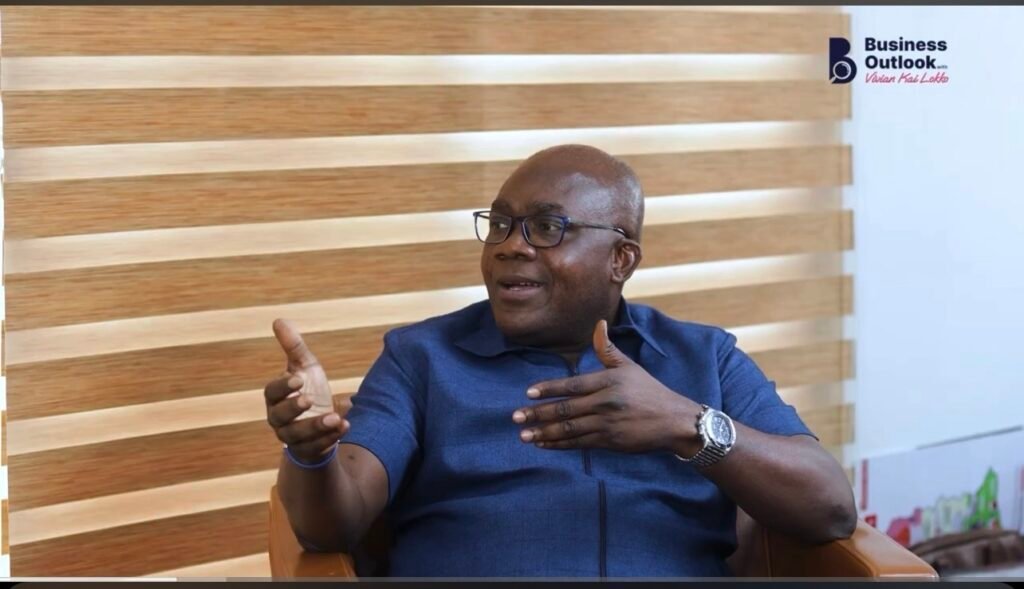
Executive Chairman of JL Holdings, Dr. James Orleans-Lindsay, has called for the establishment of a dedicated real estate development fund in Ghana to provide patient capital for property developers. Speaking to Business Outlook Africa, Dr. Orleans-Lindsay explained that commercial banks in the country are currently under-capitalised and therefore are unable to provide the kind of long-term financing that real estate development demands. He noted that the absence of patient capital remains one of the most significant drivers of high housing costs in Ghana, making homeownership increasingly out of reach for many Ghanaians. “We need to have a real estate fund that people can tap in. The banks, just like all other indigenous companies are not capitalized enough so i have what i term unavailability of patient capital you need money 10 to 15 years money you don’t have how can you tell a developer i’ll give you money for three years two years it won’t work so once you don’t have patient capital houses will continue to be expensive”Dr. Orleans-Lindsay stated Speaking about the cost of construction, Dr. Orleans-Lindsay urged the government to put in place deliberate measures that would incentivise real estate professionals to adopt local raw materials in their projects rather than using foreign materials . He argued that many of the local raw materials are comparable in quality to imported alternatives and that their wider adoption would go a long way in bringing down construction costs. “ Government needs to encourage developers, we need to encourage developers to use local raw materials. Do you know the bamboo has more, has an equivalent tensile trength like the iron road? The bamboo, yeah. So the Chinese use bamboo more for scaffolding, for a lot of things, the bamboo has a three-quarter tensile strength.So, it has to be encouraged. Cement is a great component of house construction,the other, the porcelain cement is there, we started to push it along the line, it is fissile, we have a lot of porcelain in the system that we could have, you know, encourage.” he added Beyond the real estate sector, Dr. Orleans-Lindsay made a broader call to the presidency to enforce the rule of law, asserting that a significant number of the country’s structural challenges would be resolved if the law were applied fully and without compromise. “Don’t forget, Ghana’s economy is $120 billion, Cote d’Ivoire is $112 billion,Sierra Leone is $6 or $7 billion, Liberia is $8 billion.We are the second biggest in West Africa, eighth biggest in Africa. It’s no joke, we are only 32 million people, 33 million people, it’s no joke.Something is going well for us. What is left, if you ask me personally, is organisation.We have some of the finest laws, we have everything going for us, it’s left with the application.The one thing that I would say to the affable president is, use the rule of law, finished. Rule of law will solve a lot of our problems.”he added He concluded by noting that the high cost of housing in Ghana cannot be divorced from the broader cost of living in Accra itself, describing the city’s overall expense as a foundational factor that feeds directly into property prices. Watch the full interview here: youtu.be/7qg7Sney-14

Banking & Finance

Bank of Ghana Records GH₵15.6 Billion Loss in 2025 Financial Report

The Bank of Ghana has posted a total loss of GH₵15,630,122,000 in its 2025 financial report, representing a significant deterioration from the GH₵9,487,462,000 loss recorded in the previous year. The entire loss was attributed to equity shareholders of the bank. Expenses Outpace Revenue According to the report, total operating expenses for the period stood at GH₵37,910,534,000 — exceeding the previous year’s figure by GH₵19,022,179,000. The surge was driven primarily by the cost of open market operations, which amounted to GH₵16,730,526,000, and a net loss on gold deals totalling GH₵9,052,774,000. Despite the loss, the bank recorded a notable improvement in operating revenue, which rose by GH₵12,879,519,000 to GH₵22,280,412,000 from GH₵9,400,893,000 in 2024. The increase was largely attributed to net gains from the sale of refined gold and interest income calculated using the effective interest method. Assets, Liabilities and Equity The bank’s total assets were valued at GH₵237,229,232,000 for the period, up from GH₵215,060,478,000 in 2024. Total liabilities also increased by GH₵57,121,129,000 from the GH₵276,384,482,000 recorded in the previous accounting period. Equity, however, saw a positive movement, rising to GH₵96,276,379,000 from GH₵61,324,004,000 the prior year. Currency in Circulation The report placed total currency in circulation — covering banknotes and coins held by the general public and financial institutions — at GH₵83,824,595,000, of which GH₵1,146,058,000 comprised coins and the remainder banknotes. Among the notable trends in currency usage was a sharp decline in the circulation of the GH₵2 note, which fell dramatically from GH₵51,558,000 to just GH₵499,000 within a single year — suggesting a near-total phase-out of the denomination from everyday use. Operational and Governance Gains Beyond its financial performance, the report also highlighted progress on the bank’s operational and institutional fronts. These included the completion of the Resource Efficiency Audit and Carbon Footprint Accounting Project (REACP), designed to establish baselines for energy and water usage as well as waste management across the bank’s facilities, and the calculation of its carbon footprint. The bank also developed an Environmental Management System (EMS) Framework to manage the environmental impacts arising from its operations.

Real Estate

Reinvest Profits, Avoid Bank Loans — GREDA President Tells Young Entrepreneurs

President of the Ghana Real Estate Developers Association (GREDA) and the  Executive Chairman of JL Holdings, Dr James Orleans-Lindsay, has urged young entrepreneurs and real estate professionals, to learn the act of reinvesting their profit back into their businesses to ensure sustainable business growth. Speaking to Business Outlook Africa, Dr James Orleans-Lindsay explained that reinvesting back into the helps entrants into the real estate sector to better thrive and grow.He added that young professionals in the real estate scene should delay gratification and focus on reinvesting their profits so as to ensure the company survives in the long term. “The story of the takeaway always that I tell people, reinvest in the business. I put everything back. If you don’t reinvest, you won’t have a thriving business, because interest rates are high.” He stated On financing, Dr. Orleans-Lindsay strongly advised professionals entering the real estate sector to avoid commercial bank loans at the start of their journey, warning that the accompanying interest rates can be overwhelming for new entrants. He instead recommended turning to family and friends for early-stage capital, noting that such arrangements typically carry no interest and offer more manageable repayment terms. “And so, you know, in real estate in Ghana, you don’t borrow to start a real estate business.You borrow to finish, because the money trickles in. You see, don’t borrow from a bank to start real estate, borrow from friends, family and the likes who normally would not put any interest on it. So those are some of the tenants in business, especially entrepreneurs, that people really don’t pay attention to.” He added Beyond Real Estate,the Executive Chairman of JL Holdings also urged young people to venture in agriculture, food production,food processing and agribusiness emphasizing that the biggest challenge Ghana is likely to face in the next 5 years will be food security. “The next five years to eight years, the challenge in West Africa, in Africa, will be food security.Those who want to listen should listen.Go into food, go into agriculture, go into storage, go into preservation. Why is it that 40 percent of the things that is produced in Ghana go waste? Who is putting money in temperate cold rooms?.” He stated Dr. Orleans-Lindsay ended by debunking the widely held notion that a lack of capital is an insurmountable barrier to starting a business, arguing that the claim of having “nothing to start with” is largely a myth, pointing out that the very resources people spend daily on food, clothing, and other basics represent untapped startup potential. According to him, aspiring entrepreneurs who look critically at their everyday spending will realise they already have something to work with and that with deliberate sacrifice and reallocation of those resources, the excuse of having nothing becomes difficult to sustain. Watch full interview here: https://youtu.be/7qg7Sney-14?si=CO_9sDZYF-k6nr9H

Real Estate

Ghana’s Construction Cost Inflation Eases to 2.2% in March — Eleventh Consecutive Monthly Decline

The Ghana Statistical Service has released the March 2026 edition of its Prime Building Cost Index(PBCI) and Inflation with year on year inflation down from 2.4% in February and 23.6% a year ago to 2.2% – eleven straight months of declining inflation. The report also revealed that even though prices are still rising in the short term generally, building cost increased slowly by 0.8%. Year on year labor inflation also slowed down to 1.6% in March 2026 having previously been 2.4% in February 2026. Materials inflation also reduced by 0.1% from the 2.4% recorded in February 2026 with plant/equipment inflation still remaining at the 2.6% also recorded in February 2026 pointing to materials and plant as the main sources of price pressure in construction. The data further revealed stark differences in price movement across individual construction inputs with Glazing recorded the sharpest increase, with inflation at 11.9%, while cement moved in the opposite direction, posting a deflation of 8.3%. The Prime Building Cost Index (PBCI) is a monthly measure by the Ghana Statistical Service (GSS) tracking construction cost changes for materials, labor, and equipment

Consumer

Ghana Water Company Attributes Tema, Accra East Supply Crisis to Power Instability, Weed Influx at Kpong Plant

The Management of the Ghana Water Company Ltd has moved to clarify the cause of water supply challenges currently affecting the Eastern part of Accra particularly Tema and its environs. In a statement released on Tuesday,April 28,2026,the utility company attributed the primary cause of the supply challenge to the the ongoing instability in power supply to the Kpong Water Treatment Plant and associated booster stations noting that the Plant supplies a significant portion of potable water to both the Tema and Accra East Regions and hence the challenge. Ghana Water Company Ltd also added that majority water of its operations are heavily dependent and reliant on reliable power supply and electricity hence a disruption and fluctuations in power supply directly affects its operations and its ability to supply water to the citizenry. The Utility Company further added that the occasional influx of aquatic weeds at the Kpong intake pointhas further compounded the situation,leading to unusually large volumes of weeds, increased clogging of intake screens, and restrictions in raw water abstraction for treatment. The Company then proceeded to offer its sincerest apologies to the populace adding that it is actively engaging its technical team to bring an end to challenge. It also added that it is actively engaging VRA, GRIDCo, ECG, and all relevant stakeholders to ensure the speedy repair, restoration, and stabilization of constant and consistent power supply to enable full water production and normal distribution.

Events

Advertising Association of Ghana Launches 18th Gong Gong Awards, Puts AI and Human Creativity at Centre

The Advertising Association of Ghana(AAG) has officially unveiled the 18th edition of its Gong Gong Festival of Creativity & Awards,an award ceremony that celebrates innovation, storytelling, and excellence in advertising. The launch soirée which took place on Friday,April 24,2006 at the conference room of Eni, brought together key voices shaping the advertising and creative industry. This year’s edition of the awards ceremony will be held under the theme “The Creative Convergence: Al and Human Craft in Advertising” and will explore the powerful intersection where human imagination meets artificial intelligence. Speaking at the launch, the President of the Advertising Association of Ghana who also serves as the CEO of Dentsu Ghana, Andrew Ackah urged members of the association and the general public to not just criticize but rather criticize and be willing to be part of the solution. “ And there are those who actually criticise and they show up, and they want to help,and they want to make sure that things work.But we need to grow, we need to be bigger,and this calls for all of us to be on board.So you can criticise, but please show up to work. You can share your opinion, you can disagree, but please be part of us.This is our space, this is our industry. And if you don’t pour into it, who else would?So please, it requires all of us to come on board, putting our bet, putting our energy.“he stated Also speaking at the event, Former World President and Chairman of the International Advertising Association (IAA), Joel Nettey gave an overview of the global advertising industry highlighting that the global ad spend is projected to surpass one trillion in the coming years. “Let me begin with an honest assessment of where we find ourselves today. Globally, the advertising industry is undergoing its most significant structural transformation since the advent of digital media. According to the Densu Global Ad Spend Forecast 2025, and I promise you the president didn’t ask me to say that, total global ad spend is projected to surpass one trillion in the coming years, driven largely by digital channels, programmatic buying, and personalised content delivery.” He stated Joel Nettey also urged African technologists and advertisers to make use of AI tools to develop solutions that solves African problems. “It’s the development of AI tools that understand and reflect our languages, our cultures and our contexts. The current generation of large AI models is predominantly trained on Western English language data. There is a significant space for African technologists and advertisers to develop AI applications that speak to African consumers in our own languages, our own idioms and our cultural frameworks.I call members of the Advertising Association of Ghana today, our technology partners and our regional counterparts to invest in this space. The agency or technology company that builds a genuinely African native AI advertising platform will have a significant first mover advantage in one of the world’s fastest growing consumer markets” he added The 18th edition of the Gong Gong Festival of Creativity & Awards which will take place on July 25th at the Labadi beach hotel with the advertising week celebrations also scheduled for July 13 to July 24. The 2026 edition will feature the delivery of 24 awards categorized under 7 different categories.