Business Outlook Africa

Author name: Business Outlook Africa

Banking & Finance

Ghana Stock Exchange Records Mixed Session as Financial Index Slips

Trading on the Ghana Stock Exchange on the closing day of last week(22nd May 2026 )ended on a mixed note as the benchmark GSE-Composite Index edged up while the Financial Stock Index retreated. Equity Market The GSE-Composite Index gained 0.20% to close at 14,518.96 points, up from 14,489.47 the previous day. Year-to-date, the index has gained an impressive 65.55%. The GSE-Financial Stock Index however declined by 0.76% to settle at 7,881.22 points, down from 7,941.28, though it remains 69.59% higher year-to-date. Trading activity slowed significantly with volume traded dropping 51.70% to 2,351,894 shares from 4,869,431 the previous session. Despite the lower volumes, value traded surged 151.60% to GHS 13,967,514.42 from GHS 5,551,489.69. Fixed Income Market Total fixed income market volume rose 10.99% to GHS 794,928,231 from GHS 716,243,249 the previous day. DDEP Bonds recorded the strongest growth, climbing 50.02% to 294,390,861. Treasury Bills however declined 3.38% to 495,695,951 while Corporate Bonds fell sharply by 39.58% to 4,244,900.

Opinion

The Draft NITA Bill Should be Shredded

One of Ghana’s veteran business journalists, now based in New York, reached out and asked if I have been following the NITA bill debate. Sadly, I hadn’t. Too much going on. He pressed, subtly but firmly, so I did. I appreciate the ambition of the current management at the Ministry. I am sure they want their names in neon above Black Star Square. But there is a serious katanomicodour blowing from the bill they are promoting. They would do well to assemble a group of truly independent tech folks from the ICT chamber, not just a bunch of their friends, listen hard, talk less, and take the advice. If they did, they would gut that manuscript and return to the drawing board. Here is why, based on my quick take on the bill. Bottom line The Ministry of Communications, Digital Technology, & Innovations (MOC) does not merely appear to be proposing to “license IT professionals.” The draft NITA Bill is much bigger. The plan is to convert NITA from a coordinating ICT agency into a broad digital-sector regulator with powers over ICT infrastructure, cloud, SaaS, digital platforms, public-sector technology procurement, professional certification, business premises, mergers, ownership, standards, audits, sanctions, and even the structure of government digital infrastructure. It is a wholesale revamp. No one would have quarrelled with the bill if it had focused on the big problems in the sector: public sector procurement indiscipline and a lack of incentives for R&D and support for local tech innovations. Ghana certainly needs improved standards and practices in digital assurance, interoperability, and accountability for critical systems (already captured in the “critical infrastructure” policy). The katanomics arise when instead of learning from national mistakes and proposing workable solutions, one jumps the process to venture into a whole range of areas where the country absolutely lack policy experience. 1. MOC’s Proposals The draft/consultation bill proposes as follows: A stronger NITA “Authority” The Bill would establish NITA as a regulatory authority for ICT and digital services, with objects including regulation, coordination, promotion, standards, licensing, certification, interoperability, digital innovation, and public-sector ICT personnel management. Mandatory licensing of ICT business activity Section 35 (the bombshell that has sparked so much controversy). It says no person may engage in business or a related activity in the ICT sector unless granted a licence. It expressly includes installation of ICT infrastructure, development or provision of ICT products and services, and activities requiring licensing or certification. Doing any of these without a license could get one jailed, or at best fined. Who is to be licensed? Section 36 lists categories such as public/commercial ICT infrastructure, cloud hosting, SaaS providers, government digital services partnerships, national digital platform operators, data centre operators, and any other category the Authority later determines. Citizen-only ownership qualification Section 37 says a licence applicant must be an adult Ghanaian citizen, or a company/partnership/association/body “wholly owned by a citizen.” Essentially, it would now be illegal to engage remote experts to work on a system deployed in Ghana. Essentially, half the whiz kids in Silicon Valley would have been ineligible to build their genius gizmos had America had a law like this. Certification of ICT professionals Section 46 says a person shall not be appointed as an ICT professional in a public or private institution unless certified by the Authority, and that NITA shall determine the criteria and procedure. (Funnily, this contradicts the definitions section where “certified professional” is confined to the public sector.) Closure, seizure, suspension and enforcement powers  NITA could close premises or facilities, seize ICT products/equipment, suspend business, revoke licences, and impose administrative penalties in specified circumstances. M&A and business-structure control  Section 49 appears to require NITA approval before sale, transfer, merger, amalgamation, or alteration of the nature of an ICT service provider’s business. There are also some less controversial proposals about setting up a special purpose national e-government vehicle, promoting transparency and interoperability, and preventing vendor lock-in. Let’s focus, however, on the areas of the Bill that have rankled so many ICT professionals and would clearly not have seen the light of the day if the Ministry bosses had done any serious sounding beyond their clique. 2. What do they mean by “ICT professional” anyway? “IT/ICT professional” is not like “nurse,” “electrician,” “lawyer,” “chartered accountant,” or “professional engineer.” Those occupations usually have a more defined body of practice, recognised training path, public-risk rationale, and a reserved act or protected title. “ICT” and “IT” are very loose umbrella terms. International occupational systems do not treat ICT as one unified profession. The International Standard Classification of Occupations classifies jobs by skill level and specialisation, not by one vague “IT professional” identity. Eurostat and O*NET both list many distinct computer and mathematical occupations within that bracket: software developers, network architects, cybersecurity analysts, database administrators, web developers, data scientists, support specialists, QA testers, IT project managers, and many more. Is the government of Ghana going to insist on licensing every single person in Ghana who builds a website, uses Microsoft Power BI to create some charts for a company, or deploys mermaid to craft some flyers for an event organiser? The whole idea is totally ridiculous. A more sensible approach would be to pry open the ICT chest open and only target the most critical functions. Example: Critical Public Digital Infrastructure management (with a clear and rigorous process properly defined as to how any system gets to be elevated to that status to begin with); Financial services cybersecurity auditing; Tier II & III datacenter operations; Public hospital digital health network administration; Public ERP procurement readiness certtification. The bill could then have said that for those functions, licensed professionals are required. The licensing regime would then have been constructed in an industry-led fashion much like we have in leading accounting jurisdictions. Frankly, the civil service is the last place to situate licensing for a dynamic sector like ICT. More importantly, under no circumstances should any government aspire to poke its long nose into stuff like “writing code,” “installing a router,”

Special Features

Sokoban Wood Village Carpentry Chairman Warns Galamsey Could Force Ghana to Import Timber

Chairman of the Sokoban Wood Village Carpenters Association, Daniel K. Dagodzo is sounding the alarm over Ghana’s galamsey menace , warning that if left unchecked, the country could one day be forced to import the very wood growing in its own forests. Speaking exclusively to Business Outlook Africa, Dagodzo argued that the dire consequences of galamsey extend far beyond destroyed water bodies, warning that the rate at which Ghana’s forests and trees are being decimated could one day force the country to import timber despite having the land to produce it. “ They’ve claimed most of these trees and it benefits to us all .If care is not taken, it is the exact same thing that will have that we will have our own land and still be importing timber/wood. So the govt should do well to avoid this.’’ He stated Daniel K. Dagodzo also called on government to direct sawmills to retain more timber locally, warning that reckless exports are leaving local carpenters with no option but to work with rejected and low-quality wood. He added that the more timber is exported, the less is available for local craftsmen, crippling both productivity and the quality of output at the village. “ You rarely get the quality ones. We even compete to get them. We are not saying they shouldn’t export the wood but we are telling them that when they do, they should retain more in the country, so that we can use it to produce quality work for them.’’ he stated On the increasing rate of deforestation, Dagodzo urged government to go a step further by designating a national tree-planting day to mobilize all Ghanaians in tackling the crisis head-on. He also stated that the association is open to collaborating with the Forestry Commission to plant more trees, warning that the growing shortage of wood is threatening the survival of the carpentry trade. “ The Government in particular should allow us to collaborate with the Forestry Commission to plant more trees or better still the Forestry Commission should set aside a date for all Ghanaians and the whole Ghana to plant trees so as to deal with wood shortage.’’ He added

Special Features

Wood vs Metal: Sokoban Carpenters Push Back Against Government’s School Furniture Switch

Chairman of the Sokoban Wood Village Carpenters Association, Daniel K. Dagodzo is calling on government to consider revising its decision to switch to the use of metallic furniture in our schools from the use of wooden made furniture in our schools. Speaking exclusively to Business Outlook Africa on the challenges the association faces in its day to day operations, Dagodzo argued that the government’s decision to switch has not only served a severe blow to their trade but has also stripped the village of its primary purpose. “But recently what’s making our work go down, is that the government has taken some steps that although its good, in some usage it’s not helping us the carpenters and our work. The one I can point out clearly is our school furniture. Of late we have realized the govt uses metals for making school furniture. Some time ago they did it, used the same approach but it didn’t help. Because of their decision to resort to metal tables, chairs and furniture, we don’t really get to see/fully utilize this place.’’he stated He added that the use of wooden furniture in our schools is not only good for durability purposes but also good because compared the the metal furniture, it’s a much safer options for particularly school use and can serve multiple purposes. “The students themselves complained, when we also went to some schools ourselves, we realized all the furniture made with metals that the govt got for them were all spoilt. I went to the University Primary and saw many there. When we use the wooden ones it helps the students and it doesn’t injure them or put their health at risk. We all know how students can behave sometimes. One time I visited a certain school, and one student was injured because his brother had pushed him and he landed on the metal and got hurt badly but I believe if it was a wooden furniture, because of how its shaped, he would not get hurt. The metal also has its use but it shouldn’t be used for school furniture. The wood has many purposes, if its used for school furniture and it spoils, it can even be used as firewood in the kitchen to cook for the students. But you can’t say same for metals.” he added On the rising rate of unemployment in the country, Dagodzo believes Ghana’s education system must shift from certificates to competence calling for a practical and skills-based curriculum to be introduced from an early age. “Exactly, in our time we used to have special time set aside for practical education and skill based learning. Some did carpentry, some were taken to the sea, some to the forest etc to observe and learn. This was all part of our education way back. So they should reintroduce this and set aside a day for all these things so that we can better equip our students, so that if even after school they are not employed by government, they can do something for themselves. If you look at today, after school most people don’t know what they are doing but if we introduce things like this for them at an early age. They will from a younger age start creating things by themselves.” He explained This follows President Mahama’s directive issued on June 5, 2025, ordering a switch from wooden to plastic or metal furniture in public schools. The policy, though not yet fully implemented, is anchored on conservation with the Presidency arguing that reducing commercial demand for timber will help curb the indiscriminate felling of trees.

Special Features

ARE ONION TRADERS BEING PRICED OUT BY GHANA’S BANKS?

  At Kumasi’s Anloga Onion Market, traders say 22–33% interest on business loans is not financing — it is a death sentence As Ghana debates high interest rates at the national level, traders at one of the country’s busiest onion markets say the reality on the ground is far more brutal. At Anloga Onion Market in Kumasi, small importers say commercial bank loans look attractive on paper but are suffocating their businesses in practice — and many have simply stopped trying. Hamidu Abdullahi, an advisor at the market, puts it plainly. “When we go to the banks, the interest they charge is too much for us so we don’t usually want to use their services,” he said. “When you go for a loan, the interest they charge might overwhelm you and leave you in debt — and the sad thing is, they will end up harassing your wife or family members.” The Numbers Don’t Add Up Commercial banks in Ghana charge between 22% and 33% on business loans. For onion importers operating on thin margins, traders say those rates are already difficult to absorb. But the deeper frustration is not just the cost , it is the timing. Onion importers travel supply routes that can stretch up to a month. By the time they return, offload their stock, and collect payment from retailers, their loan repayment window has already closed. “We also don’t like bank loans because of the duration — how lengthy the journey is,” Abdullahi said. “At times you’ll go for a loan and by the time you undertake the journey and come back, the repayment is already due so it doesn’t help.” He is asking banks to extend repayment periods or allow instalments. “The journey is not a small one. It can take up to a month and by the time you’re back, you now have to give the goods to traders for them to sell and give you your money, then you go and repay. It is not an easy one.” A National Conversation, A Local Reality The frustration at Anloga sits within a wider national debate. The Concerned Farmers Association of Ghana has previously pushed for interest rates as low as 2% for farmers. President John Mahama has called for single-digit lending rates to boost production. Under the 24-Hour Economy agenda, government plans to introduce SME loans ranging from 8% to 12%, in collaboration with the Bank of Ghana and the Development Bank Ghana. But at Anloga, traders say they are yet to feel any of that impact. Instead, many survive on personal savings, informal credit, and trust-based arrangements with suppliers — a fragile system that leaves little room for error and no cushion when a shipment is delayed or prices fall. Survival, Not Expansion For these traders, the ask is not complicated. It is affordable rates, flexible repayment terms, and credit that understands how their trade actually works. Because at 30% interest with a rigid repayment window, expansion becomes a luxury. Survival becomes the only goal.

Economy

Bank of Ghana Holds Policy Rate at 14%, Sets Uniform Cash Reserve Ratio at 20%

The Bank of Ghana has left the policy rate unchanged at 14%, and raised the Cash Reserve Ratio (CRR) to 20%. The Monetary Policy Committee (MPC) of the Bank of Ghana has maintained the monetary policy rate at 14.0%, citing a broadly balanced risk profile for inflation and the economy. The move, announced after the committee’s 130th MPC meeting , reflects the central bank’s cautious yet progressive path in managing the monetary policy while the world continues to grapple with uncertainties. The committee highlighted potential spill over impacts of the prevailing geopolitical tensions as one of the concerns of the domestic economy. In addition to the rate hold, the committee reported a major change in the structure of the dynamic cash reserve ratio, which would be set at a uniform rate of 20% with currency maintained in the domestic currency. The new reserve requirement will come into effect on June 4, 2026. The next meeting of the MPC is scheduled for 20–22 July 2026, with the policy decision expected to be made on 22 July 2026.

Real Estate

Rent Control freezes proposed increases in private hostel fees for 2026/2027 academic year

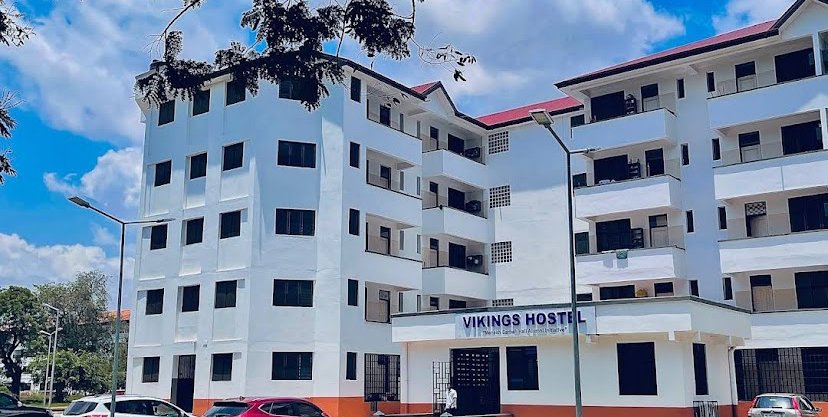
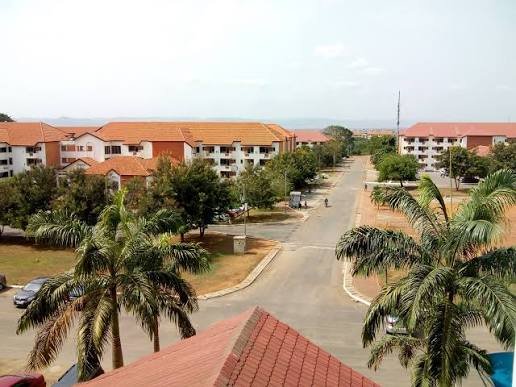
The Office of the Rent Commissioner has directed a temporary suspension of all proposed increases in private student hostel fees for the 2026/2027 academic year, citing growing public concern over rising accommodation costs. In a press statement issued on Tuesday, May 19, 2026, the Rent Control Department acknowledged persistent complaints from students, parents, and guardians about the continuous hikes in hostel fees, particularly within and around tertiary institutions across the country, which necessitated the directive. “In view of the above, the Office of the Rent Commissioner directs all private hostel owners, facility managers, operators, and stakeholders within the student accommodation sector to place a temporary hold on all intended or proposed increments in hostel accommodation fees for the 2026/2027 academic year until further notice,” the statement said. As part of the intervention, the Rent Control Department has also invited stakeholders, including private hostel operators, student representative bodies, and tertiary institution authorities, to a stakeholder engagement meeting. The meeting is expected to address concerns surrounding hostel fee increments and explore sustainable and lawful solutions to pricing challenges. Key issues to be discussed include: • concerns relating to rising hostel fees; • compliance with existing rent regulations and consumer protection provisions; • practical strategies to ensure affordability and fairness; and • measures to promote transparency and accountability in the sector. The Office of the Rent Commissioner emphasised its commitment to ensuring fairness, transparency, and responsible regulation within Ghana’s rental and accommodation sector. All stakeholders have been urged to cooperate fully with the directive and actively participate in the engagement process to help safeguard the interests of students and the broader educational community. The move is widely seen as a relief for many students and families who have struggled with the increasing cost of accommodation in recent years, especially amid broader economic pressures. Authorities say further updates will be communicated following consultations with stakeholders. Source: univers.ug.edu.gh

Banking & Finance

Xorse Augustine Godzi Takes Over From Mansa Nettey As CEO/MD of Standard Chartered Bank Ghana PLC

Standard Chartered Bank Ghana PLC has appointed Xorse Augustine Godzi as its Chief Executive Officer/Managing Director effective June 11,2026 . Replacing Mansa Nettey who served in the same portfolio for the past 9 years, Xorse Augustine Godzi brings onboard 20 years experience in the corporate and insututional banking sector across Europe and Africa . Prior to his appointment, Xorse Augustine Godzi was the Head of Ghana Corporates, and also an Executive Director on the Board of Standard Chartered Bank Ghana PLC. He is a fellow of the Association of Chartered Certified Accountants (ACCA) and an alumna of the University of Ghana where he obtained a BSc. Administration (Accounting) degree. Highlighting his proven track record, the Bank noted that his expertise uniquely positions him to spearhead the company’s future success. “ Xorse has in-depth knowledge of key industry sectors in Africa spanning across mining, energy, manufacturing, agriculture, financial services, real estate amongst others. He is experienced in providing sustainable solutions to clients and managing client relationships across multinational regional, local, and public sector client segments.” Standard Chartered Bank Ghana PLC is one of Ghana’s oldest and largest financial institutions. Founded in 1896, it operates as a major subsidiary of the global Standard Chartered Group.

Consumer

Water Supply Disruption Hits Western Accra: GWCL Moves to Address The Challenge

The Management of the Ghana Water Company Limited(GWCL) has announced a temporary disruption in its water supply due to some parts of western Accra due to some technical challenges affecting the operations of its Water Treatment Plant. In a statement released on Wednesday, May 14,2026, the utility company added that as a result of the challenge members in the Dansoman, Mamprobi, Mataheko, Laterbiokorshie, Korle-bu, La Paz, MacCarthy Hill, Gbawe, Mallam, Tesano, Darkuman, North Kaneshie, Dome, Achimota, Anyaa, Ablekuma and surrounding communities may experience erratic water supply and low water pressure. GWCL however assured the affected communities that its engineers and technical team are actively working to bring an end to the challenge as soon as possible. “Management wishes to assure the public that engineers and technical teams of Ghana Water Ltd are working assiduously to rectify the challenges and restore normal water supply as early as practicable.” The statement said It then apologized to affected customers for the inconveniences caused while’s also urging them to store water anytime there is flow in their communities to help manage the temporal disruption.

Real Estate

GHL Demands Apology from Acting Rent Commissioner Over Pentagon Hostel Comments

The Ghana Hostels Limited (GHL) is demanding an immediate apology from Acting Rent Commissioner Fredrick Opoku over comments he made regarding rent charges its  Pentagon Hostel on the University of Ghana campus, while strongly defending its pricing structure. In a statement released earlier today , management of GHL said the comments by the Acting Rent Commissioner were made without adequate due diligence and had created a misleading impression about the hostel’s operations. “We wish to state that the comments made by the Acting Rent Commissioner were not based on adequate due diligence, which has since created a misleading impression about the operations of the facility.” The statement read According to the company, although the facility is a Social Security and National Insurance Trust (SSNIT) investment, the day-to-day management, pricing structures, and tenancy arrangements are independently handled by Ghana Hostels Limited GHL also provided a breakdown of its accommodation charges, explaining that standard four-in-a-room at the old Pentagon Hostel cost GH¢7,392 per academic year per student, while rooms at the new Pentagon cost GH¢8,876 per academic year translating into approximately GH¢821.33 and GH¢986.22 per month, respectively, inclusive of water, electricity quota, and GH¢100 in Junior Common Room (JCR) dues. The Company also clarified that the company currently doesn’t charge GH¢ 28000 for any of its facilities as it’s being put out there. The management insisted that the rates remain competitive and comparatively lower than those charged by several private hostels around the University of Ghana enclave. The management then reiterated its commitment towards transparency, accountability, and constructive engagement with all stakeholders on issues of national interest.