Business Outlook Africa

Author name: Business Outlook Africa

Africa

IMF’s Tobias Adrian to Step Down as Financial Counsellor

The Managing Director of the International Monetary Fund, Ms. Kristalina Georgieva, has announced that departure of the Financial Counsellor and Director of the IMF’s Monetary and Capital Markets Department,Tobias Adrian from the Fund effective August 31, 2026. In a press release dated June 8,2026 ,Ms. Kristalina Georgieva explained that the man who led the Fund under some of its most turbulent periods in recent global economic history has decided to step down from his role after 9 years. “Since taking on this role in 2017, Tobias has provided exceptional intellectual leadership at a time of extraordinary global uncertainty.From the COVID-19 pandemic and its aftermath to the surge in global inflation, tighter financial conditions, and rising geo-economic fragmentation, he has ensured that the Fund’s work on macro-financial issues remained rigorous, timely, and highly relevant for our membership.”Ms. Georgieva said Under his tenure,the German-U.S. dual national, led the Fund’s work on financial sector surveillance, monetary and macroprudential policy, digital finance, capital markets, and financial stability. Under his watch also, the Monetary and Capital Markets Department strengthened its support to the Fund’s membership, delivering policy advice, surveillance, program support, and capacity development across more than 100 countries annually. Tobias Adrian also elevated the Global Financial Stability Report as a leading voice on macro-financial risks and played a central role in advancing the IMF’s Integrated Policy Framework, a framework aimed at helping countries navigate fluctuations in international capital flows. Beyond traditional financial stability work, Mr. Adrian played a defining role in shaping the IMF’s approach to digital money and financial innovation, helping position the institution at the forefront of global policy discussions in a rapidly evolving space. Prior to joining the IMF, Mr. Adrian held several senior positions at the Federal Reserve Bank of New York. He has published extensively and taught at leading academic institutions including MIT, Princeton University, and New York University.

News

SEC Eyes University Partnerships to Drive Virtual Asset Innovation

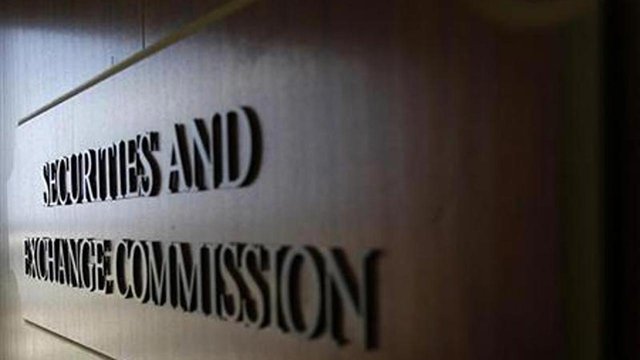
The Deputy Director General, Operations at the Securities and Exchange Commission Ghana, Mr. Mensah Thompson has revealed that the Commission is currently in talks with some tertiary institutions across the country to establish incubation hubs and training centres on campuses, aimed at equipping students with the knowledge and skills needed to understand, navigate, and fully benefit from virtual assets. Speaking with Business Outlook Africa,on the back of the passage of the passage of the virtual assets bill and the introduction of a regulatory sandbox,The Deputy Director General, explained that the move is part of broader efforts aimed at positioning the youth at the centre of Ghana’s emerging virtual assets ecosystem. “Like I said, I mean, you just have to take interest in it and then feel free to dream, innovate. Once you have the idea, come to the SEC.The SEC is going to, with time, have partnerships with other educational institutions across the country to set up incubation hubs. I think we received a proposal from, I think, was it the KNUST or a business that they want to partner with the SEC to set up incubation hubs for virtual assets on campus to allow students to be able to freely go and innovate. We are open to some of these partnerships and we are going to make sure that, I mean, there’s proper knowledge transfer, there’s proper local content participation and proper systems in place to ensure that Ghanaians get the full benefits of virtual assets.” He stated Mr. Mensah Thompson further outlined how the framework opens doors across multiple sectors explaining it will not only help entrepreneurs and business owners with simplified cross-border payments but will also help start ups and tech developers with raising capital and bringing their ideas into “full market scaling”. “ Your payments are always going to be made easier.Your imports, exports, payments, aggregation are always going to be easier.For startups, there’s an opportunity to raise capital on virtual asset platforms to invest in your business. The innovation hubs and sandboxes are for you to dream, innovate and incubate your ideas and bring them into full market scaling.” he added He then urged investors to take advantage of the opportunities created by the country’s new virtual assets regulatory framework stressing that the new regulatory framework has fundamentally changed the landscape. “Investors, if they’ve been telling, if you’re hearing that oh virtual assets is fraud, it’s scam and what have you, I say please rethink your position on virtual assets. When virtual asset firms come to you for investment, now is the time to consider and fully make the necessary investment in them because you do not know.” He said The Virtual Asset Service Providers Act, 2025 (Act 1154) was passed into law by Parliament on December 19, 2025, and subsequently received presidential assent on December 30, 2025. This landmark legislation establishes a comprehensive legal and regulatory framework to supervise, license, and register cryptocurrency and virtual asset operations in the country.

Banking & Finance

SEC Boss Takes Aim at International Payment Platforms Over “Rip-Off” Charges on Ghanaian Exporters

The Deputy Director General, Operations at the Securities and Exchange Commission Ghana, Mr. Mensah Thompson has taken direct aim at international payment platforms, describing the fees charged to Ghanaian exporters as a complete rip-off and positioning Ghana’s new virtual assets framework as the remedy. Speaking with Business Outlook Africa on the back of the passage of the Virtual Assets Bill, Mr. Mensah Thompson did not mince words in his assessment of how global payment intermediaries have long shortchanged African exporters. “My biggest challenge which I’ve not spoken about enough is how international payment platforms rip Ghana, Ghanaians off — or Africans off — in terms of payments. You go to your farm as a cocoa farmer, you grow your cocoa or your cashew or whatever commodity. Mastercard was nowhere to be found, but you go sell, you export your cocoa to the European market, and before you receive your money, some middleman called Mastercard or Visa or SWIFT is taking about 5% of your money for doing absolutely nothing — just to help you get your money for your export,” he stated. Mr. Mensah Thompson outlined what he sees as the most enduring impact of the new framework which is bringing down the cost of moving money across borders for both exporters and importers. “The biggest legacy will be that Ghanaian exporters will be able to aggregate their export proceeds for a fraction of the cost. And Ghanaian importers will be able to pay for their imports for a fraction of the cost, with convenience, access and efficiency,” he said. He added that the ripple effects of lower transaction costs would extend well beyond payments, driving greater connectivity, spawning new industries, and ultimately building wealth across Ghana’s economy. “With speed and efficiency comes more connectivity and more industries that will flow from it. The derivative aspects of it are going to come — it’s going to create further opportunities and a whole set of value chain that is going to build wealth for our people,” he added. The Deputy Director General then concluded by adding that,President Mahama’s assent to the Virtual Asset Bill during December last year will go down as one of his greatest legacies in some years to come. “President John Mahama — it will be one of his greatest legacies that he signed the Virtual Asset Service Providers Act into law. In fact, he signed it on the 24th of December 2025, a day before Christmas, where he should be relaxing with his family. He was in the office working. He signed the Virtual Asset Service Providers Act into law. He’s given us all the support that we need to do this. And that will be a very big contribution to his legacy,” he stated. The Virtual Asset Service Providers Act, 2025 (Act 1154) was passed into law by Parliament on December 19, 2025, and received presidential assent on December 30, 2025. The landmark legislation establishes a comprehensive legal and regulatory framework to supervise, license, and register cryptocurrency and virtual asset operations in the country.  

Business

The Body Shop to Open Second West African Store in Ghana

Global beauty retailer, The Body Shop, is set to open its second West African store in Ghana, deepening a long-standing relationship between Ghana and UK. A relationship which is rooted in the sourcing of shea butter from Northern Ghana for its operations. This development was announced by the Ghana High Commission in the United Kingdom, which described the move as a milestone moment in Ghana’s growing role in the global beauty supply chain. According to the High Commission, the expansion follows strategic collaboration with the British High Commission and the UK Trade Envoy to Ghana, through which efforts were made to encourage greater value addition by promoting the establishment of a Body Shop processing plant in Ghana. “This is more than investment; it is shared growth, sustainable trade, and partnership in action,” the High Commission stated in her post . The initiative is expected to bring production closer to the source, create jobs, and strengthen Ghana’s position in the global beauty industry. Ghana has long been a key supplier of shea butter to The Body Shop, with the ingredient sourced primarily from communities in Northern Ghana. The establishment of a local processing plant signals a shift from raw material export toward value-added production on Ghanaian soil.

Economy

PCI Is Ghana’s Credibility Signal To The World — Finance Minister

Minister of Finance Dr. Cassiel Ato Forson has indicated that Ghana’s decision to transition to a Policy Coordination Instrument (PCI) with the IMF after successfully completing its Extended Credit Facility (ECF) bailout programme is the need to signal to investors that the stabilisation is permanent. Speaking in an interview with Bloomberg, the Finance Minister explained that the transition to the PCI is to earn the stamp of credibility that reassures the global investor community that Ghana’s economic gains are sustainable and that the country is open for business. “Some investors are sceptical, we need to remove that concern, and in doing so, we need to walk them through a path of credibility, and we believe that though we have successfully recovered the economy and stabilised it, there’s the need to send a signal that this stabilisation is here to stay, and we’re going to sustain that.”He stated On the reforms, Dr. Cassiel Ato Forson, disclosed that government is pursuing a reform agenda for SOEs in collaboration with the IMF, drawing on international best practices and country perspectives to ensure the reforms are comprehensive and effective to address the problem of SOEs adding approximately 2.5% of GDP in additional debt to the country’s public debt burden . “For example, the state-owned enterprises. We have identified the fact that SOEs in particular have accounted for adding about 2.5% of GDP, additional debt, to the countries that pay.  And so what do we do to tackle this SOEs debt accumulation? And the fact that stock flow adjustment has been the major driver of public debt. First, we need to reform these SOEs, and some of the reforms that we need to go through, we need to do it together with the fund, bring the country perspective, other countries and what we can do together to reform the SOEs.” he added The Finance Minister also flagged the energy sector as a critical area for reform, revealing that government currently spends an average of $1.5 billion to $2 billion annually to support the sector. Dr. Forson stressed the need to eliminate or significantly reduce this expenditure, arguing that redirecting those funds to other critical sectors of the economy would go a long way in accelerating Ghana’s development agenda. “The energy sector today, the government of Ghana spent an average $1.5 billion, close to $2 billion USD to support the energy sector. We need to reform that. We need to make sure that going into the future, we can remove that $2 billion USD, and if you can reduce it to the barest minimum, that amount of money can also go a long way to other critical sectors of the economy.” He disclosed His comments follows Ghana’s official exit from the IMF following its conclusion of its $3 billion ECF program with the Fund hence transitioning to a non-financial PCI to lock in economic reforms without taking on new loans.      

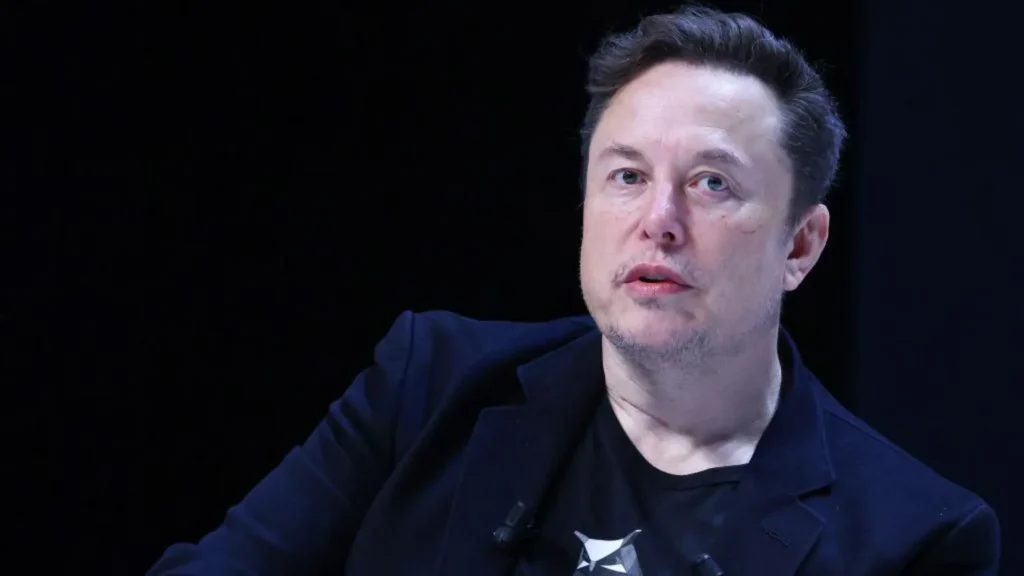
Deputy Director General, Operations at the Securities and Exchange Commission Ghana, Mr. Mensah Thompson
Banking & Finance

Virtual Assets Could Produce Ghana’s Next Billionaires Under 30 – SEC Deputy Director General

The Deputy Director General, Operations at the Securities and Exchange Commission Ghana, Mr. Mensah Thompson has stated that the passage of the bill and introduction by f the virtual assets regulatory sand box aims at unlocking the enormous wealth creation potential of virtual assets for Ghanaians particularly the youth.   Speaking exclusively with Business Outlook Africa, Mr. Mensah Thompson expressed confidence that the new virtual asset regulatory framework has the potential to produce a generation of young Ghanaian millionaires and billionaires that the country is yet to see.   “I said that for several years, we’ve seen a lot of millionaires and billionaires in this country. And we are yet to see millionaires and billionaires under 30 in this country.And I said that virtual asset has the potential to create the next billionaires of this country under the age of even 30. Because of how, you know, enormous this is, and its potential to create wealth.” He stated   Looking ahead, Mr. Mensah Thompson further projected that virtual assets will sit at the centre of Ghana’s economic and financial landscape over the next decade cutting across every sector of the country’s development agenda.   ”It’s going to be the anchor of Ghana’s economy and financial system. It’s going to be at the centre of everything we do.Yes. From health to education to infrastructure, everything is going to be at the centre of everything that we do.“ He added   The Deputy Director General further expressed the Commission’s hope that the new framework will serve as a turning point for Ghanaians who have long been excluded from the formal financial system and struggled to access capital hence deepening financial inclusion.   ”So, it’s really an exciting time for us and we are really looking forward to making sure that our young people, who for a very long time have been left out in terms of financial inclusion, access to capital, will be able to now be given the tools to now create work for themselves.” He added   The Virtual Asset Service Providers Act, 2025 (Act 1154) was passed into law by Parliament on December 19, 2025, and subsequently received presidential assent on December 30, 2025. This landmark legislation establishes a comprehensive legal and regulatory framework to supervise, license, and register cryptocurrency and virtual asset operations in the country.  

Economy

Finance Minister Sees Inflation Rising But Sets 5% As The Ceiling For 2026

Minister of Finance Dr. Cassiel Ato Forson has indicated that the ongoing Middle East tensions are unlikely to pose a significant threat to Ghana’s economy, with any impact expected to be limited largely to inflationary pressure. Speaking in an interview with Bloomberg, the Finance Minister acknowledged that he foresees some upward movement in inflation as a result of the tensions but expressed confidence that the figure will not exceed 5% by the end of the year. “Where I think we may see a bit of pressure will be on the back of inflation. Yes, it will rise and we expect that inflation may inch up. Today it’s about 3.4. I still think we’ll be better off and I don’t think the country’s inflation will exceed 5% by the end of the year.” He stated Dr. Cassiel Ato Forson attributed Ghana’s resilience to the strong foreign exchange reserves the country has built up, and the fact that petroleum products are no longer subsidised hence reflecting market realities rather than government support. “We don’t have subsidies at all on petroleum product and so there’s not much of an impact on the national budget. But the good news is that we had built some significant reserves and so the reserves position is the country is able to support the purchases of this product through United State dollar by making the central market making available United State dollars and our gold production is also going up and gold prices is also very high and so we have seen trade balance inching up to about double-digit ten percent plus this year and so Ghana is in a comfortable position to be able to respond to those shocks.” He added The Minister further revealed that Ghana has never been better prepared for an economic shock than now adding that the nation is in a very strong position to deal with economic shocks like this. “And let me say that we’ve never been ready to withstand any form of shock than today. Today, the country is in a very healthy position to be able to withstand external shocks of this nature.” He further stated

News

SIC Insurance Posts GHS 84 Million Profit In 2025 Financial Year

SIC Insurance PLC has posted a GHS 84.05 million Profit for the financial year ended December 31, 2025, reflecting a significant improvement in the insurer’s financial performance. The Financial Statement also revealed that the Group recorded Insurance Revenue of GHS 598.19 million in 2025, up from the GHS 559.48 million recorded in 2024. After accounting for Insurance Service Expenses of GHS 156.81 million, the Insurance Service Result before reinsurance also stood at GHS 441.38 million. It also added that the Investment Income came in at GHS 46.77 million while the Net Insurance and Investment Result stood at GHS 287.64 million, compared to GHS 277.01 million recorded in 2024. Profit Before Tax for the Group also stood at GHS 117.74 million. After income tax of GHS 27.74 million and a Growth and Sustainability Levy of GHS 5.95 million, the Group recorded a Profit for the Year of GHS 84.05 million, compared to GHS 53.41 million in 2024, a notable year-on-year improvement. The Balance Sheet of the Insurance Company also revealed that its Total Assets grew to GHS 1.27 billion from the GHS 1.12 billion recorded in the year 2024.Total Liabilities also stood at at GHS 479.34 million compared to GHS 445.35 million in the prior year. SIC Insurance PLC is one of Ghana’s oldest and largest non-life insurance companies, holding a dominant share of the country’s general insurance market.

Agriculture

Deputy Finance Minister Says Lack Of Transformational Capital Is Holding Ghana’s Rice Sector Back

The Deputy Minister for Finance in Ghana,Thomas Nyarko Ampem, has stated that Ghana’s problem when it comes to domestic rice production and importation is due to a lack of sufficient transformational capital . Speaking during the first day of the West African Rice Investment Roundtable here in Accra, the Deputy Minister explained that abundance in resources in the region is proof that the region’s inability to be self-sufficient in rice production has nothing to do with a shortage of natural resources. “We know that West Africa is not short of potential in rice production. We have the land, we have the water resources, and we have the farmers. What we have lacked for far too long is sufficient transformational capital capable of unlocking this potential at scale.” He stated The Transformational capital, Thomas Nyarko Ampem argued, must be patient enough to fund irrigation rather than just seasonal inputs, risk-tolerant enough to invest in storage, milling, logistics and processing rather than just commodity trading, and strategic enough to see a unified West African rice economy rather than fragmented national markets separated by borders. “Clearly, transformational capital means more than money. It means patient capital that funds irrigation, not just seasonal inputs.It means risk-tolerant capital that invests in storage, milling, logistics, and processing, not just commodity trading.It means strategic regional capital that sees a West African rice economy, not fragmented national markets separated by borders. That is the scale of ambition this movement demands.” He added Touching on the longstanding West African Jollof debate, the Deputy Minister advocated for the the conversation to shift from which country’s Jollof tastes better to which country produces enough rice to feed its people. “Therefore, the real jollof competition before us is not whose rice tastes better, even though we know Ghana’s is the best. It is whether West Africa can finally produce enough rice to feed itself competitively.” He stated The West Africa Rice Investment Roundtable is a high-level event organized by the ECOWAS Commission in collaboration with the World Bank Group and the African Development Bank (AfDB) with the primary objective of tackling the region’s $3.5 billion to $4 billion annual rice import bill.    

Agriculture

Ghana Moves to Protect Farmers and Halt Smuggling Amid $320M Annual Rice Import Bill

The Minister for Food and Agriculture, Eric Opoku has revealed plans to establish an inter-ministerial task force to help combat the smuggling of rice out of the country. Speaking at the Day 1, of the West African Rice Investment Roundtable, the Minister who also doubles as the Member of Parliament for Asunafo South Constituency explained that the move aims at helping Ghanaian rice farmers who often are placed at a severe economic disadvantage usually because they are being forced to compete with unfairly low prices. “We are establishing an inter-ministerial task force to intensify surveillance and enforcement against rice smuggling through unauthorised border routes which continues to undercut our farmers.” He stated Eric Opoku then added that the sector has currently open to private investment and partnerships explaining that the government has done its best to create a viable business environment for them to operate in . “To the investors, financiers and development partners in this room, my message is simple. Ghana has done the work to direct the sector.We have mapped the opportunity, we have created the market certainty, we have aligned the incentives, we have built the monitoring backbone that lets you verify performance. What remains is partnership. And partnership is what we are ready for.” He added Ghana currently faces a massive 44% deficit in its rice supply. While annual consumption stands at 1.7 million tonnes and is rising by 2% each year due to population growth, local production only covers 960,000 tonnes (a 56% self-sufficiency rate), leaving the country no other choice but to spend $320 million annually on foreign rice imports to cater for its 751,000-tonne gap. The West Africa Rice Investment Roundtable is a high-level event organized by the ECOWAS Commission in collaboration with the World Bank Group and the African Development Bank (AfDB) with the primary objective of tackling the region’s $3.5 billion to $4 billion annual rice import bill.