
Professor of Finance at the University of Ghana Business School, Professor Godfred Bokpin, has stated that Ghana must urgently focus on internal structural reforms before looking outward to join international economic blocs.
His statements were made during a policy dialogue at Wisconsin International University College, on the theme “Ghana’s Bid to Join BRICS.“
Speaking at the event, Professor Bokpin explained that Ghana must have a strategy to implement its 24-hour economy policy, even though it has signed free trade agreements with some of these countries.
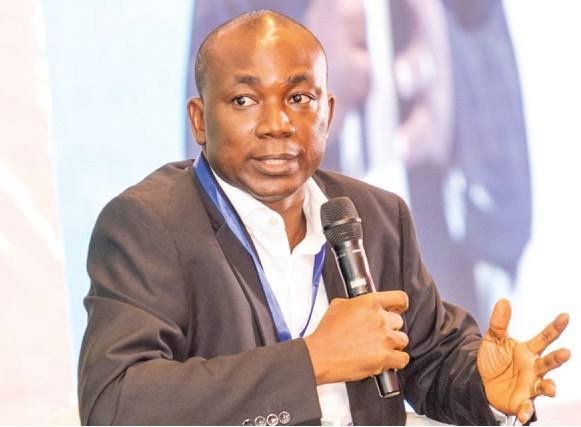
“Already, in terms of what the risk will be,permit me to say that whether joining or not, these countries are already here. There’s China mall everywhere.I don’t consider those ones to be proper FDIs, right? And how we situate this influx, given that we have even gone ahead to sign free trade agreement with China and the other countries,how we situate our 24-hour economic policy and accelerated export development within this context of global competition is something that we have to have a strategy to navigate through,” he stressed
However, Professor Bokpin explained that BRICS comes with opportunities, because the global economic order is projected to shift toward BRICS, with the majority of global economic power expected to be held by BRICS members by 2050.
“We also need to understand that there are opportunities, and here I will talk about many of them. Whether we like it or not, the global economic order is tilting towards the BRICS, to the extent that you don’t need feet to believe in that. Currently, the BRICS countries account for more than 40% of the global GDP.That’s a force, that’s a force to reckon with. By projection, the world is heading in the direction of the BRICS. In fact, by 2050, the projection is that China will be number one, globally.By 2050, China will be number one, the US will be number two, India will be number three, Indonesia will be number four, Germany will be number five. So by 2050, say a couple of decades down the line, three out of the five top global economies in the world will all be BRICS members.
That’s implication for global policy entry and financing,” he added
Professor Bokpin’s comments reflect a broader debate within Ghana’s policy circles over the country’s BRICS bid, with economists increasingly cautioning that bloc membership alone will not drive economic transformation without parallel domestic reforms in trade policy, industrial strategy, and export competitiveness.
About The Author
