
The International Monetary Fund (IMF) is projecting a global growth of 3 percent in 2026 and 3.4 percent in 2027 amid the ongoing Middle East tensions.
This was disclosed by the Deputy Director, of the Fund’s Research Department, Petya Koeva Brooks in the July 2026 Update of the World’s Economic Outlook.
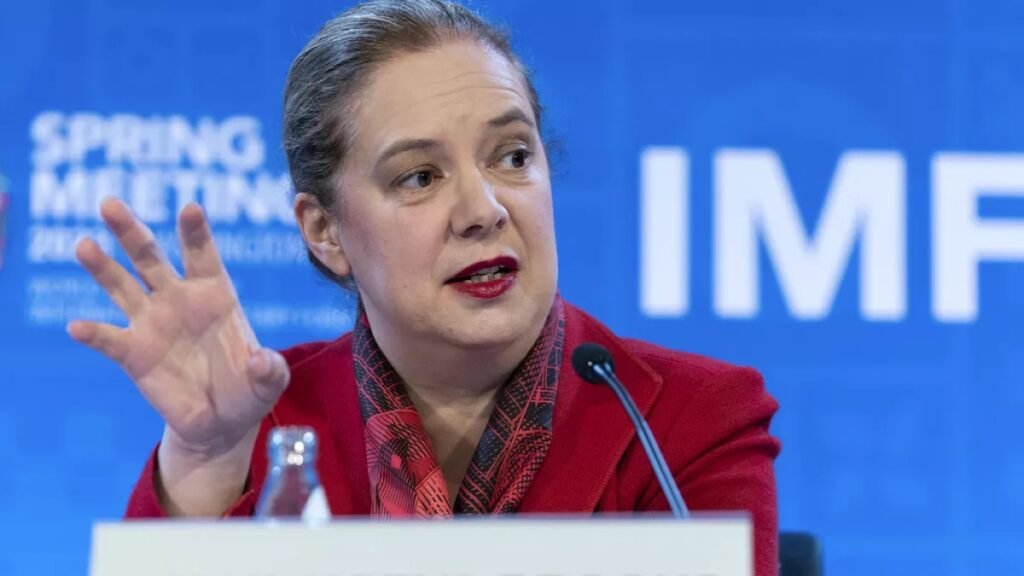
“We are projecting global growth of 3 percent in 2026 and 3.4 percent in 2027, broadly unchanged from April on a cumulative basis.” she stated
Petya Koeva Brooks stated that this development is being shaped by the ongoing war in the Middle East and the effects it’s having on energy supplies and technology-driven investment boom.
“The global outlook is being shaped by two powerful forces pulling in opposite directions: the lingering effects of the energy shock from the war in the Middle East and a technology-driven investment boom”. she added
She however insisted that the effects of these forces varies significantly across countries depending on their exposure to the war and their position in the technology value chain.
She also explained however that despite the ongoing Middle East conflict,a larger spike in oil prices was avoided thanks to inventory drawdowns, expanded production outside the Gulf, and actions taken to soften oil demand.
Petya Koeva Brooks disclosed that the IMF’s forecast assumes the Strait of Hormuz begins reopening in mid-July, with conditions normalising to the pre-war state by March 2027.
On the risks to the outlook,She warned that a renewed escalation in the Middle East conflict could reignite commodity price volatility, tighten financial conditions, strain policy buffers, and worsen food insecurity in low-income countries.
Petya Koeva Brooks then concluded by urging central banks globally to remain focused on price stability though she noted the appropriate response will vary by country depending on how commodity prices, technology-driven demand, and inflation expectations interact.
About The Author
