
The International Monetary Fund (IMF) and the Egyptian government have reached a staff-level agreement on the seventh review under the Extended Fund Facility (EFF) arrangement and the second review under the Resilience and Sustainability Facility (RSF) arrangement, which will see the Egyptian government receive approximately $1.636 billion.
Subject to the approval from the Executive Board of the IMF, the completion of the seventh EFF review would make available SDR 1.11 billion,approximately $1.5 billion while the second RSF review would unlock a further SDR 100 million approximately $136 million,bringing total disbursements under both arrangements to approximately SDR 5.3 billion, or $7.2 billion.
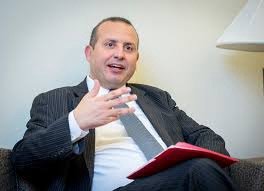
This agreement comes after discussions held in Cairo from May 11 to 21, 2026, led by IMF Mission Chief Mr. Amine Mati.
Economy Resilient Despite Middle East Shock
Speaking on the Country’s resilience during the ongoing Middle East crises, the Mission Chief stated commended the country on its maintenance of the situation stating due to timely and decisive policy actions by the authorities,including fuel and electricity price adjustments, rationalisation of energy consumption by government entities, and reprioritisation of spending to alleviate external and fiscal pressures.
He also revealed that the country recorded,Real GDP growth of 5 percent in the third quarter, bringing growth for the first three quarters of the fiscal year to 5.2 percent. The Mission Chief added that gross international reserves remained broadly stable at end-March 2026, with the exchange rate acting as a shock absorber against sizable portfolio outflows.
Mr. Mati further stated that the recent return of portfolio inflows supported by the announcement of the US-Iran agreement has helped reverse most of the exchange rate depreciation observed since the onset of the conflict.
Fiscal Performance Exceeds Targets
On fiscal performance, it was described strong. By end-March 2026, both the primary balance and tax revenue targets were exceeded, reflecting strong domestic revenue mobilisation and overall spending remaining within the allocated budget ceiling.
The primary surplus is projected to rise from 4.8 percent of GDP recorded in the 2025/2026 financial year to 5 percent of GDP in the 2026/2027 financial year. The Mission Chief stated that sustaining this effort will be critical for placing public debt firmly on a downward path.
On domestic revenue mobilisation, Mr. Mati noted that the tax-to-GDP ratio is expected to increase by 1.2 percent of GDP this year, reflecting the impact of widening the tax base and improved tax administration,describing the results as tangible.
Inflation Remains Elevated
Despite sustained efforts to reduce inflation, headline urban inflation remained elevated at 14.6 percent in May 2026 and is now projected to rise to 15.8 percent by the end of the fiscal year,higher than pre-war projections reflecting unfavourable base effects, higher energy prices, and exchange rate pass-through at the onset of the conflict.
Mr. Mati stated that pursuing a tight monetary policy stance remains necessary to contain renewed inflationary pressures and potential second-round effects from energy price adjustments.
Downside Risks Persist
The Mission Chief warned that downside risks persist, noting that renewed global inflationary pressures or regional tensions could weigh on growth, tighten financial conditions, and place substantial pressure on Egypt’s external position. Conversely, he noted that the recent US-Iran ceasefire agreement could reduce pressures from global energy prices, improve investor sentiment, and support higher inflows to Egypt.
About The Author
