
The Executive Board of the International Monetary Fund (IMF) has completed the final sixth and seventh reviews under the Extended Credit Facility (ECF) arrangement and the final third and fourth reviews under the Resilience and Sustainability Facility (RSF) arrangement with Tanzania, enabling an immediate disbursement of SDR 324.9 million,approximately USD 443.9 million under both arrangements.
The completion of the sixth and seventh ECF reviews now allows an immediate disbursement of SDR 113.37 million,approximately USD 154.1 million. This now brings Tanzania’s total access under the ECF arrangement to approximately USD 1.063 billion.
The completion of the third and fourth RSF reviews additionally allows a disbursement of SDR 213.12 million,approximately USD 289.7 million,bringing total RSF access to approximately USD 636.5 million.
The 40-month ECF arrangement was originally approved in July 2022 for a total access of SDR 795.58 million and extended twice,in June 2024 and May 2026. The 23-month RSF arrangement was also approved in June 2024 and similarly extended by three months in May 2026.
Economy Growing Strongly
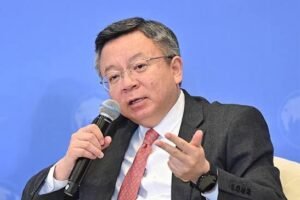
Deputy Managing Director and Acting Chair Mr. Bo Li stated that amid external and domestic shocks, Tanzania’s reform programme supported by the ECF has enabled the authorities to maintain macroeconomic stability and advance reforms.
Tanzania’s real GDP growth reached 5.9 percent in 2025 and is projected to reach approximately 6.2 percent over the medium term, supported by a strong outlook for mining, agriculture, and tourism. Headline inflation has been contained at 4.0 percent year-on-year in June 2026, though the impact of rising fuel prices from the war in the Middle East continues to be felt.
Mr. Li further stated that the current account deficit is expected to remain broadly stable in 2025/2026 financial year , with gold exports providing a partial offset to import pressures.
Programme Performance on Track
The IMF stated that Tanzania’s economic reform programme under the ECF arrangement remained on track. All end-June 2025 quantitative performance criteria were met, all end-September 2025 indicative targets were met except the domestic primary balance, and all end-December 2025 quantitative performance criteria were met except for the criterion on net domestic assets .
Five reform measures under the RSF arrangement were completed, while three reform measures related to the energy sector were not completed. The Deputy Managing Director noted that the recent non-approval of VAT administration, central bank governance, and public investment management reforms also remained outstanding concerns.
Fiscal Consolidation Remains Critical
Mr. Li stated that continued fiscal consolidation, supported by stronger domestic revenue mobilisation, VAT refund reforms, and improved public financial management, remains important highlighting that such efforts would create space for much-needed spending on education and health.
Despite significant fiscal overspending in the first quarter of the 2025/2026 financial year , the end-December quantitative performance criterion for the domestic primary balance was met.
Downside Risks Have Increased
The Deputy Managing Director warned that while the medium-term outlook is positive, downside risks have increased,particularly the risk that a prolonged conflict in the Middle East would weaken the growth outlook and intensify inflation pressures.
He additionally flagged Tanzania’s demographic challenge as a significant long-term risk, noting that the country’s population is expected to double by 2050, making the challenge of meeting Sustainable Development Goal targets and reducing poverty increasingly daunting.
Monetary Policy and Private Sector Development
Mr. Li stated that accommodative monetary policy remains appropriate, and that the Bank of Tanzania should stand ready to further adjust its stance as needed. He called for the maintenance of adequate reserve levels and exchange rate flexibility to cushion the economy against external shocks.
On private sector development, the Deputy Managing Director emphasised that accelerated reforms to strengthen the business environment and support private sector growth are critical to ensuring sufficient jobs and opportunities for Tanzania’s rapidly growing population.
“Continued reforms to further strengthen resilience to climate change and help mobilise climate finance will also be important to enhance broader economic resilience and reduce prospective balance of payments risks,” he added.
About The Author
