Smuggling Declared Economic Sabotage as Government, Sets 15% Manufacturing Target by 2030
President John Dramani Mahama has declared smuggling, under-declaration, counterfeit goods, and the re-bagging of inferior products as economic sabotage, signaling a tougher stance against practices that undermine the local industry.
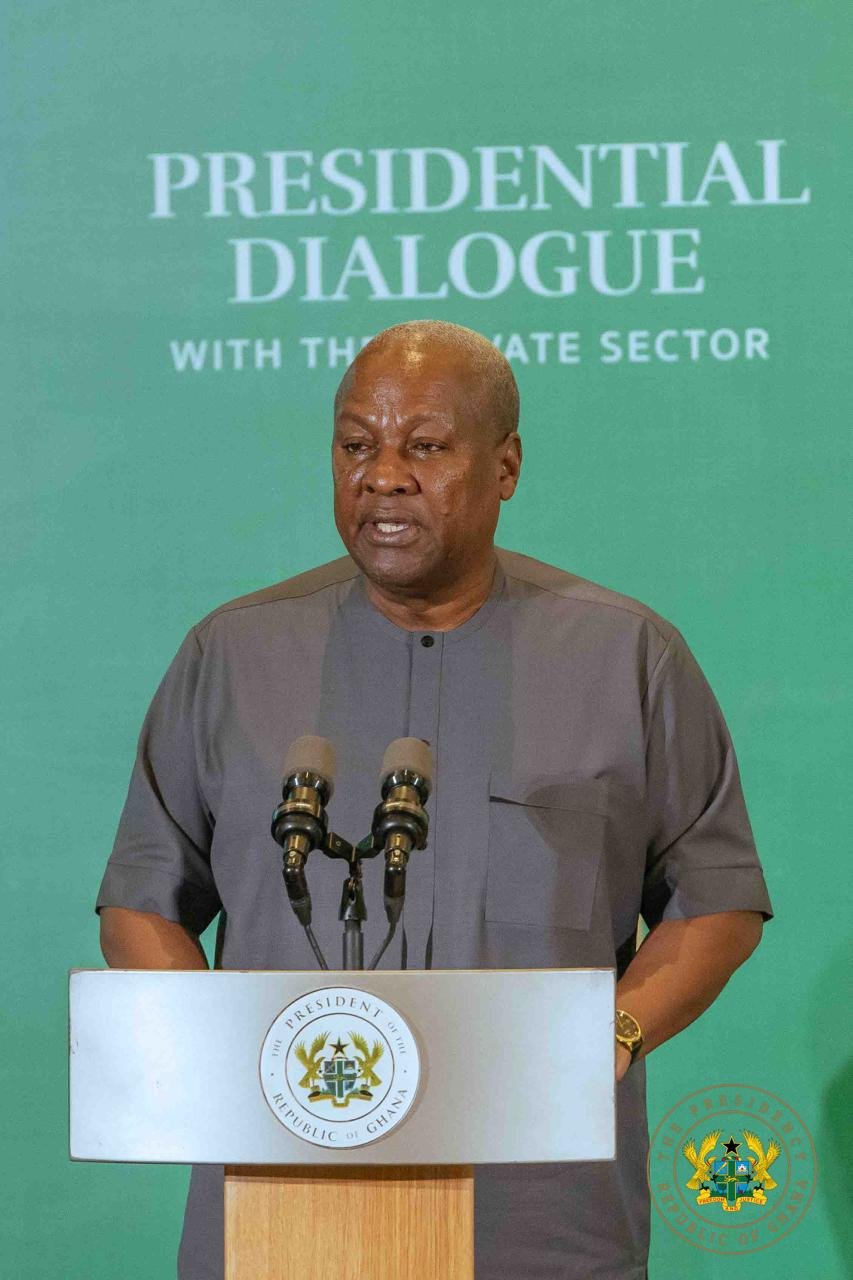
Delivering his address during the Presidential Dialogue with the Private Sector, President Mahama indicated that trade infractions will no longer be treated as minor offences, but as economic crimes, with public officers found culpable facing dismissal and prosecution. He emphasized that safeguarding Ghanaian enterprises is critical to industrial growth, noting that stronger enforcement will help local businesses thrive and expand.
“Smuggling, under-declaration, counterfeit goods and re-bagging of inferior products are not minor infractions. They constitute economic sabotage. To stem this tide and protect our fledgling manufacturing sector, we will intensify coordinated border enforcement, treat trade infractions as economic crimes, dismiss and prosecute public officers found culpable, deploy technology-driven customs surveillance solutions, and rigorously enforce product standards. This government is determined to protect Ghanaian enterprises so they can thrive and grow,” the President said.
President Mahama also stressed that economic stabilisation alone will not deliver long-term development, announcing that he has set a national target for manufacturing to contribute at least 15% of GDP by 2030, supported by the creation of about 500,000 quality industrial jobs. He explained that the current level of industrial activity is insufficient to drive large-scale employment and export competitiveness.
“But let me be clear, stabilisation is not equal to transformation. For over five decades, Ghana’s manufacturing sector has contributed around 10% to GDP. Meanwhile, emerging Asian economies starting from a similar basis have achieved a manufacturing share of 20% to 30% of GDP, creating mass employment and export competitiveness. We need to change our trajectory. I’ve therefore set a national target: manufacturing must contribute at least 15% of GDP by 2030. Supported by 500,000 new quality industrial jobs, this will require structural reform and not incremental adjustments,” he said.
The dialogue, introduced by the President as part of his campaign promises, forms part of a broader strategy to accelerate economic transformation and strengthen industrial competitiveness in Ghana.
About The Author