
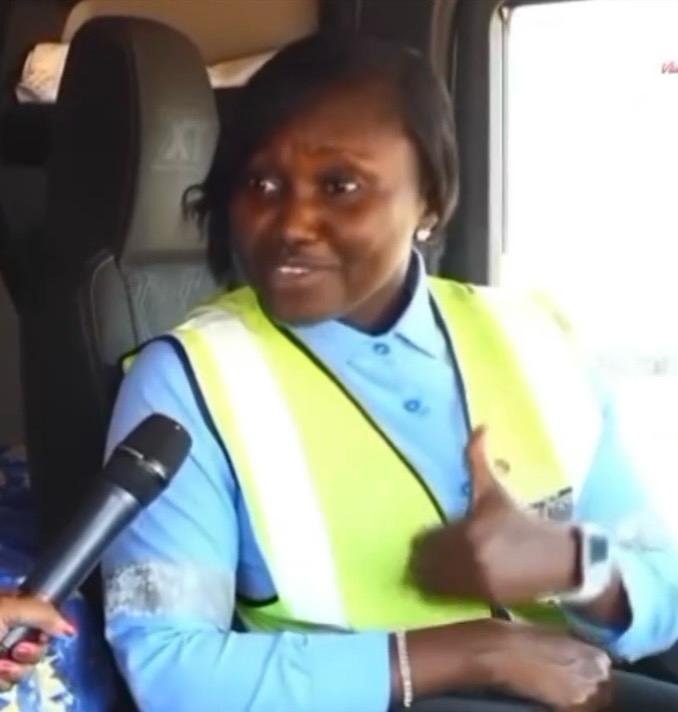
From Newsroom to Fuel Tanker: The Bold Reinvention of a Ghanaian Woman Who Refused to Be Defined
She once produced morning shows.
She read the news.
She was the only female reporter in a newsroom of seven men.
Today, she drives fuel tankers across Ghana.
Her journey from Kiss FM and Adom News to Ladybird Logistics, a subsidiary of Zen Petroleum Ghana, is not just a career change story. It is a statement about sacrifice, resilience, and redefining prestige.
Between 2013 and 2017, Patricia Nketsiah,built a solid broadcasting career. She produced breakfast shows, handled afternoon and evening bulletins, presented late-night announcements, and stepped in when news anchors were absent. In many ways, she had what many young professionals chase visibility, credibility, and status. But she wanted more.
“I love to see women do extra things in life,” she says. “So I asked myself — what about you? What are you doing that is extra?”
That question would lead her away from the microphone and into one of Ghana’s most male-dominated sectors: fuel logistics.
She joined Ladybird Logistics not as a driver, but as a fuel attendant. And that is when the whispers began.
One day, a former colleague drove in to buy fuel and froze in disbelief.
“Is this Patricia of Kiss FM?” she asked.
“Yes,” she replied.
“Why are you here? Why are you selling fuel? You’ve come this low.”
Patricia didn’t flinch.
“I’m not low,” she responded. “Sometimes in life, you just have to sacrifice. This is my sacrifice today. Tomorrow, you’ll see me somewhere else.”
That “somewhere else” came sooner than expected.
Within a short period, she transitioned from fuel attendant to fuel tanker driver — moving petroleum products across the country under a company intentionally recruiting and training women to operate heavy-duty vehicles.
The shift was not about abandoning media. It was about confronting comfort.
In Ghana, professional identity often carries social weight. Driving fuel tankers is not traditionally viewed the same way especially for women.
But what her story exposes is something deeper: resistance to women who defy expectation.
Today, she navigates highways, manages high-risk cargo, and operates machinery that many once believed women should not handle. And in doing so, she is quietly shifting narratives about gender, work, and dignity.
Her journey also underscores a larger conversation unfolding in Ghana’s business ecosystem about women in non-traditional industries, about redefining success, and about the courage required to pivot.
The lesson?
Career growth is not always linear. Prestige is not always progress. And sometimes the path upward begins with what looks, to others, like a step down.
The colleague who once questioned her choice saw her again — this time behind the wheel of a fuel tanker.
There was nothing left to say.
In a country where many young professionals cling to titles, Patricia chose transformation over perception.
And in doing so, she did not fall.
She evolved.
About The Author