
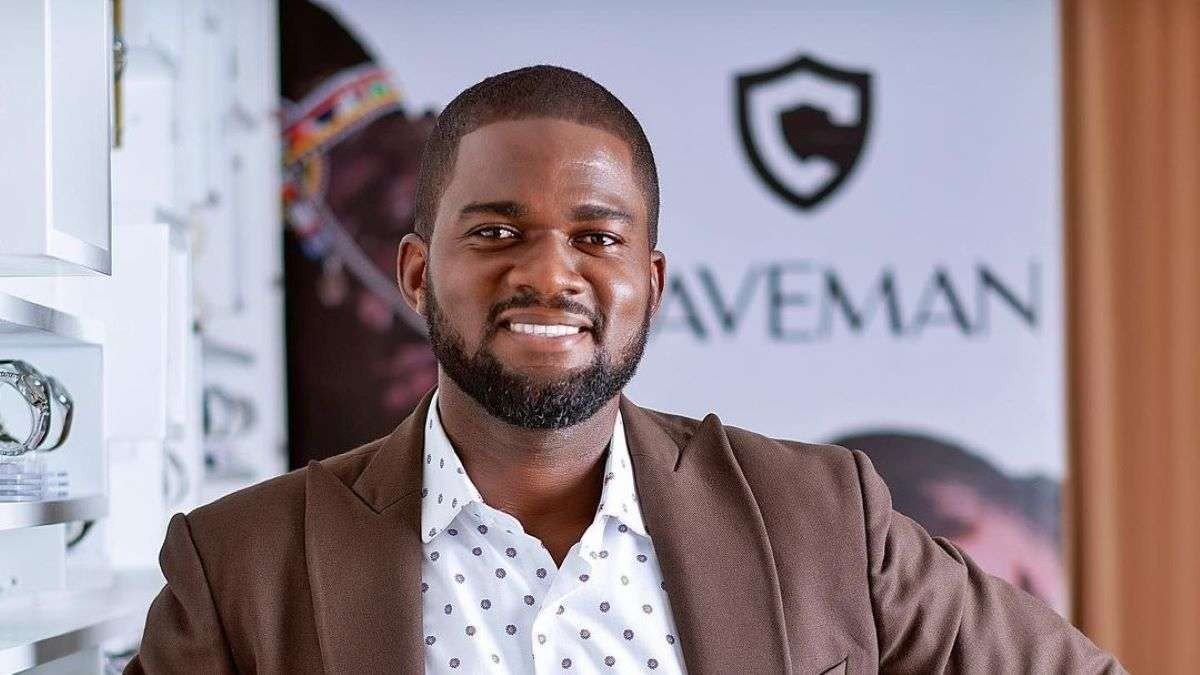
Most Entrepreneurs Fail Because of Emotional Shocks — Here’s What the Caveman Watches CEO Wants You to Know
The Founder and CEO of Caveman Watches, Anthony Dzamefe, has stated that he believes most people fail in business and entrepreneurship because of emotional shocks that come along with business which they do not prepare for.
Speaking on Business Outlook with VKL on the 13th of February 2026, Anthony recounted his early journey in entrepreneurship and how what he describes as his “stubbornness” and resilience helped him overcome those shocks.
He then called on all young people who are willing to venture into business to invest in and build their emotional strength and resilience if they hope to survive the realities of entrepreneurship.
According to him, many young entrepreneurs fail not because of the lack of intellect or system but because of emotional shocks.
“Generally, it’s difficult being a businessperson. Only a fellow businessperson would understand you. Every other person wouldn’t understand why you have some mood swings, why you were happy a few seconds ago then suddenly you are unhappy.It’s just a whole lot of emotions you know. I say that most people fail at business not because of their lack of intellect or systems but of the emotional shock that they did not prepare for, the emotional investments that they were unaware of. What do you need to be able to build a business in Ghana? A lot of resilience. You should be very hard-headed. You know, without resilience or stubbornness, you’re not getting anywhere.”
He then advised young entrepreneurs to embrace small beginnings as a strategic advantage rather than a limitation and cautioned against constantly seeking approval and validation from others.
Dzamefe,explained that it is normal for people not to see what young entrepreneurs see in their ideas. However, he stressed that this should not be a source of discouragement.
But rather encouraged them to rather use the doubt from others as motivation to prove themselves through results instead of allowing it to become a disadvantage.
“I would tell the person to start small, have a bigger picture in mind, but start small. Starting small is very important. Start small, believe in yourself, don’t look for validation from people. It’s okay for people not to see what you are seeing. It shouldn’t be discouragement, but once you know what you’re doing, just keep to it,” he said.
He further emphasised that starting small gives entrepreneurs the opportunity to learn, grow and build strong foundations and hence shouldn’t be underestimated.
“If you start small , I’ll stress on that ,starting small is very crucial to the success of your brand. It’s actually an advantage,” he added.
His message to young entrepreneurs is simple but firm: dream big, but begin small — and trust the process by being resilient enough.
Watch the full interview below:
About The Author