
BoG’s 129th MPC Meeting Begins Against Tide of Falling Inflation and Rising Global Risks
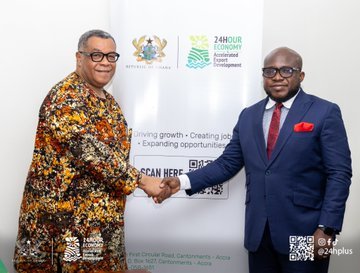
The Governor of the Bank of Ghana, Dr. Johnson Pandit Asiama has explained that country could face renewed inflationary pressures as due disruptions of global energy and shipping routes as a result of the ongoing tensions in the Middle East .
Passing oh his remarks during the opening of the 129th Monetary Policy Committee Meetings on Monday, March 16,2026 the governor highlighted that even l geopolitical uncertainty may support higher gold prices which will benefit Ghana’s export earnings and trade balance,the overall impact of the external shock is expected to be inflationary for the economy.
“ Colleagues, the external environment has evolved significantly since our last meeting in January.The escalation of conflict in the Middle East has disrupted key energy and shipping corridors, increased volatility in global oil markets, and introduced new uncertainty into the trajectory of
For Ghana, the spillover channels are clear. Sustained oil price increases raise the risk of imported inflation, which could necessitate policy tightening with implications for financial conditions.There is a partial offset – geopolitical uncertainty tends to support gold prices, which benefits our trade balance – however, the net balance of risks from this external shock is inflationary.”
Dr Asiama also added that the discussions for the meetings will primarily centere on the geopolitical risk channel and its implications for policy calibration, the Ghana Accelerated National Reserve Accumulation Programme and the effectiveness of monetary policy transmission.
“Against this backdrop, I would like to draw members’ attention to areas that will be central to our discussion:
• First geopolitical risk channel and its implications for policy calibration.
The external shock we face today is different from the conditions we confronted in January.
Back then, the principal risk was complacency in the face of success. Today, there is a live external threat to the disinflation trajectory. Whatever decision the Committee takes, our communication must reflect both the progress achieved and the risks that remain.
• Second, the Ghana Accelerated National Reserve Accumulation Programme.
Since our last meeting, the Government has announced Ghana Accelerated National Reserve Accumulation Programme (GANRAP), which seeks to raise international reserves to 15 months of import cover by 2028, from the current level of around 5.8 months.
Strengthening external buffers is an important element of macroeconomic resilience. At the same time, initiatives of this scale raise questions regarding liquidity conditions, the Bank’s balance sheet, and the interaction between reserve accumulation and monetary policy operations.
• Third, the effectiveness of monetary policy transmission.
The banking sector remains sound, profitable, and well-capitalised, with asset quality improving meaningfully over the past year. This matters not only for financial stability, but also for the effectiveness of monetary policy, the extent to which changes in the policy rate translate into the credit conditions experienced by households and businesses.Understanding the factors constraining credit expansion, whether on the supply or demand side, will therefore be important in assessing the real economy impact of any policy decisions taken today.”
The Governor then urged committee members to ensure that their decision would remain sound under different possible global economic scenarios.
About The Author